
Most people think of Wikipedia as a chaotic free-for-all where anyone can edit anything at any time. If you have ever tried to coordinate a large-scale improvement effort across hundreds of volunteers, you know that reality is far more complex. The secret sauce isn't chaos; it's structure. Specifically, it comes down to how WikiProjects define their annual goals and roadmaps. Without a clear plan, even the most passionate editors burn out or drift off-topic. With one, they can turn scattered enthusiasm into measurable progress.
The Reality of Volunteer Coordination
Coordinating a group of unpaid volunteers is fundamentally different from managing a corporate team. You cannot mandate deadlines or assign tasks by force. Instead, you have to rely on shared purpose and clear visibility. This is where the concept of a Roadmap becomes critical in the context of Wikipedia governance. A roadmap is not just a list of wishes; it is a communication tool that tells every contributor exactly what needs to happen next and why it matters.
Think about the last time you joined a new online community. Did you feel lost? Probably. Now imagine joining a WikiProject with a pinned "Goals for 2026" section that lists three specific priorities, such as "Expand coverage of women in science," "Improve citation quality in biographies," or "Translate key articles from German." Suddenly, you know where your energy is best spent. This clarity reduces friction and increases participation rates significantly.
Defining Your Annual Objectives
The first step in creating an effective plan is setting realistic objectives. Many projects fail here because they aim too high or too broadly. Saying "we want to improve article quality" is useless because it lacks specificity. Instead, use the SMART framework-Specific, Measurable, Achievable, Relevant, and Time-bound-even if you don't call it that explicitly.
- Specific: Don't say "add citations." Say "add reliable sources to all B-class articles in the [Topic] category by Q3."
- Measurable: Define success metrics. Is it the number of words added? The number of articles promoted to Good Article status? The reduction in orphaned pages?
- Achievable: Look at past performance. If your project created 50 new articles last year, aiming for 500 this year without increasing membership is setting yourself up for failure.
- Relevant: Does this goal align with Wikipedia's core content policies? Avoid goals that might violate Neutral Point of View (NPOV) or Original Research rules.
- Time-bound: Set quarterly checkpoints. An annual goal is too distant for immediate motivation.
For example, the WikiProject Medicine has historically focused on improving health-related content accuracy. Their annual goals often involve systematic reviews of medical guidelines and updating drug information based on recent FDA approvals. This specificity allows editors to track progress easily.
Structuring the Quarterly Breakdown
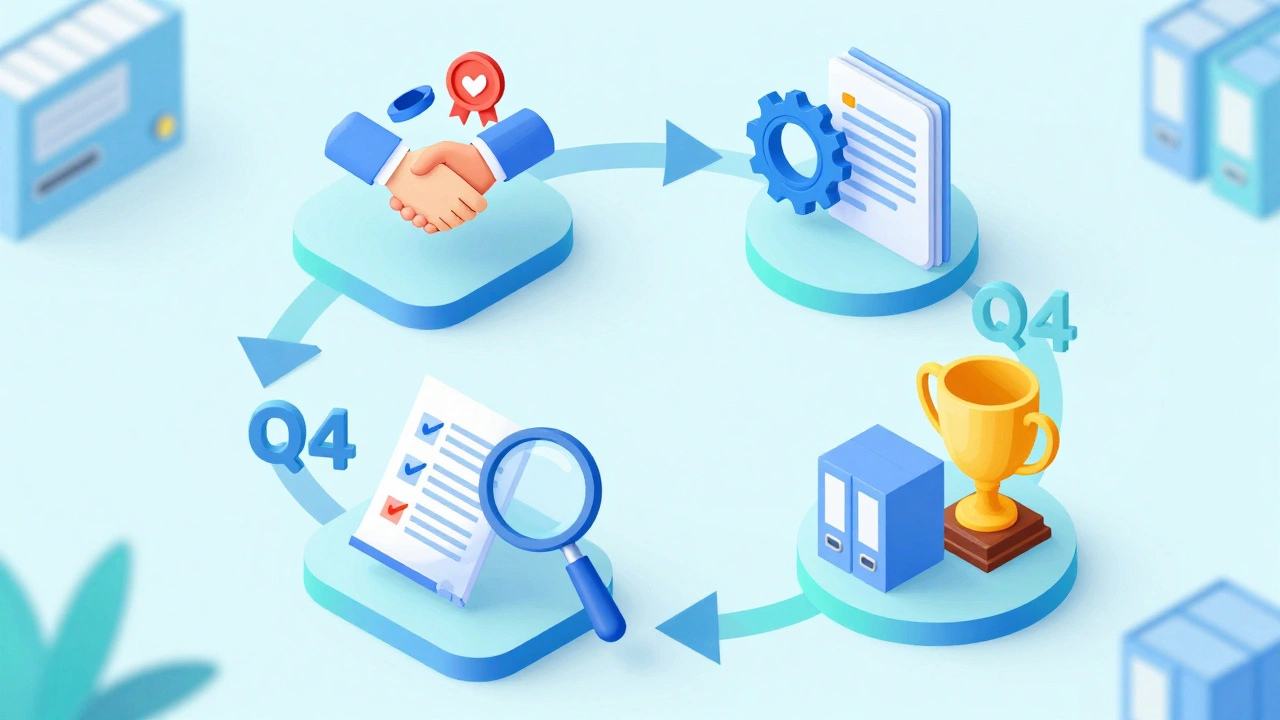
An annual goal is a destination, but the quarterly breakdown is the map. Breaking the year into four distinct phases helps maintain momentum. Here is a typical structure that works well for most WikiProjects:
- Q1: Foundation & Recruitment. Focus on updating the project page, welcoming new members, and identifying gaps in current coverage. This is also the time to launch any major campaigns, like Wiki Loves Monuments or similar thematic drives.
- Q2: Execution Phase 1. Begin tackling the largest backlog items. Assign "adoption" of specific categories or templates to small teams within the project.
- Q3: Review & Adjustment. Mid-year check-in. Are we on track? If not, why? Adjust the scope of remaining goals based on available bandwidth. Celebrate small wins publicly on the talk page.
- Q4: Final Push & Documentation. Complete outstanding tasks. Document lessons learned for the next year's planning cycle. Archive old discussions to keep the workspace clean.
This rhythm prevents the common pitfall of starting strong in January and fizzling out by August. It creates natural pauses for reflection and celebration, which are vital for volunteer retention.
Tools for Tracking Progress
You don't need expensive software to manage a WikiProject roadmap. The tools are already built into the MediaWiki platform. The key is using them consistently.
| Tool | Best For | Limitations |
|---|---|---|
| Taskforces | Sub-topics within a larger project (e.g., WikiProject History > Taskforce WWII) | Can become siloed; requires active leadership |
| Assessment Scales | Tracking article quality (Stub, Start, C, B, GA, FA) | Subjective; relies on manual tagging |
| Category Trees | Identifying missing articles and structural gaps | Static view; doesn't show work-in-progress |
| Wikidata Items | Linking data across languages and tracking properties | Steep learning curve for beginners |
One powerful yet underused feature is the Watchlist. Project leads should curate a watchlist that includes all pages related to their annual goals. This provides real-time visibility into who is working on what. Additionally, using Userboxes can help identify contributors interested in specific sub-goals. For instance, a userbox saying "I am helping expand coverage of renewable energy" makes collaboration easier.
Engaging the Community
A roadmap is only as good as the people willing to walk it. Engagement strategies must be baked into the planning process. One effective method is the "Call for Collaboration" (CfC). These are short-term, focused efforts announced on the Village Pump or relevant mailing lists. For example, if your Q2 goal is to improve geography articles, host a CfC titled "Let's fix maps in European city articles this month!"
Another tactic is mentorship. Pair experienced editors with newcomers who express interest in your project's goals. This not only improves article quality but also builds social capital within the community. Remember, Wikipedia is a social network first and an encyclopedia second. Relationships drive retention.
Regular updates are crucial. Post monthly summaries on the project's main page. Highlight top contributors, showcase before-and-after examples of improved articles, and acknowledge setbacks honestly. Transparency builds trust.

Handling Setbacks and Scope Creep
No plan survives contact with reality perfectly. You will encounter unexpected events: a controversial topic will emerge, a key editor will leave, or a policy change will require immediate attention. This is known as scope creep. The best defense is flexibility. Build buffer time into your quarterly plans. If Q1 runs over budget in terms of effort, reduce the ambition of Q2 rather than abandoning the entire annual goal.
Also, be prepared to pivot. If data shows that your chosen metric is flawed, change it. If a particular sub-goal proves unpopular among contributors, drop it and focus on what generates excitement. The goal is progress, not perfection.
Measuring Success Beyond Numbers
While quantitative metrics like word count and article promotions are important, they tell only part of the story. Qualitative improvements matter just as much. Did the tone of the articles become more neutral? Did the references become more diverse and reliable? Did the project attract a broader demographic of editors?
Consider conducting informal surveys or polls at the end of the year. Ask participants what they enjoyed most and what frustrated them. Use this feedback to refine next year's roadmap. This iterative approach ensures that your planning process evolves alongside the community.
How do I start a WikiProject if none exists for my topic?
You can create a new WikiProject by requesting it at Wikipedia:Requested projects. Provide a clear description of the scope, initial goals, and potential collaborators. Once approved, set up the basic infrastructure: a main page, taskforces, and assessment templates.
What is the difference between a WikiProject and a Taskforce?
A WikiProject is a broad collaborative effort covering a general subject area (e.g., Biology). A Taskforce is a specialized subgroup within a WikiProject focusing on a narrower topic (e.g., Entomology within Biology). Taskforces allow for more targeted goals and coordination.
How often should I update the annual goals?
Review goals quarterly. Update the public roadmap whenever significant changes occur, such as completing a major milestone or shifting priorities due to external events. Frequent updates keep the community engaged and informed.
Can I use external tools for project management?
While possible, it is generally discouraged to rely heavily on external tools like Trello or Asana for core Wikipedia work. This creates barriers to entry for casual contributors. Stick to native MediaWiki features like talk pages, categories, and Wikidata to ensure inclusivity and transparency.
What happens if no one follows the roadmap?
If engagement drops, revisit your goals. They may be too ambitious or misaligned with community interests. Reach out to inactive members personally via talk pages. Sometimes, a simple nudge or invitation to collaborate reignites interest. If necessary, scale back the scope to match available resources.