
You write a breaking news report on Wikinews is a Wikimedia Foundation project dedicated to providing original, neutral news reporting from around the world. You want to share it on your blog. Or maybe you see a great article on a major news site and think, "This would be perfect for Wikipedia." It sounds logical. Information should flow freely, right? But in the world of Wikimedia projects, that freedom comes with strict guardrails. Cross-posting isn't just about copying text; it's about navigating a complex web of licenses, editorial standards, and community trust.
If you get these rules wrong, your work gets deleted. Worse, you might face account restrictions. The confusion usually stems from one big misconception: all Wikimedia projects are the same. They aren't. Wikipedia is an online encyclopedia that aims to provide verifiable, neutral summaries of established knowledge, while Wikinews covers current events with original reporting. Their goals differ, and so do their rules for importing or exporting content.
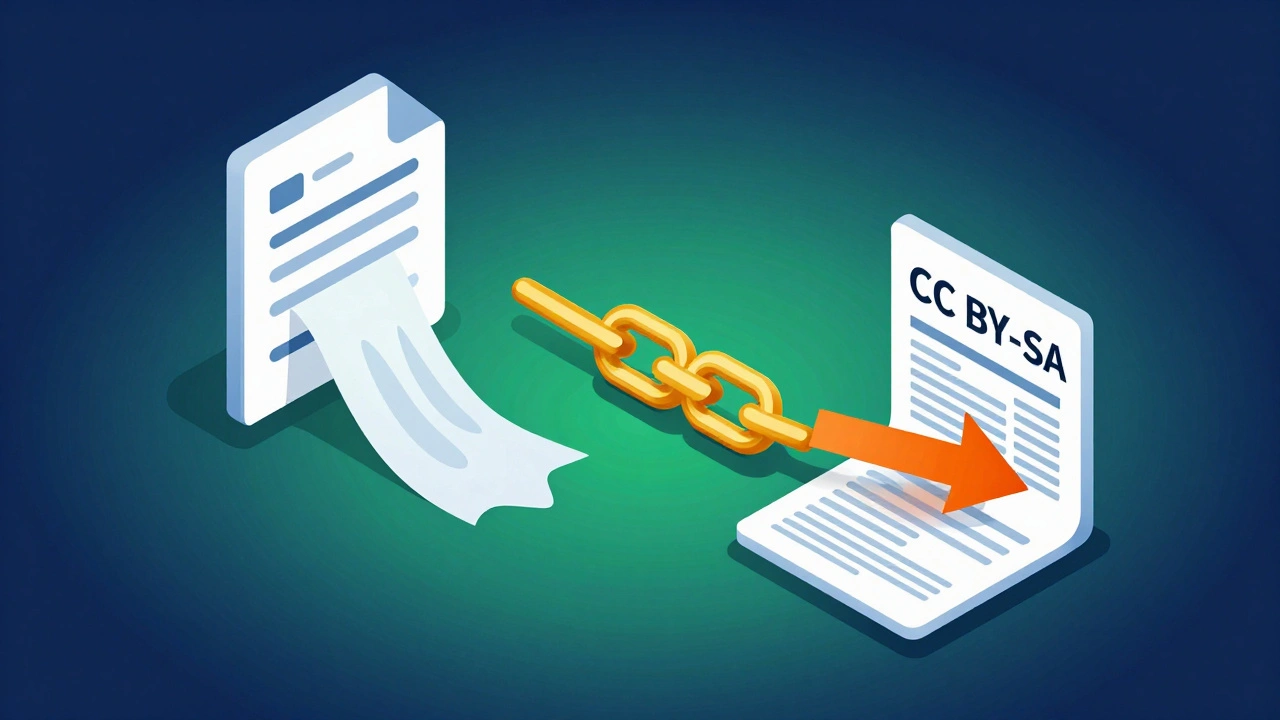
The License Barrier: Why CC BY-SA Matters
Before we talk about where you can post, we need to talk about how content is licensed. This is the foundation of everything. Most content on Wikimedia projects is released under the Creative Commons Attribution-ShareAlike (CC BY-SA) license is a copyright license that requires users to attribute the original author and release derivative works under the same license.
This creates a specific chain of custody. If you take an article from a commercial news site like Reuters or the BBC, you cannot simply copy-paste it into Wikinews. Those sites hold exclusive copyrights. Even if they allow sharing, their terms rarely match the ShareAlike requirement. To put it in Wikinews, the source must explicitly offer its content under CC BY-SA, or a compatible license like GNU Free Documentation License (GFDL).
Conversely, if you write something for Wikinews, you own the copyright, but you've already granted the public the right to use it under CC BY-SA. This means you can repost it on your personal blog. However, you must include attribution. You have to link back to Wikinews and state that it is licensed under CC BY-SA. If you don't, you're violating the license terms, even though you wrote the words.
Wikinews to Wikipedia: A One-Way Street?
Here is where most people trip up. Can you take a news story from Wikinews and paste it into Wikipedia? Technically, the license allows it. Both use CC BY-SA. But editorially? It’s almost always a bad idea.
Original Research is the policy prohibiting the publication of new theories, ideas, or unpublished data not found in reliable published sources. Wikinews reporters often gather quotes and facts firsthand. That is "original research" in the eyes of Wikipedia. Wikipedia does not publish news; it publishes history. An event needs to be covered by multiple independent, reliable sources before it earns a place in an encyclopedia entry.
Imagine a local protest reported on Wikinews. A few weeks later, major newspapers cover the aftermath. Now, you can cite those newspapers in a Wikipedia article about the protest. You cannot cite the Wikinews article itself as a primary source for the facts. In fact, citing Wikinews in Wikipedia is generally discouraged because it violates the principle of using independent secondary sources. The news report becomes part of the historical record only after external validation occurs.
External Media to Wikinews: The Import Trap
Let’s flip the script. You find a fantastic analysis on a niche blog. The author says, "Feel free to share this." You rush to Wikinews to translate it into a structured news report. Stop. Check the license again.
Saying "feel free to share" is not the same as granting a CC BY-SA license. For Wikinews to host that content legally and permanently, the author must explicitly dedicate it to the public domain or apply the CC BY-SA tag. Without that explicit legal framework, the content is vulnerable to deletion. The Wikimedia Foundation has faced lawsuits in the past over unclear licensing, so the community is hyper-vigilant.
If you want to import content from external media, follow this checklist:
- Verify the license is CC BY-SA 3.0 or 4.0 (or GFDL).
- Ensure the author is the copyright holder (they can't license someone else's photo or quote without permission).
- Include clear attribution in the edit summary and the article footer.
- Do not modify the core meaning without contacting the author first, as significant changes may require re-licensing discussions.
Wikinews to Personal Blogs and Social Media
What if you just want to share your Wikinews article on Twitter or your LinkedIn profile? This is common. Journalists often want to build their portfolio. You can absolutely do this. Since you contributed to the work, you retain moral rights, but the license still applies.
When you cross-post to a personal blog, you are creating a "derivative work" if you change the formatting or add commentary. Under ShareAlike, your entire new post must also be licensed under CC BY-SA. This is a crucial detail many bloggers miss. If you wrap a Wikinews article in your own proprietary website theme with restrictive terms, you might be infringing on the license spirit, though enforcement varies. The safest route? Keep the license notice visible. Link directly to the original Wikinews page. This drives traffic to the project and keeps you compliant.
Social media snippets are different. Posting a short excerpt with a link is considered fair use in many jurisdictions, but full-text reposts on platforms like Medium or Substack require the full CC BY-SA compliance. Make sure the platform supports open licensing. Some platforms automatically claim copyright over user content, which conflicts with your obligation to keep the work free.
| Source | Destination | Allowed? | Key Requirement |
|---|---|---|---|
| Wikinews | Wikipedia | No (Editorial) | Violates Original Research policy; use only as background, not citation. |
| Wikinews | Personal Blog | Yes | Must retain CC BY-SA license and attribute Wikinews. |
| Commercial News Site | Wikinews | No | Copyright infringement unless explicitly licensed under CC BY-SA. |
| CC BY-SA Blog | Wikinews | Yes | Explicit license verification and attribution required. |
| Wikipedia | Wikinews | Yes (with caution) | Background info allowed; do not present encyclopedic summary as breaking news. |
Wikipedia to Wikinews: Background vs. Breaking
Can you take a Wikipedia article and turn it into a Wikinews story? Yes, but with nuance. Wikipedia articles are excellent sources for background context. If a celebrity dies, the Wikipedia biography provides verified dates and career highlights. You can use that information in your Wikinews obituary. However, you must rewrite it completely. Copy-pasting encyclopedic prose into a news format is poor style and risks being flagged as plagiarism, even if the license permits it.
The key is transformation. Wikipedia tells you *who* someone was. Wikinews tells you *what* happened today. Use the encyclopedia for facts, but write the narrative yourself. Always cite the Wikipedia revision date if you rely heavily on its structure, though ideally, you should dig deeper into the primary sources cited within the Wikipedia article for higher credibility.

Common Pitfalls and How to Avoid Them
New contributors often make three specific mistakes when handling cross-posting:
- Ignoring Attribution: You can reuse content, but you must credit the source. On Wikinews, this goes in the footer. On your blog, it goes at the top. Never assume anonymous contribution means no attribution is needed.
- Misinterpreting "Fair Use": Fair use is a US legal doctrine. It does not apply globally in the same way. Wikimedia projects operate internationally. Relying on fair use to justify copying copyrighted material into Wikinews is risky and often rejected by reviewers.
- Assuming Compatibility: Not all Creative Commons licenses are compatible. CC BY-NC (Non-Commercial) cannot be mixed with CC BY-SA in a way that allows commercial reuse. If a source uses NC, you cannot import it into Wikinews, which allows commercial use by third parties.
To stay safe, always check the "Talk" page of the source article. Often, previous editors have discussed licensing issues there. If in doubt, ask on the Wikinews village pump or help desk. It’s better to delay a post than to have it deleted for copyright violation.
The Future of Open News Sharing
As AI-generated content floods the internet, the value of human-verified, openly licensed news grows. Wikinews serves as a reservoir of trusted, reusable information. By understanding these cross-posting policies, you help maintain that trust. You ensure that when someone takes your work, they respect the license. And when you take others' work, you respect their rights.
Remember, the goal isn't to restrict information. It's to protect the ecosystem that makes free knowledge possible. Whether you are moving text from a blog to Wikinews or sharing a Wikinews report on social media, clarity and compliance are your best tools.
Can I copy a news article from CNN and post it on Wikinews?
No. CNN articles are protected by standard copyright. Unless CNN explicitly releases a specific article under the CC BY-SA license, copying it to Wikinews is copyright infringement. You must write original reports or use sources that are already openly licensed.
Is it okay to use a Wikinews article as a source in a Wikipedia entry?
Generally, no. Wikipedia requires independent, reliable secondary sources. Wikinews is a primary source of news. While you can use Wikinews for background research, you should not cite it in Wikipedia references. Instead, look for the traditional media outlets that covered the same event.
Do I have to keep my blog post under CC BY-SA if I republish a Wikinews article?
Yes. The ShareAlike clause of the CC BY-SA license requires that any derivative work, including a reposted article with minor edits or formatting changes, must be distributed under the same license. You must clearly display the CC BY-SA license on your blog post.
What happens if I accidentally post copyrighted material to Wikinews?
Editors will likely tag the article for speedy deletion due to copyright concerns. If you are the contributor, you may receive a warning. Repeated violations can lead to account blocks. It is best to remove the content immediately if you realize the mistake and contact an administrator to explain.
Can I use photos from Wikipedia in my Wikinews articles?
Yes, provided the photos are properly licensed (usually CC BY-SA or Public Domain). Wikimedia Commons hosts images shared across projects. You can embed them directly. Always check the image description page to confirm the license allows use in news contexts.