
Imagine trying to decide the fate of a major policy change or the wording of a controversial biography without raising hands, clicking 'yes' or 'no,' or counting ballots. It sounds chaotic, right? Yet, this is exactly how Wikipedia is the world's largest free online encyclopedia, maintained by millions of volunteer editors who collaborate without formal voting mechanisms. Instead of elections, the platform relies on a fluid, often messy, but remarkably effective concept known as "consensus."
If you’ve ever edited an article and seen your changes reverted, or watched a heated debate unfold in the margins of a page, you’ve witnessed this system in action. Understanding how consensus works isn’t just for veteran editors; it’s essential for anyone who wants to contribute meaningfully to the world’s most-read reference site. So, how do thousands of strangers agree on what goes into an article without a single vote?
The Myth of Democracy: Why Wikipedia Doesn't Vote
The first thing to grasp is that Wikipedia explicitly rejects democratic voting for content decisions. You won’t find polls asking users whether a specific sentence should stay or go. This might seem counterintuitive in a digital age obsessed with likes and shares. However, the founders and long-time administrators realized that majority rule often leads to tyranny of the majority. If 51% of editors love a certain viewpoint, does that make it true? No.
Encyclopedic truth isn’t determined by popularity; it’s determined by verifiability and neutrality. A vote counts heads, not sources. By removing formal voting, Wikipedia forces editors to focus on the quality of arguments rather than the quantity of supporters. The goal isn’t to win an argument; it’s to reach a compromise that reflects reliable published sources accurately and neutrally.
| Feature | Formal Voting | Consensus Building |
|---|---|---|
| Decision Basis | Majority count (50% + 1) | Quality of arguments & sources |
| Outcome Goal | Winning the debate | Reaching a workable agreement |
| Minority View | Ignored if outvoted | Considered if well-sourced |
| Flexibility | Rigid binary choice | Evolving through discussion |
Talk Pages: The Engine Room of Agreement
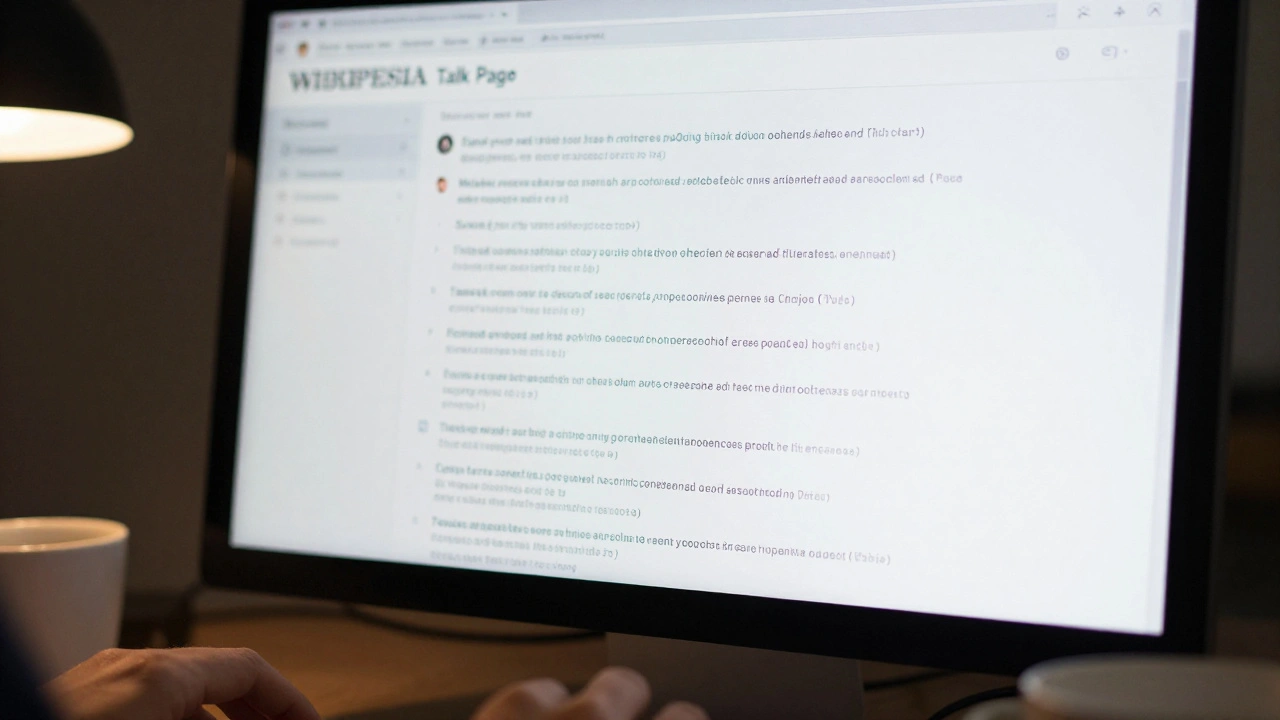
So, if there are no votes, where does the decision-making happen? The answer lies in the Talk Page, which is a dedicated discussion space associated with every Wikipedia article where editors debate content, structure, and policy issues. Every article has one. While the main page shows the final product, the talk page shows the work-in-progress.
When two editors disagree on a fact-say, whether a historical figure was primarily a politician or a military leader-they don’t edit-war back and forth. They post their reasoning on the talk page, citing sources. Other editors chime in. Over time, a pattern emerges. If everyone agrees that the sources lean toward "military leader," the article is updated accordingly. That update *is* the consensus. It’s not declared; it’s demonstrated through action.
This process requires patience. Discussions can drag on for weeks or even months. But this deliberation is a feature, not a bug. It ensures that hasty changes based on emotion or bias are filtered out. The talk page acts as a public record of why certain decisions were made, allowing future editors to understand the context behind the text.
Recognizing Consensus: Signs and Signals
Since there’s no official gavel banging down to say "meeting adjourned, here’s the winner," how do you know when consensus has been reached? It’s rarely explicit. Instead, look for these signals:
- Silence after a proposal: If an editor suggests a change and no one objects for a reasonable period (usually a few days to a week), that silence is interpreted as agreement.
- Convergence of opinion: Multiple independent editors arrive at the same conclusion using different sources. This strengthens the validity of the position.
- Administrative summary: In complex cases, a neutral third party or administrator might summarize the discussion, stating, "The consensus appears to be X because of Y reasons." This doesn’t force a vote but clarifies the current state of play.
- Implementation without reversion: An editor makes a change reflecting the discussed agreement. If it stays up for several days without being reverted, consensus is effectively locked in.
It’s important to note that consensus isn’t unanimous agreement. You don’t need 100% of editors to nod along. You need enough support from diverse participants such that no significant opposition remains unresolved. If a small group strongly disagrees but fails to provide better sources, the majority view prevails-not because they voted more, but because their evidence was stronger.
Request for Comment (RfC): Structuring the Chaos
What happens when the talk page gets too noisy, or when editors are stuck in a loop? Enter the Request for Comment (RfC), which is a structured mechanism on Wikipedia used to gather broader community input on contentious issues or policy disputes. An RfC is like calling a town hall meeting. It moves the discussion to a central location where more eyes can see it.
Any editor can start an RfC by tagging a section on the talk page and linking it to a general forum. This invites editors who don’t normally watch that specific article to weigh in. It helps break deadlocks by introducing fresh perspectives. The key rule of an RfC is that it’s still not a vote. Participants are asked to discuss, not tally preferences. However, the sheer volume of comments can sometimes create a de facto pressure to conform to the emerging majority view, which is why facilitators must remain vigilant against bandwagon effects.
The Role of Neutral Point of View (NPOV)
All consensus-building revolves around one core principle: Neutral Point of View (NPOV) is Wikipedia's foundational content policy requiring articles to represent all significant viewpoints fairly, proportionally, and without editorial bias. NPOV is the compass that guides consensus. When editors argue, they aren’t arguing about personal opinions; they’re arguing about how best to present existing opinions neutrally.
For example, if a political candidate is criticized by opponents, NPOV doesn’t mean deleting the criticism. It means including the criticism while also including the candidate’s response, ensuring both sides are attributed to reliable sources and presented without loaded language. Consensus is reached when editors agree that the article meets this standard. If one side feels underrepresented, they don’t demand more space; they demand better representation of their side’s credible sources.
Handling Deadlocks and Disputes
Despite the best efforts, disagreements persist. Sometimes, consensus simply cannot be reached. In these cases, Wikipedia has escalation paths. Editors can seek mediation from experienced community members or bring the issue to the Arbitration Committee (ArbCom), which is Wikipedia's highest-level dispute resolution body, composed of elected editors who handle severe conflicts involving user behavior and systemic biases. ArbCom doesn’t usually dictate content details but sets binding rules for how editors interact on specific topics.
Another tool is the Dispute Resolution Noticeboard, which is a public forum where editors can request help resolving ongoing edit wars or interpersonal conflicts related to article content. Here, neutral parties review the history and discussions, then offer recommendations. These recommendations carry weight because they come from respected peers, not appointed officials.
Practical Tips for New Editors
If you’re new to Wikipedia, navigating consensus can feel overwhelming. Here’s how to approach it:
- Cite your sources early: Don’t just assert a fact. Link to a reliable publication. Sources are the currency of consensus.
- Assume good faith: Most editors want to improve the article, not sabotage it. Approach disagreements as collaborative problem-solving.
- Be patient: Consensus takes time. Don’t rush to implement changes before the discussion settles.
- Summarize discussions: If a thread gets long, try summarizing the key points. This helps others follow along and speeds up agreement.
- Accept compromise: Your ideal version might not be the final one. The goal is a balanced article, not a personal manifesto.
Why This System Works
Critics often point to Wikipedia’s lack of formal governance as a weakness. Yet, this decentralized model has allowed the encyclopedia to scale globally without bottlenecks. By empowering local communities to solve local problems through consensus, Wikipedia remains agile and resilient. It adapts to cultural nuances and subject-specific needs in ways a top-down bureaucracy never could.
Consensus isn’t perfect. It can be slow, opaque, and frustrating. But it prioritizes accuracy over speed and collaboration over competition. In a world increasingly divided by echo chambers, Wikipedia’s insistence on finding common ground through reasoned discussion offers a compelling alternative to the politics of polarization.
Can I vote on Wikipedia?
No, Wikipedia does not allow formal voting for content decisions. Decisions are made through discussion and consensus building on talk pages, focusing on the quality of sources and arguments rather than headcounts.
What happens if editors can't agree?
If consensus cannot be reached, editors can use tools like Requests for Comment (RfC) to broaden the discussion. Persistent disputes may escalate to mediation or the Arbitration Committee, which handles severe behavioral issues.
How do I know if consensus has been reached?
Consensus is indicated by a lack of objection after a proposal, convergence of opinions among multiple editors, or an administrative summary. Once a change is implemented and remains unchallenged for a reasonable time, it is considered accepted.
Is consensus the same as unanimity?
No, consensus does not require everyone to agree. It requires that the strongest arguments and most reliable sources guide the outcome, with significant objections addressed or resolved. Minority views are included if they are notable and well-sourced.
What is the role of the Talk Page?
The Talk Page is the primary venue for discussing changes to an article. It serves as a public record of debates, citations, and agreements, allowing editors to resolve differences collaboratively before modifying the main content.