Quick Guide to Academic Wiki-Use
- The 80/20 Rule: Use Wikipedia for the 80% of the work that is gathering context and terminology, but never for the 20% that constitutes your actual evidence.
- The Bottom-Up Method: Skip the summary and head straight to the references section.
- Verification Loop: Find a claim, find the cited source, read the source, and then decide if the Wiki summary is accurate.
- Edit History Audit: Check the "View history" tab to see if a controversial topic is currently in an edit war.
The Role of Tertiary Sources in Research
To use Wikipedia correctly, you have to understand where it sits in the information hierarchy. In the world of research, we deal with primary, secondary, and tertiary sources. Wikipedia is a tertiary source, meaning it indexes and summarizes primary and secondary sources. It's essentially a giant, crowdsourced directory.
Imagine you're researching the impact of the Industrial Revolution on urban housing. A primary source would be a letter from a factory worker in 1840. A secondary source would be a peer-reviewed history paper from 2010 analyzing those letters. Wikipedia is the tertiary layer that tells you who the key historians are and which cities were most affected. By understanding this, you stop viewing the site as a "source" and start viewing it as a Wikipedia fact-checking tool that points you toward the evidence you actually need for a grade-A paper.
The Reference Mine: Turning Summaries into Evidence
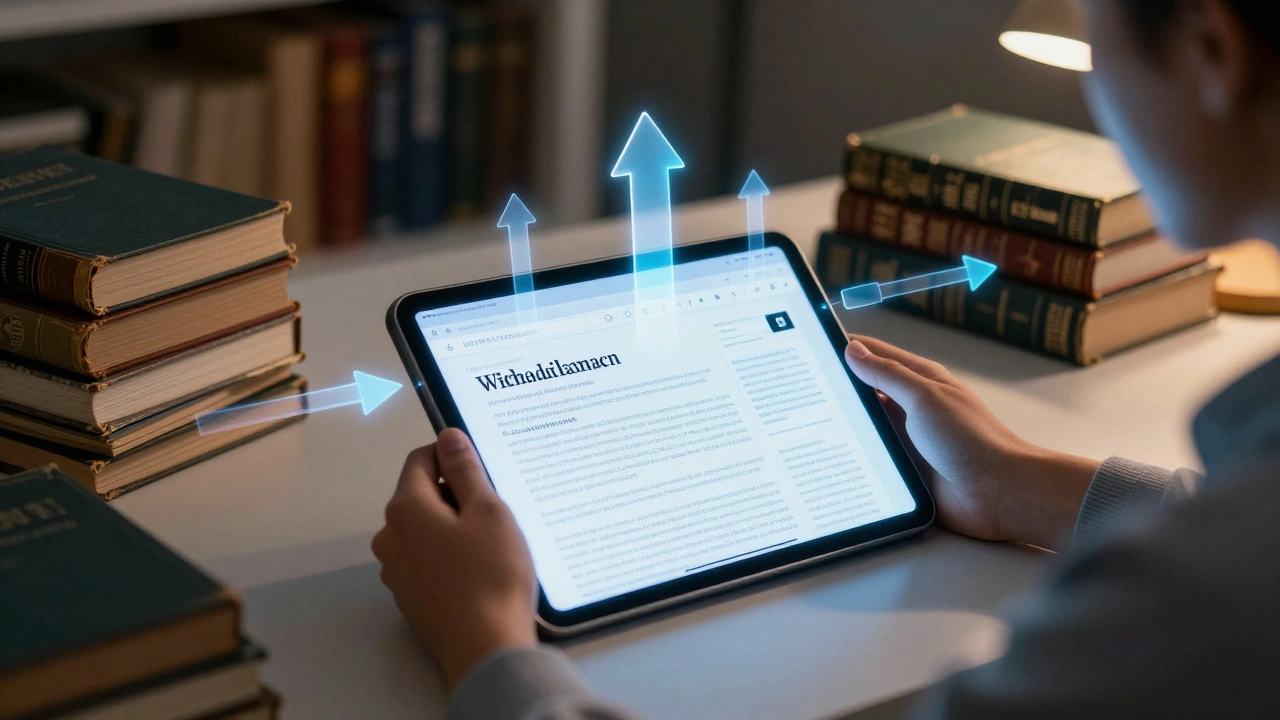
The most valuable real estate on any Wikipedia page isn't the text-it's the little blue superscript numbers. These citations are the bridge between a general overview and academic rigor. When you find a specific claim that supports your thesis, don't cite the Wiki page. Instead, follow that link to the original publication.
For example, if a page on Quantum Entanglement mentions a specific experiment from 2015, that citation likely leads to a paper in Nature or Science. By going directly to the source, you can verify the methodology, check the sample size, and see if the authors' conclusions were later challenged. This is the difference between "I read it on the internet" and "I've verified the empirical data from a peer-reviewed journal."
| Source Type | Example | Academic Weight | Best Use Case |
|---|---|---|---|
| Primary | Original Lab Data, Diaries | Highest | Direct evidence and raw data |
| Secondary | Scholarly Books, Journal Articles | High | Analysis and interpretation |
| Tertiary | Wikipedia, Textbooks | Low/Medium | Orientation and discovery |

Vetting the Crowd: How to Spot Unreliable Entries
Not all pages are created equal. Some are meticulously maintained by experts, while others are battlegrounds for ideological warfare. To verify the reliability of a page, you need to look at the metadata. The "Talk" page is where the real action happens. This is where editors debate the wording of a section or argue about which sources are biased.
If you see a "Warning: This article is currently under dispute" banner at the top, treat the content as a hypothesis, not a fact. Check the Edit History. If a single paragraph has been changed ten times in the last two hours by three different anonymous users, you've found a contested topic. In academia, contested topics are where the best research happens, but they are also where Wikipedia is most likely to be unstable. Using the Wiki Project tags can also tell you if the page is being overseen by a specialized group of scholars or enthusiasts.
The Strategy of "Triangulation"
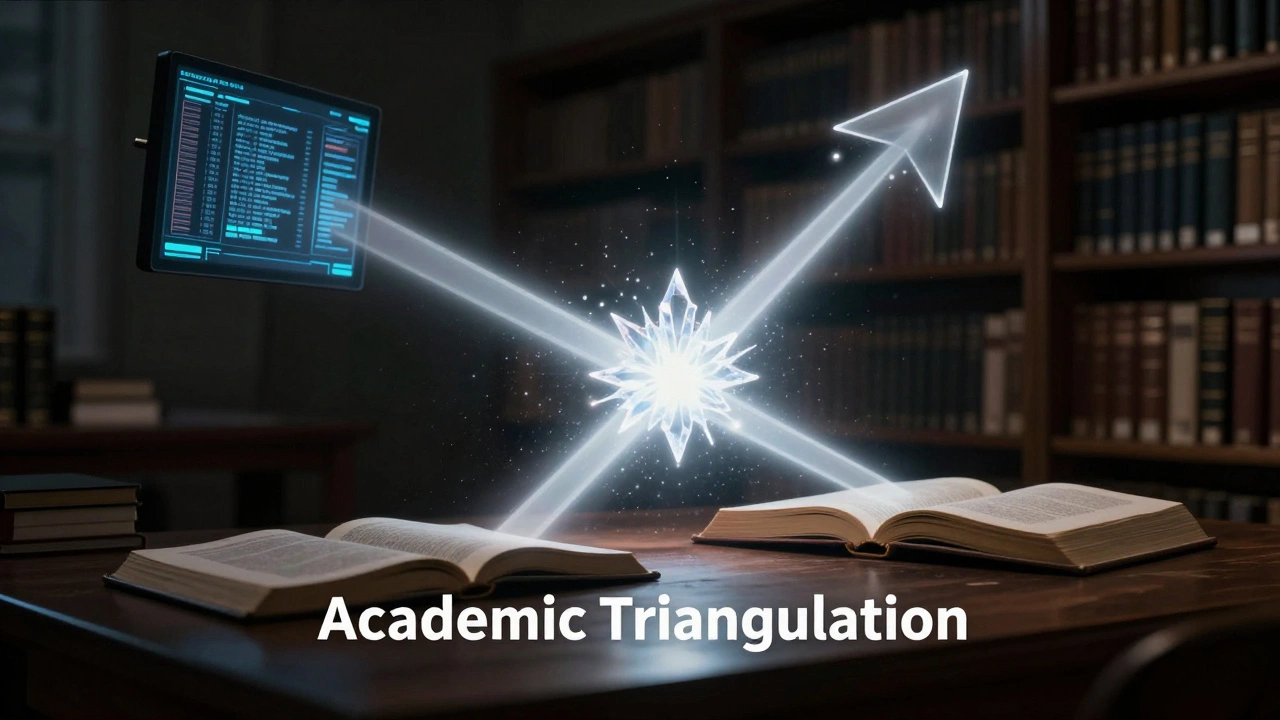
Verification doesn't happen in a vacuum. To ensure your fact-checking is bulletproof, use a technique called triangulation. This means finding the same fact in three independent, high-quality sources. Wikipedia serves as the first point of contact.
- Step 1: Find the fact on Wikipedia and note the cited source.
- Step 2: Access that cited source (e.g., via Google Scholar or your university library).
- Step 3: Look at the bibliography of that scholarly paper to find other authors who agree or disagree.
- Step 4: Compare these findings with a second, independent tertiary source, like the Stanford Encyclopedia of Philosophy or a specialized handbook.
When all three paths lead to the same conclusion, you've moved from "searching" to "verifying." This process doesn't just give you a fact; it gives you a map of the entire academic conversation surrounding that topic.
Common Pitfalls and How to Avoid Them
The biggest mistake students make is trusting the "featured" status of a page. While Featured Articles have undergone rigorous community review, they can still lag behind the absolute latest cutting-edge research. For instance, in fast-moving fields like CRISPR gene editing, a Wikipedia page might be six months behind a breakthrough paper published last week.
Another trap is the "Circular Reporting" loop. This happens when a journalist writes an article based on Wikipedia, and then a Wikipedia editor uses that news article as a source to verify the original claim. If you see a citation that leads to a generic news site which itself cites "experts" without naming them, be suspicious. Always push further back until you hit a named academic or an official institutional report.
Can I ever cite Wikipedia directly in a college paper?
Generally, no. Most professors require peer-reviewed or primary sources. However, you can cite Wikipedia if your paper is specifically *about* Wikipedia-for example, if you are analyzing how public perception of a historical event is shaped by the site's editing patterns. In all other cases, use Wikipedia to find the sources the authors used, and cite those instead.
How do I know if a Wikipedia source is biased?
Check the "Talk" tab. If there are heated arguments about the neutrality of a section, the content is likely biased or contested. Also, look at the citations; if a page only cites one specific viewpoint or relies heavily on a single organization's website, it lacks the balance required for academic verification.
What is the best way to find a peer-reviewed paper from a Wiki page?
Go to the "References" or "External Links" section at the bottom of the page. Look for links to .edu, .gov, or .org sites, and specifically look for titles that sound like academic papers (e.g., "An Analysis of..." or "The Effects of..."). Copy the title and search for it in your university's library database to get full access.
Is the "View History" tab actually useful for researchers?
Yes. It allows you to see how an idea has evolved. If a fact was suddenly changed and replaced with something else, the history tab will show you who changed it and often why (via the edit summary). This is crucial for verifying the stability of a fact.
What should I do if I find an error on Wikipedia while researching?
If you have a reliable, citable source that proves the error, you can fix it yourself! This is a great way to contribute to the academic community. Just make sure you add a proper citation for your correction so other researchers can verify your change.
Next Steps for Your Research Workflow
If you've mastered the art of using Wikipedia as a launchpad, your next move is to integrate a citation manager like Zotero or Mendeley. As you jump from Wikipedia to a primary source, save that source immediately. Don't rely on your browser history.
For those dealing with highly technical subjects, try exploring Wikibooks or Wikiversity, which often provide more structured, pedagogical approaches to a topic. Once you've exhausted the Wiki-path, move your search to specialized academic databases. The goal is to move from the broad, general knowledge of the crowd to the deep, specific knowledge of the expert.