Imagine waking up one morning to find that Wikipedia has gone dark. Not just a temporary glitch, but a permanent shutdown because the servers couldn't be paid for. For most of us, this feels like science fiction. We treat free knowledge as if it were air-always there, invisible, and essential. But the reality is much more fragile. The donation-based model that powers the world’s largest repositories of information is facing a severe stress test in 2026.
We are living in an era where 'free' content is actually the most expensive product on the internet. While social media giants harvest your data to sell ads, platforms like Wikimedia Foundation relies on voluntary contributions from users who value open access to keep the lights on. This creates a unique economic paradox: the more successful these platforms become, the harder it becomes to justify their cost to the average user. Why pay for something you can get elsewhere? Or worse, why pay at all when the alternative seems so close?
The Economics of Voluntary Giving
To understand the sustainability crisis, we first need to look at how money moves in the digital commons. Unlike traditional businesses, donation-based platforms do not have customers; they have beneficiaries. This distinction matters because beneficiaries rarely feel a direct financial obligation to the provider. You don’t buy a dictionary entry; you use it. When usage spikes, costs rise, but revenue doesn’t necessarily follow suit.
In recent years, the cost structure of running these platforms has shifted dramatically. It’s no longer just about server space. In 2026, the biggest expense isn't electricity-it's human labor. Specifically, the labor required to fight misinformation, manage complex legal compliance across different countries, and develop sophisticated AI tools to help editors verify sources. A single server farm might cost millions, but maintaining the integrity of the content requires thousands of hours of volunteer moderation and professional oversight. This gap between rising operational complexity and static donation volumes is widening.
Consider the concept of 'donor fatigue.' Most people donate once or twice a year during major campaigns. These campaigns rely on emotional appeals-the banner ads asking, "If everyone gave $3, Wikipedia could stay free." This works until it doesn’t. As economic uncertainty grows globally, discretionary spending shrinks. People cut back on subscriptions, dining out, and yes, charitable giving. When the economy tightens, the donation model trembles.
The Threat of Commercial Alternatives
The biggest challenge to the sustainability of donation-based models isn't lack of interest; it's competition from commercial entities that offer 'good enough' alternatives. Search engines and large tech companies have integrated AI-driven summaries directly into their interfaces. If you ask a question today, you often get an answer generated by an LLM (Large Language Model) without ever clicking through to a source article.
This creates a phenomenon known as 'disintermediation.' The user gets the knowledge instantly, but the original platform loses visibility. If no one visits the site, they don't see the donation appeal. They don't engage with the community. They simply consume the output. For platforms relying on voluntary donations, visibility is currency. Lose the traffic, lose the donors. This dynamic puts immense pressure on free knowledge providers to innovate beyond static text pages.
Moreover, commercial platforms have deep pockets. They can invest in better UX, faster load times, and personalized experiences. A volunteer-run encyclopedia cannot compete on convenience alone. It must compete on trust and accuracy. But trust is hard to monetize. Users may respect the accuracy of a well-sourced article, but they won't necessarily open their wallets for it unless they feel a personal connection to the mission.
Structural Vulnerabilities in Volunteer Labor
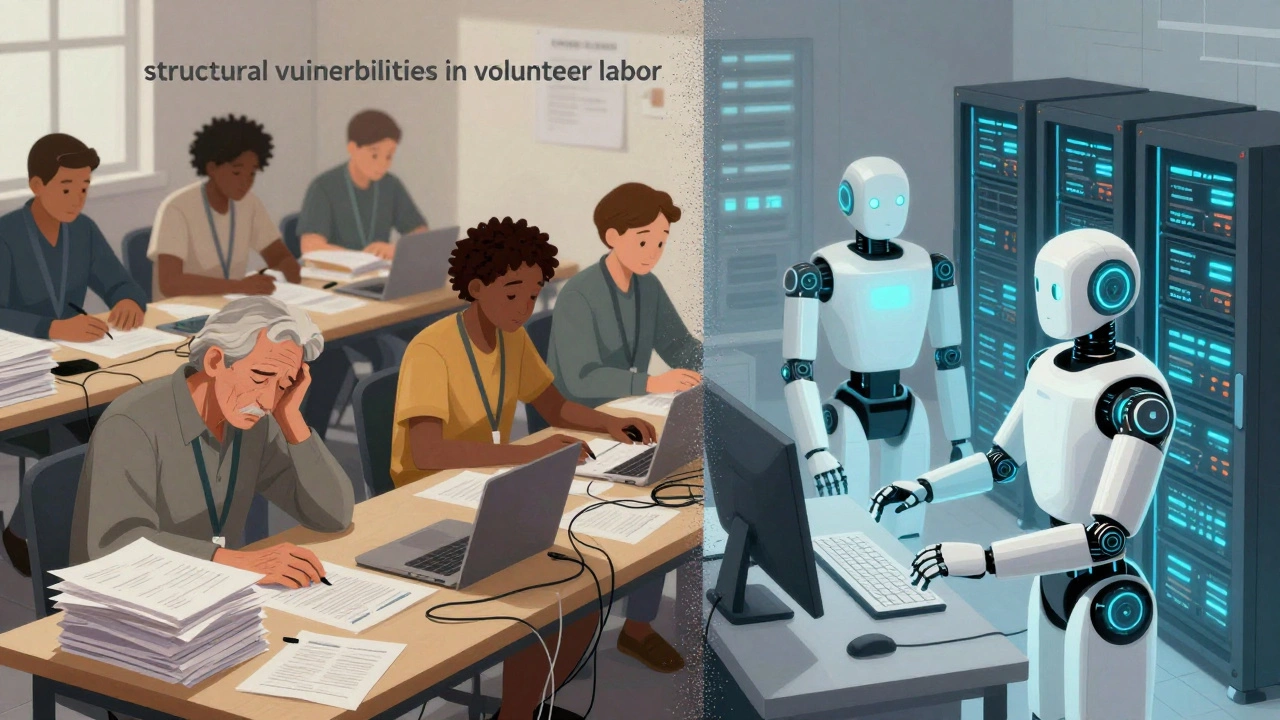
Beyond money, there is the issue of human capital. Donation-based platforms are heavily reliant on volunteers. In 2026, the demographic profile of these volunteers is aging. Younger generations are less likely to dedicate hundreds of hours to editing articles or moderating discussions. They prefer creating short-form video or engaging in interactive communities rather than curating encyclopedic entries.
This shift poses a long-term risk. If the core group of maintainers shrinks, the quality of content declines. Lower quality leads to lower trust. Lower trust leads to fewer donations. It’s a vicious cycle. To break it, platforms are trying to gamify contribution or integrate AI assistance to lower the barrier to entry. However, these solutions come with their own costs and ethical dilemmas. Can AI truly replace the nuanced judgment of a human editor? And if not, how do we incentivize humans to do the work for free?
| Model Type | Primary Revenue Source | Sustainability Risk | User Experience Impact |
|---|---|---|---|
| Donation-Based | Voluntary contributions | High (economic downturns) | Clean, ad-free interface |
| Advertising-Supported | Ad sales | Medium (algorithm changes) | Cluttered, intrusive ads |
| Subscription/Paywall | User fees | Low (predictable income) | Limited access for non-payers |
| Hybrid (Freemium) | Mixed sources | Medium (balance difficult) | Tiered access levels |
Strategies for Long-Term Survival
So, what can be done? The status quo is not sustainable. Platforms must evolve. One promising approach is diversifying revenue streams. This doesn't mean selling out to advertisers, but exploring grants, institutional partnerships, and endowments. Universities and governments have a vested interest in preserving accurate historical and scientific records. Treating these platforms as public infrastructure rather than charities could unlock stable funding sources.
Another strategy is enhancing the perceived value of donations. Instead of vague appeals to 'keep knowledge free,' platforms should show exactly where the money goes. Transparency builds trust. If a donor knows their $5 helps train an AI tool that detects fake news, they are more likely to give again. Storytelling around impact is crucial. People don't just want to support a cause; they want to be part of a solution.
Furthermore, integrating with educational institutions can create a steady stream of engaged users. Schools and universities already use these platforms extensively. Formalizing this relationship through curriculum integration or student ambassador programs can foster a new generation of contributors who see value in maintaining open knowledge.

The Role of Technology and AI
Technology offers both a threat and a lifeline. On one hand, AI can automate many tedious tasks, reducing the burden on volunteers. Imagine bots that automatically format citations, flag potential conflicts of interest, or translate articles into multiple languages. This efficiency gain allows the same budget to cover more ground.
On the other hand, developing and maintaining these AI systems requires significant investment. Who pays for the engineers building these tools? If the answer is still 'donations,' we’re back to square one. Perhaps the solution lies in open-source collaboration, where tech companies contribute code in exchange for brand association or tax benefits. This symbiotic relationship could bridge the gap between idealism and practicality.
Conclusion: A Collective Responsibility
The sustainability of donation-based models for free knowledge platforms is not just a technical or financial issue; it’s a societal one. It asks us to decide what we value as a civilization. Do we believe that knowledge should be a commodity, accessible only to those who can pay? Or do we believe it should be a common good, maintained by collective effort?
The path forward requires innovation, transparency, and a renewed sense of community. It demands that we move beyond passive consumption and active participation. Whether through donating, volunteering, or advocating for policy support, every action counts. The future of free knowledge depends on our willingness to invest in it-not just with our money, but with our time and attention.
Why are donation-based models struggling in 2026?
They face increased operational costs due to security needs and AI development, while donor fatigue and economic uncertainty reduce voluntary contributions. Additionally, commercial competitors offer convenient alternatives that divert user attention.
What is the main difference between donation-based and advertising-supported models?
Donation-based models rely on voluntary user contributions, keeping the interface clean but making revenue unpredictable. Advertising-supported models generate income from ads, which can clutter the experience and potentially influence content neutrality.
How does AI impact the sustainability of free knowledge platforms?
AI can reduce manual labor by automating formatting and translation, improving efficiency. However, developing and maintaining these AI systems requires significant financial investment, adding to the platform's expenses.
Can government funding replace donations for these platforms?
Government funding could provide stability, but it raises concerns about censorship and political bias. Many platforms prefer private donations to maintain editorial independence and avoid state interference.
What role do volunteers play in sustaining these platforms?
Volunteers create and maintain content, ensuring accuracy and relevance. Their unpaid labor is the backbone of these platforms, allowing them to operate with minimal overhead costs compared to commercial competitors.