Imagine you are reading a biography of a controversial political figure. One paragraph cites a major newspaper praising their economic reforms. The very next paragraph cites an investigative report detailing allegations of corruption. If you just read the headlines, it feels like Wikipedia is contradicting itself. Is this person a hero or a villain? The answer isn't in picking a side. It is in understanding what Neutral Point of View (NPOV) actually means when the world won't agree on the facts.
Many users assume that being "neutral" means splitting the difference or finding a middle ground between two opposing views. That is a common misconception. On Wikipedia, neutrality doesn't mean compromise. It means representation. It means showing exactly what reliable sources say, without adding your own judgment about which source is "right." When sources disagree, Wikipedia’s job is not to solve the argument. Its job is to document the argument accurately.
The Core Rule: Represent Views, Don't Judge Them
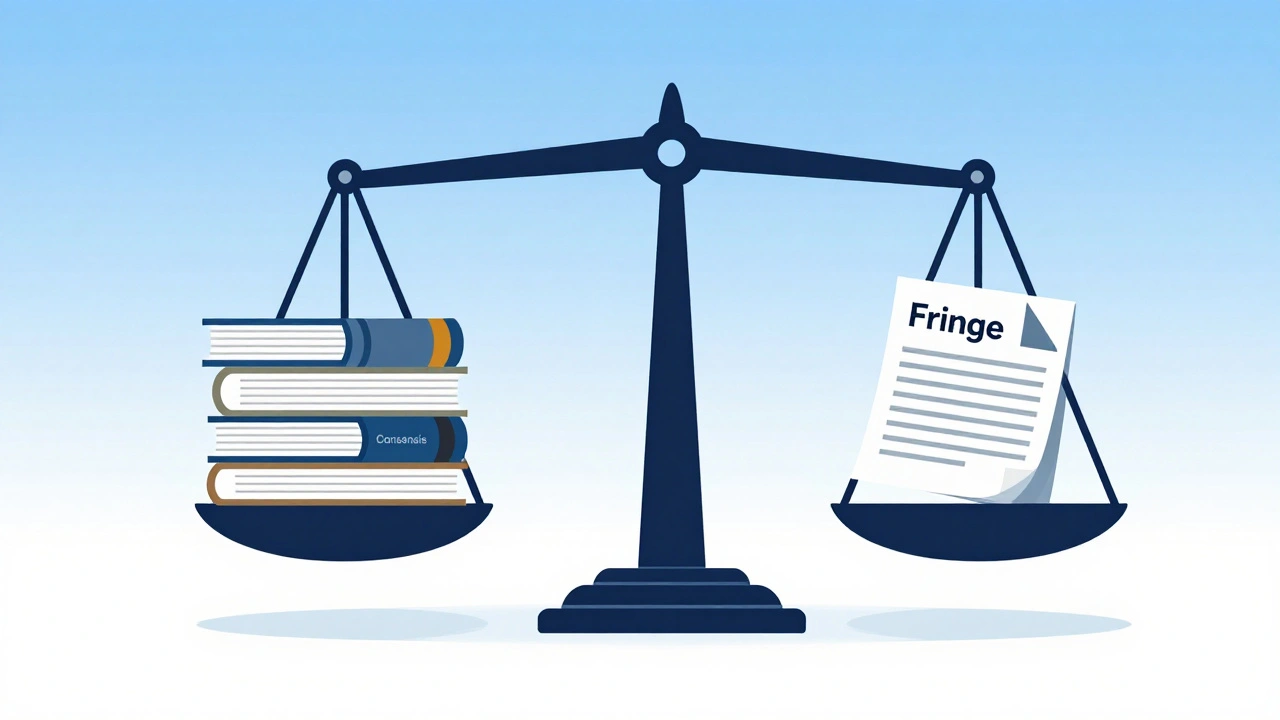
The foundation of Wikipedia’s editorial policy is the Neutral Point of View. This rule states that articles must present all significant viewpoints fairly and proportionately. But here is where it gets tricky: "Fairly" does not mean giving equal space to every opinion. It means giving space proportional to how much that view is held by reliable, published sources.
If 95% of scientific journals say climate change is human-caused, and 5% of fringe blogs say it is a hoax, a neutral article reflects that 95/5 split. It does not give both sides equal paragraphs. Doing so would create a false balance, which is actually biased against the consensus. Neutrality requires looking at the weight of evidence, not just counting heads.
When sources disagree on a specific fact-like the date of a historical event or the cause of a modern conflict-the editor’s role shifts from interpreter to reporter. You don’t write "The battle happened because X." You write "Historians debate the cause of the battle. Source A argues X, while Source B suggests Y." This structure removes the editor’s voice and lets the sources speak for themselves.
Why Some Sources Count More Than Others
Not all voices are created equal in the eyes of Wikipedia’s policies. To maintain neutrality, editors rely on a hierarchy of reliability. This is crucial when sources disagree. If a personal blog contradicts a peer-reviewed academic journal, the journal carries more weight. Wikipedia’s guideline on Reliable Sources defines these tiers clearly.
| Source Type | Reliability Level | Usage in Disputes |
|---|---|---|
| Peer-reviewed academic journals | High | Preferred for complex or controversial topics |
| Major news organizations (e.g., Reuters, AP) | High | Standard for current events and general history |
| Self-published material (blogs, social media) | Low / Unreliable | Generally prohibited as primary sources |
| Publishers with known ideological bias | Moderate | Used cautiously; balanced with opposing views |
When a dispute arises, the first step is often checking the quality of the sources. If one side relies on a press release from the company involved, and the other side relies on an independent audit, the audit wins. Neutrality depends on using secondary sources that have already done the work of verifying facts. Primary sources-like raw data sets or direct quotes-are useful, but they need context from secondary analysis to be considered neutral.
Handling Controversy Without Taking Sides
Controversial topics are the testing ground for neutrality. Whether it is a political scandal, a religious doctrine, or a medical treatment, strong opinions run high. The key technique here is attribution. Attribution means explicitly stating who holds a belief, rather than stating the belief as fact.
Consider the difference between these two sentences:
- Biased: "The new tax law will destroy the economy."
- Neutral: "Critics of the new tax law argue it will harm economic growth, citing projections from the Congressional Budget Office."
The second sentence is neutral because it attributes the claim to critics and cites a specific source. It allows the reader to see the argument without accepting it as absolute truth. When multiple credible sources disagree, Wikipedia lists the different perspectives. It might look like this: "Economist Jane Doe argues the policy is effective, while economist John Smith contends it leads to inflation."
This approach can feel dry or detached, but that is the point. An encyclopedia is not a debate club. It is a reference library. Your goal is to provide a map of the conversation, not to participate in it. If you find yourself wanting to add a phrase like "obviously" or "unfortunately," stop. Those words signal personal opinion, not neutral reporting.
The Role of Consensus Among Editors
Wikipedia is edited by volunteers, which means disagreements happen constantly. How do editors decide what stays and what goes? They don’t vote. They build consensus. This process is central to maintaining neutrality over time.
When two editors fight over a paragraph, they usually take the issue to a talk page-a discussion area linked to every article. There, they cite policies. One editor might say, "This source is unreliable per WP:RS." Another might reply, "But this view is significant per WP:NPOV." The community looks at the arguments, not the personalities. The goal is to reach a version of the text that no reasonable editor can claim violates the core policies.
If consensus cannot be reached, the dispute escalates. Administrators may step in, or the article might be protected from editing until the issue is resolved. In extreme cases, arbitration committees review the behavior of editors, not just the content. This system ensures that neutrality is enforced collectively, preventing any single user from turning an article into a propaganda piece.
Common Pitfalls in Writing Neutral Content
Even experienced editors make mistakes. Here are the most common ways neutrality slips away:
- False Balance: Giving equal weight to a minority view simply because it exists. As mentioned, if only 1% of experts believe the earth is flat, the article should reflect that marginal status, not treat it as a 50/50 debate.
- Weasel Words: Using vague phrases like "some people think" or "it is widely believed" without citing sources. This hides the lack of evidence behind friendly language.
- Loaded Language: Choosing adjectives that carry emotional weight. Instead of "the disastrous failure," use "the failed attempt." Let the facts describe the outcome; don’t judge it.
- Omission Bias: Leaving out a significant viewpoint because you personally disagree with it. Neutrality requires including unpleasant truths if they are well-documented.
Avoiding these pitfalls takes practice. It helps to read your draft aloud. If it sounds like an opinion column, rewrite it. If it sounds like a news summary that covers all bases, you are on the right track.

Practical Steps for Resolving Source Disagreements
If you are editing an article and encounter conflicting sources, follow this practical workflow:
- Verify Reliability: Check if both sources meet Wikipedia’s standards. Discard unreliable ones immediately.
- Check Significance: Is the disagreement minor (a typo) or major (a fundamental interpretation)? Minor errors can often be corrected based on the better source. Major disagreements require coverage of both views.
- Attribute Clearly: Use phrases like "According to...", "Supporters argue...", and "Critics state..." to separate the view from the narrator.
- Cite Proportionally: Allocate space based on how prominent each view is in the broader literature. The majority view gets the lead; minority views get context.
- Discuss on Talk Page: If you are unsure, explain your reasoning to other editors. Transparency builds trust and helps achieve consensus.
This method turns a potential conflict into a structured improvement. It keeps the article focused on what is written, not what is felt.
Why Neutrality Matters for Readers
In an era of information overload, neutrality is a feature, not a bug. Readers come to Wikipedia expecting a baseline of facts. They want to know what the mainstream consensus is, and they want to understand where the debates lie. By adhering to strict neutrality, Wikipedia provides a stable platform for learning. It doesn’t tell you what to think. It shows you what others have thought, documented, and debated. That distinction is vital for anyone trying to navigate complex topics in today’s digital landscape.
Does Wikipedia allow personal opinions?
No. Wikipedia strictly prohibits original research and personal opinions. All content must be based on reliable, published sources. Editors are expected to attribute claims to those sources rather than presenting them as their own beliefs.
How does Wikipedia handle biased sources?
Wikipedia evaluates sources for reliability and independence. Biased sources, such as self-published materials or outlets with clear ideological agendas, are used with caution or avoided. When used, they must be balanced with more neutral or opposing reliable sources to maintain a Neutral Point of View.
What happens if editors cannot agree on neutrality?
Disputes are resolved through discussion on the article's talk page. If consensus cannot be reached, editors can request mediation from neutral third parties or administrators. In severe cases, articles may be locked to prevent further editing until the dispute is settled.
Is neutrality the same as giving equal weight to all views?
No. Neutrality requires representing views in proportion to their significance in reliable sources. A fringe theory held by a small minority should not receive the same amount of space as a widely accepted scientific consensus, even if both are cited by some sources.
Can I use my own experience as a source?
No. Wikipedia does not accept personal experience, anecdotes, or unpublished data as valid sources. All claims must be verifiable through external, reliable publications that other readers can check.