Imagine you spend years building a massive library of facts. You invite the world to read it for free, but with one catch: if you want to reuse that information, you have to share your improvements back with everyone else. That is exactly how Wikipedia is a free online encyclopedia written by volunteers under the Creative Commons Attribution-ShareAlike (CC BY-SA) license works. It’s the fifth most visited website in the world, serving as the backbone of knowledge for billions of people.
Now, imagine a company takes that entire library, feeds it into a black box, and spits out a new product that doesn’t share anything back. That is what happened when Wikimedia Foundation is the non-profit organization behind Wikipedia that advocates for free knowledge sued OpenAI is an artificial intelligence research and deployment company known for ChatGPT. This isn't just a tech dispute; it is a landmark battle over who owns the internet's collective knowledge and whether Generative AI is technology that creates new content like text or images based on patterns learned from existing data can legally learn from copyrighted material without permission.
The Core Conflict: CC BY-SA vs. AI Training
To understand why this lawsuit matters, you need to look at the license. Wikipedia content is not public domain. It is protected by the Creative Commons Attribution-ShareAlike (CC BY-SA) is a copyright license that allows reuse only if credit is given and derivative works are shared under the same terms license. The "ShareAlike" part is the kicker. If you build something using Wikipedia text, you must release your creation under the same open license.
When companies like OpenAI scrape Wikipedia to train their large language models (LLMs), they argue that reading text to find patterns is different from copying text. They claim they aren't storing the articles; they are learning the statistical relationships between words. However, Wikimedia Foundation argues that the resulting AI model is a "derivative work." Since the AI was built using Wikipedia data, the AI itself should be subject to the ShareAlike clause. Essentially, Wikimedia wants the AI companies to either pay for the data or make their models open-source under similar terms.
This creates a massive legal gray area. If the court rules that training an AI constitutes creating a derivative work, every major AI company could face liability for scraping copyrighted datasets. If they rule against Wikimedia, the door opens for unlimited commercial exploitation of volunteer-created content without any reciprocity.
Fair Use: The Shield of AI Companies
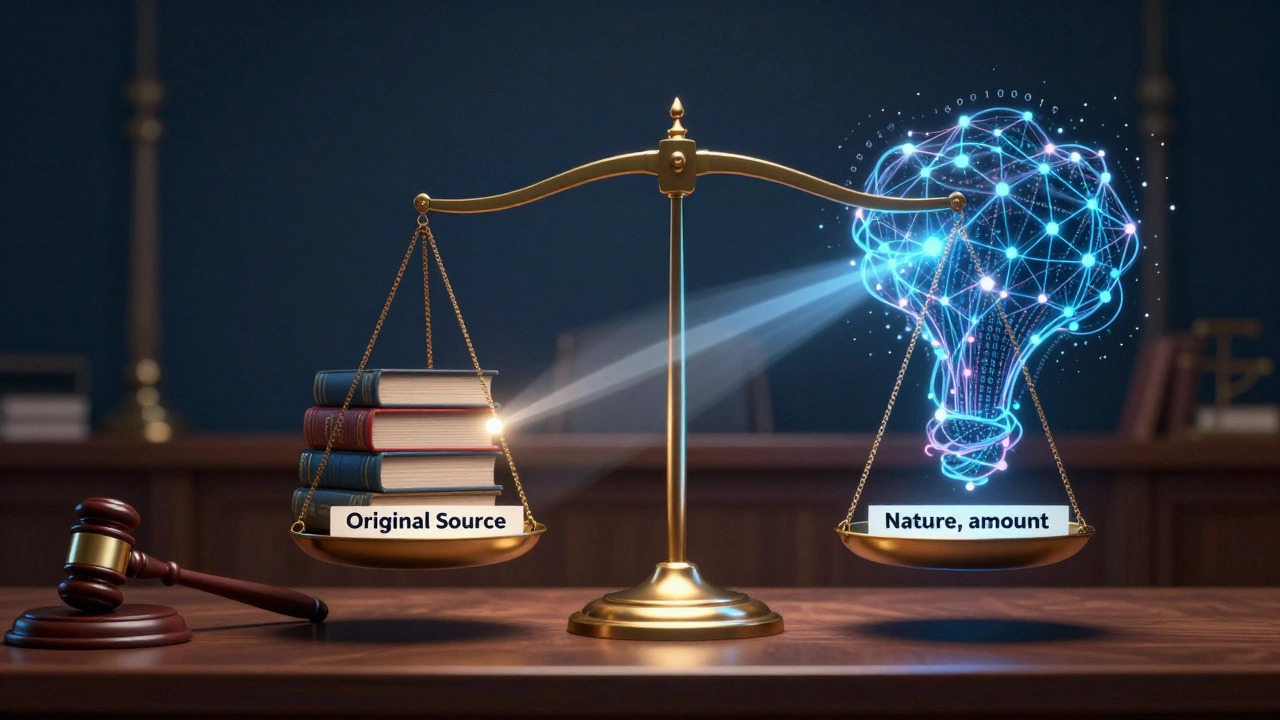
On the other side of the courtroom sits the doctrine of Fair Use is a legal principle allowing limited use of copyrighted material without permission for purposes like criticism, comment, news reporting, teaching, scholarship, or research. In the United States, Fair Use is determined by four factors:
- Purpose and character of the use: Is it transformative? Does it add new expression or meaning?
- Nature of the copyrighted work: Is it factual or creative? Published or unpublished?
- Amount and substantiality of the portion used: Did they take a little bit or the whole thing?
- Effect on the potential market: Does the new use replace the original in the marketplace?
AI developers argue that training is highly transformative. They don't recite Wikipedia articles; they generate entirely new sentences based on learned patterns. They also point out that Wikipedia is factual, which leans slightly in favor of Fair Use compared to using fiction or art. Furthermore, they argue there is no direct market harm because nobody uses ChatGPT instead of reading Wikipedia for verified citations. Instead, they see AI as a tool that increases access to information.
Critics, however, argue that the "amount" factor weighs heavily against them. To train these models, companies ingest nearly 100% of available Wikipedia articles. Taking everything leaves nothing for the original source to compete with in the context of quick answers. Additionally, if AI becomes the primary way people access information, the traffic and donation revenue for platforms like Wikipedia could dry up, causing real economic damage.
Database Rights: A Global Patchwork
While US courts debate Fair Use, Europe has a different weapon: Sui Generis Database Rights is a European Union intellectual property right that protects the investment made in obtaining, verifying, or presenting data in a database, regardless of copyright. Under EU law, even if individual facts aren't copyrighted, the structure and compilation of a database are protected if significant investment went into creating it.
This adds another layer of complexity for global AI companies. Even if they win a Fair Use argument in California, they might still violate database rights in Berlin or Paris. The European Union has been moving quickly to regulate AI through the EU AI Act is comprehensive legislation regulating the development and use of artificial intelligence systems within the European Union, which includes transparency requirements for training data. Companies now have to disclose summaries of the copyrighted content used to train their foundation models.
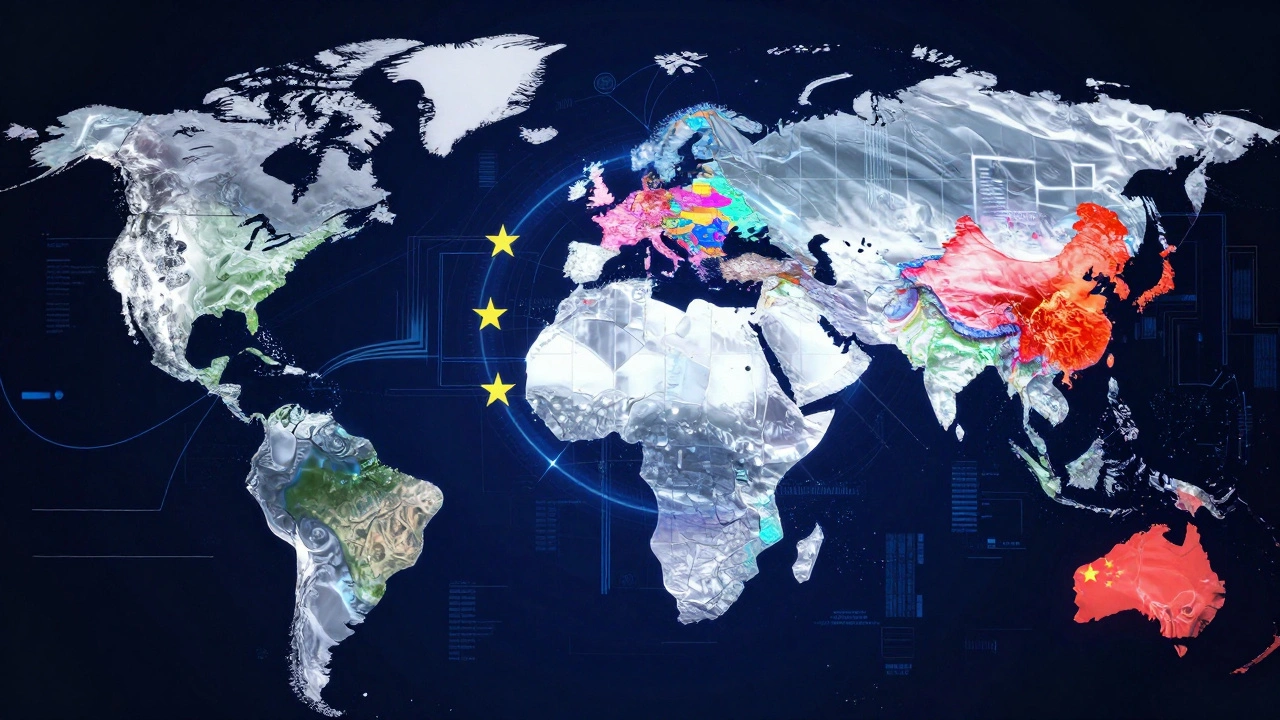
This regulatory divergence means AI companies cannot adopt a one-size-fits-all legal strategy. They must navigate US copyright law, EU database rights, and emerging regulations in countries like China and Japan, each with different stances on data privacy and intellectual property.
| Jurisdiction | Primary Legal Concept | Protection Scope | Impact on AI Scraping |
|---|---|---|---|
| United States | Fair Use Doctrine | Case-by-case analysis of transformative nature | Uncertain; depends on court rulings regarding derivative works |
| European Union | Sui Generis Database Rights & GDPR | Protects investment in data compilation; strict privacy laws | High risk; requires explicit licensing or opt-out mechanisms |
| Japan | Copyright Law Amendment (2018) | Allows extraction for AI/machine learning unless prohibited | Low risk; pro-AI stance encourages data usage |
| China | Anti-Unfair Competition Law | Focuses on market behavior rather than pure IP | Moderate risk; focuses on whether scraping harms competitors |
The Precedent: Authors Guild v. Google
You can't talk about this case without mentioning the precedent set by Authors Guild, Inc. v. Google, Inc. In that historic ruling, the Second Circuit Court of Appeals decided that Google Books' scanning of millions of books did not violate copyright. The court found that Google's use was highly transformative because it turned full texts into a searchable index, helping users discover books rather than replacing them.
AI companies are betting that judges will view LLM training similarly. They argue that an AI model is like a super-powered search engine-it helps you find information and generate insights without reproducing the original work verbatim. However, there is a key difference. Google Books showed snippets. AI models generate entirely new text that can mimic the style, tone, and specific phrasing of the training data. Critics argue this goes beyond indexing and enters the realm of substitution.
Implications for Creators and Users
If Wikimedia wins, or if courts begin to reject the Fair Use defense for AI training, the internet changes overnight. We might see a rise in "walled gardens" where high-quality data is locked behind paywalls. AI companies may stop scraping the open web and rely solely on licensed data, which is expensive and limited. This could lead to less diverse, more biased AI models trained on a narrow slice of commercially viable content.
For everyday users, this means higher costs. If AI companies have to pay licensing fees for every dataset, those costs will trickle down to consumers. Subscription prices for AI tools could skyrocket. Alternatively, we might see a decline in the quality of free AI services as companies cut corners on training data to save money.
For creators, it offers hope. Writers, journalists, and encyclopedists have long feared being displaced by AI. A favorable ruling would establish that human creativity has value and that companies cannot simply extract that value without compensation. It could lead to new revenue streams where creators get paid whenever their work is used to train a model.
What Comes Next?
The outcome of the Wikimedia vs. OpenAI case will likely ripple through the entire tech industry. Other organizations, including the New York Times and various artist collectives, are watching closely. Each victory or defeat sets a precedent that shapes the future of digital content.
We are likely to see more lawsuits, more lobbying, and potentially new legislation. Congress may step in to clarify Fair Use in the age of AI, though political gridlock makes this difficult. Until then, companies are operating in a state of calculated risk, hoping their scale and resources allow them to weather the legal storms.
As we move further into 2026, the definition of "ownership" in the digital age remains fluid. Is knowledge a common good, or is it a commodity to be mined? The answer to that question won't just determine the fate of Wikipedia; it will define the relationship between humans and machines for decades to come.
Did OpenAI copy Wikipedia articles directly?
No, OpenAI did not copy-paste Wikipedia articles. Instead, they ingested the text to train their algorithms to recognize patterns in language. The legal dispute is whether this process of "learning" from copyrighted text constitutes a violation of the license terms or copyright law.
What is the CC BY-SA license?
The Creative Commons Attribution-ShareAlike (CC BY-SA) license allows anyone to share and adapt material, even commercially, as long as they give appropriate credit and distribute their contributions under the same license. This means if you build a product using Wikipedia data, you must also make your product open and free for others to use.
How does Fair Use apply to AI training?
Fair Use is a legal defense that permits limited use of copyrighted material without permission. AI companies argue that training models is a transformative use because it analyzes data statistically rather than displaying it. Courts are currently deciding if this transformation is sufficient to qualify as Fair Use.
Why is the Wikimedia Foundation suing OpenAI?
Wikimedia Foundation is suing to enforce the terms of the CC BY-SA license. They argue that AI models trained on Wikipedia are derivative works and should therefore be released under the same open license. They seek to ensure that the benefits of AI derived from volunteer labor are shared back with the community.
Will I have to pay to use AI in the future?
It is possible. If AI companies are required to pay licensing fees for training data, they may pass these costs on to consumers through higher subscription prices. Alternatively, free tiers of AI services might become more limited or lower in quality.