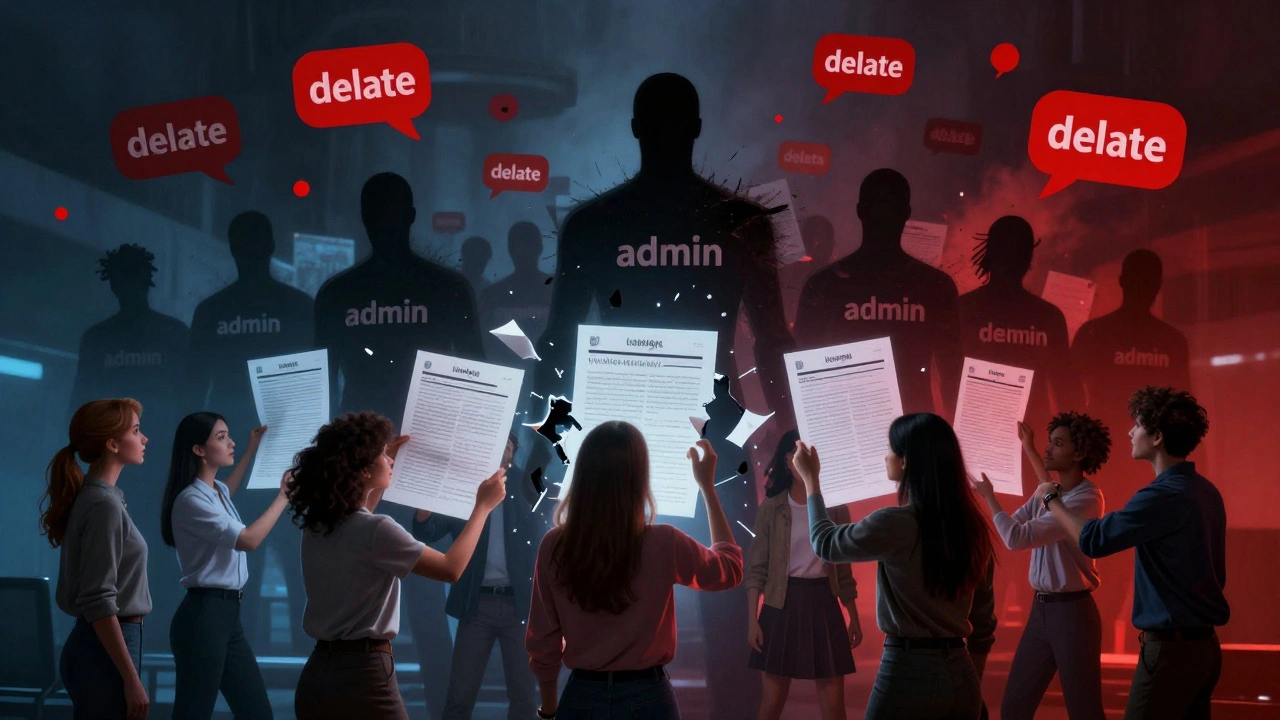
Imagine writing an article about a community leader who saved hundreds of lives during a local crisis. You cite reliable sources. You follow the rules. Then, three anonymous editors vote to delete it because they don't understand the cultural context or simply don't care. This isn't a hypothetical nightmare; it is the daily reality for thousands of contributors on Wikipedia, the largest online encyclopedia in history, powered by volunteer editors worldwide. While Wikipedia prides itself on neutrality, its deletion process-specifically Articles for Deletion (AfD)-has become a bottleneck where systemic bias thrives.
The core problem isn't just that articles get deleted. It's that certain types of articles are disproportionately targeted for removal based on who writes them and what topics they cover. Recent data suggests that articles about women, people of color, and non-Western cultures face higher deletion rates than those about white men in Western contexts. This imbalance undermines the project's mission to create a free encyclopedia that everyone can edit. If you want to fix Wikipedia, you have to look at how we decide what stays and what goes.
How the Deletion Process Works
To understand the bias, you first need to understand the mechanism. When an editor believes an article doesn't meet Wikipedia's notability guidelines, they tag it for deletion. This triggers a public discussion called Articles for Deletion (AfD), a forum where editors debate whether an article should be kept, merged, or deleted based on verifiability and notability.
These discussions last seven days. Editors post arguments citing policy, reliability of sources, and general consensus. At the end of the week, a neutral administrator closes the thread and makes a final decision. The system relies on "consensus," which sounds democratic but often favors the most vocal, experienced, and historically dominant group of editors. Since the majority of active administrators are older, male, and from North America or Europe, their perspective heavily influences what is considered "notable."
This structure creates a high barrier to entry. New editors, especially those from underrepresented communities, often lack the institutional knowledge to navigate these debates effectively. They might write a well-sourced article, only to be overwhelmed by seasoned editors who argue technicalities rather than the substance of the topic. The result? Good content gets lost because the defense wasn't sophisticated enough.
Evidence of Systemic Bias in Deletions
You don't have to take my word for it. Researchers have crunched the numbers, and the patterns are stark. A study published in *Scientometrics* analyzed thousands of AfD cases and found significant disparities. Articles about female subjects were roughly 10% more likely to be deleted than articles about male subjects, even when controlling for the quality of citations. Why? Because the sources used to document women's achievements are often different-more biographical, less focused on traditional power structures-and some editors dismiss these as insufficient.
Bias also shows up in geography. Topics related to Africa, South Asia, and Latin America face stricter scrutiny. An editor in Madison, Wisconsin, might struggle to verify a source from a small newspaper in Nairobi, leading to a quick deletion vote. Meanwhile, an article about a minor politician in London might survive with thin sourcing because the editors involved recognize the context. This geographic blind spot means Wikipedia remains overwhelmingly Anglo-centric.
Another form of bias is topical. "Soft" topics like culture, art, and social movements often get deleted faster than "hard" topics like science, technology, and politics. This reflects the personal interests of the core editor base. If you're passionate about video games or military history, you'll find plenty of support. If you're passionate about indigenous folklore or local theater groups, you might find yourself fighting a losing battle against editors who see your topic as trivial.
Why Diversity Matters in Moderation
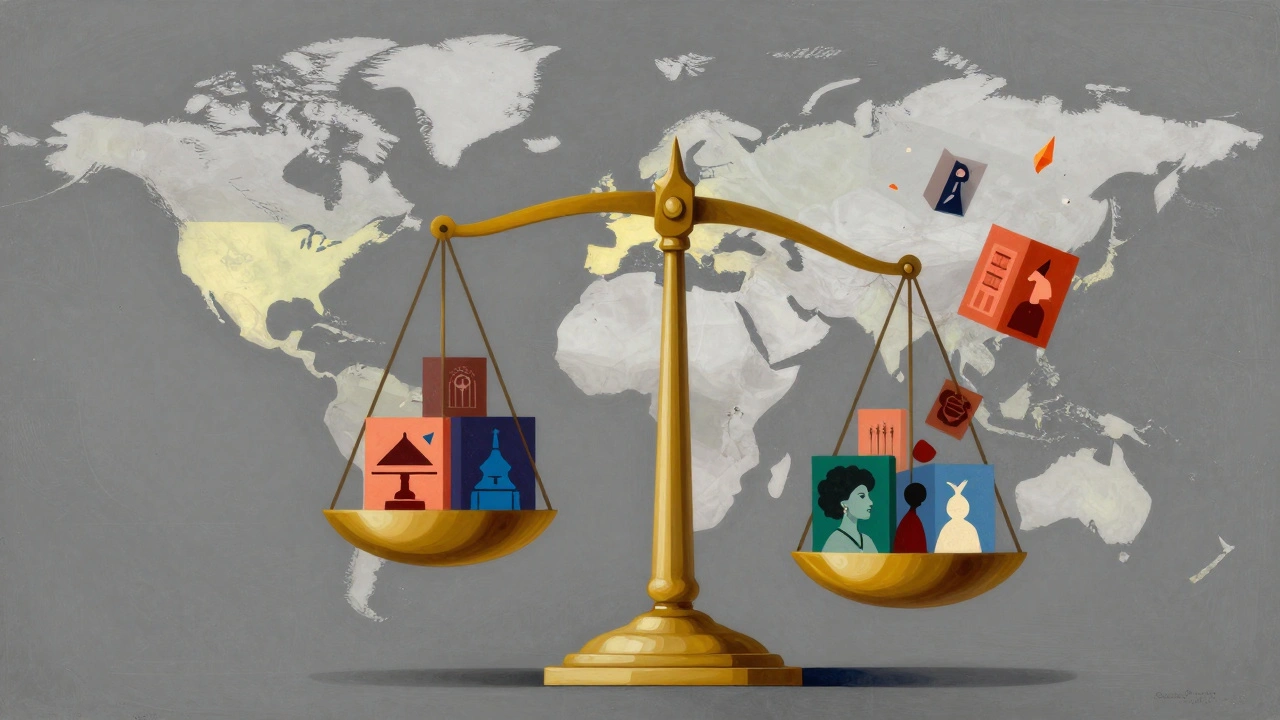
Diversity isn't just a buzzword; it's a functional necessity for accuracy. When a homogeneous group decides what is notable, they inevitably project their own values onto the platform. We see this in the way historical figures are portrayed. For decades, Wikipedia articles about explorers emphasized their "discovery" while ignoring the indigenous populations already living there. It took diverse voices pushing back to correct these narratives.
Consider the case of Grace Hopper, a computer scientist and United States Navy rear admiral who helped pioneer the development of early programming languages. Early drafts of her article focused almost exclusively on her military rank. It was editors interested in computing history and gender studies who expanded it to highlight her technical contributions. Without that diverse input, the article would have been incomplete. Similarly, deletion decisions benefit from multiple perspectives. An editor who understands African literature can spot reliable sources that another editor might miss.
Lack of diversity also leads to echo chambers. If all the voters in an AfD discussion share similar backgrounds, they are less likely to challenge each other's assumptions. This groupthink reinforces existing biases. By bringing in editors from different regions, genders, and professional backgrounds, we introduce friction that ultimately improves the quality of decisions. Friction is good. It forces us to justify our views with evidence rather than intuition.
Reform Ideas: Fixing the Broken System
So, what can we do? The Wikimedia Foundation and the community have discussed reforms for years, but progress has been slow. Here are practical ideas that could make a real difference.
1. Simplify Notability Guidelines Current notability rules are dense and confusing. They require editors to interpret vague concepts like "significant coverage" and "reliable sources." Simplifying these guidelines into clear, checklist-style criteria would reduce ambiguity. For example, instead of asking if a subject has "general interest," ask if they have been covered by at least three independent, reputable news outlets. Clearer rules mean fewer subjective arguments.
2. Implement Structured Voting Right now, AfD discussions are free-form text threads. This allows ad hominem attacks and irrelevant tangents to derail the conversation. Introducing structured voting forms, where editors must select specific reasons for deletion (e.g., "lack of sources," "not notable") from a dropdown menu, would force clarity. It would also make it easier to analyze data later to identify biased patterns.
3. Expand Administrator Diversity The pool of administrators is too small and too uniform. The community needs to actively recruit and mentor editors from underrepresented groups to become admins. This isn't about lowering standards; it's about removing barriers. Many potential admins never apply because they feel intimidated by the existing culture. Creating mentorship programs specifically for diverse candidates can help build a more representative moderation team.
4. Use AI to Detect Bias Artificial intelligence can help flag potentially biased deletion nominations. Tools could scan AfD pages for language that dismisses certain topics or demographics without sufficient justification. While AI shouldn't make final decisions, it can serve as a check-and-balance system, alerting human reviewers to possible issues. This aligns with broader trends in using machine learning to improve content moderation across the web.
5. Regional Expert Panels For topics related to specific countries or cultures, involve editors from those regions in the decision-making process. Instead of letting any global editor vote on an article about a local Indonesian festival, prioritize input from editors who speak the language and understand the cultural significance. This ensures that deletions are based on genuine lack of notability, not ignorance.
| Feature | Current System | Proposed Reform |
|---|---|---|
| Voting Method | Free-form text discussion | Structured voting forms with predefined categories |
| Decision Makers | Small group of mostly Western admins | Diverse panel including regional experts |
| Guidelines | Vague, interpretation-heavy | Clear, checklist-based criteria |
| Bias Detection | Manual review only | AI-assisted flagging of suspicious patterns |

The Role of Community Culture
Technology and rules alone won't fix Wikipedia. The deeper issue is culture. The community has developed a reputation for being unwelcoming to newcomers, particularly women and people of color. Harassment, gaslighting, and aggressive editing styles drive many potential contributors away. Until the culture changes, reforms will only have limited impact.
We need to shift from a mindset of "gatekeeping" to one of "gardening." Gatekeepers protect the garden by keeping people out. Gardeners nurture the plants so they can grow. This means assuming good faith, offering constructive feedback, and welcoming new perspectives. It means recognizing that someone's lack of familiarity with Wikipedia's jargon doesn't mean their topic isn't important.
Education plays a key role here. Workshops and training sessions can help new editors understand how to defend their articles effectively. But they also need to teach experienced editors how to communicate respectfully. Empathy is a skill, and it can be learned. When we treat each other with kindness, we create a space where diverse voices feel safe to contribute.
What Happens If We Don't Act?
If we ignore these biases, Wikipedia risks becoming obsolete. Younger generations expect digital platforms to be inclusive and representative. If Wikipedia continues to reflect the narrow interests of a shrinking demographic, users will turn to other sources that better reflect their realities. Trust is hard to earn and easy to lose. Once users perceive Wikipedia as biased, that perception sticks.
Moreover, the legal and ethical implications are growing. As Wikipedia becomes more integrated into search engines and educational curricula, its inaccuracies and omissions have real-world consequences. Biased deletion decisions contribute to misinformation by silencing marginalized voices. This isn't just a problem for Wikipedia; it's a problem for society. We rely on accurate information to make informed decisions. If our primary source of knowledge is skewed, we all suffer.
The time for action is now. We have the data. We have the ideas. What we need is the will to implement change. Every editor, every administrator, and every user has a role to play. By challenging bias in deletion decisions, we don't just save articles; we save the integrity of the entire project.
Why are articles about women deleted more often?
Research shows that articles about women are deleted at higher rates due to differences in sourcing. Women's achievements are often documented in biographical or niche publications that some editors consider less reliable than mainstream news. Additionally, unconscious bias leads some editors to undervalue topics traditionally associated with women, such as caregiving or arts, compared to politics or business.
What is Articles for Deletion (AfD)?
Articles for Deletion (AfD) is a process on Wikipedia where editors discuss whether an article should be deleted because it fails to meet notability guidelines. It involves a seven-day public debate followed by a decision from an administrator. AfD is the primary mechanism for removing content that lacks sufficient reliable sources or general interest.
How does geographic bias affect Wikipedia?
Geographic bias occurs when editors from Western countries dominate deletion decisions, leading to harsher scrutiny of topics from Africa, Asia, and Latin America. Editors may struggle to verify sources from non-English speaking regions or misunderstand cultural contexts, resulting in unjustified deletions. This skews the encyclopedia toward Anglo-centric perspectives.
Can AI help reduce bias in deletion decisions?
Yes, AI can assist by analyzing deletion discussions for patterns of biased language or inconsistent application of rules. Machine learning models can flag nominations that seem disproportionate or dismissive without adequate justification. However, AI should support, not replace, human judgment to ensure nuanced understanding of context.
Who are Wikipedia administrators?
Administrators, or admins, are trusted volunteers with technical tools to delete pages, block users, and protect articles. They are elected by the community based on their experience and adherence to policies. Currently, the admin population is predominantly male and from North America or Europe, which contributes to systemic bias in decision-making.