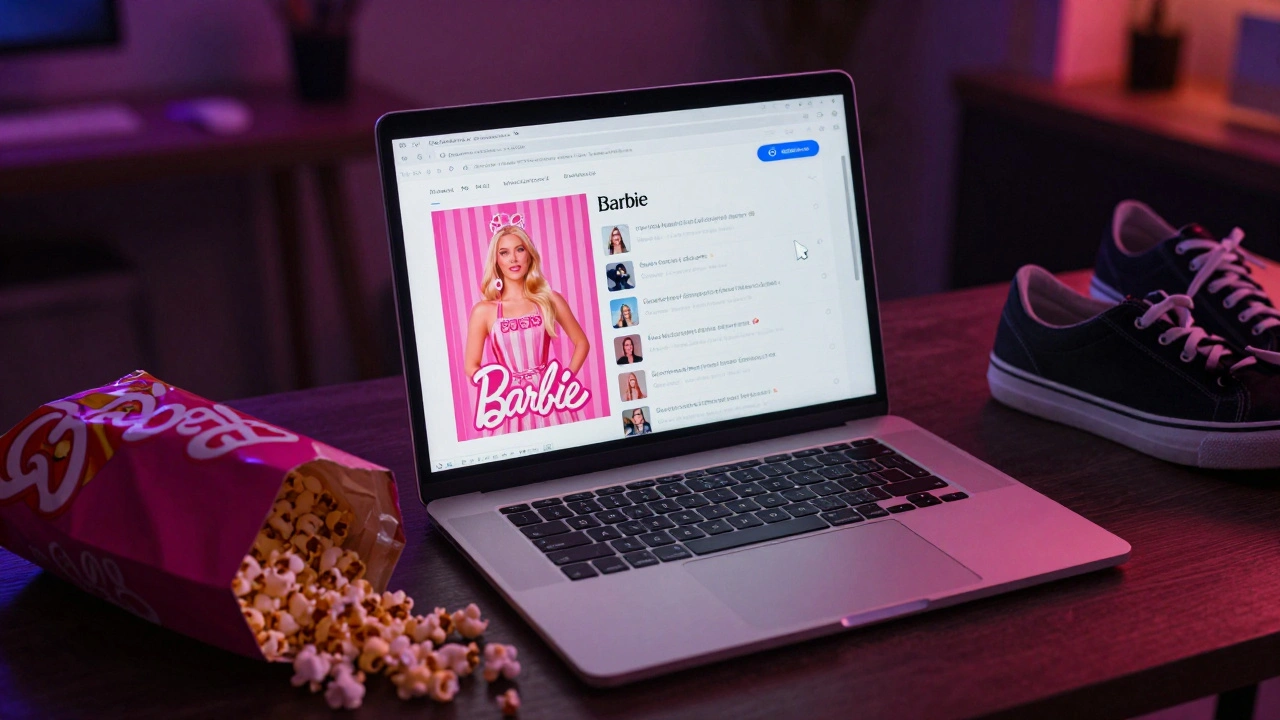
When a big movie hits theaters, something quiet but powerful happens on Wikipedia. Within hours, the film’s page starts to glow with activity-pageviews spike, editors scramble to update cast lists, and plot summaries get rewritten. It’s not just fans looking up details. It’s the entire internet turning Wikipedia into a live documentary of pop culture as it unfolds.
What Happens to a Movie Page During Release Week?
On the day a major film drops, its Wikipedia page often sees a 500% to 2,000% jump in pageviews compared to its average daily traffic. For blockbusters like Avengers: Endgame or Barbie, the numbers go even higher. Endgame’s page hit over 15 million views in its first week. Barbie’s page got 11 million in seven days. These aren’t anomalies. They’re patterns.
That surge isn’t just people reading. It’s people editing. Within minutes of a film’s premiere, volunteers start fixing errors: correcting actor names, adding release dates by region, updating box office numbers, and even removing fake plot twists that spread on social media. The most active editors aren’t professionals-they’re fans, students, film buffs. They’re the ones who know the movie inside out.
Pageviews vs. Edits: Two Different Stories
Pageviews tell you how many people are looking. Edits tell you how many people are caring enough to change something. The two don’t always match.
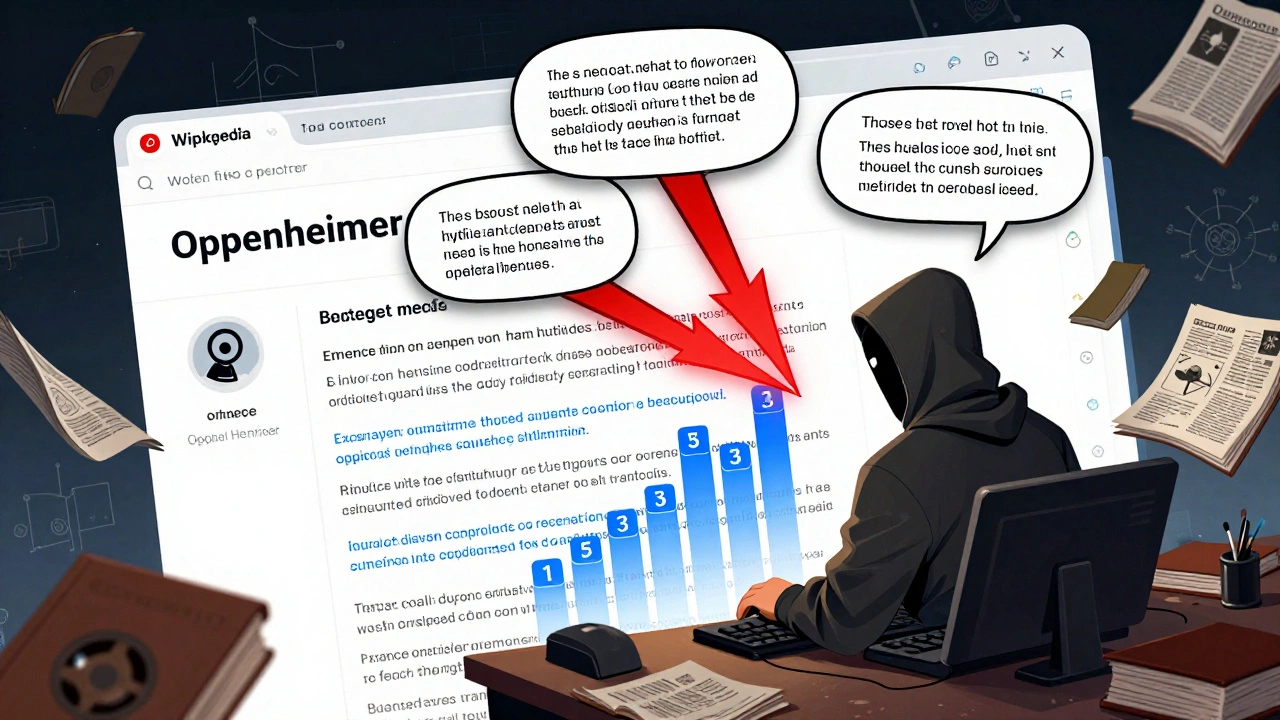
Take Oppenheimer. In its release week in July 2023, it had over 8 million pageviews. But it also had over 400 edits-far more than most films of similar popularity. Why? Because the film sparked intense debate. People kept correcting historical inaccuracies, adding context about nuclear policy, and citing sources for claims about J. Robert Oppenheimer’s life. The edits weren’t just cosmetic. They were scholarly.
Compare that to a big-budget action flick like The Marvels. It had 6 million pageviews but only 120 edits. Most edits were simple: fixing spelling, adding a new cast member, updating the trailer link. No deep research. No controversy. Just cleanup.
This difference reveals something important: the type of film shapes the kind of attention it gets on Wikipedia. Thoughtful films get thoughtful edits. Popcorn films get quick fixes.
When Edits Go Wrong
Not every edit helps. Release week is also when vandalism spikes. Fake cast members appear. Made-up quotes get added. Some editors try to insert personal opinions as facts-like claiming a movie is "the worst ever" or "the greatest of all time."
Wikipedia’s community has ways to handle this. Auto-protects kick in for high-profile pages. Administrators revert bad edits within minutes. But the system relies on volunteers. If no one’s watching, misinformation sticks around longer.
In 2022, a fake quote from Spider-Man: No Way Home stayed on the page for 14 hours before being caught. It claimed Tom Holland said, "I’m not a hero, I’m just a guy who got lucky." No such quote exists. It was made up by a fan on Reddit and copied onto Wikipedia. It only got removed because a regular editor noticed the citation was missing.
That’s the real story behind Wikipedia’s reliability: it’s not perfect. But it’s watched. And when something’s popular enough, enough people are paying attention to fix it.
How Wikipedia Tracks Movie Popularity
Wikipedia doesn’t just record edits-it measures interest. The Wikimedia Foundation releases public data on pageviews for every article. Researchers use this data to track cultural moments.
A 2024 study by the University of Michigan analyzed 1,200 film pages released between 2018 and 2023. They found a clear correlation: the higher the opening weekend box office, the higher the pageview spike. But there were exceptions. Indie films like Everything Everywhere All at Once had lower box office numbers but higher edit counts than expected. Why? Because they sparked niche but passionate conversations-about multiverse theory, immigrant identity, absurdist humor.
Wikipedia’s data shows that popularity isn’t just about money. It’s about resonance. A film can make $50 million and barely move the needle on edits. Another can make $15 million and generate hundreds of thoughtful changes.
What This Tells Us About Culture
Wikipedia is the world’s most visited reference site. When a movie hits, its page becomes a real-time cultural archive. The edits reflect what people care about. The pageviews reflect what people want to know.
During the release week of The Batman in 2022, editors added over 60 references to Batman’s comic book history. They didn’t just update the cast-they linked the film to its roots. That’s not just editing. That’s cultural preservation.
Meanwhile, during the release of John Wick: Chapter 4, edits were mostly about stunt choreography, weapon specs, and locations. Fans wanted technical details. The page became a database for action movie enthusiasts.
These differences aren’t random. They reveal how audiences engage with different kinds of stories. One film invites deep analysis. Another invites admiration for craft. Wikipedia captures both.
Why This Matters for Film Fans
If you love movies, you’re already using Wikipedia. But you might not realize how much you’re contributing. Every time you fix a typo, add a release date, or cite a source, you’re helping build a public record of cinema history.
You don’t need to be an expert. You don’t need to be a scholar. You just need to care enough to check.
Here’s what you can do:
- Visit the film’s page right after watching it.
- Check for missing actors, incorrect release dates, or outdated box office numbers.
- If something’s wrong, click "Edit"-it’s free and open to anyone.
- Add a source. Even a link to an official studio press release counts.
- Don’t add opinions. Stick to facts.
That’s it. You’ve just helped make the internet more accurate.
What’s Next for Wikipedia and Film
As streaming releases grow, the pattern is changing. Films that drop on Netflix or Apple TV+ still get spikes-but they’re smaller and more spread out. A film like The Night Agent (a series, not a movie) got steady traffic over weeks, not a single surge.
Wikipedia is adapting. Editors now track "release windows" instead of just "release day." They’re creating new templates for streaming titles. They’re tagging pages with "limited series," "TV movie," or "direct-to-streaming." The system is evolving to match how we watch.
One thing won’t change: when a film matters to people, Wikipedia becomes its first living archive. Not on a studio’s website. Not on IMDb. Not on Reddit. On Wikipedia-where facts get checked, sources get cited, and history gets written by strangers who care enough to fix a comma.