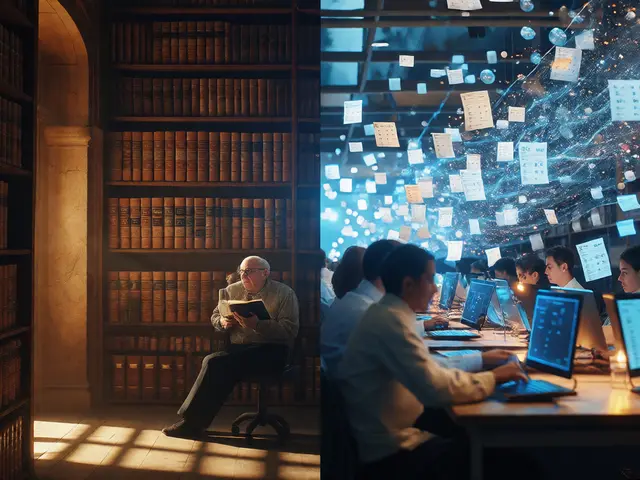
The internet has always been a place where information flows freely, but it has never been more chaotic than in mid-2026. For over two decades, Wikipedia is a free online encyclopedia that anyone can edit, built on the belief that crowdsourced wisdom could outperform traditional gatekeepers. It worked for a long time. But now, a new contender called Grokipedia is an artificial intelligence-driven knowledge platform that generates answers instantly without human editing. This shift has sparked intense debate among the people who have spent their lives curating facts.
Grokipedia promises speed. It uses advanced large language models to synthesize information from billions of web pages in seconds. For a casual user looking for a quick fact, this feels like magic. But for the volunteers and academics who rely on verified sources, it feels like a threat. The core issue isn't just about technology; it's about trust. When an AI generates an answer, who is responsible if it's wrong? And what happens to the meticulous process of citation when the source is a black-box algorithm?
The Volunteer Crisis: Why Wikipedians Are Worried
To understand the backlash, you have to look at how Wikipedia actually works. It doesn't run on servers alone; it runs on people. As of 2025, there are fewer than 100,000 active editors globally. Many are aging, and few young people are joining. This volunteer base is exhausted. They spend hours verifying claims, fighting vandalism, and resolving disputes. The Wikimedia Foundation is the non-profit organization that supports Wikipedia has warned for years that burnout is real.
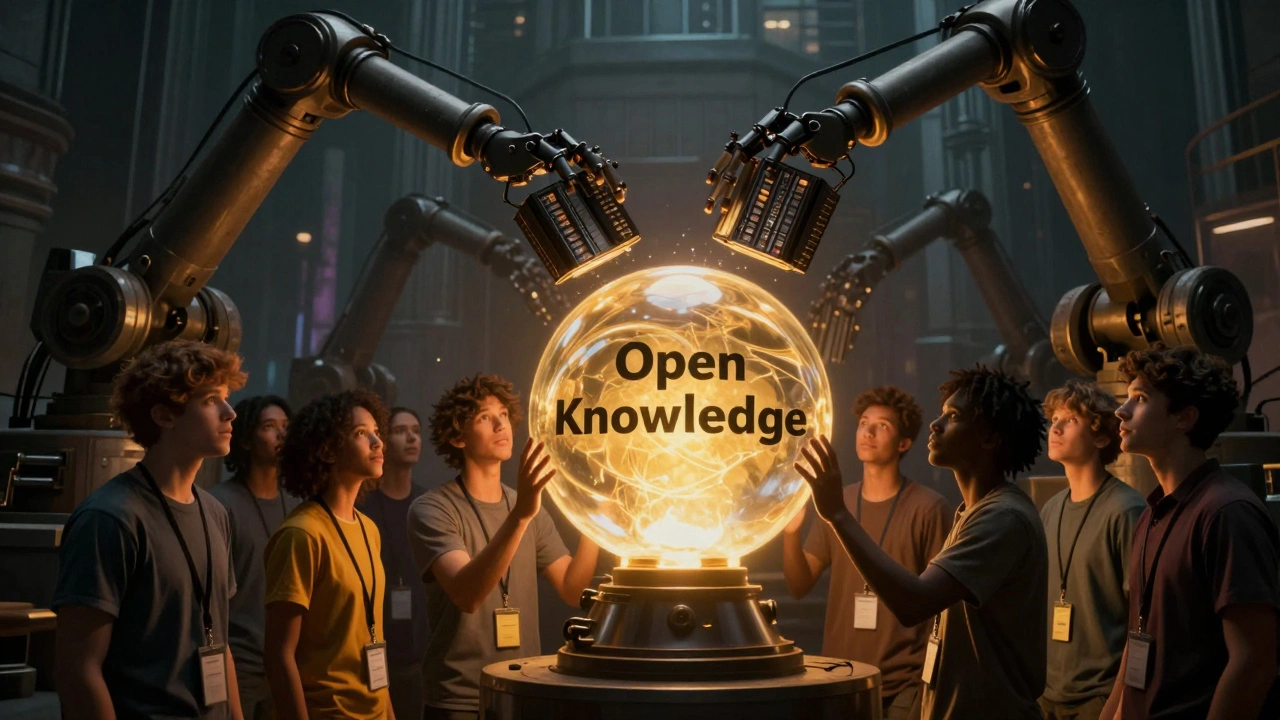
Grokipedia enters this space by offering a product that requires no maintenance. You don't need to check references because the AI does it for you-or so the marketing says. For many Wikipedians, this feels like a betrayal of the open-knowledge ideal. They see Grokipedia not as a tool to help them, but as a replacement that devalues their labor. If users can get instant answers from an app, why bother learning how to edit a wiki? Why care about sourcing?
One prominent editor, who prefers to remain anonymous due to past harassment, put it bluntly in a recent forum discussion: "We spent twenty years building a system where every claim needs a receipt. Grokipedia gives you the answer without showing the math. That’s not progress; it’s laziness wrapped in tech." This sentiment is widespread. The fear is that the public will stop caring about *how* they know something, as long as the answer sounds confident.
The Scholar’s Dilemma: Accuracy vs. Hallucination
If Wikipedians are worried about culture, scholars are worried about correctness. Academic researchers depend on precise, citable information. In the world of science and history, a small error can derail a thesis or mislead policy. Traditional encyclopedias and peer-reviewed journals exist to filter out noise. Large Language Models (LLMs) are AI systems trained on vast datasets to generate human-like text are probabilistic. They predict the next likely word, not the next true fact.
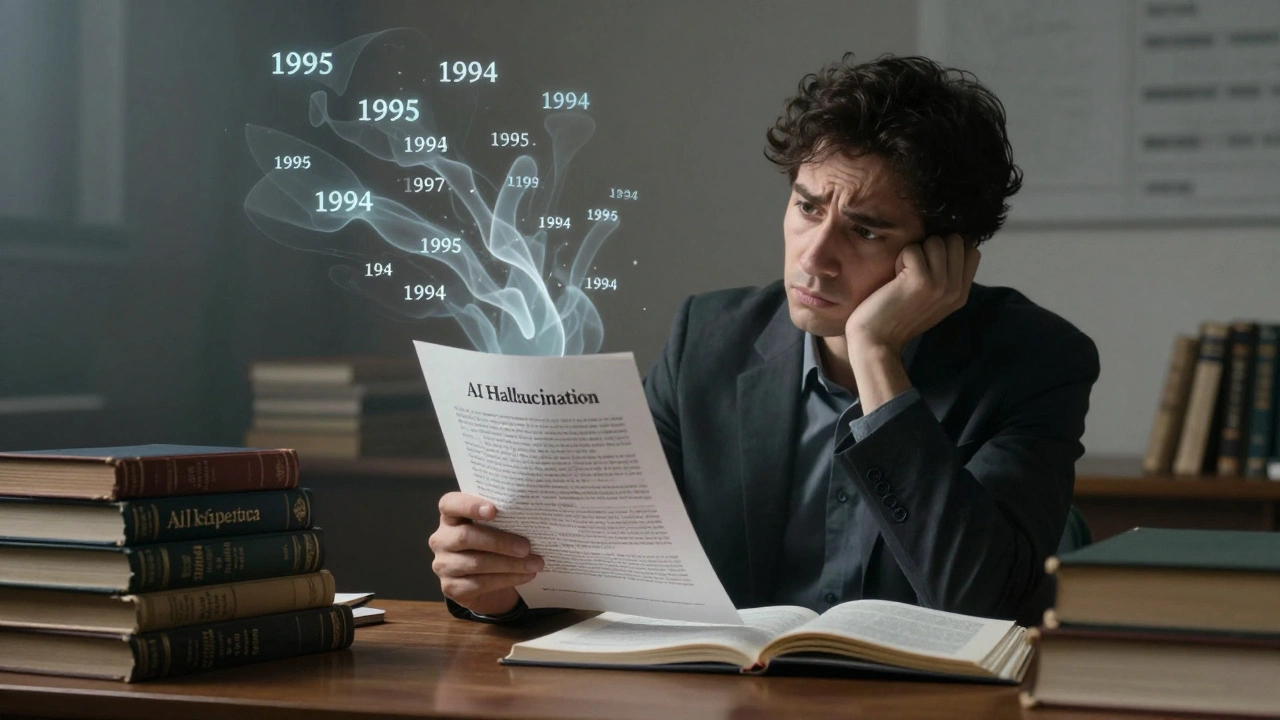
This leads to the problem of hallucination. An LLM might confidently state that a historical event happened in 1994 when it actually happened in 1995. Because the sentence structure is perfect and the tone is authoritative, humans often fail to catch the error. Studies from 2024 showed that even experts struggled to distinguish between AI-generated fake citations and real ones. Grokipedia, relying on these models, inherits this flaw.
Scholars argue that Grokipedia lacks accountability. If Wikipedia makes a mistake, you can click "Edit" and fix it. You can see the talk page where editors debated the change. With Grokipedia, the answer is static until the model is retrained. There is no transparent trail of reasoning. For a student writing a paper, citing Grokipedia is risky. Professors are already banning AI-generated content in assignments, and Grokipedia falls squarely into that gray area.
| Feature | Wikipedia | Grokipedia |
|---|---|---|
| Source Transparency | High (visible citations and edit history) | Low (black-box algorithmic synthesis) |
| Error Correction | Immediate by community volunteers | Delayed, requires model retraining |
| Accountability | Individual editors and admins | Corporate entity (no individual responsibility) |
| Update Speed | Moderate (depends on editor availability) | Instant (real-time generation) |
| Cost to User | Free (ad-supported/donations) | Freemium (basic free, premium features paid) |
The Business Model: Who Owns Your Knowledge?
Beneath the technical debates lies a sharper question: money. Wikipedia is funded by donations and operates as a non-profit. Its mission is to share all human knowledge freely. Grokipedia, however, is built by a commercial tech company. While the basic service may be free, the data generated by users-their queries, corrections, and preferences-becomes valuable training material for future AI models.
Critics point out that this creates a conflict of interest. A for-profit company has an incentive to keep users engaged, not necessarily to keep them informed. Engaging content is often sensationalized or simplified. Nuanced topics, which require careful explanation, might be flattened into soundbites to increase retention. This dynamic threatens the integrity of neutral point-of-view policies that Wikipedia struggles to maintain but still enforces.
Furthermore, there is the issue of copyright. Grokipedia trains its models on existing web content, much of which comes from Wikipedia itself. This raises ethical questions about whether it is fair to take freely licensed content, repackaging it through an AI, and then selling access to the enhanced version. Some legal experts argue this constitutes a form of digital enclosure, where public goods are privatized by tech giants.
User Experience: Convenience Over Critical Thinking
Let’s be honest: Grokipedia is easier to use. If you ask it a complex question, it gives you a concise paragraph. Wikipedia gives you a sprawling article with links, images, and talk page controversies. For the average person scrolling on their phone during lunch, Grokipedia wins on convenience.
But this ease comes at a cognitive cost. Reading a well-cited Wikipedia article forces you to engage with multiple perspectives. You see where consensus breaks down. You learn to evaluate sources. Grokipedia presents a single, polished narrative. It removes the friction that helps us think critically. Over time, this could erode public literacy. If we stop practicing the skill of verifying information, we become vulnerable to misinformation.
Consider a recent example involving a political scandal. Wikipedia updated its articles within minutes, linking to news reports and official statements. Grokipedia provided a summary based on social media trends, which included several unverified rumors. Users who relied solely on Grokipedia were misled for hours before the AI was corrected. This highlights the danger of trusting an algorithm that optimizes for popularity rather than truth.
The Future of Trust in Digital Information
The rise of Grokipedia reflects a broader trend in society: we want answers without effort. We want certainty without ambiguity. But knowledge is messy. It requires work. The critiques from Wikipedians and scholars are not just luddite resistance to change. They are a defense of a process that, while imperfect, has proven resilient.
As we move further into 2026, the choice isn't necessarily between Wikipedia and Grokipedia. It might be about how we integrate both. Perhaps AI can help draft articles, but humans must verify them. Perhaps Grokipedia can serve as a starting point, but users must be taught to dig deeper. The key is maintaining transparency. Any AI-driven knowledge platform must show its work. It must cite sources clearly and allow for human oversight.
Without these safeguards, we risk creating a world where information is abundant but truth is scarce. The community reactions to Grokipedia are a warning sign. They remind us that behind every byte of data, there should be a human conscience. Technology can speed up delivery, but it cannot replace the value of verification.
Is Grokipedia accurate compared to Wikipedia?
Grokipedia can be accurate for general facts, but it lacks the rigorous citation standards of Wikipedia. Because it relies on AI models, it is prone to hallucinations and may present outdated or biased information without clear sourcing. Wikipedia’s accuracy comes from community verification, making it more reliable for critical research.
Why are Wikipedians criticizing Grokipedia?
Wikipedians criticize Grokipedia because it devalues the volunteer effort required to maintain high-quality, verifiable content. They fear that users will abandon the practice of checking sources, leading to a decline in digital literacy and trust in online information.
Can I cite Grokipedia in academic papers?
Most academic institutions do not accept Grokipedia as a primary source. Since it is an AI-generated summary without transparent citations, it fails to meet scholarly standards for verification. Always use original sources or peer-reviewed articles instead.
Is Grokipedia free to use?
Grokipedia offers a freemium model. Basic access is free, but advanced features, such as detailed analytics or priority support, require a subscription. This contrasts with Wikipedia, which is entirely free and supported by donations.
How does Grokipedia handle errors?
Unlike Wikipedia, where users can immediately correct errors, Grokipedia relies on periodic updates to its underlying AI model. Corrections are slower and less transparent, meaning false information may persist longer until the next model iteration.