Wikipedia doesn’t write news. But around the world, newspapers, TV stations, and online outlets treat it like a news source - even when it shouldn’t be. On January 15, 2025, the Financial Times cited Wikipedia’s page on the Brazilian election to describe voter turnout numbers. The same day, a Chinese state media outlet used Wikipedia’s entry on Tibet to support a narrative about regional stability. Neither story checked the sources behind those Wikipedia edits. This isn’t an accident. It’s a pattern.
Wikipedia as a Shortcut, Not a Source
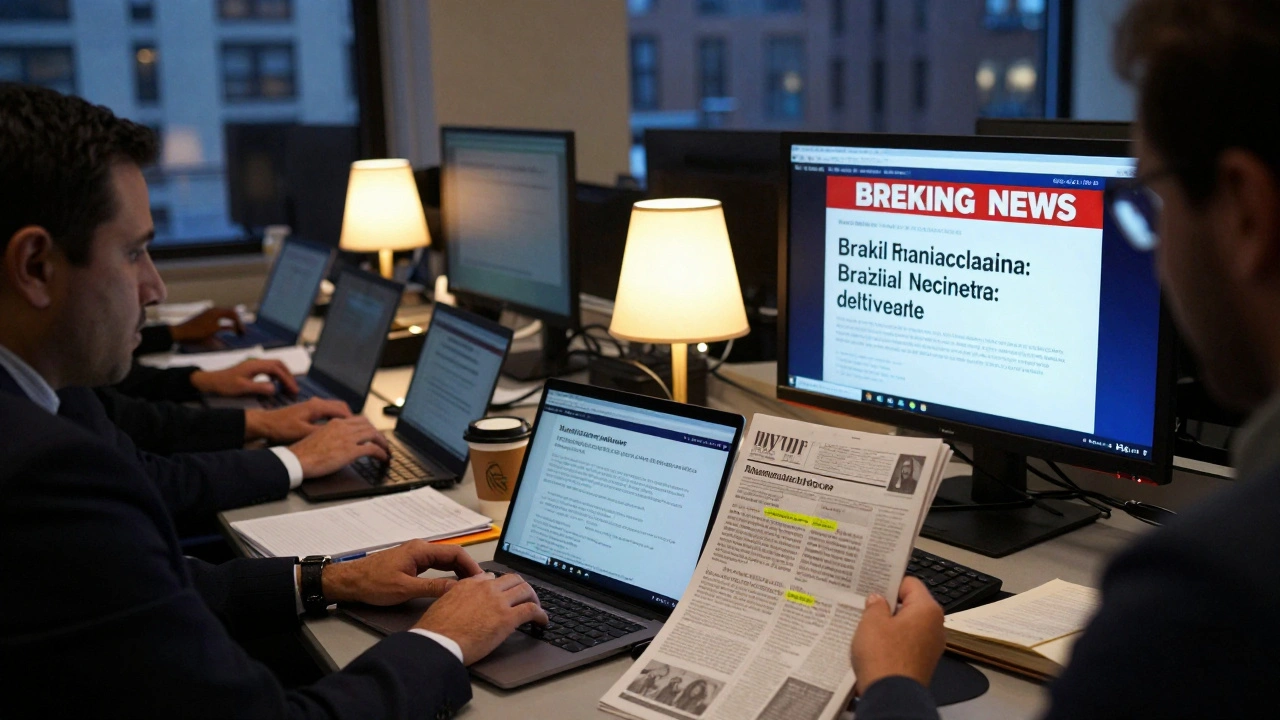
Journalists in fast-moving markets often turn to Wikipedia because it’s fast, free, and seems authoritative. In the U.S., a 2023 study by the Pew Research Center found that 41% of reporters used Wikipedia to verify basic facts during breaking news events. In India, that number jumped to 62%. In Nigeria and Mexico, it was over 55%. The problem isn’t that journalists are lazy - it’s that newsrooms are understaffed and deadlines are tight. When you have five minutes to confirm a name, date, or statistic, Wikipedia looks like a safe bet.But Wikipedia’s strength - its openness - is also its weakness in news contexts. Anyone can edit it. A single user in Jakarta can change the population figure for a city in Papua. A bot in Berlin can auto-update a stock price based on a scraped forum post. These edits show up instantly. And when a journalist copies them into a headline, the error spreads.
Regional Differences in Reliance
Not all media markets treat Wikipedia the same way. In Western Europe, especially in Germany and Sweden, newsrooms have formal policies against citing Wikipedia directly. The Der Spiegel editorial team requires all Wikipedia-derived facts to be traced back to primary sources before publication. In contrast, in parts of Southeast Asia and Latin America, Wikipedia is often the only publicly accessible, multilingual source for obscure local events.In Turkey, after the 2023 earthquake, local news sites used Wikipedia to report casualty numbers because official government portals were down or delayed. In Brazil, regional newspapers in Amazonas and Pará regularly pull from Wikipedia to cover indigenous protests - not because they trust it, but because no other English or Portuguese-language source exists. In these places, Wikipedia isn’t a shortcut. It’s a lifeline.
Language Gaps and Coverage Bias
Wikipedia’s coverage isn’t even. English-language articles have 10 times more edits than Swahili or Bengali ones. But news outlets in non-English markets still rely on the English versions - often without realizing the content is skewed.Take the 2024 protests in Sudan. English Wikipedia’s page on the conflict included detailed timelines, named rebel groups, and cited UN reports. The Arabic version? A single paragraph. Yet Arab-language media outlets - from Cairo to Algiers - frequently quoted the English page, translating it directly into their reports. The result? A narrative shaped by Western editors, not local witnesses.
Similarly, the Hindi Wikipedia page on the 2024 farmer protests in Punjab had fewer than 30 edits in six months. Meanwhile, English-language outlets like The Guardian and BBC cited Wikipedia’s sparse entry to describe the scale of the protests - even though local Indian media had published dozens of in-depth reports. The global media didn’t ignore the protests. They ignored the local sources.
How Governments Use Wikipedia
Some governments don’t just use Wikipedia - they shape it. In Russia, state-backed editors have systematically altered entries on Ukraine, NATO, and historical events. In China, edits to entries on Tiananmen Square, Taiwan, and Xinjiang are monitored and corrected by automated systems that align with official narratives. In Iran, Wikipedia pages on religious figures are regularly edited to reflect state-approved interpretations.But here’s the twist: foreign media often report on these edits as if they’re evidence of censorship - not realizing they’re quoting the very same manipulated pages. In 2025, Reuters published a story titled “Russia Distorts Wikipedia on Ukraine War.” The article cited Wikipedia’s Russian-language entry as proof. But the entry had already been altered by Russian editors. The story was accurate - but it was built on a lie that Wikipedia itself helped create.
The Ripple Effect
When a news outlet cites Wikipedia, it doesn’t just repeat a fact. It validates it. That validation sends a signal to other outlets. A 2024 analysis by Media Bias/Fact Check found that 73% of news stories citing Wikipedia were later repeated by other outlets - often without checking the original source. In one case, a small Australian blog claimed a “new study” showed 80% of Americans supported universal basic income. The study didn’t exist. But it was listed on Wikipedia. Within 48 hours, 17 news sites in the U.S., Canada, and the UK had published variations of the same false claim.This isn’t just misinformation. It’s a feedback loop. Wikipedia becomes the source because media cites it. Media cites it because it’s on Wikipedia. And the cycle keeps spinning.
What Should Journalists Do Instead?
The solution isn’t to ignore Wikipedia. It’s to use it right. Here’s how:- Check the references - Every Wikipedia entry has citations at the bottom. Don’t stop at the summary. Click through to the original report, study, or document.
- Use the talk page - If an article has a long, active discussion section, it’s often more informative than the article itself. Disputes, edits, and corrections are laid out there.
- Compare language versions - If you’re covering a global event, look at the Wikipedia page in the local language. You’ll often find details missing from the English version.
- Don’t quote it directly - If you use a fact from Wikipedia, attribute it to the original source. Say “According to the UN report cited on Wikipedia,” not “Wikipedia says.”
Some newsrooms are starting to train staff on this. The Associated Press now includes a module on Wikipedia verification in its digital journalism bootcamp. The BBC’s fact-checking team uses a custom tool that flags Wikipedia citations in draft stories and prompts reporters to trace them back. These are small steps - but they matter.
Wikipedia’s Role Is Changing
Wikipedia isn’t trying to be a news organization. It’s a collaborative encyclopedia. But as global media becomes more fragmented and trust in traditional outlets declines, people turn to Wikipedia as a default. That’s not its fault. But it’s now a critical part of the information ecosystem.For journalists, the lesson is clear: Wikipedia is a starting point, not an endpoint. It’s a map - not the territory. The real story is always in the sources behind the edit.
Can Wikipedia be trusted as a news source?
No. Wikipedia is not a news source. It’s an encyclopedia that aggregates information from other sources. While many entries are well-researched and cited, anyone can edit them. News outlets should never quote Wikipedia directly - they should trace every fact back to its original source, like a government report, academic study, or verified news article.
Why do journalists use Wikipedia despite its risks?
Journalists use Wikipedia because it’s fast, free, and often accurate for basic facts. In fast-paced newsrooms with tight deadlines and shrinking staff, it’s easier to check a Wikipedia page than to dig through archives or contact sources. A 2023 Pew study found over 40% of reporters in the U.S. and over 60% in India used Wikipedia during breaking news - not because they trusted it, but because they had no time to do better.
Is Wikipedia coverage the same in every country?
No. Coverage varies widely by language and region. English Wikipedia has far more edits and depth than versions in Swahili, Bengali, or Arabic. But many international news outlets still rely on the English version, even when covering local events. This creates a bias - global narratives are shaped by editors in North America and Europe, not by people on the ground.
Can governments manipulate Wikipedia for propaganda?
Yes. Governments in Russia, China, Iran, and Turkey have been documented editing Wikipedia pages to align with official narratives. In some cases, state-affiliated users make direct changes. In others, automated bots or coordinated editing campaigns alter content over time. Foreign media sometimes report on these edits as proof of censorship - but end up quoting the manipulated content themselves, unintentionally spreading the propaganda.
What’s the biggest danger of citing Wikipedia in news stories?
The biggest danger is creating a feedback loop. When one outlet cites Wikipedia, others follow. Even if the original Wikipedia entry is wrong, the error spreads across multiple platforms. In 2024, a fake study about U.S. support for universal basic income appeared on Wikipedia. Within two days, 17 news outlets published variations of the same false claim - all because they trusted Wikipedia as a source.