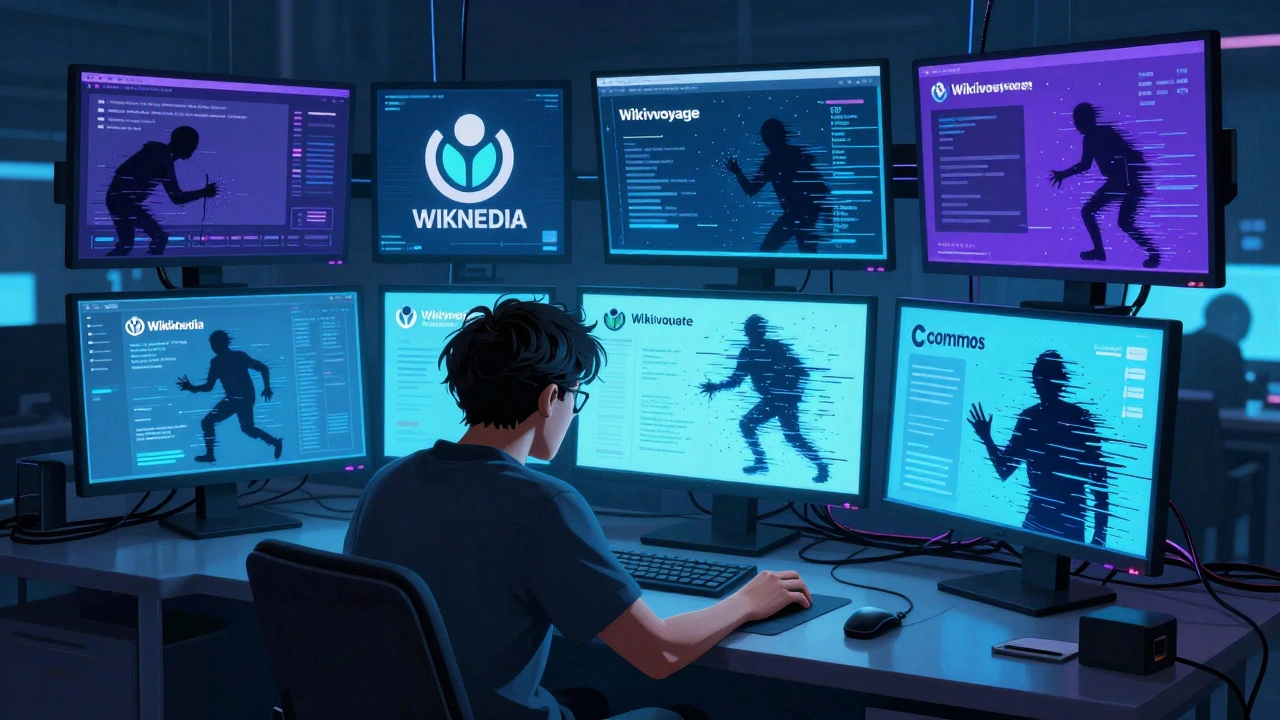
Imagine this: you are patrolling recent changes on Wikipedia, the largest online encyclopedia in history. You spot a user reverting good edits. You block them. But five minutes later, that same user is back-except now they are vandalizing Wikivoyage, then Wikiquote, and finally Commons. They are jumping between platforms to stay one step ahead of local blocks. This is cross-wiki abuse, and it is one of the most frustrating challenges for volunteer editors.
Cross-wiki abuse happens when a bad actor exploits the shared infrastructure of the Wikimedia Foundation’s family of sites to evade restrictions. Unlike standard vandalism, which stays within one project, this tactic relies on the fact that while accounts can be global, enforcement is often local. If you do not know how to track these users across borders, your efforts will feel like playing whack-a-mole. The goal here is simple: stop the damage, ban the abuser effectively, and protect the integrity of all sibling projects.
Understanding the Mechanics of Cross-Wiki Abuse
To fight cross-wiki abuse, you first need to understand why it works. The Wikimedia ecosystem consists of dozens of sibling projects, such as Wikidata, Wikisource, and Wikimedia Commons. These sites share a unified login system called Global Accounts. When you create an account on English Wikipedia, you technically have an account on every other language version and project too.
The loophole? Blocks are usually project-specific. A block on English Wikipedia does not automatically block that user on German Wikipedia or Wikivoyage. Abusers know this. They use this gap to continue disruptive behavior after being banned from their primary target. Common patterns include:
- Revert wars: An editor gets blocked for warring on one wiki, then creates a new account or uses their existing account on another wiki to harass the same opponents.
- Account farms: Groups of coordinated users spread their activity across multiple wikis to avoid detection by automated filters that focus on single-project data.
- Harassment campaigns: Targeting specific editors who contribute to multiple projects, following them from Wikipedia to Wikinews to exhaust their patience.
Recognizing these patterns is the first step. If you see a user suddenly appearing on a niche project with aggressive editing habits, check their history on larger wikis. Often, they are refugees from a previous ban.
Tools for Tracking Abusers Across Projects
You cannot fight what you cannot see. Fortunately, the Wikimedia community has built powerful tools to visualize user activity across the entire network. The most critical tool is Global Contributions, a feature available at contribs.global. This allows you to see every edit a user has made across all Wikimedia projects, sorted by date.
When investigating potential cross-wiki abuse, start here. Look for spikes in activity right after a block on another wiki. Also, pay attention to CheckUser, a specialized group of volunteers with access to technical data. While regular editors cannot see IP addresses or browser fingerprints, CheckUsers can confirm if two seemingly different accounts belong to the same person. If you suspect cross-wiki evasion, file a request with CheckUser on the wiki where the abuse is currently happening, providing evidence from other wikis.
Another essential resource is the Wikimedia Foundation's Special:ListUsers page. This lists all registered users globally. It helps verify if an account exists on a specific project even if they haven’t edited there recently. Combining these tools gives you a complete picture of the user’s footprint.
Step-by-Step Response Tactics
Once you have identified a cross-wiki abuser, you need a coordinated response. Acting alone on one wiki is rarely enough. Here is a practical workflow:
- Gather Evidence: Compile logs of the abusive behavior on all affected wikis. Save screenshots or permanent links to diffs. Note the timestamps of blocks on other projects.
- Contact Local Administrators: Notify admins on the current wiki about the situation. Provide the link to their global contributions. Explain clearly that this is part of a broader pattern.
- Request a Global Block: If the abuse is widespread, local blocks are insufficient. Submit a request for a Global Block via the Steward requests page. Stewards are trusted volunteers with the power to block users across all Wikimedia projects. Your request must cite clear policy violations and provide evidence from multiple wikis.
- Coordinate with Other Communities: Use the Wikimedia Village Pump or relevant meta-pages to alert other communities. Sometimes, a warning on one wiki prevents damage on another.
This process requires patience. Global blocks are not instantaneous. However, documenting the abuse thoroughly increases the likelihood of a swift and permanent solution.
The Role of Stewards and Global Policies
Stewards play a pivotal role in handling cross-wiki abuse. They operate under the Global Ban Policy established by the Wikimedia community. This policy outlines when a user should be banned from all projects. Key criteria include persistent harassment, severe vandalism, and legal threats.
If you are unsure whether a case qualifies for a global block, review the policy guidelines. Generally, isolated incidents on one wiki do not warrant global action. However, if a user demonstrates a pattern of evading blocks across three or more projects, a global block is appropriate. Stewards rely on local communities to flag these patterns. Your reports are the fuel for their decisions.
It is also important to respect local sovereignty. Each wiki has its own culture and rules. What constitutes abuse on English Wikipedia might be acceptable on a smaller language edition. Always frame your arguments around universal principles like harassment, spam, or copyright infringement, rather than subjective editorial disputes.
Preventing Future Incidents
Prevention is better than cure. How can we reduce the effectiveness of cross-wiki abuse? One major improvement is the implementation of Automated Abuse Filters that span multiple projects. While currently limited, there is ongoing development to share filter signatures across wikis. Supporting these initiatives through feedback and testing helps strengthen the network’s defenses.
Additionally, educate new editors. Many cross-wiki abusers start as naive newcomers who misunderstand norms. Clear, welcoming messages on their talk pages can de-escalate situations before they become abusive. If you notice a user struggling, offer guidance. If they respond with hostility, document it immediately.
Finally, maintain open communication channels. Join the Wikimedia IRC channels or Discord servers dedicated to moderation. Real-time collaboration among admins across different wikis can catch abusers in the act, preventing them from bouncing between projects.
Common Pitfalls to Avoid
In the heat of the moment, it is easy to make mistakes. Avoid these common errors:
- Assuming Guilt Without Proof: Just because a user was blocked on one wiki does not mean they are guilty elsewhere. Verify their actions independently.
- Venting on Talk Pages: Keep discussions professional. Emotional outbursts can distract from the core issue and alienate potential allies.
- Neglecting Documentation: If you do not write it down, it did not happen. Always archive evidence of cross-wiki coordination.
- Ignoring Smaller Wikis: Abusers often hide on less-monitored projects. Do not overlook activity on obscure language editions or sister projects.
By staying calm, thorough, and collaborative, you turn a chaotic problem into a manageable task. Cross-wiki abuse is a symptom of a large, decentralized community. With the right tactics, we can keep our shared knowledge base safe and reliable.
What is the difference between a local block and a global block?
A local block restricts a user only on the specific wiki where it was applied. A global block, enforced by Stewards, restricts the user across all Wikimedia projects simultaneously. Global blocks are reserved for severe, widespread abuse.
How can I report cross-wiki abuse if I am not an administrator?
You can report abuse by notifying local administrators on the affected wikis and submitting a request for a global block on the Steward requests page. Include detailed evidence and links to the user's global contributions.
Can CheckUser identify cross-wiki sock puppets?
Yes. CheckUsers have access to technical data like IP addresses and browser identifiers. They can confirm if multiple accounts across different wikis are operated by the same individual, helping to close loopholes used by abusers.
Why do abusers jump between sibling projects?
Abusers exploit the fact that blocks are often local. By moving to a different project, they can continue their disruptive behavior without facing immediate restrictions, especially if that project has fewer active moderators.
Is there a way to automate the detection of cross-wiki abuse?
Currently, automation is limited but improving. Tools like Global Contributions help manual tracking. Future developments aim to integrate cross-wiki abuse filters, but human oversight remains essential for accurate enforcement.