Imagine spending three hours writing a detailed article about a local historical landmark. You publish it, proud of your work. Then, within days, you see a template at the top: {{Db-g1}}. Your heart sinks. Is your hard work gone forever? Not necessarily. The fate of that article often depends on where it gets sorted next. This is the hidden machinery of deletion sorting on Wikipedia's system for categorizing and routing articles flagged for removal to specific discussion forums based on their subject matter.
Most casual readers never see this process. They only see the final result: an article exists, or it doesn't. But for editors, understanding how deletion requests are routed to topic-specific noticeboards is dedicated pages on Wikipedia where discussions about the inclusion or exclusion of content related to specific subjects take place is crucial. It’s the difference between an article being speedily deleted because no one noticed its value, and surviving a heated debate because the right experts saw it.
The Anatomy of a Deletion Request
To understand sorting, you first need to understand the trigger. When someone believes an article violates Wikipedia’s policies-usually regarding notability, verifiability, or original research-they tag it. There are two main paths: Speedy Deletion is a fast-track process for articles that clearly violate basic criteria, such as being blatant spam, vandalism, or lacking any encyclopedic merit whatsoever and Articles for Deletion (AfD) is a community-driven discussion process where editors debate the merits of an article over a period of seven days before a consensus is reached.
Speedy deletion is binary. It happens quickly, often automatically by bots if the criteria are met. If an article is tagged with {{db-g1}} (no meaningful content) or {{db-a3}} (repeated vandalism), it might be gone in minutes. However, if there is even a slight chance the article has merit, or if someone contests the speedy tag, it moves to AfD. This is where sorting becomes vital.
In the early days of Wikipedia, all AfD nominations piled up on one massive page. It was chaotic. Editors interested in biographies had to scroll past thousands of discussions about obscure software libraries just to find one relevant topic. This led to "forum shopping," where editors would only vote on topics they knew nothing about, simply because those were the only ones visible. The solution was thematic sorting.
How Topic-Specific Noticeboards Work
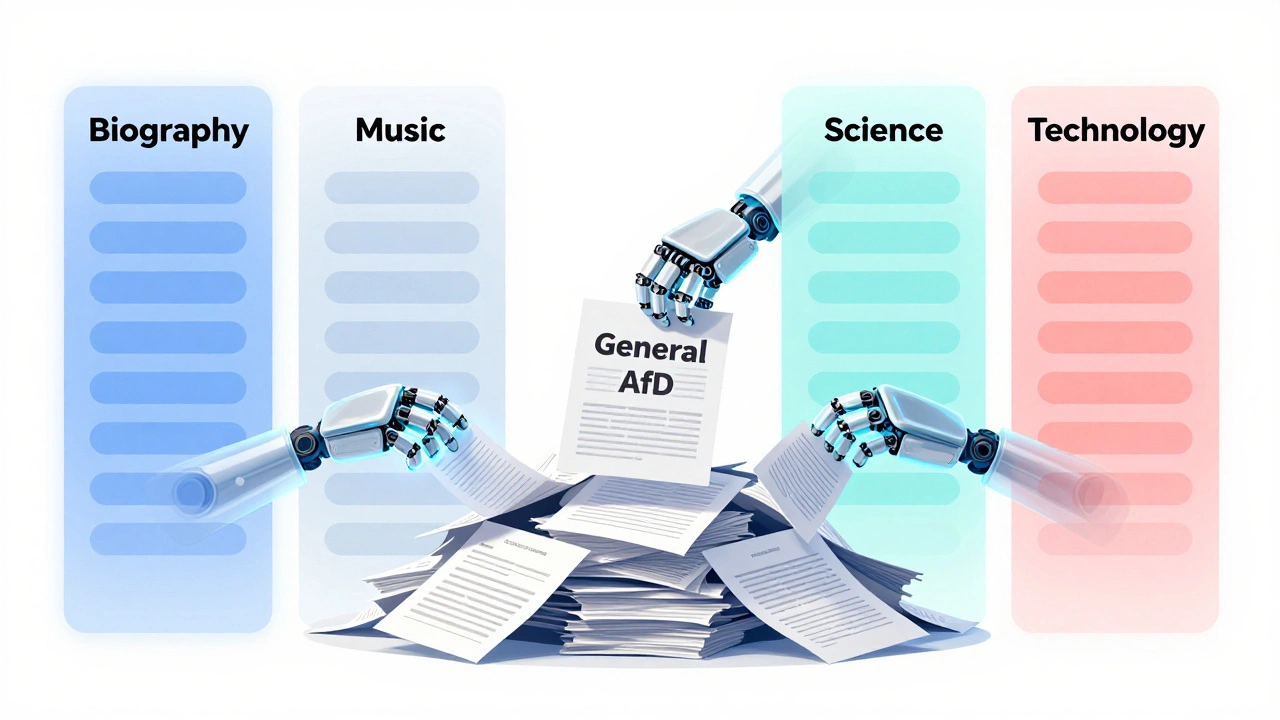
Topic-specific noticeboards act as filters. When an article is nominated for deletion, it is categorized by its subject matter. A biography goes to WP:AFDBIO is the Wikipedia sub-page dedicated to discussing the deletion of articles about living or deceased individuals. An article about a video game goes to WP:AFDVIDEOGAMES is the specialized noticeboard for deletion discussions concerning video games, developers, and related media.
This structure relies on a hierarchy of WikiProjects are collaborative groups of Wikipedia editors who focus on improving and maintaining articles within a specific subject area. Each WikiProject maintains a watchlist. When a new nomination appears on their specific noticeboard, editors who care deeply about that topic get notified. They are the ones most likely to know if a local politician meets the notability guidelines or if a minor character in a TV show deserves a standalone entry.
The mechanism works through templates. When you nominate an article, you add a category parameter. For example:
{{afd|cat=Biology}}{{afd|cat=Music}}{{afd|cat=Geography}}
This single line of code does heavy lifting. It places the discussion on the correct sub-page, updates the statistics for that WikiProject, and alerts subscribed editors. Without this, the signal-to-noise ratio for specialized editors would be unmanageable.
Why Sorting Matters for Content Preservation
You might ask, "Does it really matter which board my article ends up on?" The answer is yes. Different communities have different standards and levels of engagement. A highly technical article about a niche programming language might be deleted on a general board because general editors don’t understand its significance. On the technology-specific board, however, expert editors can provide sources and context that save the article.
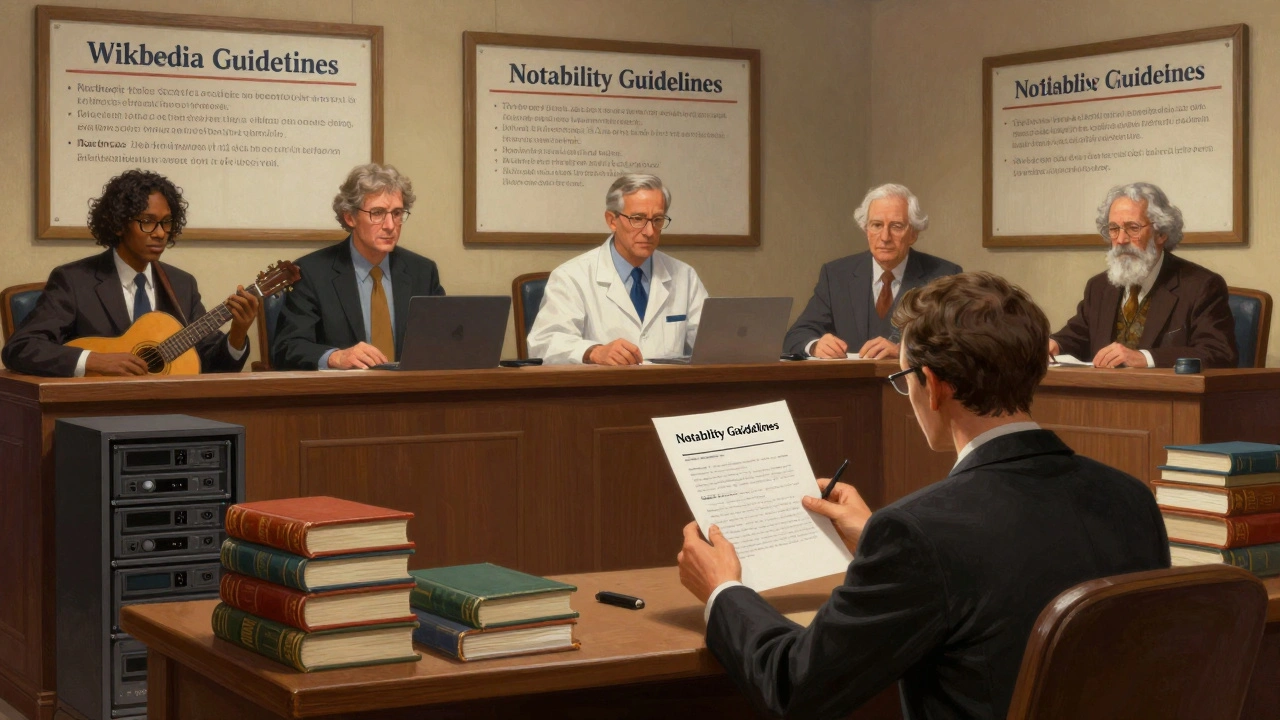
Consider the concept of Notability Guidelines are specific rules that define what topics are significant enough to warrant their own Wikipedia article, varying significantly by subject area. These guidelines are not uniform. WP:MUSIC (Music) has different thresholds than WP:ACADEMIC (Academia). Sorting ensures that the correct guideline is applied. Mis-sorting leads to inconsistent outcomes, which erodes trust in the encyclopedia.
Furthermore, sorting helps manage workload. During high-traffic periods, some boards become backlogged. If a biology article is mistakenly sorted under "General," it might sit unnoticed for weeks. Sorted correctly, it enters a queue monitored by active biologists. Efficiency isn’t just about speed; it’s about accuracy.
Common Pitfalls in Deletion Sorting
Even experienced editors make mistakes here. Here are the most common issues:
- Misclassification: Putting a sports biography under "Sports" instead of "Biographies." While it seems logical, WP:AFDBIO is usually the primary venue for people, regardless of their profession. The exception is when the article is primarily about the team or event, not the person.
- Over-Specialization: Creating a new category for every tiny niche. If there isn’t an active WikiProject behind it, the noticeboard becomes a ghost town. Discussions stall, and deletions happen by default due to lack of opposition.
- Ignoring Multi-Topic Articles: Some articles span multiple domains. A book about the history of chemistry needs both Literature and Science perspectives. In these cases, cross-posting or choosing the primary focus is key.
A major pitfall is "tag fatigue." Editors sometimes forget to sort the article after nominating it. The bot might catch it later, but delays cost time. Time is critical in AfD because discussions close after seven days. Every hour counts.
| Feature | General AfD Board | Topic-Specific Noticeboard |
|---|---|---|
| Audience | All editors | Specialized WikiProject members |
| Expertise Level | Variable | High (domain-specific) |
| Response Time | Fast for obvious cases | Slower, more thorough debate |
| Risk of Error | Higher (lack of context) | Lower (informed consensus) |
| Best For | Clear violations, vandalism | Borderline notability, complex topics |
Best Practices for Editors
If you are nominating an article for deletion, follow these steps to ensure proper sorting:
- Identify the Primary Subject: What is the core topic? Is it a person, a place, a creative work, or a scientific concept?
- Check for Active WikiProjects: Visit the article’s talk page. Look for project banners. If it lists "WikiProject History," use the History-specific AfD board.
- Use Standard Categories: Don’t invent new categories. Use established ones like
Bio,Music,Science, orSports. - Notify the Project: After nominating, post a link to the discussion on the relevant WikiProject’s talk page. This drives traffic and ensures visibility.
For those defending an article, the strategy is similar. Check where the nomination landed. If it’s in the wrong place, politely request a move to the appropriate topic-specific board. Explain why the expertise of that community is needed. Often, a simple move can revive a dying discussion.
The Role of Bots and Automation
Humans aren’t doing all the sorting. Bots play a huge role. ClueBot NG is an advanced automated tool on Wikipedia that detects and reverts vandalism, but also assists in categorizing and sorting deletion nominations and other maintenance bots scan for new nominations. They look at the article’s existing categories and attempt to match them to an AfD sub-board.
However, bots are only as good as the data they receive. If an article lacks categories, the bot guesses. Sometimes it guesses wrong. That’s why human oversight remains essential. Editors must verify that the automatic sorting makes sense. If a bot puts a philosophy article under "Religion" because of a shared keyword, a human needs to correct it.
This automation reduces the administrative burden on volunteers. Imagine manually moving hundreds of discussions daily. It’s impossible. Automation handles the volume; humans handle the nuance.
Impact on Community Health
Proper deletion sorting fosters a healthier community. When editors feel heard by peers who understand their field, they are more likely to stay engaged. Conversely, feeling judged by outsiders who don’t grasp the context leads to burnout and departure.
It also promotes consistency. If every editor applies their personal standard, Wikipedia becomes a patchwork of arbitrary decisions. Topic-specific boards create localized norms. Over time, these norms align with global policies, creating a stable, reliable encyclopedia.
Think of it like a court system. You wouldn’t want a patent dispute decided by a judge who specializes in family law. You want a specialist. Wikipedia’s deletion sorting is its judicial specialization.
Future Trends in Deletion Management
As Wikipedia grows, so does the complexity of sorting. New topics emerge constantly. Crypto-assets, AI-generated art, viral internet memes-these didn’t exist twenty years ago. Now they have their own debates.
We’re seeing a trend toward finer granularity. Instead of just "Technology," we might see separate boards for "Software," "Hardware," and "Internet Culture." This allows for deeper expertise but risks fragmentation. The challenge is finding the sweet spot where specificity aids quality without isolating discussions.
Another trend is better integration with machine learning. Future tools might predict the best noticeboard based on the text of the article itself, not just its categories. This could reduce misclassification errors significantly.
For now, the system relies on community effort. It’s imperfect, but it’s effective. By understanding how deletion sorting works, you empower yourself to protect valuable content and contribute meaningfully to the world’s largest encyclopedia.
What happens if an article is sorted to the wrong noticeboard?
If an article is sorted incorrectly, the discussion may miss the attention of relevant experts. An editor can request a move to the correct topic-specific board by adding a comment on the AfD page explaining the error. Usually, another editor will update the category tag, moving the thread to the appropriate sub-page.
Can I nominate an article for deletion without specifying a category?
Yes, you can. If you omit the category parameter, the system defaults to the general AfD board. However, this is discouraged for specialized topics because it reduces visibility among experts. Always try to identify the most relevant WikiProject.
How do I find the right topic-specific noticeboard?
Check the talk page of the article you are nominating. Look for "WikiProject" banners at the top. These indicate which communities monitor the article. Visit those WikiProject pages to find links to their specific AfD sub-pages. Common ones include WP:AFDBIO for biographies and WP:AFDMUSIC for music.
Does sorting affect the outcome of the deletion vote?
Indirectly, yes. Proper sorting brings in editors with subject-matter expertise. They are more likely to find reliable sources or apply the correct notability guidelines. This can lead to a more informed consensus, whether that means keeping or deleting the article.
What is the difference between Speedy Deletion and AfD?
Speedy Deletion is for articles that clearly violate basic policies and require no discussion. AfD is for contentious cases where editors disagree on notability or policy application. AfD involves a seven-day discussion period, while Speedy Deletion can happen instantly.