Wikipedia isn’t just a website. It’s one of the largest, most actively maintained datasets in human history. Every edit, every talk page discussion, every revision history-this data is collected, stored, and publicly available. But most researchers don’t know how to use it. Or worse, they use it without understanding how it was made. That’s where open data practices come in. Sharing Wikipedia research datasets and code isn’t optional anymore. It’s the only way to build trustworthy, reproducible science.
Why Wikipedia Data Matters
Wikipedia has over 60 million articles across 300+ languages. Each article has a full edit history. That means you can trace how a topic changed over time. Did the article on climate change shift from skepticism to consensus? You can measure that. Did edits from a specific country spike after a major news event? That’s visible too. Researchers have used this data to study bias, misinformation, collaboration patterns, and even cultural trends.
One study from the University of Oxford tracked how Wikipedia articles on vaccines evolved between 2010 and 2020. They found that edits promoting misinformation dropped by 42% after public health campaigns. But the real insight? That change didn’t happen overnight. It followed a clear pattern of editor engagement, citation updates, and community moderation. Without access to the raw edit logs, none of that would’ve been visible.
Wikipedia data isn’t just big. It’s structured. Every edit has a timestamp, username, edit summary, and diff. That’s more detail than most academic datasets offer. And it’s free.
What Open Data Practices Look Like in Practice
Open data doesn’t mean just uploading a CSV file to a server. It means making your work usable by others. Here’s what that looks like for Wikipedia research:
- Sharing raw data: Don’t just share cleaned results. Share the full edit history dump you used. The Wikimedia Foundation provides monthly dumps of all edits. Use them. Don’t reinvent the wheel.
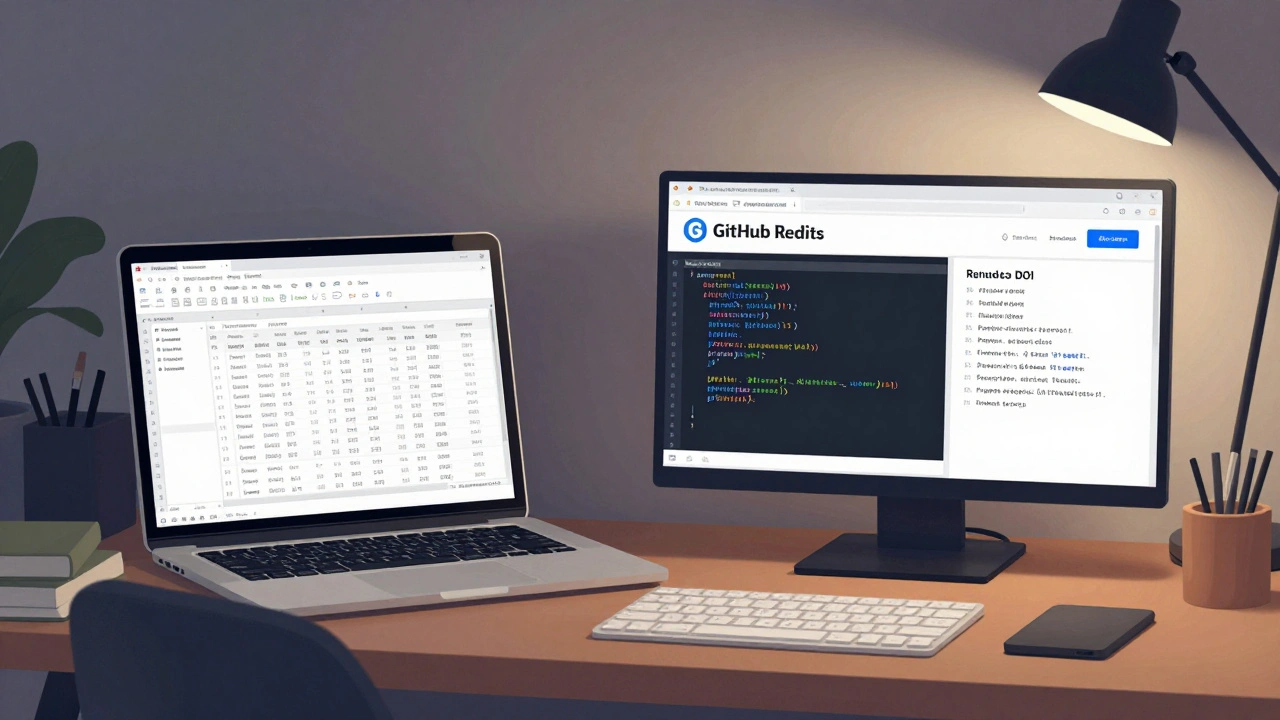
- Documenting your code: If you wrote a Python script to analyze edit patterns, post it on GitHub. Include a README that explains what each function does. Use comments like you’re teaching someone else.
- Versioning your datasets: If you filtered edits from 2023, say so. If you excluded bots, say how you defined a bot. Someone else needs to replicate your work. Don’t make them guess.
- Using standard formats: Use CSV, JSON, or Parquet-not proprietary formats. Avoid Excel files unless you’re sharing with non-technical collaborators.
- Linking to tools: If you used a tool like WikiWho is a tool that identifies individual contributors to Wikipedia edits, mention it. If you built your own, explain how it works.
Here’s a real example: In 2024, a team at the University of California published a paper on gender bias in Wikipedia biographies. They didn’t just say “we found bias.” They shared their full dataset of 1.2 million biographies, their code to extract gender pronouns, and their script to compare edit frequency across genders. Within weeks, another researcher replicated their findings using data from the Arabic Wikipedia. That’s the power of open data.
Common Mistakes Researchers Make
Even well-intentioned researchers mess this up. Here are the top three mistakes:
- Using Wikipedia as a source, not as data. Many papers cite Wikipedia as a reference. That’s fine. But if you’re studying Wikipedia itself, you need to treat it as a data source. Don’t copy-paste content. Download the edit history.
- Not cleaning data properly. Bots make up 15% of all edits. If you don’t filter them out, your results are skewed. But don’t just delete bot edits-you should document how you identified them.
- Ignoring license compliance. Wikipedia content is licensed under CC BY-SA. If you publish a dataset derived from it, you must license your output the same way. Many researchers don’t know this. And yes, it matters.
One researcher in 2023 published a dataset of “most edited Wikipedia pages” without mentioning that they excluded all edits made by administrators. When someone else tried to use the data, they got wildly different results. The paper was retracted. It wasn’t fraud-it was oversight. Open data requires transparency, not just openness.
Tools You Need
You don’t need a supercomputer to work with Wikipedia data. Here are the tools most researchers use:
- WikiApi is a Python library for querying Wikipedia’s API to retrieve article metadata and edit history
- Wikidata is a structured knowledge base that powers Wikipedia’s infoboxes and is used for linking data across languages
- Wikimedia dumps are full snapshots of Wikipedia’s database, updated monthly, available for download
- Pywikibot is a Python framework for automating edits and data extraction on Wikipedia
- Wikicharts is a web-based tool for visualizing edit trends over time without writing code
Start with Wikicharts if you’re new. It lets you see how edits to a page have changed over months or years. Once you’re comfortable, move to Pywikibot to automate data collection. You don’t need to be a programmer-but you do need to be systematic.
How to Share Your Work
Where do you put your data? Not in a Google Drive folder. Here’s what works:
- Zenodo: A free, nonprofit repository for research datasets. Assigns DOIs. Trusted by universities.
- Figshare: Another reliable option. Supports code, data, and notebooks.
- GitHub: For code. Use a README with clear instructions. Tag your releases.
- Wikimedia Commons: If your dataset is directly about Wikipedia content, upload it there. It’s designed for this.
Always include a data citation. Example:
Whitcombe, L. (2025). Edit History of Climate Change Articles (2010-2024) [Data set]. Zenodo. https://doi.org/10.5281/zenodo.1234567
That’s how others find and credit you. And yes, you need a DOI. Journals now require it.

What Happens When You Don’t Share
Imagine you spend six months analyzing Wikipedia edits to study political bias. You write a paper. It gets published. Then someone else tries to check your work. They can’t. Your code is gone. Your data is in a private folder. Your results? Unverifiable.
That’s not just bad science. It’s unethical. Science relies on replication. Wikipedia’s data is public. Your analysis shouldn’t be locked away.
There’s a growing movement in academia called open science. It’s not a buzzword. It’s a requirement. Journals like PLOS ONE and Nature Human Behaviour now require data and code sharing. Funding agencies like the National Science Foundation demand it. If you’re doing research with Wikipedia, you’re already in this system.
Start Small. Do One Thing Today.
You don’t need to overhaul your whole workflow. Just pick one thing:
- If you’re analyzing edits: download the latest dump and save it in a public folder.
- If you wrote code: upload it to GitHub with a README.
- If you’re writing a paper: add a section called “Data and Code Availability” and link to your dataset.
That’s it. You don’t need to be perfect. You just need to be open.
Can I use Wikipedia data for commercial research?
Yes, as long as you follow the CC BY-SA license. You can use Wikipedia data for commercial purposes, but you must give credit and license your derivative work under the same terms. This means if you publish a dataset based on Wikipedia edits, others can use it too-even for profit. Most researchers avoid this by using Zenodo or Figshare, which handle licensing automatically.
Do I need to be a programmer to work with Wikipedia data?
No. Tools like Wikicharts and WikiWho let you explore edit trends without writing code. You can download pre-processed datasets from Zenodo and analyze them in Excel or R. But if you want to do anything beyond basic trends-like tracking how specific users interact-you’ll need to learn Python or SQL. Start with a free online tutorial. It takes less than a weekend.
What’s the difference between Wikipedia and Wikidata?
Wikipedia is for human-readable articles. Wikidata is for structured data. For example, Wikipedia has an article about “Barack Obama.” Wikidata has a structured entry with fields like birth date, education, office held, and links to other databases. If you’re studying facts, use Wikidata. If you’re studying how people write about facts, use Wikipedia.
Are there legal risks in using Wikipedia data?
The biggest risk is ignoring licensing. Wikipedia content is under CC BY-SA. That means you must credit the original editors and share your work under the same license. You’re not breaking any laws by using the data-but if you publish a dataset without proper attribution or license, you could face legal challenges. Always check the Wikimedia Foundation’s legal guidelines. They’re clear and freely available.
How often are Wikipedia datasets updated?
The Wikimedia Foundation releases full database dumps once a month. Edit history is updated daily via the API. For most research, the monthly dump is enough. If you need real-time data-for example, to track breaking news events-you can use the API to pull edits as they happen. But that requires technical setup and bandwidth.
Open data isn’t about being perfect. It’s about being honest. If your research can’t be checked, it can’t be trusted. Wikipedia gives you the data. The rest is up to you.