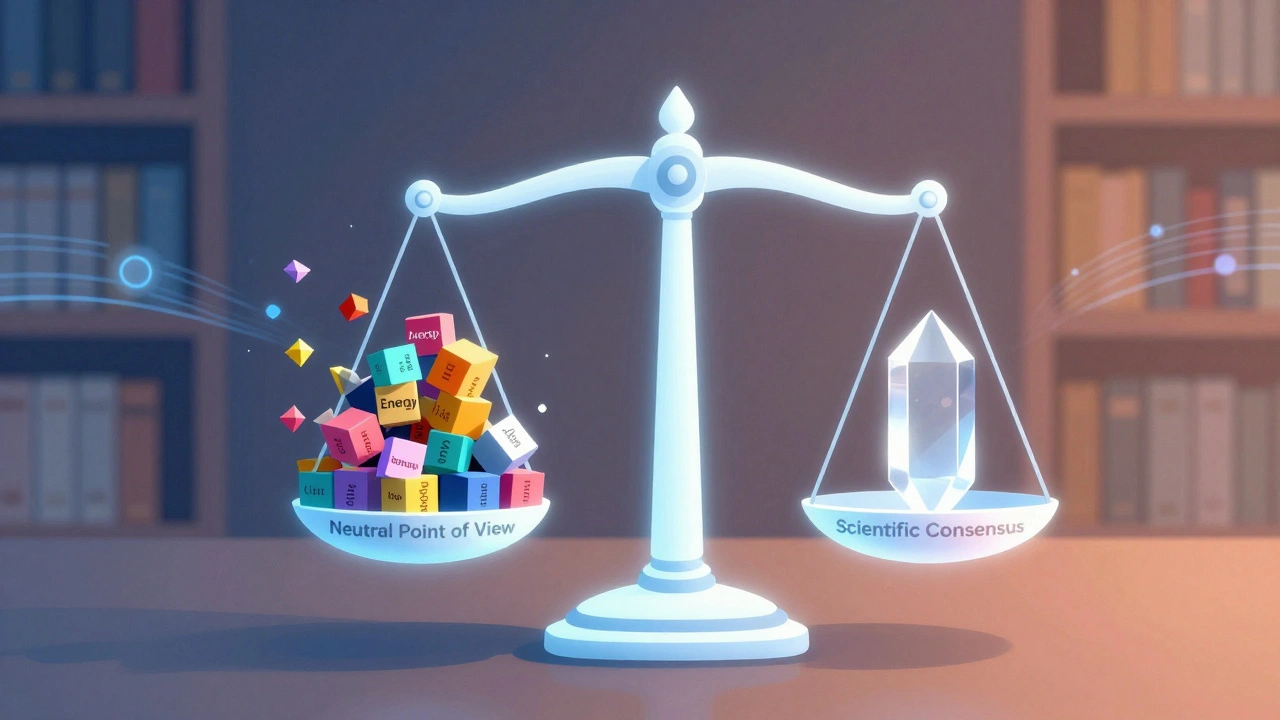
Imagine you are looking up a new health supplement or a fringe historical theory. You land on a Wikipedia page that reads like a promotional brochure for one side of the argument, while ignoring decades of mainstream research. This is not just an annoyance; it is a failure of the encyclopedia’s core mission. Wikipedia aims to be neutral, but without strict enforcement of policies against pseudoscience and undue weight, it can easily become a platform for misinformation.
The problem isn't usually malicious editing alone. It is often well-meaning contributors who believe they are adding "balance" by giving equal space to minority views, even when those views lack credible support. Understanding how to identify and prevent this requires a deep dive into Wikipedia’s editorial guidelines, specifically the concepts of Neutral Point of View (NPOV), Verifiability, and No Original Research.
Understanding the Core Policies: NPOV and UNDUEWEIGHT
To fix misinformation, you first need to understand the rules that govern truth on the platform. The most cited rule is Neutral Point of View (NPOV). Many people misinterpret NPOV as meaning "give equal time to all sides." If one person says the earth is flat and ten thousand scientists say it is round, NPOV does not require you to spend half the article on the flat earth claim. That would be inaccurate.
This is where the Undue Weight policy comes in. Wikipedia explicitly states that articles should reflect the proportion of attention each view has received in reliable sources. If a scientific consensus exists, the article must reflect that consensus prominently. Minority views can be mentioned, but only if they have been covered by high-quality, independent sources, and even then, they get a fraction of the space.
Think of it like a news report. If a politician makes a wild claim that is immediately debunked by fact-checkers, the news doesn't give the claim and the debunking equal column inches. The focus remains on the facts. Wikipedia operates on the same principle. When editors argue for "balance," they are often violating the spirit of NPOV by applying undue weight to fringe ideas.
Identifying Pseudoscience in Articles
Pseudoscience looks like science. It uses technical jargon, cites studies (often cherry-picked ones), and presents itself with confidence. But it lacks the self-correcting mechanism of real science. How do you spot it on a wiki page?
- Lack of Falsifiability: Claims that cannot be tested or proven wrong are red flags. For example, some alternative medicine claims rely on vague concepts like "energy flow" that cannot be measured.
- Reliance on Anecdotes: Personal stories and testimonials are not data. If an article leans heavily on user reviews or individual experiences rather than peer-reviewed studies, it is likely drifting into pseudoscience.
- Moving Goalposts: When evidence disproves a claim, proponents shift the criteria for proof. Real science accepts negative results; pseudoscience dismisses them.
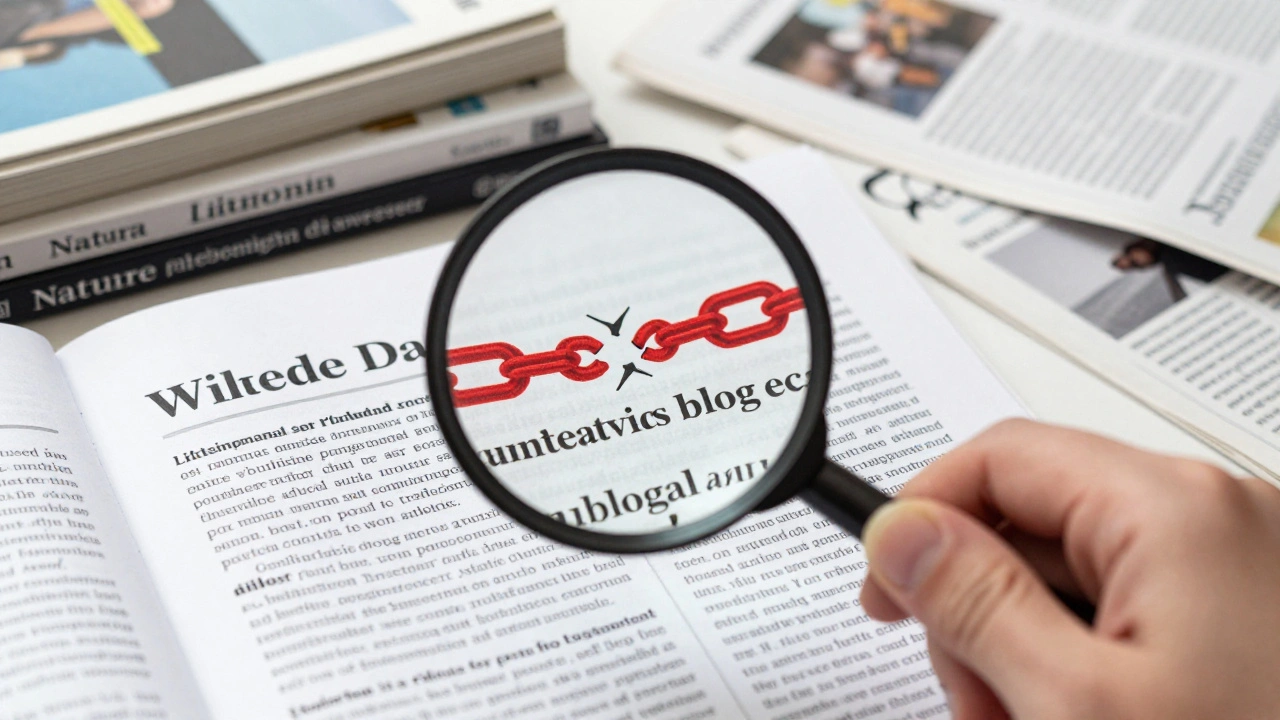
- Absence of Peer Review: Check the citations. Are they from reputable journals? Or are they from blogs, self-published books, or conferences with no oversight?
If you see these patterns, the article needs work. The goal isn't to delete the topic entirely-unless it's purely spam-but to reframe it. Instead of presenting a pseudoscientific claim as a valid alternative, present it as a belief system or a controversial idea that has been rejected by the scientific community.
The Role of Reliable Sources
You cannot have a good article without good sources. On Wikipedia, a source is only as good as its reliability. Not all websites are created equal. A blog post written by an enthusiast is not the same as a study published in Nature or The Lancet.
| Source Type | Reliability Level | Usage Recommendation |
|---|---|---|
| Peer-Reviewed Journals | High | Use for core facts and consensus statements |
| Major News Outlets (AP, Reuters) | Medium-High | Good for reporting on events or controversies |
| University Press Books | High | Excellent for historical context and analysis |
| Blogs and Social Media | Low | Avoid unless quoting the opinion directly |
| Self-Published Material | Very Low | Never use to support factual claims |
When editing an article about a controversial topic, always prioritize secondary sources. These are sources that analyze primary data. For instance, instead of citing a single raw dataset, cite a review article that summarizes multiple datasets. This helps ensure you are capturing the broader scientific consensus rather than an outlier finding.
Handling Content Disputes and Edit Wars
Preventing misinformation often leads to conflict. Editors who promote fringe views will fight back. They might accuse you of bias or censorship. This is where emotional detachment and procedural knowledge are key.
First, never edit-war. If someone reverts your changes, stop. Do not revert their revert. Instead, take the discussion to the article's talk page. Explain your edits clearly, citing specific policies like WP:NPOV and WP:UNDUEWEIGHT. Use a calm, professional tone. Avoid ad hominem attacks. Focus on the content, not the editor.
If the dispute continues, seek outside opinions. You can request a third-party opinion (3PO) from experienced editors who are not involved in the conflict. These editors look at the evidence and policies objectively. Often, just having a neutral party weigh in is enough to resolve the issue. If not, you can escalate to formal mediation or arbitration, though this is rare and time-consuming.
Remember, the goal is not to "win" the argument. The goal is to produce an accurate, verifiable article. Sometimes that means compromising on wording while holding firm on facts.

Practical Steps for Editors
If you want to actively help clean up Wikipedia, here is a step-by-step approach:
- Check the Talk Page: Before making major changes, read the history. Is there an ongoing debate? Have experts already weighed in? This saves you time and prevents unnecessary conflicts.
- Gather High-Quality Sources: Find recent, authoritative sources that support the mainstream view. Look for meta-analyses, government reports, and publications from recognized institutions.
- Draft Changes Locally: Use the visual editor or wikitext mode to make your changes in a sandbox or draft section. Ensure every claim is backed by a citation.
- Write a Clear Summary: When you save your edits, write a detailed edit summary. Explain why you made the changes and which policies you are following. For example: "Reduced weight of fringe theory per WP:UNDUEWEIGHT; added citations from peer-reviewed journals."
- Monitor and Respond: After saving, keep an eye on the article. If someone reverts you, engage politely on the talk page. Provide additional sources if needed.
Patience is crucial. Cleaning up an article can take weeks or months. But the effort pays off in creating a resource that users can trust.
The Impact of Misinformation
Why does this matter? Because people use Wikipedia to make decisions. Students cite it for papers. Doctors might glance at it for quick info. Voters check it for political background. If the information is skewed by pseudoscience, real-world harm can occur. People might avoid life-saving treatments, fall for scams, or develop distorted views of history.
By enforcing strict standards for reliability and neutrality, we protect the integrity of the entire project. It is a collective responsibility. Every editor plays a part in keeping the encyclopedia honest.
What is the difference between NPOV and Undue Weight?
NPOV (Neutral Point of View) is the overarching principle that articles must be written neutrally. Undue Weight is a specific guideline under NPOV that dictates how much space different viewpoints should receive. While NPOV says "be neutral," Undue Weight clarifies that neutrality does not mean equal time for all views, especially when one view is supported by overwhelming evidence and another is not.
Can I delete a section that contains pseudoscience?
You can remove content that is unverifiable or violates copyright, but you generally cannot delete a notable topic just because you disagree with it. Instead, you should rewrite the section to reflect the scientific consensus, citing reliable sources that debunk the pseudoscientific claims. If the topic is not notable at all, you can propose it for deletion through the Articles for Deletion process.
How do I find reliable sources for a controversial topic?
Start with academic databases like Google Scholar, JSTOR, or PubMed. Look for peer-reviewed journal articles, books from university presses, and reports from government agencies or international organizations like the WHO. Avoid blogs, social media, and self-published material. If a claim is controversial, look for review articles that summarize the state of the field.
What should I do if an editor keeps adding pseudoscientific claims?
Do not engage in an edit war. Revert the changes once, then explain your reasoning on the talk page, citing relevant policies. If the editor persists, seek a third-party opinion from other experienced editors. In extreme cases, you can report the editor to administrators for disruptive behavior.
Is Wikipedia a reliable source for academic work?
Generally, no. Most universities and schools prohibit citing Wikipedia directly because it is a tertiary source that can change at any time. However, Wikipedia is excellent for getting an overview of a topic and finding primary and secondary sources through its reference list. Always verify information from Wikipedia with more authoritative sources before using it in academic work.