
On Wikipedia, a sockpuppet isn’t a child’s toy-it’s a hidden user account created to deceive. These fake profiles are used to manipulate discussions, push biased edits, or dodge blocks. They’re not just annoying; they break the core promise of Wikipedia: neutral, collaborative knowledge. In 2025, over 12,000 sockpuppet accounts were identified and blocked by volunteers, up from 8,500 in 2023. The rise isn’t because more people are cheating-it’s because detection tools and community vigilance have gotten sharper.
What Exactly Is a Sockpuppet?
A sockpuppet account is any Wikipedia account controlled by someone who already has another account. The goal? To pretend to be multiple people when you’re really just one. You might see one sockpuppet defending an edit another account made, then later the same person comes back under a new name to argue the same point. Or maybe a banned user keeps creating new accounts to keep editing a controversial page-like a celebrity’s biography or a political topic.
Wikipedia doesn’t ban people outright. It bans accounts. So bad actors exploit that. They create new accounts with different IPs, email addresses, or usernames to slip past blocks. Some even use public Wi-Fi or VPNs to hide their location. The system was built for openness, but that openness can be abused.
How Wikipedia Detects Sockpuppets
Wikipedia doesn’t rely on guesswork. It uses a mix of automated tools and human eyes. The most powerful tool is CheckUser. This is a special permission only given to trusted volunteers. CheckUser can see technical data like IP addresses, browser fingerprints, and connection timestamps-even if the user is using a proxy.
Here’s how it works in practice:
- Two accounts make nearly identical edits within minutes of each other, using the same phrasing and timing.
- Both accounts edit the same controversial article but never interact with other users.
- One account gets blocked, and within hours, a new one appears with a similar username (e.g., “User:JohnSmith123” → “User:JohnSmith456”).
These patterns trigger alerts. Automated bots like ClueBot NG flag suspicious edits in real time. They don’t block accounts-they just raise red flags for human reviewers. Then, experienced editors dig deeper. They look at edit histories, talk page behavior, and even writing style. People have unique ways of typing: punctuation habits, word choices, sentence length. It’s like recognizing someone’s handwriting.
Common Signs of a Sockpuppet
You don’t need CheckUser access to spot trouble. Here are red flags anyone can notice:
- Identical editing patterns: Same time of day, same number of edits per session, same type of changes (e.g., always removing citations, always adding promotional links).
- Conflict of interest: An account only edits pages about a company, person, or product they’re connected to-like a PR firm editing their client’s page.
- Isolation: The account never responds to comments, never engages with other editors, and never edits anything outside the target topic.
- Repetition after blocks: A blocked user returns under a new name with the same agenda.
- Account age: New accounts with no history that immediately start making aggressive edits on contentious topics.
One real case from 2024 involved a user who created 17 accounts over six months to push a specific narrative about a local school board election. Each account edited the same page, praised the same candidate, and attacked critics. Volunteers noticed the same grammatical errors appeared in every account’s edits. That tiny detail-repeating a misspelled word-was the break they needed.
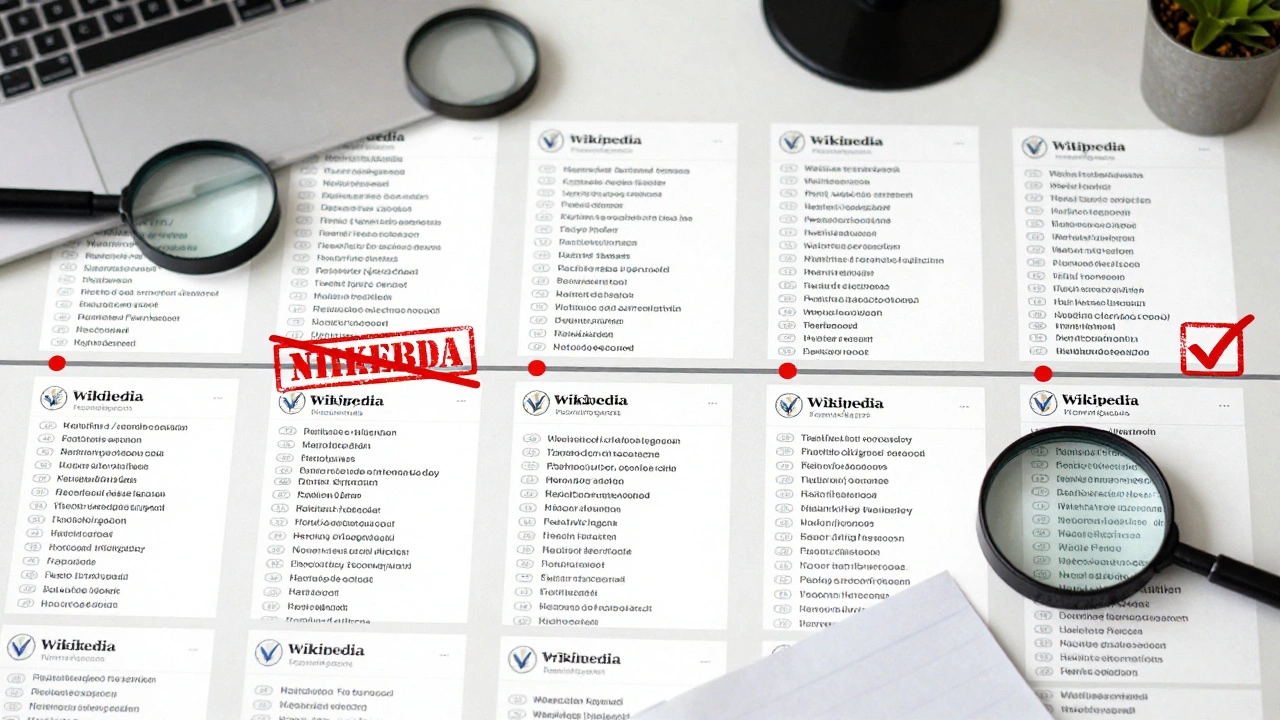
Prevention: Making It Harder to Cheat
Detection is important, but stopping sockpuppets before they start is better. Wikipedia uses several layers of prevention:
- Account creation limits: New users can’t edit certain protected pages until they’ve been active for four days and made at least ten edits.
- Auto-blocking by IP: If 10+ sockpuppets come from the same IP range, that entire range gets temporarily blocked.
- Template warnings: New users see pop-up messages explaining Wikipedia’s policies when they try to edit sensitive pages.
- Editing restrictions: On high-risk pages (like those about living people or politics), only autoconfirmed users (those with 10+ edits and 4+ days of activity) can edit.
These aren’t perfect. Determined abusers still find ways around them. But they raise the cost of cheating. It’s harder to run 20 sockpuppets if you have to wait four days between each one, and if every edit gets flagged for review.
The Human Element: Why Volunteers Matter
No algorithm catches everything. That’s why Wikipedia’s community of volunteers is irreplaceable. Experienced editors spend hours reviewing edit histories, cross-checking usernames, and analyzing behavior. They don’t get paid. They do it because they care about keeping Wikipedia honest.
There’s a culture of accountability. If you’re accused of being a sockpuppet, you can appeal. You’re given a chance to explain. Most of the time, the evidence speaks for itself. But sometimes, a user genuinely didn’t know they were violating rules. That’s why Wikipedia offers guidance, not just punishment.
One editor from Australia noticed a pattern across three accounts editing pages about Indigenous land rights. All used the same obscure reference source. She dug into the source’s history and found it was written by a known activist. That led to uncovering a coordinated effort to push a single viewpoint. Her report triggered a CheckUser request, which confirmed all three accounts were linked.

What Happens When a Sockpuppet Is Found?
Once confirmed, the process is clear:
- All sockpuppet accounts are blocked indefinitely.
- Edits made by those accounts are reverted.
- The main account (if it exists) is also blocked.
- The case is documented on Wikipedia’s Sockpuppet Investigations page for transparency.
- If the user was a paid editor (like a PR professional), their employer may be publicly named.
There’s no second chance. Wikipedia doesn’t ban users for being wrong-it bans them for being deceptive. If you lie about who you are, you lose your right to participate.
Why This Matters Beyond Wikipedia
Wikipedia isn’t just a website. It’s one of the most trusted sources of information on the internet. When sockpuppets slip through, they don’t just mess up an article-they erode public trust. A 2025 study by the Reuters Institute found that 68% of people who use Wikipedia for research believe it’s more reliable than search engine results. That trust is built on the assumption that edits are honest and transparent.
Other platforms-Reddit, YouTube, news sites-are now watching how Wikipedia handles this. Their methods are being studied as models for fighting coordinated inauthentic behavior. Wikipedia’s approach isn’t about censorship. It’s about integrity.
What You Can Do
You don’t need to be an admin to help. If you see something odd:
- Don’t engage. Don’t argue with the account. That’s what they want.
- Report it on the Sockpuppet Investigations page.
- Use the "Report vandalism" button on the edit history.
- If you’re unsure, ask on the Teahouse-a friendly space for new editors to ask questions.
Most reports lead to nothing. But every once in a while, one report stops a whole network.
Can a sockpuppet account be unblocked?
No. Once an account is confirmed as a sockpuppet, it’s blocked permanently. Even if the user claims they didn’t know it was against the rules, the deception itself violates Wikipedia’s core policies. There are no appeals for confirmed sockpuppet accounts.
Do sockpuppets ever work for good causes?
No. Even if the goal is noble-like promoting environmental awareness or correcting misinformation-using fake accounts breaks Wikipedia’s rules. The platform requires transparency. If you care about a topic, edit under your real identity. That’s how you earn trust, not manipulate it.
How long does it take to investigate a sockpuppet claim?
It varies. Simple cases with clear evidence can be resolved in hours. Complex cases involving dozens of accounts or international users can take weeks. The process depends on the availability of CheckUser volunteers and the quality of the evidence submitted.
Can I check if someone is a sockpuppet myself?
You can look for patterns, but you can’t use CheckUser tools. Only authorized volunteers have access to IP and device data. If you suspect a sockpuppet, report it. Don’t try to investigate on your own-it can lead to false accusations and community conflict.
Are paid editors allowed to edit Wikipedia?
Yes, but they must disclose their affiliation. If you’re hired to edit a company’s page, you must say so on your user page and in every edit summary. Hiding paid editing is a violation and often leads to sockpuppet investigations. Transparency is mandatory.