When a major investigative report breaks-say, an exposé on corporate corruption or government misconduct-it doesn't just stay in the news cycle. It migrates. Within hours, editors are updating Wikipedia, which is a free, web-based encyclopedia that relies on volunteer editors and strict sourcing guidelines to summarize complex topics. But here’s the catch: Wikipedia isn’t a news site. It’s a reference work. This distinction changes everything about how those stories are handled.
If you’ve ever wondered why your favorite investigative piece feels "missing" from Wikipedia, or why it looks so different when it does appear, you’re not alone. The process of turning raw, breaking journalism into stable, long-term reference material is messy, deliberate, and often misunderstood. Let’s look at how this transformation actually happens behind the scenes.
The Core Conflict: News vs. Reference
Investigative journalism is dynamic. It evolves as new documents leak, interviews happen, and legal battles unfold. Wikipedia, by design, is static. Its goal is to provide a summary of what is already well-established and widely reported by reliable sources. This creates a natural friction.
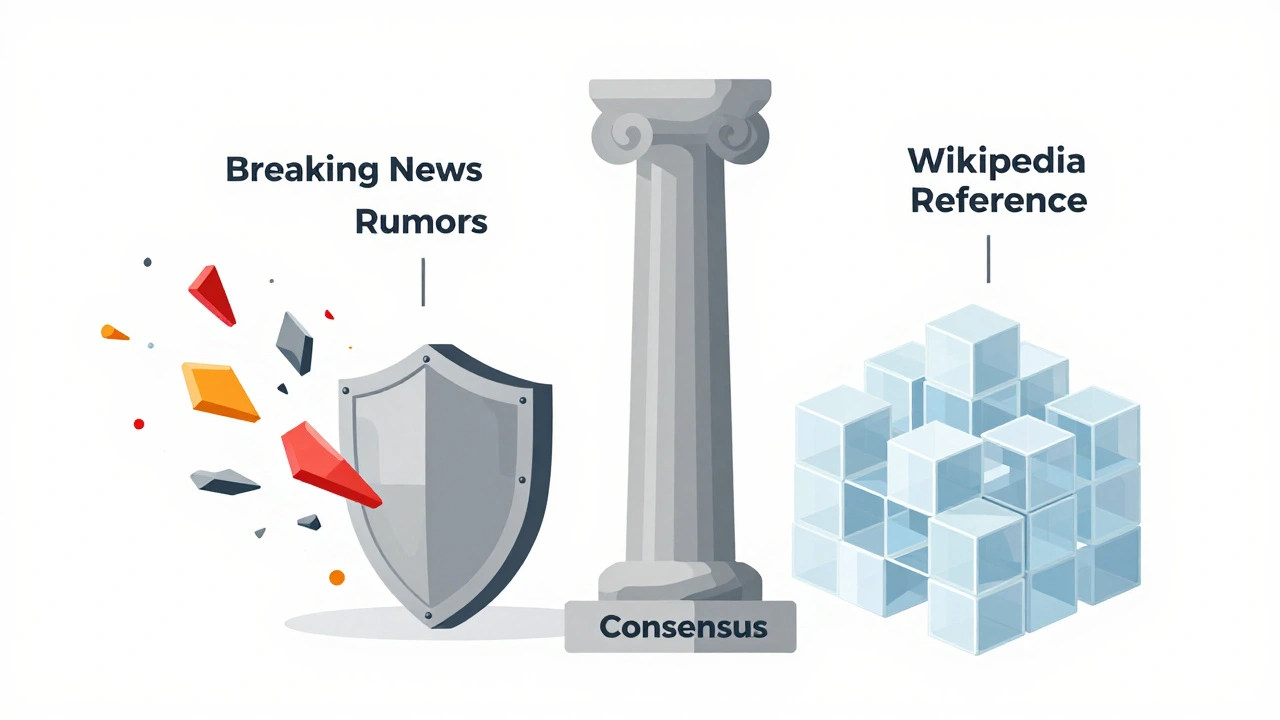
When a story first breaks, it is considered "breaking news." Wikipedia has a specific policy against original reporting. Editors cannot add details just because they saw them on Twitter or read them in a single blog post. They must wait until multiple independent, high-quality sources have covered the event. This delay frustrates readers who want immediate updates, but it protects the encyclopedia from becoming a rumor mill.
Think of it like building a house. Investigative journalists lay the foundation with fresh concrete. Wikipedia waits for the concrete to cure before putting up the walls. If you try to build on wet concrete, the structure collapses. In the context of information, "collapsing" means spreading misinformation that becomes hard to correct later.
The Role of Reliable Sources
The backbone of any Wikipedia article on investigative topics is the concept of reliable sources, which are publications with a reputation for fact-checking and editorial oversight, such as major newspapers, academic journals, and broadcast networks. Not all journalism is created equal in the eyes of Wikipedia editors.
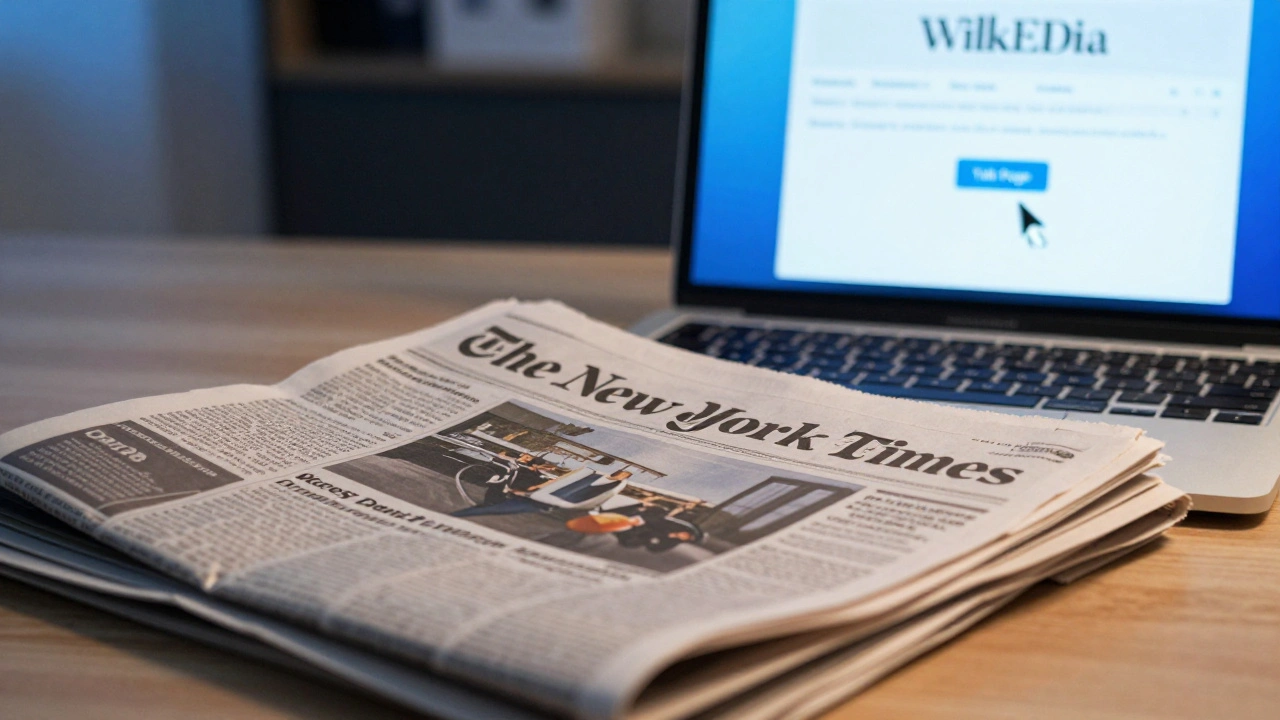
For a complex investigation to make it into an article, it usually needs to be picked up by outlets known for rigorous verification. A story reported solely by a partisan blog or a self-published newsletter will likely be rejected. However, if The New York Times, a prominent American daily newspaper known for its extensive investigative reporting and global coverage publishes a deep dive, and then Reuters, an international news organization that provides text and video news content to media organizations worldwide verifies key facts, Wikipedia editors can start weaving those accounts together.
This reliance on secondary reporting means that Wikipedia often summarizes the *consensus* of the journalism rather than the journalism itself. You won’t find the emotional narrative arc of the reporter’s journey. Instead, you’ll find a dry list of findings, dates, and implicated parties. This is intentional. The encyclopedia strips away the storytelling to leave only the verifiable facts.
Neutral Point of View (NPOV) in Practice
One of the hardest parts of summarizing investigative journalism is maintaining Neutral Point of View (NPOV), which is a core Wikipedia policy requiring articles to represent all significant viewpoints fairly, without bias toward any one side. Investigative pieces are inherently accusatory. They aim to prove wrongdoing. Wikipedia cannot take sides.
So, how do they handle allegations? They attribute them. Instead of writing "Company X stole money," a Wikipedia editor will write "Company X was accused of stealing money by [Source A] and [Source B]." This subtle shift is crucial. It separates the allegation from the established fact. If the company denies the claims, that denial must also be included, provided it comes from a reliable source.
This balancing act often leads to debates among editors. One editor might feel the evidence is overwhelming and wants stronger language. Another might worry about libel risks or premature conclusions. These discussions happen on "Talk pages," where editors hash out wording until they reach a consensus that satisfies the NPOV requirement. The result is often a paragraph that feels cautious, but it is legally and ethically sound.
Handling Ongoing Investigations
What happens when the investigation isn’t over? Many major journalistic projects span years. Think of the Panama Papers or the Paradise Papers. These weren’t single-day events; they were rolling releases of data followed by months of follow-up reporting.
In these cases, Wikipedia creates dedicated articles for the dataset itself (e.g., "Panama Papers") rather than trying to stuff every finding into existing biographies of politicians or CEOs. This allows the encyclopedia to track the evolving nature of the story without cluttering unrelated pages. Editors update the main article as new leaks emerge, citing the latest reports from consortiums like the International Consortium of Investigative Journalists (ICIJ), a non-profit organization that coordinates cross-border investigations between newsrooms around the world.
However, there is a limit. If a story becomes too speculative or lacks sufficient third-party analysis, Wikipedia may decline to create a standalone article altogether. Instead, the information might be added to broader topics, such as "Corruption in [Country Name]" or "History of [Industry]." This ensures that even incomplete investigations contribute to the larger historical record without creating fragile, isolated entries.
| Feature | Investigative Journalism | Wikipedia Summary |
|---|---|---|
| Purpose | To expose truth, provoke change, and tell a compelling story | To provide a verified, neutral overview of established facts |
| Tone | Narrative, urgent, sometimes emotive | Dry, academic, detached |
| Sourcing | Primary documents, whistleblower interviews, exclusive leaks | Secondary analysis from multiple reliable publications |
| Timeliness | Immediate; focuses on the "now" | Delayed; focuses on the "established" |
| Stability | Evolves rapidly as new info emerges | Changes slowly only after broad consensus forms |
The Risk of "WikiPooh" and Disinformation
A common misconception is that Wikipedia is easily manipulated by bad actors. While vandalism happens, sophisticated disinformation campaigns targeting investigative topics are harder to pull off than people think. Why? Because of the community’s vigilance.
High-profile articles related to political scandals or corporate fraud are often "semi-protected" or "fully protected." This means only experienced, trusted editors can make changes. Furthermore, these pages are watched closely by bots and human patrollers who revert unverified edits almost instantly.
If a journalist publishes a bombshell claim that turns out to be false, Wikipedia’s response is swift but measured. Once the retractions are published in reliable sources, editors remove the disputed information. The history of the page remains, providing a transparent audit trail. This transparency is a feature, not a bug. It allows researchers to see how understanding of an event evolved over time.
Best Practices for Readers and Researchers
So, how should you use Wikipedia when dealing with complex investigative topics? Treat it as a starting point, not the finish line. Use it to get the timeline straight. Identify the key players. Understand the general consensus. Then, click the citations at the bottom of the page.
Those citations link back to the original investigative journalism. Reading the primary sources gives you the nuance, the context, and the depth that Wikipedia necessarily omits. By combining the structural clarity of the encyclopedia with the narrative richness of professional journalism, you get the most complete picture possible.
Remember, Wikipedia summarizes what we know. Investigative journalism discovers what we didn’t. Both are essential tools for navigating the modern information landscape.
Can I add my own investigative findings to Wikipedia?
No. Wikipedia strictly prohibits original research. You cannot publish new information directly. Your findings must first be published in a reliable, third-party source (like a major newspaper or academic journal). Only then can other editors cite that publication to add the information to Wikipedia.
Why does Wikipedia seem biased against certain controversial figures?
It often appears biased because it adheres to the Neutral Point of View (NPOV) policy. This requires giving weight to mainstream, reliable sources. If most credible journalism criticizes a figure, Wikipedia will reflect that criticism. However, it must also include any significant counter-arguments from reliable sources, ensuring a balanced representation of the public record.
How quickly does Wikipedia update after a major scandal breaks?
Updates vary. Breaking news sections might appear within hours, but detailed summaries of investigative findings often take days or weeks. Editors wait for multiple reliable sources to confirm the facts to avoid spreading rumors. High-profile pages may also be locked temporarily to prevent edit wars during volatile periods.
Is Wikipedia a reliable source for academic papers?
Generally, no. Most universities and academic institutions prohibit using Wikipedia as a primary citation because it is a tertiary source. However, it is excellent for background research. The real value lies in the references section at the bottom of the article, which links to primary and secondary sources that are acceptable for academic citation.
What happens if an investigative report is retracted?
If a reliable source retracts a story, Wikipedia editors will remove the associated information from the articles, citing the retraction. The page history retains a record of the change, showing when the information was added and when it was removed. This ensures the encyclopedia reflects the current state of verified knowledge.