The Wikimedia Foundation isn’t just the organization behind Wikipedia-it’s the engine keeping the world’s largest free knowledge project running. At the heart of that engine is the Board of Trustees. This group doesn’t write articles or edit pages, but it makes the decisions that shape how Wikipedia grows, stays independent, and protects its mission. If you’ve ever wondered who’s really in charge behind the scenes, here’s how the Board works, who sits on it, and why it matters.
What the Board of Trustees Actually Does
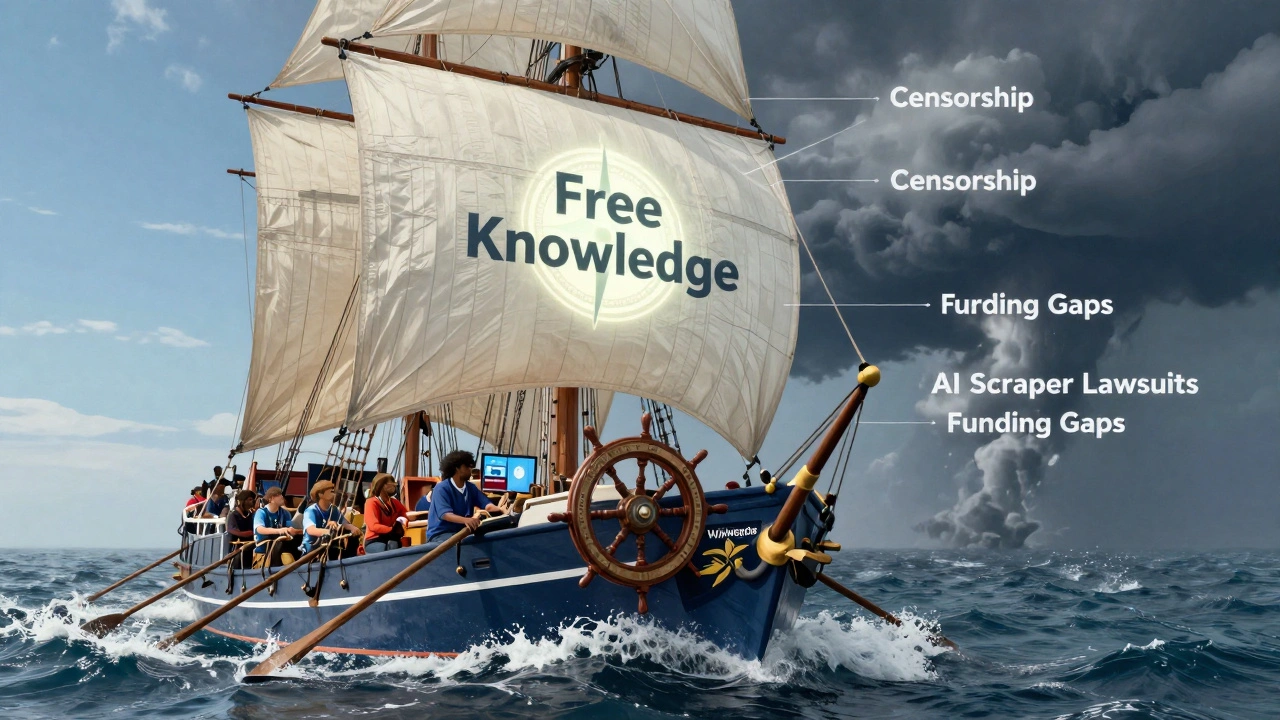
The Board of Trustees isn’t a day-to-day manager. It doesn’t approve individual edits or mediate disputes between editors. Instead, it sets the long-term direction. Think of it like a steering committee for a massive ship. The crew (volunteer editors) handles the sails and oars. The Board decides which way to sail, how to handle storms, and whether to build new decks.
Its core responsibilities include hiring and evaluating the Executive Director, approving the annual budget, overseeing financial health, and ensuring the Foundation stays true to its mission: to empower and engage people around the world to collect and develop free educational content. It also protects the Foundation’s legal standing, especially when governments try to censor content or demand data.
In 2025, the Board approved a $132 million operating budget. That money funds servers, legal teams, grants to volunteer chapters, and staff who support global outreach. It doesn’t pay editors-those are volunteers. But it pays for the infrastructure that lets them work.
Who Sits on the Board
The Board has 18 members. Not all are the same. Some are elected by the community. Others are appointed by existing board members. A few represent partner organizations. This mix is intentional.
- Community-elected trustees (6 seats): Chosen by Wikipedia editors and other Wikimedia contributors. These are people who’ve spent years helping build the projects. They know the culture, the conflicts, and the unwritten rules.
- Board-appointed trustees (7 seats): Selected by the current Board. These are often experts in law, finance, technology, or global nonprofit governance. They bring skills the community might not have.
- Affiliate representatives (3 seats): Nominated by Wikimedia chapters (like Wikimedia Deutschland or Wikimedia Canada). These keep the global network connected.
- Founder’s seat (1 seat): Reserved for Jimmy Wales, the founder. He doesn’t vote unless there’s a tie, but he can speak and influence discussions.
- CEO as ex-officio member (1 seat): The Executive Director sits on the Board but doesn’t vote. Their job is to carry out the Board’s decisions.
Terms last three years, with about half the Board turning over each year. This keeps continuity without letting power stagnate.

How Decisions Are Made
Board meetings happen every other month, usually via video. Minutes are public. Votes are recorded. But real decisions don’t always happen in meetings.
Most of the work happens in committees. There’s a Finance and Audit Committee, a Governance Committee, a Fundraising Committee, and others. These are made up of Board members plus outside advisors. They dig into budgets, review risk policies, or draft new bylaws before bringing them to the full Board.
Transparency is built in. Anyone can watch live streams of meetings. All financial reports are published. The Board has a public conflict-of-interest policy. If a trustee works for a company that sells services to Wikimedia, they must disclose it-and often recuse themselves from related votes.
But it’s not perfect. Critics say the Board is too insulated. Community-elected members sometimes feel sidelined by professional appointees. In 2023, a controversial vote to expand the Board’s power to remove community-elected trustees sparked protests. The Board later revised the proposal after feedback from editors.
Key Challenges Today
Right now, the Board is juggling three big pressures.
First: AI and automation. As AI tools scrape Wikipedia to train models, the Foundation faces legal questions. Who owns the data? Can it be used commercially? The Board has to decide whether to block AI scrapers, license content, or stay neutral. In early 2025, it approved a new policy allowing non-commercial AI use under strict attribution rules.
Second: Global access and censorship. In countries like Iran, China, and Russia, Wikipedia is partially or fully blocked. The Board has to decide whether to support circumvention tools, work with local activists, or avoid political entanglement. It’s chosen the latter-focusing on technical solutions like mirror sites and encrypted access rather than public advocacy.
Third: Funding sustainability. Wikipedia doesn’t run ads. It relies almost entirely on small donations from 30 million people a year. The Board must balance keeping fundraising low-key (to preserve trust) with needing more money for infrastructure. In 2024, the Foundation raised $157 million. That’s up 12% from the year before, but server costs are rising faster.
Why This Matters to You
You might think: "I just read Wikipedia. Why should I care about a board?" But here’s the truth: the Board decides whether Wikipedia stays free, open, and editable by anyone.
Without the Board, there’d be no legal shield against lawsuits. No funding for mobile apps. No support for Wikidata or Wikimedia Commons. No protection for editors in authoritarian regimes. The Board doesn’t edit articles-but it makes sure the platform that lets you edit them keeps running.
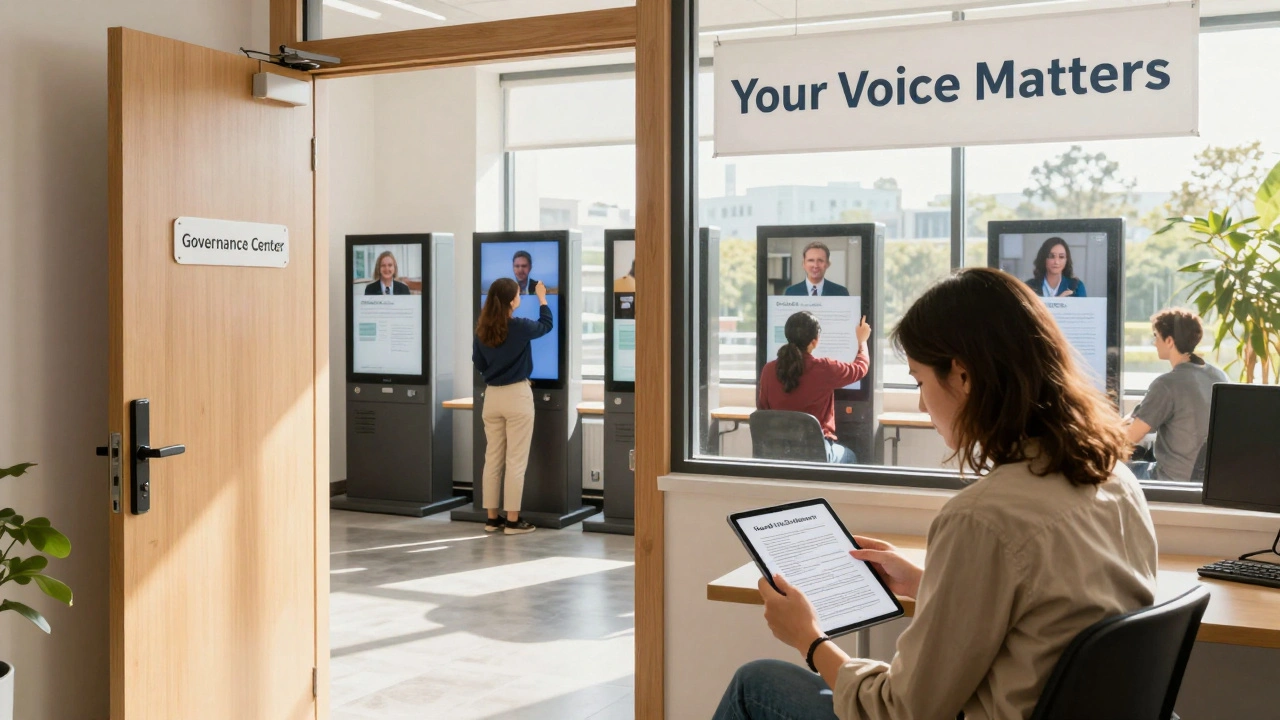
And if you’re a contributor? Your voice matters. You can nominate yourself to run for a community-elected seat. You can attend public forums. You can review budget proposals. The Board isn’t a closed circle. It’s a structure designed to listen-even if it doesn’t always get it right.
How to Get Involved
Want to influence the Board’s direction? You don’t need to be an expert. You just need to show up.
- Read the Board’s public meeting minutes and financial reports. They’re on Wikimedia Foundation’s official website under "Governance".
- Join a local Wikimedia chapter. They often host Q&A sessions with Board members.
- Participate in trustee elections. Voting is open to registered editors with at least 500 edits and one year of activity.
- Submit feedback during public comment periods. The Board regularly opens proposals for public review.
Some of the most effective Board members started as editors who just asked, "Why is this decision being made?"
Who can vote for the Wikimedia Board of Trustees?
Only registered contributors to Wikimedia projects with at least 500 edits across any project (like Wikipedia, Wiktionary, or Commons) and who have been active for at least one year can vote in trustee elections. This ensures voters have a track record of contributing to the projects. Voting is done through a secure online system during designated election periods.
Do Board members get paid?
No, Board members are volunteers. They don’t receive a salary. However, the Wikimedia Foundation covers reasonable expenses like travel to meetings, accommodation, and necessary communications. This keeps the Board focused on mission, not money.
Can the Board remove Wikipedia editors?
No, the Board does not remove individual editors. That’s handled by community-driven processes like administrator votes, arbitration committees, and local dispute resolution. The Board only steps in if an editor’s actions threaten the Foundation’s legal standing or violate its core policies at a systemic level-like coordinated vandalism campaigns funded by outside groups.
How often does the Board change its bylaws?
The Board reviews its bylaws every two years. Major changes require public consultation and a two-thirds vote. Recent updates include expanding community representation and clarifying conflict-of-interest rules. The last full revision was in 2023.
What’s the difference between the Board and the Wikimedia chapters?
The Board governs the Wikimedia Foundation-the legal entity that owns servers, trademarks, and funds. Wikimedia chapters are independent nonprofit organizations in different countries that support local projects, organize events, and sometimes raise local funds. The Board works with chapters but doesn’t control them. Chapters report to the Foundation but operate autonomously.