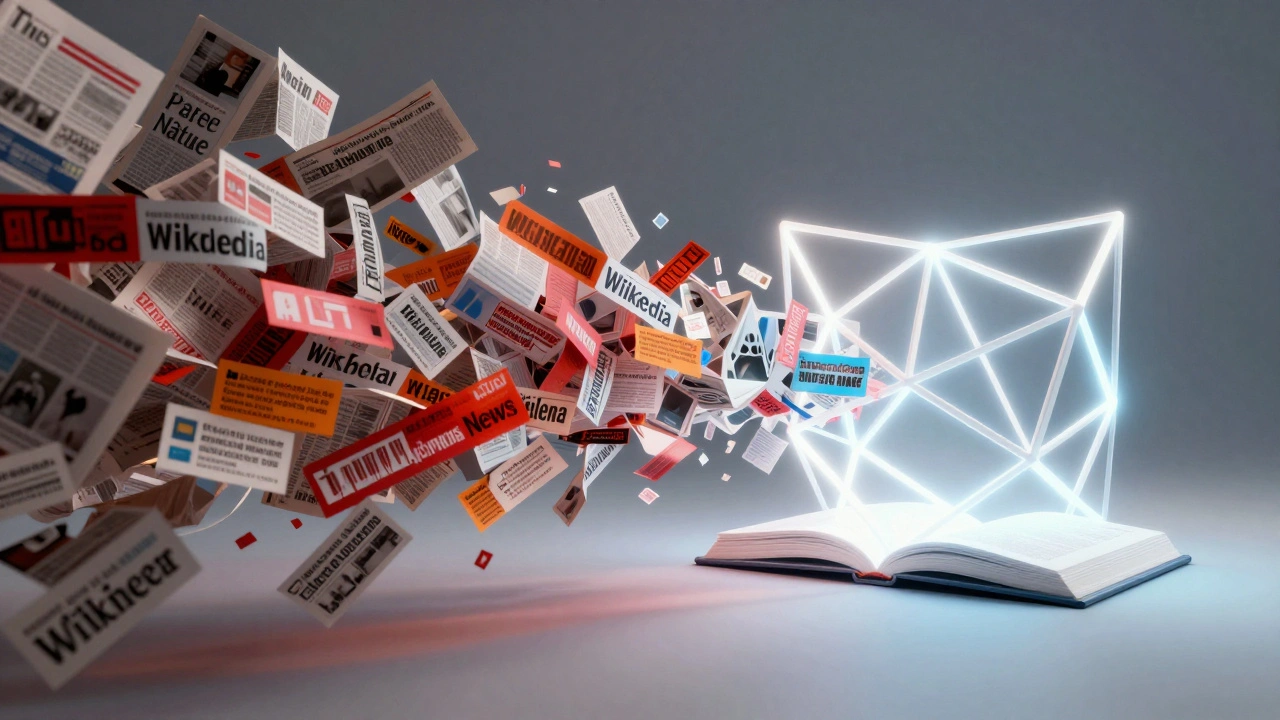
Imagine reading a breaking news story about a massive corporate scandal. The headlines are screaming, the details are messy, and half the internet is arguing about what actually happened. Now, imagine walking into a library five years later to find out exactly how that scandal affected global markets. You don't want the gossip; you want the facts. That shift-from the chaos of breaking news to the clarity of historical record-is exactly where Wikipedia is the world's largest free online encyclopedia. comes in.
We often treat Wikipedia as a quick fix for trivia. But its real power lies in how it processes complex, long-term investigations. When a major investigative piece drops, Wikipedia doesn't just copy-paste the article. It acts as a filter, a summarizer, and eventually, a historian. This process transforms raw, emotional reporting into stable, verifiable reference material.
The Gap Between News and Reference
There is a fundamental difference between news and reference. News is fast. It’s reactive. It’s designed to grab your attention right now. Reference material is slow. It’s deliberate. It’s designed to help you understand something over time.
Investigative journalism is in-depth reporting that uncovers hidden truths about powerful institutions. takes months or even years. Think of the Panama Papers or the Watergate hearings. These aren't single events; they are sprawling narratives with hundreds of players. If you try to read every single article from day one, you get overwhelmed. You miss the forest for the trees.
This is why we need synthesis. Synthesis is the act of combining different sources to create a coherent whole. Wikipedia editors perform this synthesis constantly. They take dozens of conflicting reports, strip away the adjectives, remove the speculation, and leave only what can be proven by reliable sources. This turns a chaotic news cycle into a structured entry you can trust.
The Role of Reliable Sources
You might wonder: "Who decides what goes on Wikipedia?" The answer isn't a single editor. It's a system built on Reliable sources are publications with a reputation for fact-checking and editorial oversight.. Wikipedia has strict rules about which publications count. A random blog post doesn't cut it. Neither does an unverified social media rumor.
For complex investigations, editors look for consensus among high-quality outlets. If The New York Times, The Guardian, and BBC News all report the same fact, that fact gets written into the article. If only one outlet claims something, it usually stays out-or gets labeled as disputed. This creates a safety net against misinformation.
Consider the case of the Cambridge Analytica scandal. In 2018, the news was full of accusations, denials, and political spin. Wikipedia editors didn't pick a side. They looked at court documents, official government inquiries, and reporting from top-tier newspapers. The resulting page didn't tell you who was "evil." It told you what had been legally established and widely reported. That distinction is crucial for reference use.
Handling Ongoing Investigations
What happens when the investigation isn't finished? This is the hardest part for any reference work. Life is messy, and legal cases drag on for years. Wikipedia handles this through careful wording and constant updates.
Editors use specific language to show uncertainty. Instead of saying "Company X committed fraud," they write "Company X was accused of fraud by regulators." This small change protects the integrity of the article. It acknowledges the accusation without stating guilt before a verdict.
They also add templates. You’ve probably seen boxes at the top of pages that say "This article needs additional citations" or "This section is outdated." These are signals to readers that the information is still being refined. For someone using Wikipedia for research, these warnings are vital. They tell you where the data is solid and where it’s still shaky.
Structure and Navigation
A good summary isn't just accurate; it's organized. Wikipedia entries follow a standard structure that makes complex topics easier to digest. Here is how a typical investigative topic breaks down:
- Lead Section: A concise overview of the entire event. This answers the "who, what, where, when, and why" in three paragraphs or less.
- Background: Context before the investigation started. Why did this issue matter?
- The Investigation: A chronological account of how the story broke. Who uncovered it? What were the key milestones?
- Reactions: How did governments, companies, and the public respond?
- Aftermath: What changed because of the investigation? Were laws passed? Did people go to jail?
This structure helps you skip around. If you already know the background, you can jump straight to the aftermath. You don't have to read a 10,000-word feature article from start to finish. You get the skeleton of the story, fleshed out with verified facts.
Comparison: News Article vs. Wikipedia Entry
| Feature | Breaking News Article | Wikipedia Summary |
|---|---|---|
| Purpose | To inform immediately and drive engagement | To provide a stable, neutral overview |
| Tone | Often urgent, dramatic, or opinionated | Neutral, factual, and detached |
| Source Base | Single reporter or organization | Multiple independent sources required |
| Longevity | Becomes outdated quickly | Updated continuously over years |
| Depth | Deep dive into specific angles | Broad coverage of all major aspects |
The Human Element: Editors as Curators
Behind every Wikipedia page are volunteers. Some are students, some are professors, and some are former journalists. These editors act as curators. They debate every sentence. They check dates, names, and quotes. This community effort is what keeps the content fresh and accurate.
When a new investigative report drops, experienced editors monitor the relevant pages closely. They watch for vandalism-people trying to delete unfavorable facts-and they rush to add new, verified information. This vigilance ensures that the summary evolves with the story. It’s not a static document; it’s a living record.
However, this human element also brings bias risks. Editors have their own views. To counter this, Wikipedia enforces a Neutral point of view (NPOV) is a core policy requiring articles to represent all significant viewpoints fairly.. This means if a company denies allegations, that denial must be included alongside the accusations, provided both are backed by reliable sources. The goal isn't to balance truth with lies; it's to balance competing claims until the truth emerges.
Using Wikipedia for Research
If you're a student, a writer, or just a curious reader, how should you use Wikipedia for complex topics? Don't stop at the first paragraph. Treat it as a starting point, not the end.
Here is a practical checklist for using Wikipedia effectively:
- Read the Lead: Get the big picture quickly. Understand the main players and outcomes.
- Check the References: Scroll down to the bottom. Click on the footnotes. See which news outlets support each claim. This leads you back to the primary sources.
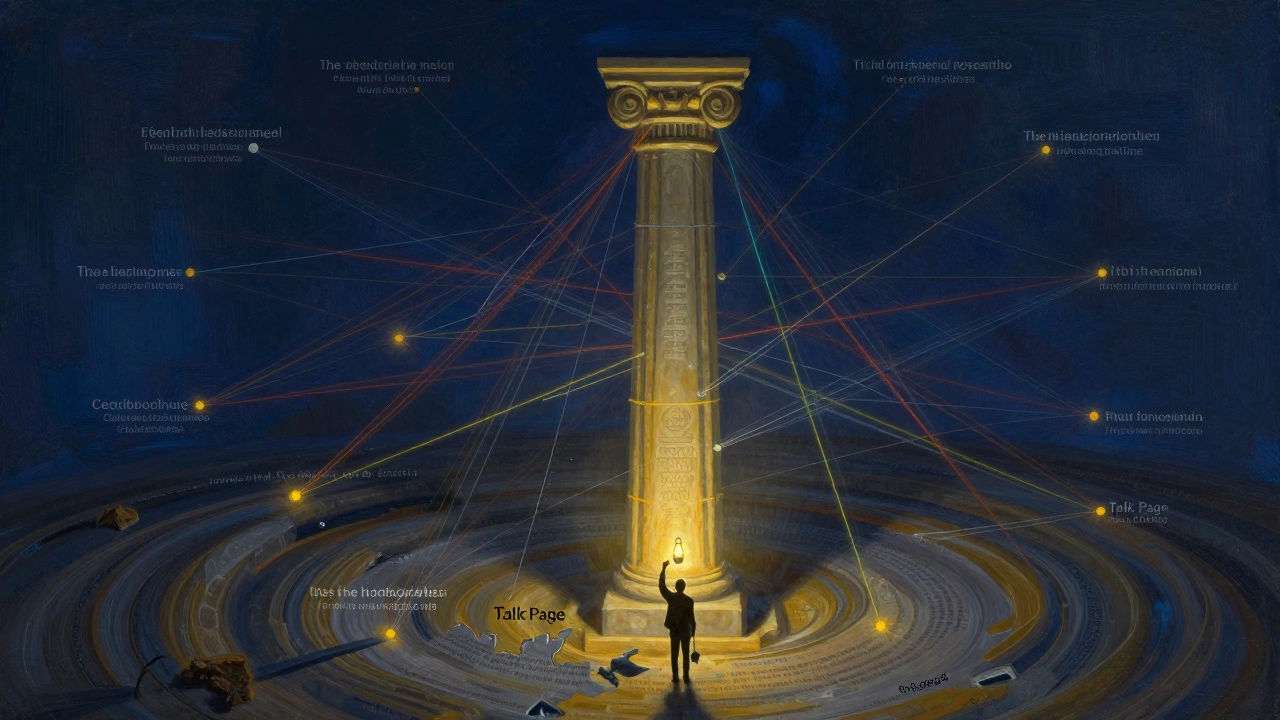
- Look at the Talk Page: Every article has a "Talk" tab. Here, editors discuss controversies. Reading this gives you insight into what facts are disputed and why.
- Compare Versions: Use the "View History" button to see how the article changed over time. Did new evidence come out? Was a controversial claim removed?
This approach turns Wikipedia from a simple lookup tool into a research hub. You get the summary first, then you dig deeper into the sources that built that summary. It saves you hours of searching through archives.
Challenges and Limitations
No system is perfect. Wikipedia struggles with very recent events. In the first few days after a major scandal breaks, the articles can be volatile. Facts change rapidly, and editors may disagree on how to phrase things. During this period, the content is useful for awareness but risky for citation.
Another challenge is coverage gaps. Not all investigations get equal attention. High-profile scandals involving celebrities or major corporations get detailed pages. Smaller, local investigations might get little more than a mention. This reflects the bias of the news media itself-if no major outlet covers it, it won't appear prominently on Wikipedia.
Despite these limits, Wikipedia remains the best free resource for synthesizing complex information. It bridges the gap between the noise of daily news and the silence of academic archives. By understanding how it works, you can use it smarter, faster, and more critically.
Is Wikipedia reliable for citing in academic papers?
Generally, no. Most universities and journals do not accept Wikipedia as a primary source because it is a tertiary source. However, it is excellent for finding primary sources. Look at the references at the bottom of the page to find the original news articles, books, or studies that you can cite instead.
How does Wikipedia handle biased news reports?
Wikipedia requires a neutral point of view. If two reputable news outlets present opposing views on an investigation, Wikipedia will summarize both perspectives proportionally. It avoids favoring one narrative unless one side is overwhelmingly supported by evidence and consensus among reliable sources.
Can anyone edit Wikipedia articles about ongoing scandals?
Yes, anyone can edit, but changes are monitored. For high-traffic pages about current events, edits are often semi-protected, meaning only registered users can make changes. Vandalism or unsourced claims are usually reverted within minutes by other editors or automated bots.
Why is the "Talk" page important for investigative topics?
The Talk page shows the behind-the-scenes debate. It reveals which facts are contested, why certain sources were rejected, and how editors reached a consensus. For complex investigations, this transparency helps you understand the reliability of the information presented in the main article.
How quickly does Wikipedia update after a major investigative reveal?
Updates can happen within minutes for breaking news. However, for complex investigations, editors wait for multiple reliable sources to confirm facts before adding them. This delay ensures accuracy over speed, preventing the spread of rumors during the initial chaos of a story breaking.