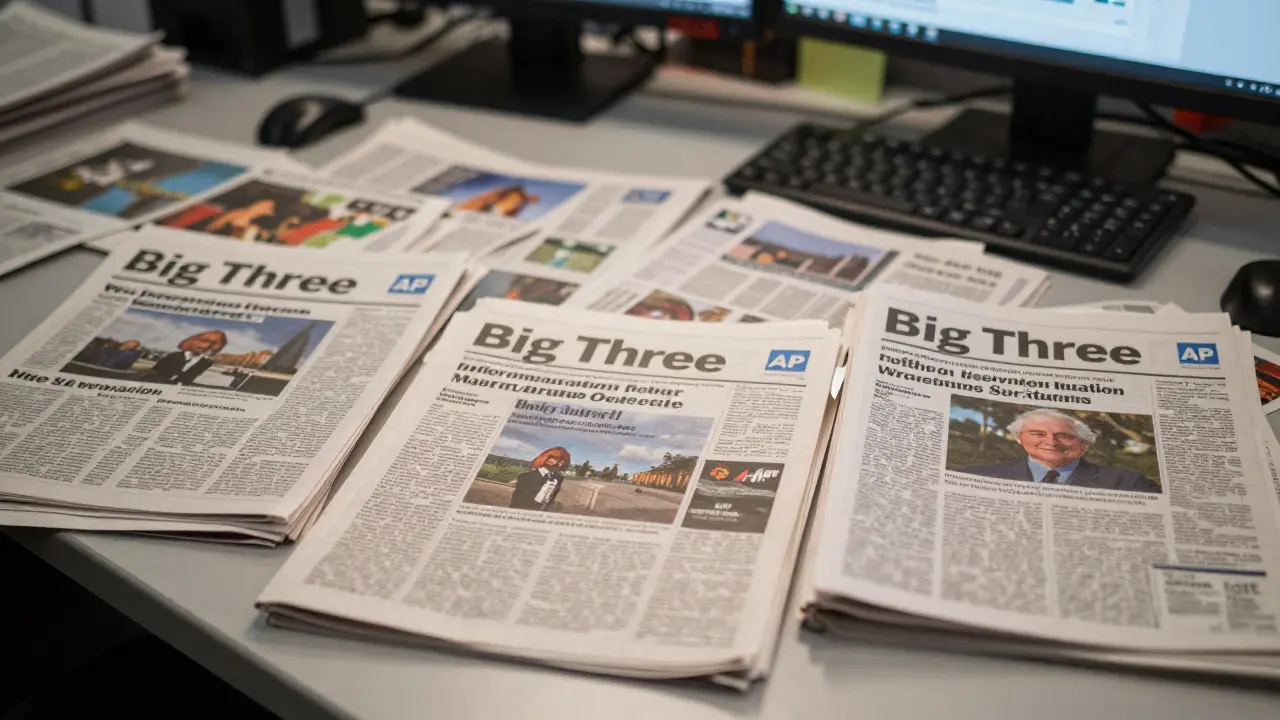
You’ve probably seen them in the footnotes of a breaking news article on Wikipedia. A small citation tag pointing to Associated Press, Reuters, or Agence France-Presse. But why do these three specific organizations dominate the reference list for current events? And how does a volunteer editor decide which one to trust when they’re reporting conflicting details about the same event?
If you’ve ever tried to edit a page about a recent political scandal or a natural disaster, you know the struggle. You need a source that is reliable, neutral, and fast enough to be relevant. Local blogs are too slow. Social media is too biased. That’s where the "Big Three" wire services come in. They aren’t just news outlets; they are the infrastructure of global information flow. Understanding how to use them correctly on Wikipedia isn’t just about following rules-it’s about grasping how truth gets standardized in the digital age.
The Role of Wire Services in Global News
Think of wire services as the plumbing behind the tap. When you turn on your TV or open a news app, you rarely see the pipes. You just get water. Similarly, most local newspapers don’t have reporters in every country. Instead, they buy content from wire services. This model allows a small-town paper in Ohio to report on an earthquake in Japan within minutes, using text and photos provided by a global agency.
For Wikipedia editors, this creates a unique opportunity. These agencies operate with massive budgets and strict editorial standards. They employ hundreds of journalists worldwide. When Reuters reports that a central bank raised interest rates, it’s not just one person’s opinion. It’s a verified fact checked by multiple desks across London, New York, and Singapore. This institutional weight is what makes them acceptable sources under Wikipedia’s Reliable Sources guideline (WP:RS).
But here is the catch: because everyone uses the same wires, stories can look identical. If five different newspapers all copy-paste from AP, do you really have five independent sources? No. You have one source cited five times. Editors often fall into this trap, thinking they have strong coverage when they actually have echo-chamber confirmation.
Associated Press: The American Standard
Associated Press (AP) is a non-profit cooperative owned by its member newspapers and broadcasters in the United States. Founded in 1846, it has become the de facto standard for US domestic news. If something happens in Washington D.C., AP is usually there first. Their style guide dictates how Americans write dates, titles, and numbers. For example, AP prefers "Aug. 29" over "August 29th." This consistency matters on Wikipedia because the encyclopedia aims for a neutral, consistent tone.
Why choose AP? It’s excellent for US-centric events. Their political reporting is deep, with dedicated bureaus in every state capital. However, their international coverage, while good, sometimes lacks the nuance of European agencies when dealing with complex diplomatic situations in Africa or Asia. Also, remember that AP is a cooperative. While they strive for neutrality, their ownership structure means they answer to American media companies. This doesn’t make them biased, but it frames their perspective through a US lens.
Reuters: The Global Financial Pulse
If AP is the king of US domestic news, Reuters is the global financial backbone. Owned by Thomson Reuters, this Canadian-British agency specializes in business, markets, and international affairs. Founded in 1851, Reuters built its reputation on speed and accuracy in transmitting stock prices via telegraph cables. Today, if you read about a merger between two tech giants or a shift in oil prices, Reuters is likely the primary source.
Editors prefer Reuters for economic data and international politics outside the US. Their reporting on the European Union, China, and emerging markets is often more detailed than AP’s. Why? Because their revenue model depends heavily on financial institutions needing precise, actionable data. A mistake in a Reuters story about inflation can move billions of dollars. This high stakes environment enforces rigorous fact-checking. On Wikipedia, citing Reuters adds credibility to financial claims. It signals to readers that the number wasn’t pulled from a press release but verified against market movements.

Agence France-Presse: The International Lens
Agence France-Presse (AFP) is the world’s oldest news agency, founded in 1835. Based in Paris, AFP offers a distinctly European perspective on global events. While AP focuses on the US and Reuters on finance, AFP excels in covering culture, conflict zones, and the Global South. Their network includes strong bureaus in West Africa, the Middle East, and Latin America.
Using AFP on Wikipedia is smart when you need balance. If a story involves French colonial history or EU policy, AFP provides context that Anglo-American agencies might miss. They also offer extensive photo archives, which are valuable for adding visual evidence to articles. However, like any agency, AFP has a viewpoint. Their framing of certain geopolitical conflicts may differ subtly from AP or Reuters. For instance, in coverage of protests in France, AFP will have local insights that foreign correspondents lack. Recognizing these nuances helps editors avoid presenting a single cultural narrative as universal truth.
| Feature | Associated Press (AP) | Reuters | Agence France-Presse (AFP) |
|---|---|---|---|
| Primary Focus | US Domestic News, Politics | Global Finance, Business, Markets | International Affairs, Culture, Conflicts |
| Geographic Strength | United States, North America | Europe, Asia, Global Markets | Europe, Africa, Middle East, Latin America |
| Ownership Model | Non-profit Cooperative | Publicly Traded Company | Semi-public Agency |
| Best Used For | US elections, local crime, domestic policy | Economic indicators, corporate mergers, trade deals | Diplomatic relations, social movements, art/culture |
How to Cite Wire Services Correctly
Citing a wire service on Wikipedia requires more than just pasting a URL. Most wire stories appear on aggregator sites like Yahoo News, MSN, or local newspaper websites. You shouldn’t cite the aggregator; you should cite the original agency. If you see a story labeled "By John Doe, Associated Press," find the original AP link or use the template {{cite news |agency=Associated Press}}.
Here’s a common pitfall: relying solely on wire copies. Suppose a celebrity dies. AP breaks the news. Then CNN, BBC, and Fox News all publish articles based on the AP wire. An editor might cite all three, thinking they have robust sourcing. But if AP made an error, all three outlets repeated it. Best practice? Use the wire service for the basic facts (who, what, when, where) and seek out independent analysis for the "why" and "how." If you need to discuss the public reaction to the death, cite a commentary piece from a magazine, not another wire copy.
Another tip: watch for corrections. Wire services issue corrections quickly. If an AP story says a suspect was arrested, but later updates say he was released, ensure your Wikipedia citation reflects the latest version. Use the archive function to check the history of the article if possible. This diligence prevents outdated info from lingering on pages for years.
Navigating Bias and Neutrality
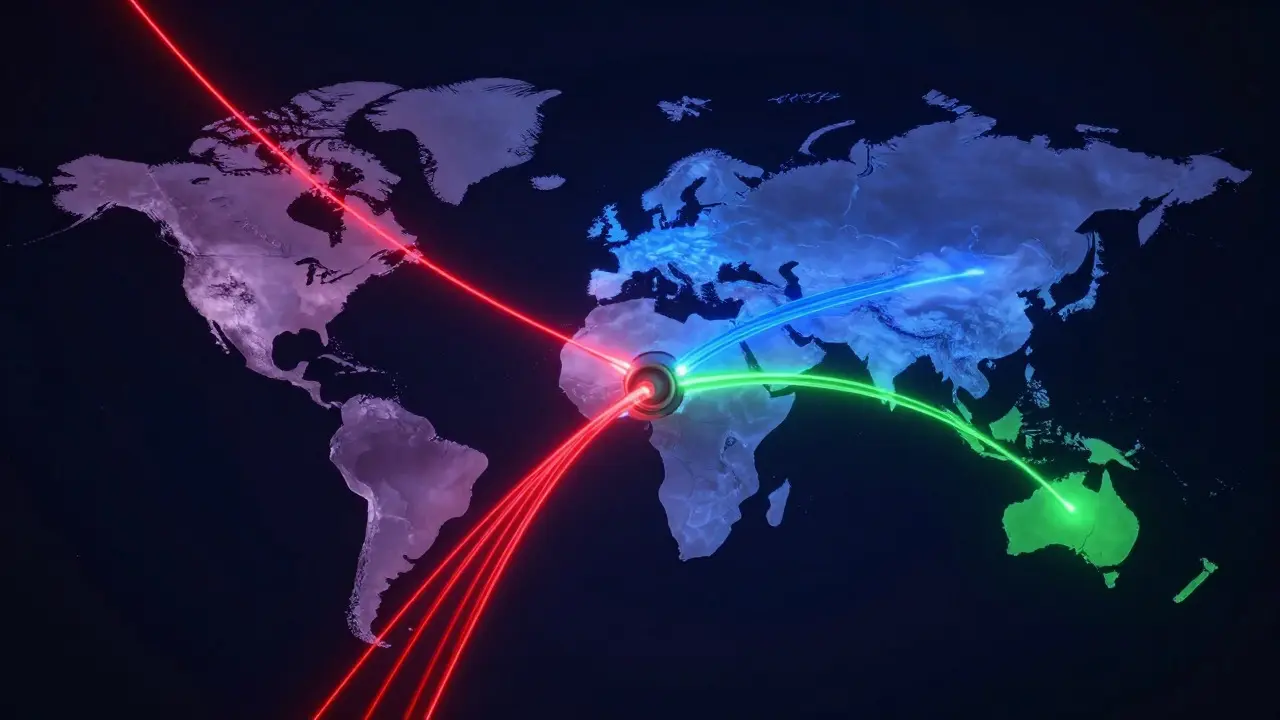
No source is perfectly neutral, even the Big Three. Each has institutional biases shaped by location and audience. AP tends to frame issues through an American legal and political framework. Reuters often highlights economic implications. AFP may emphasize human rights or cultural context. As a Wikipedia editor, your job isn’t to eliminate bias-that’s impossible-but to identify it.
When editing a controversial topic, try to triangulate. If AP and Reuters agree on a set of facts, those facts are likely solid. If they diverge in interpretation, note the difference. For example, in reporting on a protest, AP might focus on the disruption to traffic and business. Reuters might highlight the impact on consumer confidence. AFP might detail the protesters’ demands. By combining these angles, you create a more complete picture. Don’t pick one agency as "the truth." Treat them as complementary lenses.
Also, be wary of syndication fatigue. Sometimes, a wire story is so widely distributed that it becomes the only available source. In these cases, acknowledge the limitation in your edit summary. Say something like, "Cited AP due to lack of independent local reporting." This transparency helps other editors understand why you chose that source.
Beyond the Big Three: Other Wires
While AP, Reuters, and AFP dominate, they aren’t the only players. Bloomberg is crucial for deep financial analysis. DPA (Deutsche Presse-Agentur) is essential for German-speaking regions. Yonhap covers Korea. TASS provides the Russian state perspective.
Should you use them? Yes, if the topic is region-specific. A story about a Berlin policy change is better sourced from DPA than AP. However, apply the same scrutiny. Is the outlet independent? TASS, for example, is state-owned. Wikipedia generally treats state-owned media with caution regarding neutrality, especially in politically charged contexts. Always check the reliability guidelines for each specific agency before citing.
Practical Checklist for Editors
- Identify the Origin: Check the byline. Does it say "AP," "Reuters," or "AFP"? Or is it a local reporter?
- Verify Independence: Are you citing multiple copies of the same wire story? If so, consolidate citations.
- Check for Updates: Has the wire corrected the story since publication?
- Match Context: Use AP for US politics, Reuters for economics, AFP for international diplomacy.
- Avoid Aggregators: Link to the agency’s site or use proper templates, not Yahoo or Bing News links.
Mastering wire services turns you from a passive reader into an active curator of knowledge. You learn to spot the difference between a rumor and a reported fact. You understand that "reliable" doesn’t mean "infallible," but it does mean "accountable." Next time you add a citation to a breaking news page, pause. Ask yourself: Am I citing the source, or am I citing the echo? Your choice shapes how millions of people understand the world.
Are wire services considered reliable sources on Wikipedia?
Yes, major wire services like Associated Press, Reuters, and Agence France-Presse are generally considered reliable sources under Wikipedia's policies. They have established reputations for fact-checking and editorial oversight. However, editors should still exercise judgment, particularly on highly controversial topics where framing might vary slightly between agencies.
Can I cite a newspaper article that credits the Associated Press?
It is better to cite the Associated Press directly if possible. If you must cite the newspaper, ensure you attribute the content to the AP. Citing the aggregator or secondary publisher can lead to broken links if the site changes its layout. Using the {{cite news}} template with the agency parameter is the preferred method.
Which wire service is best for financial news?
Reuters is typically the go-to source for financial news and market data. Bloomberg is also highly regarded for deep financial analysis. AP covers financial news but often with a broader general-interest angle rather than specialized market mechanics.
Do wire services have political bias?
All media outlets have some degree of bias or perspective. AP is centered in the US, Reuters in the UK/Canada, and AFP in France. This influences which stories they prioritize and how they frame international events. Wikipedia editors should aim for neutrality by using multiple sources or acknowledging differing perspectives when significant.
What if two wire services contradict each other?
If major wire services contradict each other on a factual claim, this indicates uncertainty. Wikipedia requires verifiability, not necessarily absolute truth. In such cases, it is appropriate to present both viewpoints with attribution, e.g., "According to Reuters... while Associated Press reports..." This reflects the ongoing debate or confusion surrounding the event.