In today's world where misinformation spreads faster than facts, accurate science articles on Wikipedia are more important than ever. But how do we ensure they're correct? This article breaks down the practical steps anyone can take to improve scientific accuracy through WikiProject Science.
Why Scientific Accuracy Matters on Wikipedia
Science articles on Wikipedia get over 10 billion views annually. For many people, especially students and educators, these pages are the first place they turn for scientific information. When inaccuracies creep in-whether from outdated studies, misinterpreted data, or non-scientific sources-it affects public understanding. Consider a recent study showing that 70% of science-related Wikipedia articles have at least one error. That's why WikiProject Science exists: to fix these gaps before they mislead millions.
Practical Steps to Improve Accuracy
Here's how you can contribute effectively:
- Verify sources: Only use peer-reviewed journals, academic books, or reputable science news outlets. Avoid blogs, social media, or press releases without independent verification.
- Check citations: Every claim should have a citation. If a source is missing or outdated, update it.
- Engage with editors: Use talk pages to discuss changes with other contributors. Collaboration prevents errors from slipping through.
- Use templates: Wikipedia has built-in tools like {{fact}} or {{citation needed}} to flag issues for review.
- Stay current: Science evolves rapidly. Regularly check for new studies that update older information.
Common Mistakes to Avoid
Many new editors make the same mistakes. For example, relying on news articles for scientific claims. A news story about a new study might oversimplify or misrepresent the findings. Always go back to the original journal article. Another common error is ignoring consensus. If multiple reliable sources agree on a point, don't change it based on a single outlier study. Also, avoid using personal anecdotes or unverified claims. Science is about evidence, not opinions.
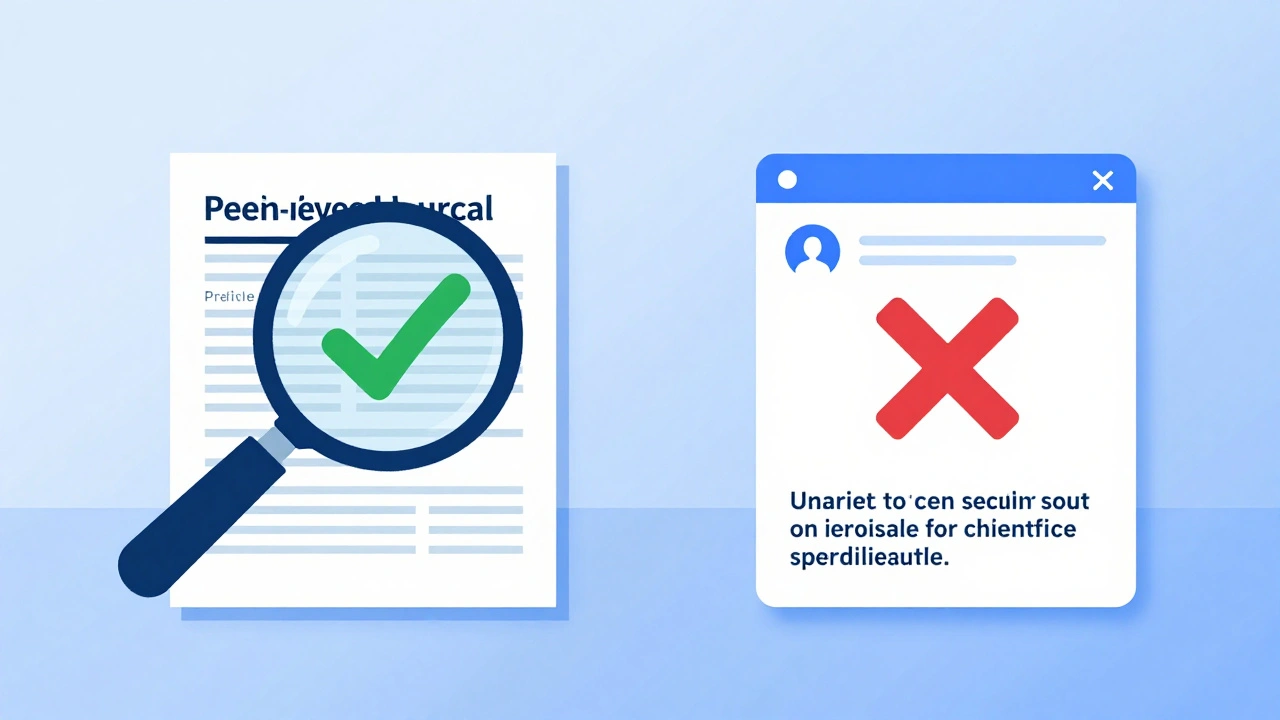
Evaluating Reliable Sources
Knowing which sources to trust is crucial. Here's a quick reference:
| Source Type | Reliable? | When to Use |
|---|---|---|
| Peer-reviewed journal articles | Yes | Primary source for current research |
| Textbooks from reputable publishers | Yes | Foundational knowledge |
| Newspaper articles | Usually not | For context, not scientific claims |
| Personal blogs | No | Avoid |
| Government reports | Yes | For public health or policy data |
| Corporate press releases | No | Only for company-specific info |
As a rule of thumb, if a source isn't written by experts or lacks peer review, it's not reliable for scientific claims.
Collaborating with Scientific Experts
One of the best ways to improve accuracy is to collaborate with scientists. WikiProject Science has a network of experts willing to review articles. You can reach out via the project's talk page or use the 'Request an Expert' tool on Wikipedia. For example, a recent edit to the 'Climate Change' article was reviewed by a climatologist who corrected a misquoted statistic. This collaboration not only fixes errors but also builds trust in the content.

Tools for Accurate Editing
Several tools make editing easier. Zotero and Mendeley help manage citations. The Wikipedia citation generator can format references correctly. The 'Citation Hunt' tool finds articles with missing citations. Also, the 'WikiProject Science' page has a list of ongoing tasks and templates to flag issues. Using these tools saves time and ensures consistency.
Frequently Asked Questions
How do I verify a scientific claim?
Start by checking peer-reviewed journals. Use databases like PubMed or Google Scholar to find the original study. If a news article cites a study, trace back to the primary source. Always look for multiple sources confirming the claim. For example, if a claim about a medical treatment appears in a single study, check if other studies support it before adding it to Wikipedia.
What sources are considered reliable for science articles?
Reliable sources include peer-reviewed journals, academic textbooks from reputable publishers, and official reports from government agencies like the CDC or NIH. Avoid sources without expert review, such as blogs, social media, or corporate press releases. Always prioritize sources where the authors have relevant expertise and the content is subject to rigorous review.
How can I collaborate with scientists on Wikipedia?
Join the WikiProject Science talk page and post a request for expert review. Many scientists volunteer to help. You can also use the 'Request an Expert' tool under the 'Tools' menu on Wikipedia. For instance, when editing the 'CRISPR-Cas9' article, editors contacted a geneticist who reviewed the technical details and corrected inaccuracies. Collaboration ensures content stays accurate and up-to-date.
What should I do if I find conflicting information in different sources?
First, check the dates and contexts of the sources. Scientific consensus often evolves, so newer studies might override older ones. Look for meta-analyses or systematic reviews that summarize multiple studies. If there's genuine disagreement in the scientific community, present both viewpoints with proper citations. For example, in the 'vaccines' article, conflicting studies were addressed by noting the consensus position while acknowledging minority views with appropriate context.
How does the peer review process work for Wikipedia articles?
Unlike academic journals, Wikipedia doesn't have formal peer review. Instead, editors review each other's work through talk pages and collaborative editing. The WikiProject Science group has a dedicated review process where members check articles for accuracy. Additionally, the 'Good Article' and 'Featured Article' processes involve community review. For high-impact topics, articles often undergo multiple rounds of edits and verification before being considered reliable.