When you think of Wikipedia, you probably picture English articles about Hollywood movies or Silicon Valley startups. But less than 5% of Wikipedia’s 60 million articles are in African languages. That’s not because Africans don’t want to contribute-it’s because the systems weren’t built for them.
In 2022, a group of editors from Nigeria, Kenya, Ghana, and South Africa started a quiet revolution. They didn’t ask for more funding. They didn’t wait for outsiders to fix things. They built knowledge equity from the ground up-using local languages, mobile phones, and community trust.
What Is Knowledge Equity?
Knowledge equity means giving everyone the same chance to create, share, and access information-not just in English, but in their own language, on their own terms. It’s not about translating articles. It’s about creating original content that reflects local realities: traditional medicine in Zulu, farming techniques in Akan, oral histories in Swahili.
For years, Wikipedia’s tools assumed users had stable internet, desktop computers, and fluency in English. But in rural Zambia, where 78% of people access the internet via mobile, and only 12% speak English fluently, that model failed. The result? Fewer articles on local crops, fewer entries on indigenous governance systems, fewer pages on regional heroes.
The Breakthrough: Local Language, Local Control
In 2021, the Wikimedia Foundation launched a pilot in four African countries: Ghana, Kenya, Nigeria, and South Africa. The goal? Let local communities decide what matters.
Instead of pushing English templates, they trained editors to use mobile-first tools. One group in Lagos built a WhatsApp bot that lets users dictate oral histories. A bot in Nairobi recorded stories in Kikuyu and automatically converted them into wiki markup. No typing needed.
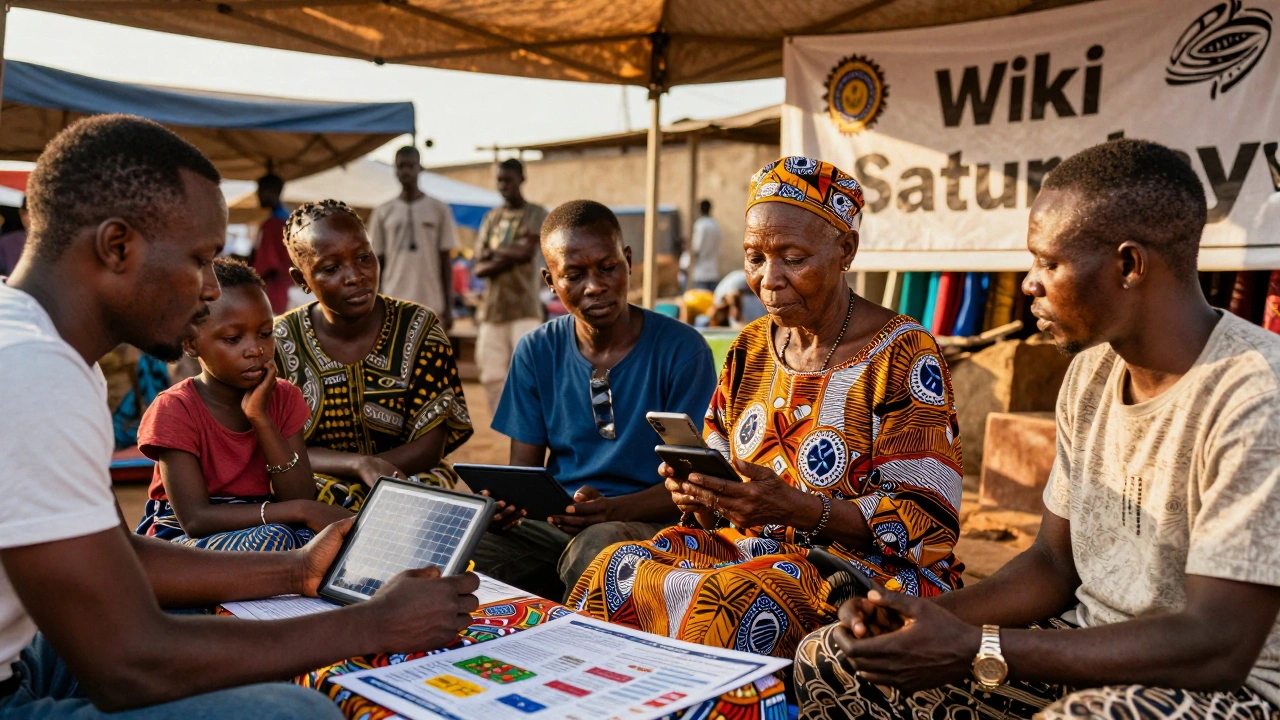
In Accra, editors started hosting “Wiki Saturdays” at local markets. They brought tablets, charged with solar panels, and asked traders: “What do you wish more people knew about your craft?” The answers became articles. A weaver from Kumasi wrote about the symbolism of Adinkra patterns. A fisherman from Mombasa documented tidal patterns used by his community for centuries.
These weren’t just edits. They were acts of reclamation.
How It’s Changing the Map
By 2025, African language Wikipedias had grown by 310%. Hausa Wikipedia went from 4,000 articles to over 18,000. Yoruba jumped from 1,200 to nearly 9,000. Twi and Igbo saw similar spikes.
But numbers don’t tell the whole story. What changed was who was editing.
In 2019, 92% of African Wikipedia editors were based outside the continent. By 2025, that flipped. 68% of active editors lived in the countries they wrote about. Women made up 41% of new contributors-up from 14% in 2020. That’s not coincidence. It’s design.
One key shift: they stopped calling it “content gaps.” They started calling it “knowledge sovereignty.”
Tools Built for Real Life
The biggest barrier wasn’t literacy. It was access.
Wikipedia’s traditional editor interface required long-form typing, complex formatting, and stable connections. Most African editors work on 2G networks with data caps. So local teams built lightweight tools:
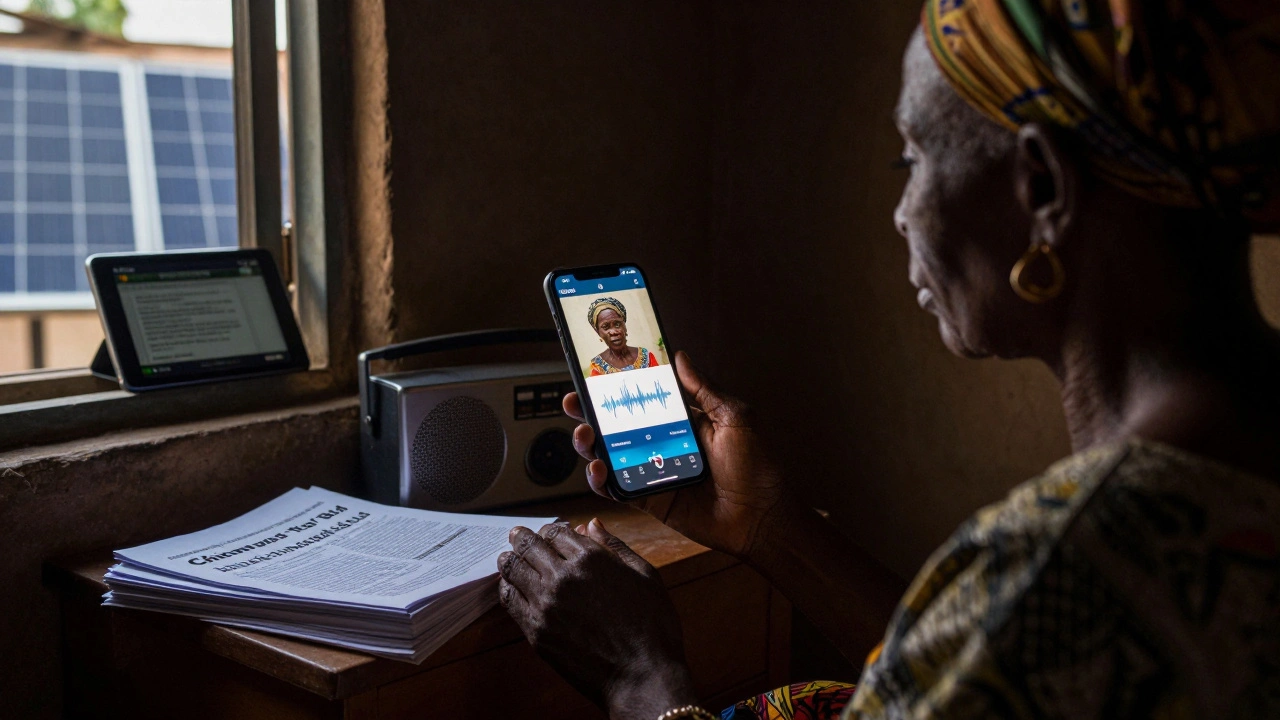
- Text-to-Wiki: A voice app that turns spoken stories into wiki pages. Works offline.
- Photo Upload via SMS: Send a picture to a number. The system auto-tags it, adds location, and uploads to Commons.
- Community Review Circles: Local elders and teachers vet new articles before they go live. No algorithm. Just trust.
These tools weren’t created in Silicon Valley. They were coded in Nairobi, tested in Kano, and refined in Cape Town.
The Ripple Effect
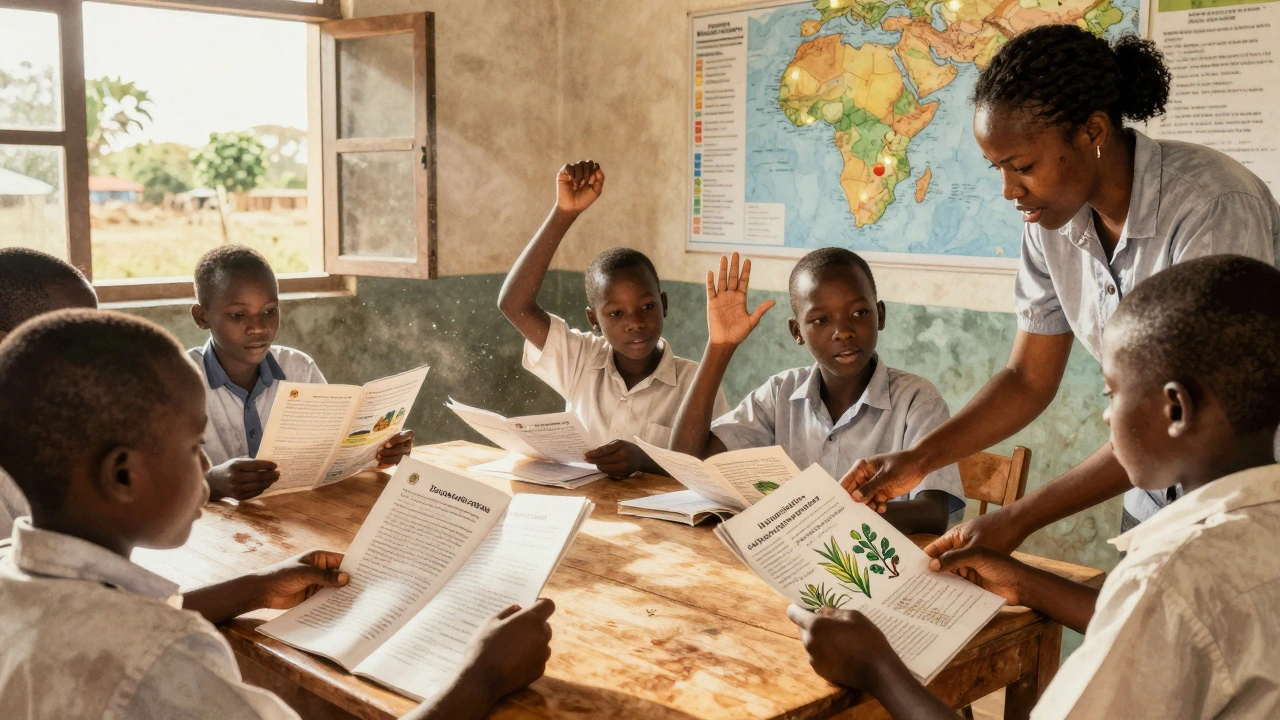
When schoolchildren in Durban started reading Wikipedia in Zulu, their grades in history and science improved by 18% in one year. Teachers reported students asking more questions-because they could finally understand the answers.
Libraries in rural Malawi began using Wikipedia as a primary reference. No internet? No problem. Printed booklets of top 50 articles in Chichewa were distributed. One library in Lilongwe now has 1,200 copies.
Even governments noticed. In 2024, the Ghanaian Ministry of Education officially endorsed Wikipedia in Twi and Ga as a learning resource. Nigeria’s National Library included 200 African-language articles in its national curriculum guide.
This isn’t about Wikipedia becoming global. It’s about global knowledge becoming local.
Why This Matters Beyond Africa
What’s happening in West Africa isn’t an exception. It’s a blueprint.
Indigenous communities in Canada are now using the same mobile-first model to revive Cree and Inuktitut knowledge. In Papua New Guinea, 800 languages are spoken-but only 12 have Wikipedia pages. A similar project is launching there in 2026.
The lesson? Technology doesn’t need to be advanced to be equitable. It needs to be accessible.
Wikipedia was meant to be the encyclopedia anyone can edit. But for decades, it was shaped by a narrow set of assumptions: fast internet, English fluency, desktop access. African editors didn’t ask for permission to change that. They just started building.
What’s Next?
The next phase is simple: scale without centralization.
Instead of one global team dictating how to edit, there are now 17 regional hubs across Africa, each with their own rules, tools, and priorities. A Yoruba editor in Ibadan doesn’t need to follow the same format as a Somali editor in Mogadishu. That’s the point.
And it’s working. In 2025, African-language Wikipedias saw a 40% increase in daily readership from within Africa. For the first time, most views came from local users-not tourists or researchers.
Knowledge equity isn’t about fixing a broken system. It’s about letting new systems grow.
What You Can Do
You don’t need to be an expert. You don’t need to speak an African language.
Start here:
- Read an article in Swahili or Yoruba. Even if you don’t understand it, notice how it’s structured differently.
- Share a page from a non-English Wikipedia with someone who speaks that language.
- Support organizations like Wikimedia Africa, which fund mobile editing kits and local training.
The next great contribution to human knowledge might not come from a university. It might come from a farmer in Kano, a student in Harare, or a grandmother in Accra who just told her story into a phone.
Why don’t more African languages have Wikipedia pages?
It’s not a lack of interest-it’s a lack of tools. Most Wikipedia systems assume users have computers, fast internet, and English fluency. But in many African regions, people use mobile phones on slow networks, speak local languages, and rely on voice and community trust. Without tools designed for those realities, participation drops. Local teams are now building mobile-first, voice-enabled, offline-capable systems to fix this.
How are African Wikipedia editors different from editors elsewhere?
African editors often prioritize oral traditions, community validation, and local relevance over encyclopedic neutrality. They don’t just translate English content-they create original articles about indigenous farming, local medicine, and regional history. Many work without formal training, using WhatsApp, SMS, and voice notes. Their biggest allies are elders, teachers, and market traders-not academics.
Is Wikipedia really being used in African schools?
Yes. In Ghana, Nigeria, and South Africa, schools now use Wikipedia in Twi, Yoruba, and Zulu as official learning resources. Printed booklets of key articles are distributed in areas without internet. Teachers report higher engagement because students can understand the material. In one Malawian school, students who read in Chichewa scored 22% higher on history tests than those using English-only materials.
What role do women play in these initiatives?
Women make up 41% of new African Wikipedia editors today, up from 14% in 2020. Many are teachers, librarians, and community leaders who see knowledge sharing as part of their role. They often focus on topics overlooked by male-dominated teams-like women’s health, local crafts, and family histories. Training programs specifically for women have been key to this growth.
Can I contribute to African language Wikipedias even if I don’t speak the language?
Absolutely. You can help by fact-checking, uploading public domain images, translating metadata, or sharing articles with native speakers. You can also support organizations that fund mobile editing kits, solar-powered tablets, or local training workshops. The goal isn’t to speak the language-it’s to help the people who do.