Every week, the Signpost publishes original reporting on Wikipedia’s inner workings-editorial disputes, policy changes, community conflicts, and behind-the-scenes events. But if you’re managing a community newsletter, blog, or wiki project, you might want to share those stories elsewhere. One of the most trusted places to republish Signpost content is Wikimedia Diff, the official blog of the Wikimedia Foundation. It’s not just about reposting. It’s about doing it right.
Why Cross-Post to Wikimedia Diff?
Wikimedia Diff reaches a global audience of editors, developers, researchers, and foundation staff. Unlike social media, where posts vanish in feeds, Diff stories are archived, indexed by search engines, and often cited in academic papers. When you cross-post a Signpost article to Diff, you’re not just sharing news-you’re helping the broader movement understand what’s happening inside Wikipedia’s community.But there’s a catch. Not every Signpost story belongs on Diff. The editorial team there has strict standards. They don’t just want copies. They want context, clarity, and purpose.
What Makes a Signpost Story Suitable for Diff?
Not all Signpost articles are equal when it comes to cross-posting. The best candidates share these traits:- They cover events with wide impact-like policy changes affecting thousands of editors
- They include original reporting, not just summaries or opinion pieces
- They cite reliable sources within Wikipedia’s ecosystem-edit logs, talk pages, official announcements
- They avoid internal jargon or assume too much prior knowledge
- They have a clear narrative arc: problem, response, outcome
For example, a Signpost piece on the 2024 global edit-a-thon that boosted article quality in underrepresented languages would be a strong candidate. A short opinion column about a single editor’s dispute over citation style? Probably not.
How to Prepare Your Cross-Post
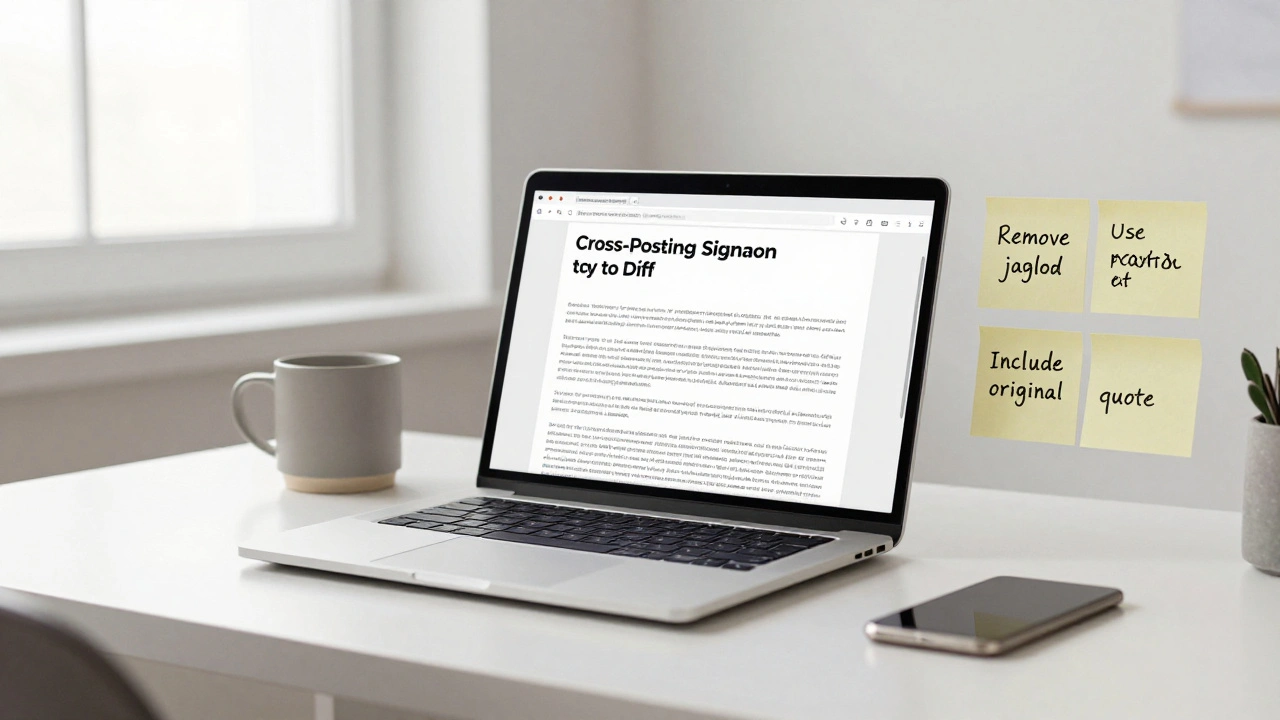
Before you hit submit, follow these steps:- Start with the original Signpost article. Copy the full text, but remove any Signpost-specific formatting like bylines, issue dates, or internal links to other Signpost pieces.
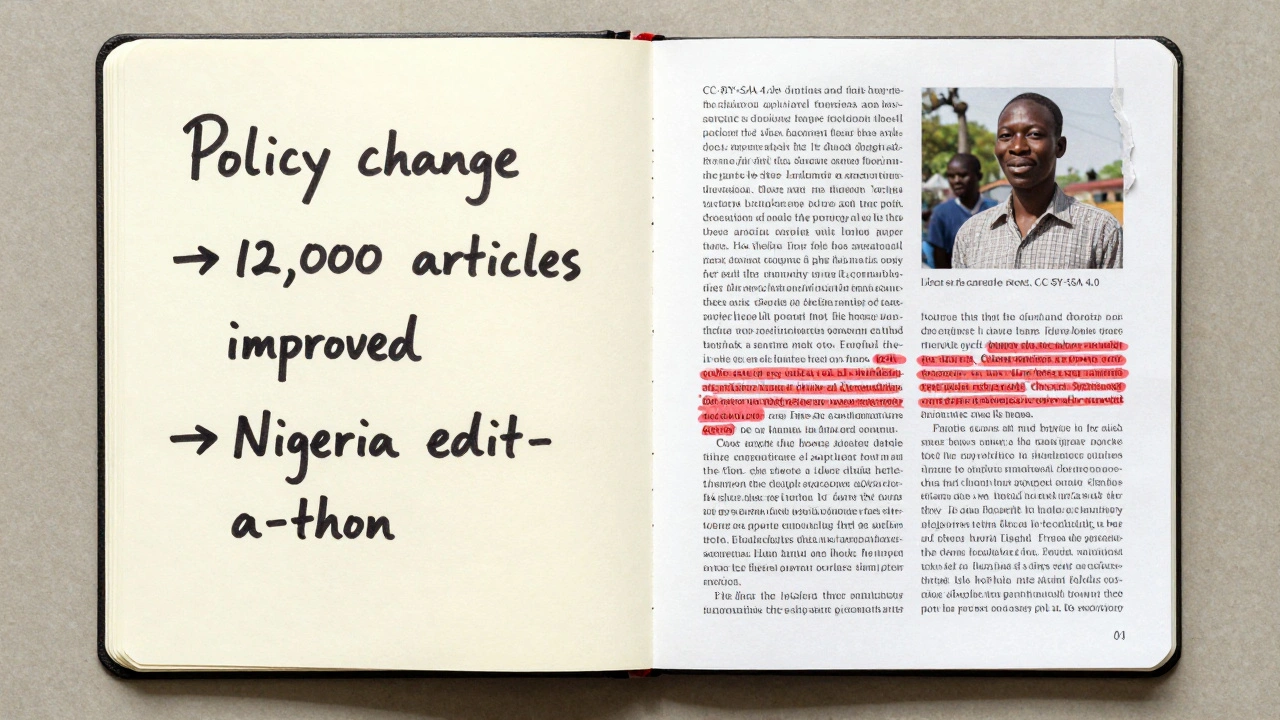
- Add a clear introduction that explains why this story matters beyond Wikipedia. Example: “This report details how a grassroots initiative in Nigeria improved coverage of local history across 12,000 Wikipedia articles in six months.”
- Replace internal Wikipedia links (like [[User:Example]]) with direct URLs to the actual pages. Diff readers may not know how to navigate Wikipedia’s internal linking system.
- Remove any editorial commentary or humor that’s specific to the Signpost audience. Diff readers include non-editors, journalists, and policymakers.
- Include at least one original quote from someone involved-ideally an editor, not a staff member. Real voices build credibility.
Pro tip: If your article includes data-like edit counts, user growth, or article improvements-turn it into a simple table. People remember numbers better when they’re visualized.
Formatting Rules for Wikimedia Diff
Diff has its own house style. Deviate from it, and your submission gets bounced back.- Use plain text. No bold or italics unless absolutely necessary for emphasis.
- Headings must be H2 only. No H3 or H4.
- Every image must be freely licensed (CC0 or CC-BY-SA 4.0) and uploaded to Wikimedia Commons. Include a caption and source.
- Link only to official Wikimedia domains: wikipedia.org, wikimedia.org, meta.wikimedia.org. No external blogs or news sites.
- Use “Wikipedia” not “the encyclopedia” or “wiki.” Be precise.
Also, don’t forget to include a brief bio of the author at the end. Even if you’re republishing someone else’s work, you need to say who you are and why you’re qualified to share this.
Submission Process
The process is simple, but not automatic:- Visit https://diff.wikimedia.org/submit/
- Fill out the form with your name, email, and a short summary of your piece (no more than 100 words).
- Paste your cleaned-up article into the body field.
- Attach any images or files if needed.
- Submit. You’ll get an automated confirmation.
Expect a response within 7-10 business days. If you don’t hear back, don’t resend. Instead, email [email protected] with your submission ID.
What Happens After Submission?
The Diff team doesn’t just publish everything they receive. They edit. They restructure. Sometimes they ask for revisions.Here’s what you might see:
- Your headline gets rewritten to be more neutral and newsworthy
- Long paragraphs get split up for readability
- Passive voice is changed to active (“The policy was changed by the committee” → “The committee changed the policy”)
- Minor factual errors are corrected-sometimes without telling you
This isn’t a rejection. It’s standard practice. The goal is to make your story accessible to people who’ve never edited a Wikipedia page. If you’re not okay with edits, don’t submit.
What Not to Do
Avoid these common mistakes:- Don’t cross-post opinion pieces as news. Diff is not a platform for personal rants.
- Don’t republish content that’s already been published elsewhere on Diff. Duplicate submissions get rejected.
- Don’t use Signpost’s logo or branding. You’re republishing the content, not the publication.
- Don’t include links to your own blog, Patreon, or social media. It looks promotional.
- Don’t submit articles that are older than 90 days. Diff prioritizes timely reporting.
Why This Matters
Cross-posting isn’t just about visibility. It’s about accountability. When community-driven news reaches the foundation’s official channels, it signals that editors’ concerns are being heard at the highest level. In 2024, three cross-posted Signpost stories led to policy reviews by the Wikimedia Foundation’s Trust & Safety team. One resulted in revised guidelines for handling conflicts of interest among paid editors.By following these best practices, you’re not just sharing a story-you’re helping shape the future of free knowledge.
Frequently Asked Questions
Can I cross-post a Signpost article if I’m not the original author?
Yes, as long as you have permission from the original author and follow all formatting rules. Always credit the original author in your submission and link to the original Signpost article. You must also ensure the content is still relevant and hasn’t been superseded by newer reporting.
Do I need to ask permission from the Signpost editors before submitting?
No formal permission is required because Signpost content is published under CC BY-SA 4.0, which allows reuse with attribution. But it’s considered good practice to notify the Signpost editorial team by email-especially if your version adds new context or data. They may even help you refine it.
What if my article is rejected?
Rejection doesn’t mean your story isn’t valuable. Common reasons include lack of context, too much jargon, or poor structure. Ask for feedback via [email protected]. Many successful submissions were rewritten after an initial rejection. Use the feedback to improve and resubmit.
Can I post the same article on both Diff and my own blog?
Yes, but only after Diff has published it. Do not publish your version first. Diff prefers to be the first official platform to carry the story. If you post it on your blog before Diff, they will likely decline your submission.
How long does a cross-posted article stay on Diff?
Diff articles remain permanently archived on their site. They’re indexed by search engines and often linked from Wikipedia’s official pages. Unlike social media, there’s no expiration. Your story becomes part of the permanent record of Wikipedia’s evolution.