Imagine searching for a famous local poet in your native language and finding a detailed biography. Now switch to English or Mandarin, and that same poet might not even have an entry. This isn't just a quirk; it’s a massive structural issue known as content gaps. These gaps reveal that what we consider "universal knowledge" is actually heavily skewed by who writes the encyclopedia, where they live, and which languages dominate digital spaces.
When we talk about multilingual encyclopedias like Wikipedia, we often assume that information flows freely across borders. In reality, translation rates are low, and cultural context is frequently lost. Understanding why some topics get more coverage than others helps us see the hidden biases in how global knowledge is stored and retrieved.
The Scale of the Disparity
The disparity in article counts between languages is staggering. English Wikipedia has over six million articles, while smaller language versions may have only thousands. But the real problem isn't just the total number; it's the distribution of topics. A study by the Wikimedia Foundation highlighted that non-English speakers contribute disproportionately less to their own language editions compared to English speakers contributing to English.
This creates a feedback loop. If a topic is well-covered in English but ignored in Spanish, Spanish-speaking users rely on English sources, reinforcing the dominance of Anglo-centric perspectives. For example, history entries often focus on European events, while regional histories from Africa or Asia remain underdeveloped unless translated by dedicated volunteers.
Why Certain Topics Dominate
Several factors drive this imbalance. First, there is the issue of editorial demographics. The majority of active editors in major language versions tend to be male, white, and from North America or Europe. Their personal interests naturally shape the encyclopedia. Sports, specifically American football and baseball, receive extensive coverage in English, while cricket or kabaddi might be primary sports in South Asian language editions but barely mentioned elsewhere.
Second, there is the barrier of notability standards. What counts as "notable" varies by culture. A local festival in Brazil might be significant to millions of Brazilians but fail to meet the strict sourcing requirements for an English-language article if international media hasn't covered it extensively. This leads to a situation where globally relevant topics are filtered through a Western lens before they gain visibility in other languages.
The Role of Translation and Technology
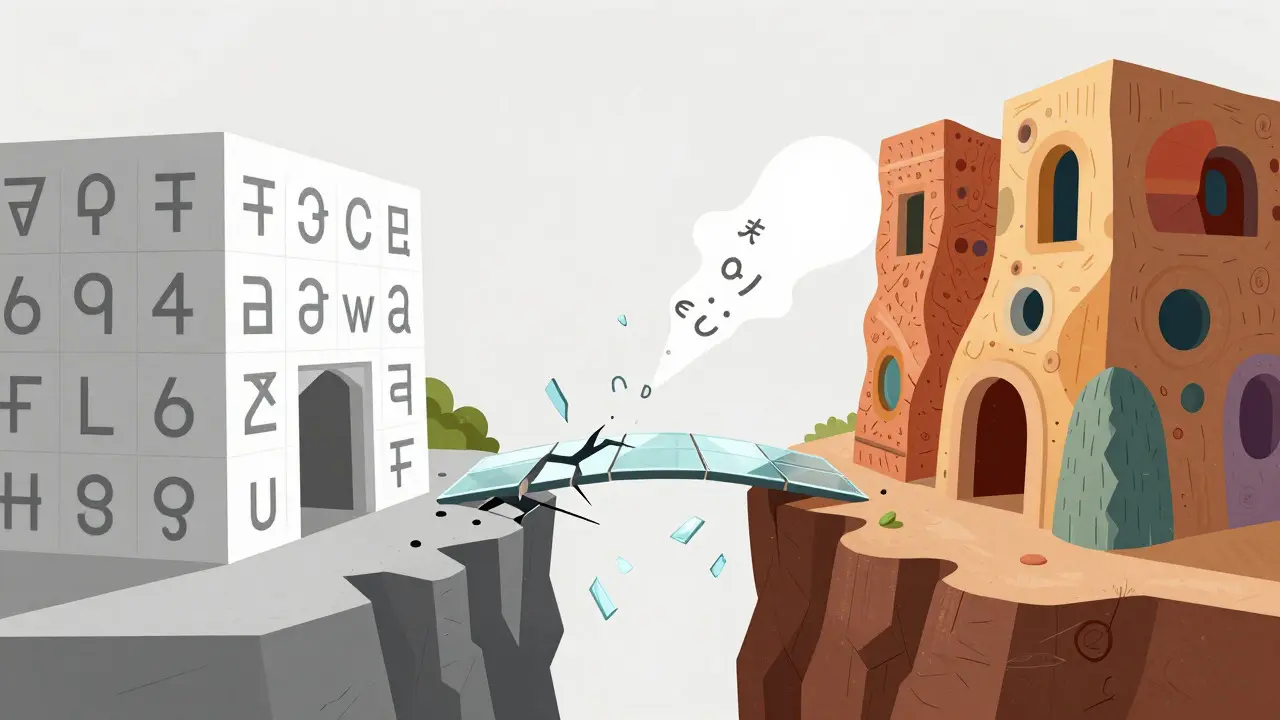
Translation is the bridge between language silos, but it’s a broken bridge. Only about 10% of articles in one language version are fully translated into another. Machine translation has improved, but it often lacks nuance, leading editors to hesitate in publishing auto-translated content. Human translators are scarce, especially for low-resource languages.
Tools like the Translate Extension help, but they require manual verification. This means that high-quality content stays in its original language, creating information islands. For instance, scientific research published in Japanese might take years to appear in English Wikipedia, leaving a gap in the global scientific record accessible to the wider public.
Cultural Context and Local Knowledge
Local knowledge is often invisible in global databases. Think of indigenous practices, regional cuisines, or local folklore. These topics are rich with detail in their native language versions but rarely cross over. Why? Because the concepts themselves don't always translate directly. Terms like Ubuntu (a Southern African philosophy) or Harambee (a Swahili concept of communal work) carry deep cultural weight that simple dictionary definitions miss.
When these terms are included in English articles, they are often explained briefly or left unexplained, assuming the reader will look them up. But if the lookup fails because the target language article is thin or missing, the knowledge is effectively lost. This highlights a critical flaw: knowledge is not just data; it's context. Without context, coverage is incomplete.
| Factor | High-Resource Languages (e.g., English, German) | Low-Resource Languages (e.g., Swahili, Bengali) |
|---|---|---|
| Total Articles | Millions | Tens of Thousands |
| Active Editors | High volume, diverse interests | Lower volume, focused on local topics |
| Translation Rate | Higher inbound/outbound flow | Low inbound, minimal outbound |
| Notability Bias | Global/Western-centric criteria | Local relevance prioritized |
| Machine Translation Quality | High accuracy | Moderate to Low accuracy |
Impact on Search and Discovery
These gaps affect how people find information. If you search for a historical figure in a language with poor coverage, you might get no results, or worse, inaccurate summaries generated from sparse data. This impacts education, journalism, and research. Students in countries with limited language resources may struggle to access balanced global perspectives, relying instead on whatever few articles exist.
Furthermore, algorithms used by search engines often favor high-volume, high-link-density pages. Since English articles tend to have more links and backlinks, they rank higher even when a user searches in another language. This reinforces the cycle: the more visible a topic is in English, the more likely it is to be considered "important" globally.

Bridging the Gap: Practical Solutions
So, what can be done? First, communities need to prioritize local-first editing. Instead of waiting for translations, editors should build robust local articles using local sources. This ensures that the foundational knowledge exists in the native language first.
Second, improving machine translation models for specific domains can help. General-purpose translators struggle with technical or cultural terms, but domain-specific models can improve accuracy. Projects focusing on translating scientific abstracts or legal documents can fill critical gaps faster than general content.
Third, redefining notability standards is crucial. If an event is significant to a community of millions, it deserves coverage regardless of international media attention. Allowing local sources to count toward notability would open the door for many underrepresented topics.
Looking Ahead
The future of multilingual knowledge depends on decentralizing authority. No single language should hold the monopoly on truth. As digital tools become more accessible, we have the opportunity to create a truly global encyclopedia-one where a farmer in India, a student in Brazil, and a researcher in Germany all have equal access to accurate, culturally relevant information. Closing these content gaps isn't just a technical challenge; it's a social one. It requires recognizing that every language holds unique insights into the human experience.
What causes content gaps in multilingual encyclopedias?
Content gaps are caused by uneven editor demographics, low translation rates, biased notability standards, and the lack of local sources in dominant languages. These factors lead to certain topics being over-represented in some languages and under-represented in others.
How does language bias affect search results?
Language bias affects search results because algorithms often favor content with more links and higher volume, which typically comes from high-resource languages like English. This means that even if a topic is relevant locally, it may not appear prominently if it lacks global coverage.
Can machine translation solve content gaps?
Machine translation can help reduce gaps by making content available in more languages quickly. However, it often lacks cultural nuance and accuracy for specialized topics, so human review remains essential for high-quality knowledge sharing.
Why are local topics often missing from English Wikipedia?
Local topics are often missing because notability standards in English Wikipedia tend to require international media coverage. If a local event or person hasn't been covered by global news outlets, it may not meet the threshold for inclusion, despite being significant to the local community.
What is the impact of content gaps on education?
Content gaps impact education by limiting access to balanced global perspectives. Students in regions with low-resource language editions may struggle to find accurate information on global topics, leading to a skewed understanding of world events and cultures.