You open a Wikipedia article about climate change. The science is settled-over 97% of peer-reviewed studies agree that human activity drives global warming. Yet, the article spends equal space on the scientific consensus and on a handful of contrarian blogs. This isn't an error; it's a feature gone wrong. It is false balance, the practice of presenting opposing viewpoints as equally valid when one side lacks substantial evidence or expert support. On Wikipedia, where the Neutral Point of View (NPOV) policy is law, this phenomenon creates a distortion field. It makes fringe theories look mainstream and robust science look like a mere opinion among many.
Why does this happen? Because "neutral" doesn't mean "equal." It means proportional to the weight of evidence. But in practice, editors often mistake symmetry for fairness. If you have ten pages of peer-reviewed data against one blog post claiming the Earth is flat, giving them each half the section isn't neutral-it's misleading. This article breaks down how false balance creeps into the world's largest encyclopedia, why it persists despite clear policies, and what it means for anyone relying on Wikipedia for truth.
The Core Conflict: Symmetry vs. Proportionality
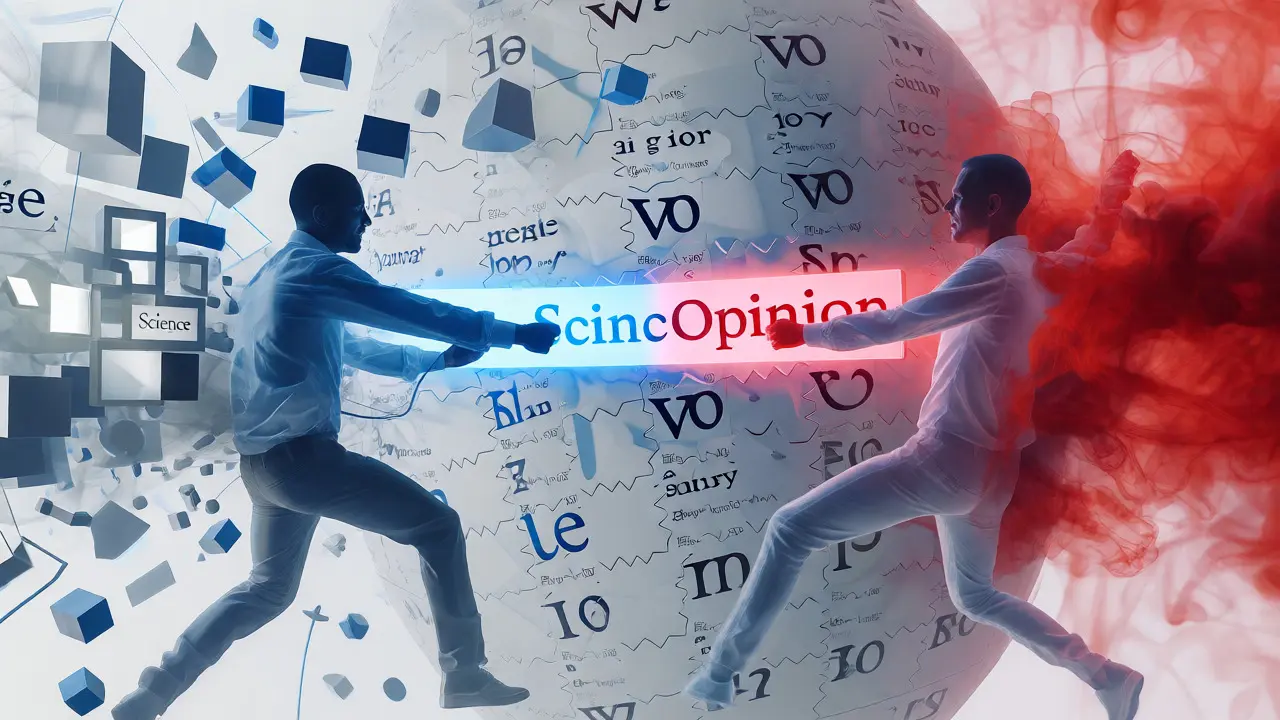
At its heart, Wikipedia’s NPOV policy requires editors to present significant views with due weight. The key phrase here is "due weight." A view held by 0.1% of experts should not get 50% of the word count. However, the human brain loves symmetry. We naturally want to see two sides of every story. In journalism, this is called "bothsidesism," and it has bled heavily into wiki editing.
Consider the debate on vaccine safety. Mainstream medicine says vaccines are safe and effective. Anti-vaccine movements argue otherwise. An editor striving for "balance" might write: "Some scientists say vaccines work; others say they cause autism." By placing these statements side-by-side without context, the reader infers a 50/50 split in credibility. In reality, the ratio is closer to 10,000-to-1. The structural layout of the text itself becomes a lie because it visually equates disparate levels of authority.
| Feature | Genuine Neutrality | False Balance |
|---|---|---|
| Basis of Weighting | Proportional to expert consensus and source quality | Equal space regardless of evidentiary strength |
| Treatment of Fringe Views | Mentioned briefly if notable, labeled as minority | Given equal prominence to mainstream views |
| Reader Takeaway | Clear understanding of what is established fact | Confusion about which claims are credible |
| Source Usage | Prioritizes academic journals and major news outlets | Treats all sources as interchangeable voices |
How Editors Fall Into the Trap
Most editors aren't trying to deceive. They’re afraid of being accused of bias. Wikipedia has a rigorous dispute resolution process. If you write that "Climate change is real," a contrarian editor might tag your sentence as "non-neutral" and demand you include their perspective. To avoid an edit war, the original author often concedes, adding sentences like "However, some skeptics argue..."
This dynamic is reinforced by the structure of talk pages. Debates often devolve into battles over word count rather than evidence quality. If the pro-science side writes three paragraphs and the skeptic side writes one, the skeptic cries foul. The compromise? Cut the science down to one paragraph and expand the skepticism to match. The result is a watered-down summary that satisfies no one but looks "fair" at first glance.
Another culprit is the lack of expertise among volunteer editors. Many contributors are generalists. They don’t know that a pre-print paper carries less weight than a study published in Nature. Without deep subject knowledge, they default to visual symmetry. If two sources exist, give them equal billing. It’s a heuristic that fails spectacularly in complex scientific or historical topics.
Case Studies in Distortion
History offers several glaring examples where false balance distorted public understanding through Wikipedia articles.
Genetically Modified Organisms (GMOs): For years, Wikipedia articles on GMOs struggled with tone. While organizations like the World Health Organization stated that no health risks were confirmed for approved GM foods, articles often highlighted consumer fears and activist campaigns with equal vigor. The text would list potential benefits followed immediately by "criticisms," implying a stalemate. In reality, the scientific consensus was overwhelmingly positive regarding safety, even if environmental impacts remained debated. The equal weighting suggested a controversy about safety that didn't exist in the literature.
Historical Negationism: Consider articles on the Armenian Genocide or the Holocaust. Fringe historians sometimes claim these events were exaggerated or fabricated. True neutrality acknowledges the overwhelming documentary evidence supporting these genocides. False balance, however, might devote significant space to the deniers' arguments, treating them as legitimate alternative interpretations rather than outliers rejected by virtually all historians. This grants undue legitimacy to denialism, confusing readers who assume that if Wikipedia gives it space, it must be a viable viewpoint.
Economics: Articles on fiscal policy often suffer from this too. Keynesian economics and Austrian economics are distinct schools of thought. But when discussing basic macroeconomic principles, such as inflation control, the consensus leans heavily toward certain models. Presenting every heterodox economic theory as an equal competitor to standard models can mislead students into thinking there is no professional agreement on fundamental mechanisms.
The Role of Source Reliability
Wikipedia relies on a hierarchy of sources. Academic papers and books from university presses sit at the top. Major newspapers follow. Blogs, self-published works, and partisan websites sit at the bottom. False balance ignores this hierarchy. It treats a blog post by a hobbyist historian as equivalent to a peer-reviewed journal article.
When editors fail to distinguish between primary, secondary, and tertiary sources, the content suffers. A secondary source synthesizes existing research. A primary source is raw data or firsthand accounts. Tertiary sources summarize both. Mixing these up leads to confusion. For instance, citing a newspaper report about a new study is different from citing the study itself. If the newspaper sensationalizes the findings, and the Wikipedia editor cites only the newspaper, the error propagates. If the editor then balances this with a contrary blog post, the factual basis erodes further.
The solution lies in strict adherence to WP:RS (Reliable Sources) guidelines. But enforcement is inconsistent. In high-traffic articles, administrators may intervene to enforce source quality. In niche topics, nobody is watching, and low-quality sources slip in, creating pockets of false balance that persist for years.
Impact on Public Perception
Does this matter? Absolutely. Wikipedia is the first stop for most people researching a topic. Teachers use it. Students cite it. Politicians quote it. If the entry presents a settled scientific fact as a debatable opinion, the public perception shifts accordingly.
Research from the Pew Research Center indicates that while trust in traditional media has declined, trust in Wikipedia remains relatively high, particularly among younger demographics. Users often perceive Wikipedia as objective precisely because it seems to present multiple perspectives. They don't realize that the presentation of those perspectives is skewed. This creates a feedback loop: users expect balance, editors provide symmetry, and the resulting article reinforces the idea that everything is up for grabs.
This erosion of epistemic certainty is dangerous in areas like public health and climate policy. If citizens believe there is a "great debate" about whether smoking causes cancer or whether CO2 traps heat, they are less likely to support regulatory action. False balance doesn't just confuse; it paralyzes decision-making.

Fixing the Problem: From Symmetry to Accuracy
How do we fix this? First, editors need better training on what "neutrality" actually means. It’s not about pleasing everyone. It’s about accurately reflecting the state of knowledge. If 99% of experts agree, the article should reflect that 99% consensus, mentioning the 1% dissent only as a footnote or a brief mention of ongoing minor debates.
Second, the community needs to value precision over politeness. Edit wars shouldn't be resolved by splitting the difference. They should be resolved by evaluating source quality. If one side cites Nature and Science, and the other cites a personal website, the latter gets cut or relegated to a small section on "Criticism," not given equal standing in the main narrative.
Third, automated tools could help flag imbalances. Imagine a bot that analyzes the citation density of different viewpoints within an article. If a viewpoint supported by three citations takes up 40% of the text, while a viewpoint supported by thirty citations takes up 20%, the bot flags it for review. Technology can assist humans in spotting these structural biases.
Finally, readers need to become more critical. Don't take the structure of an article at face value. Look at the references. Are they academic? Are they recent? Do they represent the majority view? Understanding that Wikipedia is a work in progress, edited by imperfect humans, helps you navigate its flaws.
Frequently Asked Questions
What is the difference between bias and false balance?
Bias usually implies a preference for one side, often excluding the other entirely. False balance occurs when both sides are included, but weighted incorrectly. Bias hides information; false balance distorts the importance of information. Both lead to misunderstanding, but false balance is trickier because it appears fair on the surface.
Is Wikipedia biased against conservative or liberal views?
Studies suggest Wikipedia has a slight left-leaning tendency in political biographies and social issues, partly due to the demographic of active editors. However, false balance affects all political spectrums. In science-related topics, the bias is towards empirical consensus, which can frustrate ideologically driven groups on both sides who prefer their preferred narrative over data.
Can I fix false balance on a Wikipedia page myself?
Yes, but proceed with caution. First, discuss your proposed changes on the Talk page. Cite reliable sources that demonstrate the weight of the consensus. Avoid removing opposing views entirely unless they lack reliable sourcing. Aim to adjust the proportion of text to match the proportion of expert agreement.
Why doesn't Wikipedia just state facts clearly?
For undisputed facts, it does. The issue arises in areas where there is some level of debate or where the debate is manufactured by interest groups. Wikipedia aims to document the discourse, not just the conclusion. When the discourse is asymmetric (one side shouting loudly with little evidence), documenting the noise alongside the signal creates false balance.
Does false balance affect non-scientific topics?
Absolutely. Historical controversies, legal interpretations, and cultural critiques often suffer from this. For example, in discussions of controversial historical figures, articles may give equal weight to laudatory biographies and revisionist critiques without adequately contextualizing the scholarly consensus on the figure's impact.