You’re writing a research paper. You find a Wikipedia article that explains exactly what you need. It’s clear, well-structured, and cites sources. It feels like a shortcut-until your professor says, "You can’t cite Wikipedia." Why? Because not all Wikipedia articles are created equal. Some are meticulously maintained. Others are outdated, poorly sourced, or even vandalized. The key isn’t to avoid Wikipedia-it’s to learn how to judge its quality before using it as a stepping stone in academic work.
Start by checking the article’s edit history
Look at the "View history" tab. A high-quality Wikipedia article shows consistent, thoughtful edits over time. You’ll see multiple contributors making small improvements: fixing typos, adding citations, updating statistics. If the edit history is mostly one person making big changes, or if there are long gaps with no edits for years, that’s a red flag. Articles on controversial topics like climate change or vaccine safety often have edit wars-thousands of edits in a week. These are usually unstable and unreliable for academic use.Check the talk page too. That’s where editors debate content. If there’s active discussion about sourcing, neutrality, or accuracy, the article is being held to a standard. If the talk page is empty or full of personal opinions, skip it.
Look for citations-and verify them
A good Wikipedia article uses inline citations. Every factual claim should have a superscript number linking to a source. Hover over or click those references. Do they point to peer-reviewed journals, books from university presses, or reputable news outlets like The New York Times or BBC? Or do they link to blogs, personal websites, or forums?Wikipedia’s own policy requires reliable sources. But not all citations are equal. An article might cite a 2012 blog post from a grad student as proof of a current scientific consensus. That’s not valid. A 2023 meta-analysis in The Lancet? That’s credible. Always trace the citation back to the original source. If you can’t access it, or if the summary on Wikipedia misrepresents it, don’t use the article.
Check the references section for depth and diversity
Don’t just count the number of citations. Look at the variety. A strong article draws from multiple independent sources-not just one book or one study repeated five times. If every reference comes from the same publisher or author, the article may be biased or shallow.Also, check the publication dates. A Wikipedia article on artificial intelligence in 2026 should cite recent papers, not ones from 2010. If the oldest source is more than five years old and the topic is fast-moving (like AI, gene editing, or cryptocurrency), treat it with caution. Stable topics like historical events or classical literature can rely on older sources, but science and technology demand freshness.
Look for warning banners and quality tags
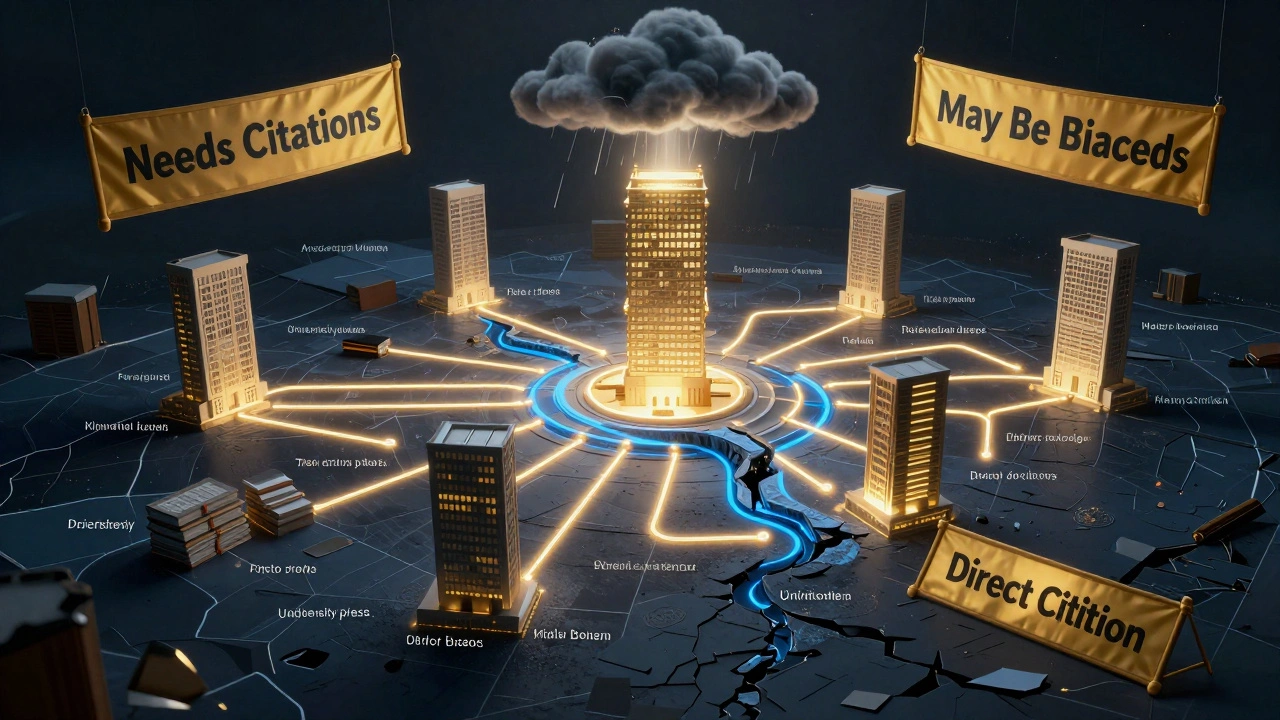
Wikipedia uses automated and human-reviewed banners to flag problematic articles. Scroll to the top of the article. Do you see any of these?- "This article needs additional citations for verification" - means it’s missing key sources.
- "This article may be biased" - indicates a lack of neutral point of view.
- "This article is a stub" - it’s incomplete.
- "This page has been protected" - often a sign of controversy or frequent vandalism.
These banners aren’t just noise. They’re signals from experienced editors. An article with multiple warnings should be avoided unless you’re doing a study on Wikipedia’s own reliability-and even then, you’d need to document why you’re using it.
Use Wikipedia’s quality ratings
Wikipedia assigns formal quality ratings to articles. These aren’t perfect, but they’re useful. Scroll to the bottom of the article and look for the "Assessment" section. You’ll see ratings like:- Featured Article - top tier. Rigorously reviewed by editors. Rare, but the gold standard.
- Good Article - well-written, well-sourced, meets most standards.
- B-Class - decent coverage, but may lack depth or citations.
- C-Class or lower - incomplete or unreliable.
Only Featured and Good Articles are worth considering as a starting point for academic research. Even then, you shouldn’t cite them directly. Use them to find the original sources listed in their references.
Use Wikipedia as a map, not a destination
The real value of Wikipedia isn’t in its content-it’s in its references. Think of it as a search engine for academic sources. If an article cites a 2024 study in Nature, go directly to that study. Read it. Understand it. Cite it.Wikipedia can help you:
- Find key terms and concepts in a field you’re new to.
- Identify major researchers or institutions working on a topic.
- Discover seminal papers or books referenced repeatedly.
But never stop there. A 2022 study by the University of Oxford’s Centre for Digital Scholarship found that 78% of students who cited Wikipedia directly in their papers were asked to revise their work. Those who used Wikipedia to find peer-reviewed sources had a 92% acceptance rate.
When is it okay to cite Wikipedia directly?
Rarely. But there are exceptions. If you’re studying how knowledge is constructed online, or analyzing Wikipedia’s own editorial process, then citing it makes sense. In those cases, be transparent. State your purpose clearly.Some disciplines, like digital humanities or media studies, may allow Wikipedia citations with approval from your advisor. Always check your department’s guidelines. But in STEM, medicine, law, or history? Almost never. The expectation is that you go to the original source.
Build your own Wikipedia quality checklist
Here’s a simple tool you can use every time you open a Wikipedia article:- Is there a "View history" tab? If not, it’s likely a redirect or draft-skip it.
- Are there inline citations for every claim? If not, move on.
- Are the sources reputable? (Peer-reviewed journals, books, major news outlets)
- Are the sources recent? (Within 5 years for science/tech; older is fine for history)
- Are there any warning banners at the top?
- Is the article rated "Featured" or "Good"?
- Can you trace at least three key claims back to original sources?
If you answer "yes" to all seven, you’ve found a high-quality article. Now, use it to find the real sources-and cite those instead.
What do professors really think?
A 2023 survey of 400 university instructors across the U.S. found that 89% discourage Wikipedia citations in final papers. But 94% said they don’t mind students using it to begin research-so long as they follow up with primary sources.The issue isn’t that Wikipedia is wrong. It’s that it’s a summary. Academic writing demands engagement with original evidence. You’re not just reporting what someone else said-you’re showing you understand it well enough to analyze it.
Wikipedia can be your first stop. But it should never be your last.
Can I cite Wikipedia in my college paper?
Most professors will not accept Wikipedia as a direct citation in academic papers. It’s considered a secondary source, not a primary one. You should use Wikipedia to find credible sources like journal articles, books, or official reports, then cite those instead. The only exception is if your research topic is Wikipedia itself-like its editing culture or reliability over time.
Why do professors say not to cite Wikipedia?
Professors discourage Wikipedia citations because it’s editable by anyone. Even high-quality articles can change overnight. Academic work requires stable, traceable sources. A citation should lead readers to the original evidence, not a crowd-sourced summary that could be altered after you submit your paper.
Is Wikipedia ever accurate?
Yes, many Wikipedia articles are highly accurate-especially on well-established topics like biology, physics, or historical events. A 2021 study in Nature found that Wikipedia’s science articles were as accurate as Encyclopaedia Britannica. But accuracy isn’t the only issue. Reliability, stability, and traceability matter more in academic contexts. Just because something is true doesn’t mean it’s appropriate to cite.
How do I know if a Wikipedia article is well-sourced?
Look for inline citations next to every factual claim. Check that those citations link to reputable sources like peer-reviewed journals, university publications, or major news organizations. Avoid articles that cite blogs, personal websites, or Wikipedia itself. Also, check the references section: are the sources varied and recent? A good article will have multiple independent sources, not just one repeated.
What should I do if I find a good Wikipedia article?
Use it as a starting point. Click on the citations and find the original sources. Read those sources carefully. Take notes. Then, write your paper using those primary sources as your references. Wikipedia helped you find the trail-you walk it yourself.
Wikipedia is a powerful tool-if you use it right. It won’t save you time if you cite it directly. But it can save you weeks if you use it to find the real research. The goal isn’t to avoid Wikipedia. It’s to go deeper.