Editing Wikipedia articles about living people is one of the most high-stakes tasks on the site. A single inaccurate sentence can trigger legal threats, media attention, or even real-world harm. That’s why Wikipedia’s Biographies of Living Persons (BLP) policy exists - not as a suggestion, but as a hard rule enforced by editors and administrators alike.
Why BLP Matters More Than You Think
Wikipedia isn’t just a public forum. It’s a primary source of information for millions. When someone searches for a politician, doctor, teacher, or local business owner, they often land on a Wikipedia page first. If that page contains unverified claims - like a false arrest record, a misquoted statement, or an unproven allegation - the damage can last years, even after correction.
There’s no room for "maybe" or "I heard." Wikipedia requires verifiable, published sources. For living people, that standard is stricter than for historical figures. A 2021 study by the Wikimedia Foundation found that 68% of BLP edit disputes originated from unsourced claims about personal life, health, or professional conduct. These aren’t minor edits. They’re often attempts to smear, promote, or exploit.
What the BLP Policy Actually Says
The BLP policy isn’t vague. It has clear, actionable rules:
- Everything about a living person must be cited to reliable, published sources.
- Unsourced or poorly sourced negative material must be removed immediately - no exceptions.
- Do not add material that implies guilt or wrongdoing without solid, independent sourcing.
- Do not use blogs, social media, or self-published content as sources for sensitive claims.
- When in doubt, leave it out.
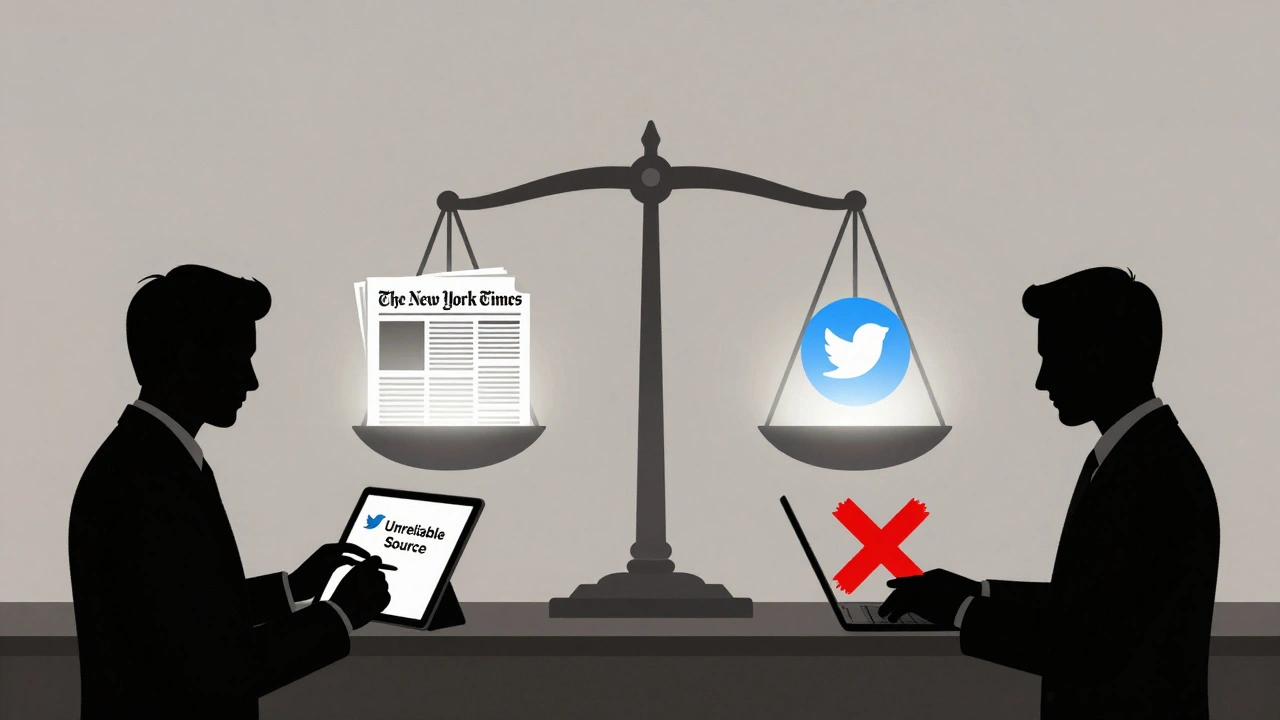
That last point is critical. Many editors think, "Well, it’s true, I know it." But Wikipedia doesn’t care what you know. It only cares what’s in print. A tweet from a whistleblower? Not good enough. A blog post by a rival? Not acceptable. A news article from a major outlet with direct quotes and context? That’s your baseline.
Common Disputes and How to Handle Them
Most BLP disputes fall into a few predictable patterns:
1. False or Misleading Accusations
Someone adds: "John Smith was investigated for embezzlement in 2022." No source. No context. Just a headline-style claim.
What to do: Remove it. Immediately. Then post on the article’s talk page: "Removed unsourced allegation. Per BLP policy, we need a reliable source that confirms the investigation and its outcome. Please provide one."
Don’t argue about whether it’s true. Argue about whether it’s sourced. That’s the only thing that matters.
2. Overly Positive or Promotional Content
"Jane Doe is the greatest innovator in her field" or "Her company changed the industry." These aren’t neutral. They’re opinion.
What to do: Replace with facts. Instead of "greatest innovator," say: "Jane Doe received the 2023 National Innovation Award for her work on renewable energy storage." Then cite the award announcement from a reputable organization.
3. Privacy Violations
Adding details like home address, medical history, family relationships, or sexual orientation without consent.
What to do: Remove it. No discussion needed. BLP explicitly forbids private information unless it’s publicly documented in reliable sources and directly relevant to the person’s public role. A celebrity’s public marriage? Fine. A teacher’s divorce? Unless it affected their job and was reported by a major outlet, it’s out.
4. Edit Warring
Two editors keep reverting each other’s changes. One adds the allegation. The other removes it. Back and forth, for days.
What to do: Stop editing. Immediately. Use the article’s talk page to propose a neutral version. If it doesn’t resolve, request mediation at Wikipedia:Mediation Committee. If it escalates, report it to Wikipedia:Administrators’ Noticeboard/Incidents. Don’t try to win. Try to stop the cycle.
How to Cite Sources Correctly
Not all sources are equal. Here’s what works - and what doesn’t.
| Reliable Sources | Unreliable Sources |
|---|---|
| Newspapers: The New York Times, BBC, Reuters | Personal blogs, Medium posts |
| Books from academic or commercial publishers | Social media (Twitter, Facebook, Instagram) |
| Official government or institutional reports | Wikipedia itself, fan sites |
| Peer-reviewed journals | Forums, Reddit threads, comment sections |
| Major magazines: The Economist, Time, Wired | Press releases or company websites (unless quoted in independent reporting) |
Even a good source isn’t enough if it’s not used right. Don’t just link to a news article. Quote the exact sentence that supports your claim. Example: "According to a 2023 investigation by The Guardian, Smith was cleared of all charges after a six-month review."
What to Do When You’re the Subject of a Dispute
If you’re the person in the article, you’re not allowed to edit it directly. That’s not a suggestion - it’s a hard ban. Wikipedia considers anyone with a personal stake in the article a conflict of interest.
But you’re not powerless.
- Use the article’s talk page to request changes - calmly and with sources.
- Ask a trusted friend, journalist, or academic to make the edit on your behalf - with full transparency.
- If the article is false or defamatory, contact Wikipedia’s OTRS team (Open Ticket Request System) at OTRS. They handle legal and privacy concerns.
- Do not harass editors. Do not threaten lawsuits. That will backfire. Wikipedia has legal teams. They’ve handled this before.
How to Avoid Becoming a Dispute Magnet
Some people naturally attract BLP disputes. Why? Because they’re public figures, controversial, or in the news often. Here’s how to reduce the risk:
- Keep your public profile clean and consistent. If you’re quoted in interviews, make sure your statements are clear and documented.
- Encourage reputable media to cover your work. More coverage = more reliable sources = fewer disputes.
- If you’re a professional, maintain a public bio on your official website - it can help editors find accurate info.
- Don’t panic if something appears. Most disputes are resolved within days. If it’s wrong, fix it with sources - not anger.
What Happens When BLP Rules Are Broken?
Wikipedia doesn’t tolerate BLP violations. Repeated violations can lead to:
- Editing restrictions on the article
- Account blocks
- Loss of editing privileges
- Legal action from subjects (rare, but possible)
In 2024, over 300 editors received temporary or permanent restrictions for BLP violations. Many didn’t realize they broke the rules. That’s why awareness matters.
Final Rule: When in Doubt, Leave It Out
Wikipedia’s greatest strength isn’t its speed. It’s its caution. Every edit to a living person’s biography should be treated like a legal document. If you’re unsure, ask. If you’re still unsure, wait. If you’re still unsure, don’t edit.
The goal isn’t to have the most complete biography. It’s to have an accurate, fair, and safe one. That’s what BLP is for. And that’s what every editor owes to the person on the page - and to the millions who rely on it.
Can I edit my own Wikipedia page if I’m a living person?
No. Wikipedia prohibits direct editing by subjects of biographies due to conflict of interest. Even well-intentioned edits can appear biased. Instead, use the article’s talk page to request changes with reliable sources, or ask a neutral editor for help.
What if someone adds false information about me on Wikipedia?
Remove it if you’re an editor, or flag it on the article’s talk page. If the claim is defamatory, contact Wikipedia’s OTRS team at [email protected]. They handle legal and privacy concerns. Do not threaten lawsuits - it often makes things worse.
Are social media posts ever acceptable as sources for BLP?
No. Tweets, Facebook posts, Instagram stories, and blogs are not reliable sources for biographies of living people. They’re self-published and unverified. Even if a celebrity posts something, Wikipedia requires independent, third-party reporting to confirm it.
How long does it take to fix a false Wikipedia article?
Most accurate, sourced corrections are made within 24 to 48 hours if the request is clear and supported by reliable sources. Complex disputes may take longer, especially if mediation is needed. Patience and persistence with sources are key.
Can I get a Wikipedia article removed if it’s damaging?
Removal is rare. Wikipedia only deletes articles about living people if they fail notability guidelines - not because they’re negative. The solution is not deletion, but correction. Add reliable sources that provide context, balance, and accuracy.