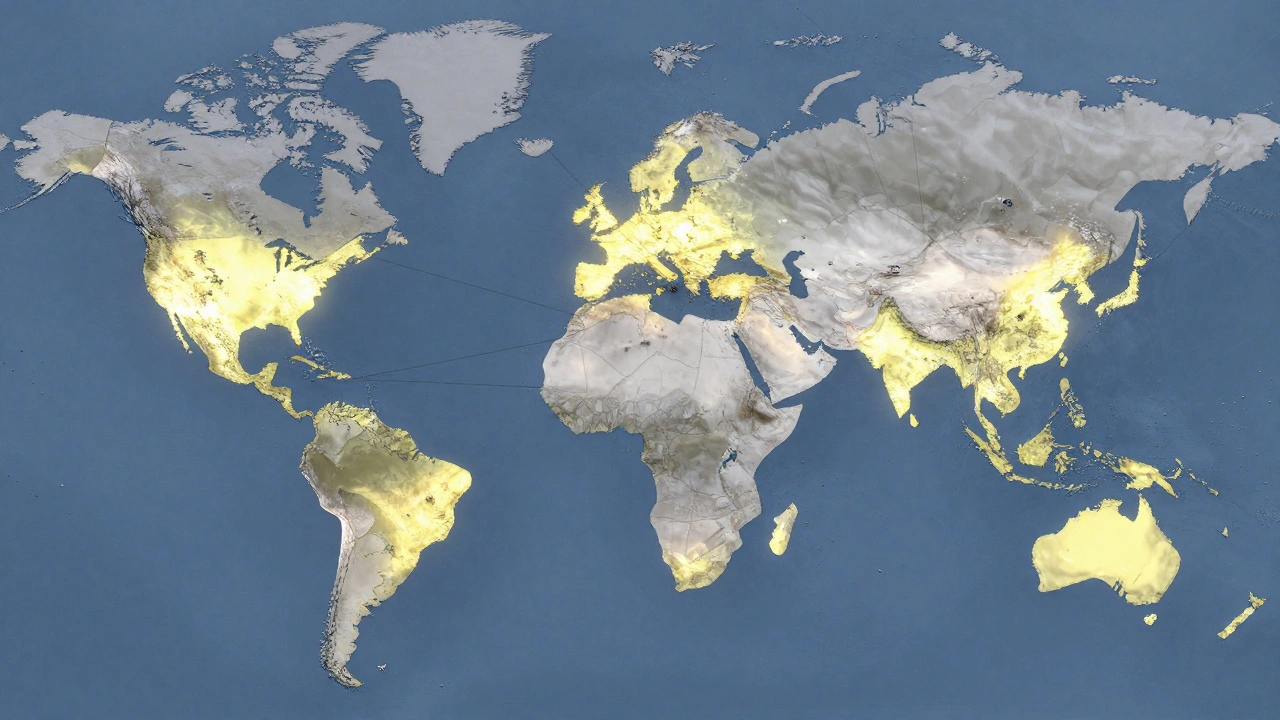
Wikipedia gets over 12 billion pageviews every month. That’s more than most social media platforms. But how do we know that? And what does it actually tell us about who’s using Wikipedia and why?
Pageview analytics isn’t just a number on a dashboard. It’s the backbone of understanding how a free, volunteer-run encyclopedia reaches billions of people across the world - from students in rural India to researchers in Berlin, from mobile users in Nigeria to elderly readers in Japan. Unlike commercial websites, Wikipedia doesn’t track users by name, location, or browsing habits. It doesn’t sell ads or build profiles. So how does it measure its reach? And what can those numbers really tell us?
How Wikipedia Counts Pageviews
Every time someone opens a Wikipedia article - whether on desktop, mobile, or through an app - a request is sent to Wikimedia’s servers. That request is logged. Each log entry includes the page title, the time of access, the user’s IP address (anonymized after 90 days), the device type, and the language version accessed. That’s it.
There’s no cookies, no tracking pixels, no behavioral profiling. The system is designed to be as private as possible while still being accurate enough for operational needs. Wikimedia Foundation uses open-source tools like Apache Kafka and Hadoop to process these logs at scale. Millions of requests per minute are aggregated into daily, weekly, and monthly totals.
What gets counted? Every time a page loads, even if it’s the same person refreshing. What doesn’t get counted? Bots, crawlers, and automated scripts. Wikimedia filters out known bot traffic using a constantly updated list of IP ranges and user-agent patterns. In 2025, about 18% of raw traffic was filtered out as non-human activity. That means the 12 billion monthly pageviews represent real human readers.
What Pageview Data Reveals About Readers
Pageview numbers don’t just show popularity - they reveal patterns in human curiosity.
During major global events, traffic spikes tell a story. When Queen Elizabeth II died in September 2022, her page saw over 12 million views in a single day. When the 2024 U.S. presidential election results were announced, pages for both candidates hit 8 million views within hours. During the 2023 earthquake in Turkey, the Wikipedia page for “earthquake preparedness” became the most-read article in 17 languages within 48 hours.
These aren’t random spikes. They show that people turn to Wikipedia first when they need reliable, neutral information quickly. A 2024 study by the University of Oxford found that during crises, Wikipedia is the most trusted source of factual information globally - even more trusted than official government websites in several countries.
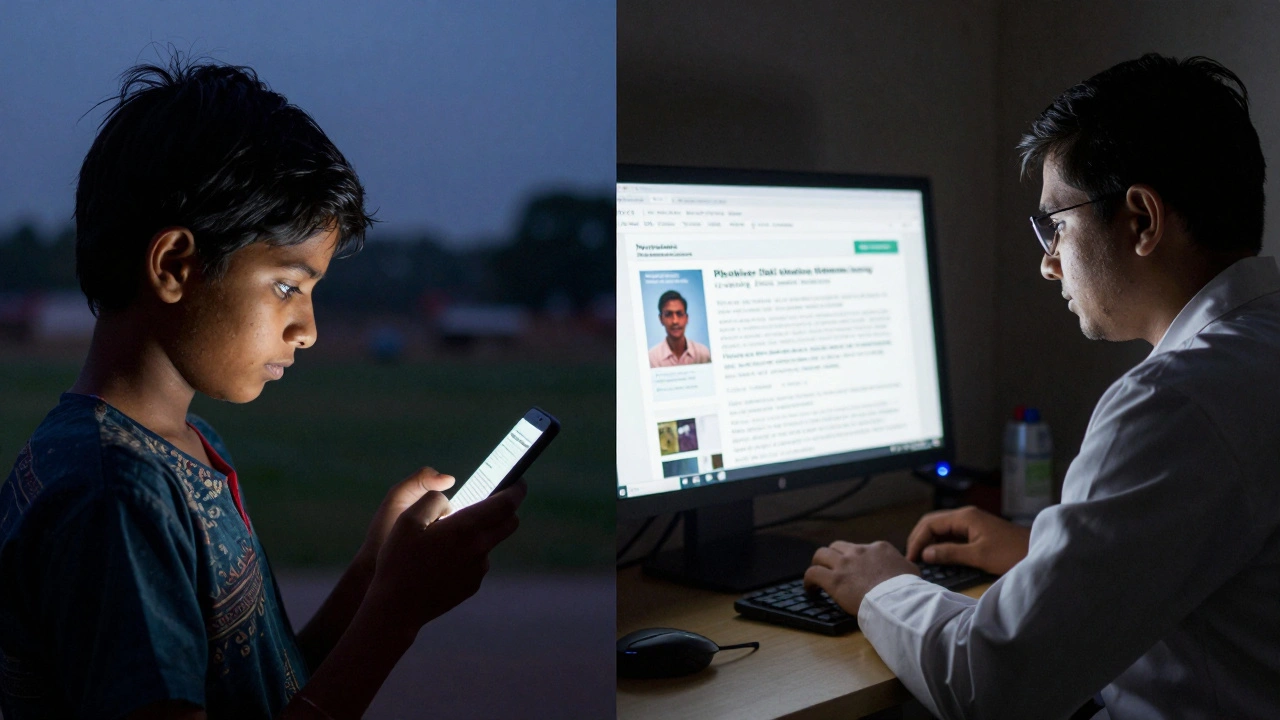
Pageview data also shows educational use. In countries with limited access to academic journals, Wikipedia is often the only source of peer-reviewed-level content. In Nigeria, the top 10 most-read articles in 2025 were all science and medicine topics - anatomy, malaria treatment, vaccine schedules. In rural Bangladesh, students use Wikipedia to study for high school exams because textbooks are scarce or outdated.
Language and Regional Differences
Not all Wikipedias are equal in traffic. The English version still leads, with about 4.5 billion monthly pageviews. But it’s not the fastest-growing.
The Hindi Wikipedia saw a 42% increase in pageviews between 2023 and 2025. The Arabic Wikipedia grew by 38%. The Bengali and Indonesian versions each crossed 1 billion monthly pageviews in late 2024. These aren’t just translations - they’re localized knowledge ecosystems. Articles on local history, regional medicine, and indigenous practices are being written and updated by volunteers who live in those communities.
Mobile access drives much of this growth. In Southeast Asia and Sub-Saharan Africa, over 80% of Wikipedia traffic comes from smartphones. That’s why the mobile site is optimized for low bandwidth. Pages load in under 2 seconds on 2G networks. The app works offline - users can download articles for later reading without internet.
What Pageviews Don’t Tell You
Pageviews are a powerful metric, but they’re not perfect. A single person can read ten articles in one sitting - that’s ten pageviews. Someone else might read one article for an hour - still just one pageview.
Pageviews don’t measure depth of engagement. They don’t tell you if someone skimmed the article or studied it. They don’t show if the reader took action - like applying what they learned, sharing it with others, or editing the page themselves.
That’s why Wikimedia also tracks edit activity, article talk page discussions, and user surveys. In 2025, over 1.5 million edits were made to Wikipedia articles each day. Around 30% of those edits came from new contributors. And in a global survey of 25,000 users, 68% said they had used Wikipedia to make a real-life decision - from choosing a medication to understanding a legal right.
So while pageviews measure reach, other data measures impact.
How Wikipedia Uses This Data
Wikipedia doesn’t use pageview data to chase clicks or boost engagement like a commercial platform. Instead, it uses it to make better decisions.
If a medical article gets 500,000 pageviews a month but hasn’t been updated in three years, editors prioritize it for review. If a language version has high traffic but low article quality, volunteers launch edit-a-thons to improve content. If mobile traffic spikes in a region with no local editors, Wikimedia partners with universities to train new contributors.
Pageview data also helps secure funding. Donors want to know their money is reaching people. Wikimedia reports that 92% of its funding goes directly to operations - servers, bandwidth, software, and community support. Pageview metrics prove that every dollar supports real, measurable global access to knowledge.

Privacy First, Data Second
Wikipedia’s approach to analytics is unique because it’s built on trust. The organization refuses to collect personally identifiable data. Even IP addresses are anonymized. No advertising networks are allowed on Wikipedia pages. No third-party trackers. No behavioral targeting.
This means the data is less detailed than what you’d find on Facebook or Google - but it’s also more honest. It reflects what people actually look for, without manipulation or distortion.
It’s a quiet rebellion against the surveillance economy. Wikipedia proves you can measure global impact without invading privacy.
What’s Next for Pageview Analytics
Wikipedia’s analytics team is now experimenting with AI to detect anomalies in traffic patterns. For example, if a page suddenly gets a surge of views from a region where it’s never been popular before, the system flags it. Could be a viral social media post. Could be a misinformation campaign. Could be a new community discovering Wikipedia.
They’re also testing ways to estimate how many people read an article without clicking - like when a search engine shows a Wikipedia summary in its results. In 2025, an estimated 2.3 billion additional people saw Wikipedia content through Google’s featured snippets, without ever visiting the site.
That’s a new frontier. Measuring influence beyond direct visits.
Final Thought: Knowledge Without Borders
Pageview analytics on Wikipedia isn’t about vanity metrics. It’s about proving that free, open knowledge works - at scale, across cultures, languages, and economic divides.
Every pageview is a person seeking understanding. Every spike is a moment of global curiosity. Every filtered bot is a reminder that real humans are still at the center of this project.
Wikipedia doesn’t need to be the biggest platform. It just needs to be the most trusted. And the numbers - raw, honest, and unfiltered - show that it is.