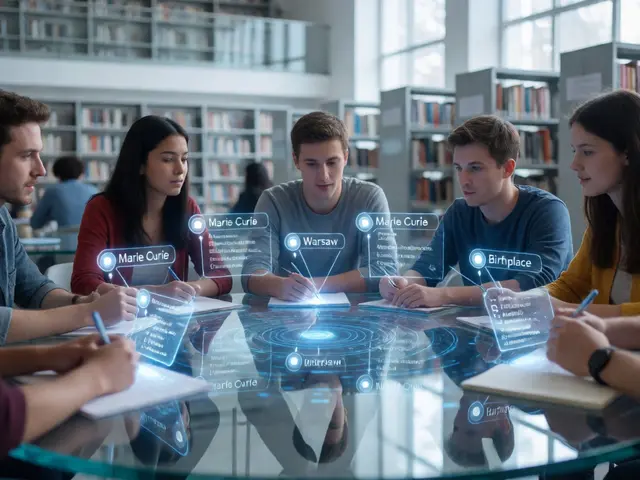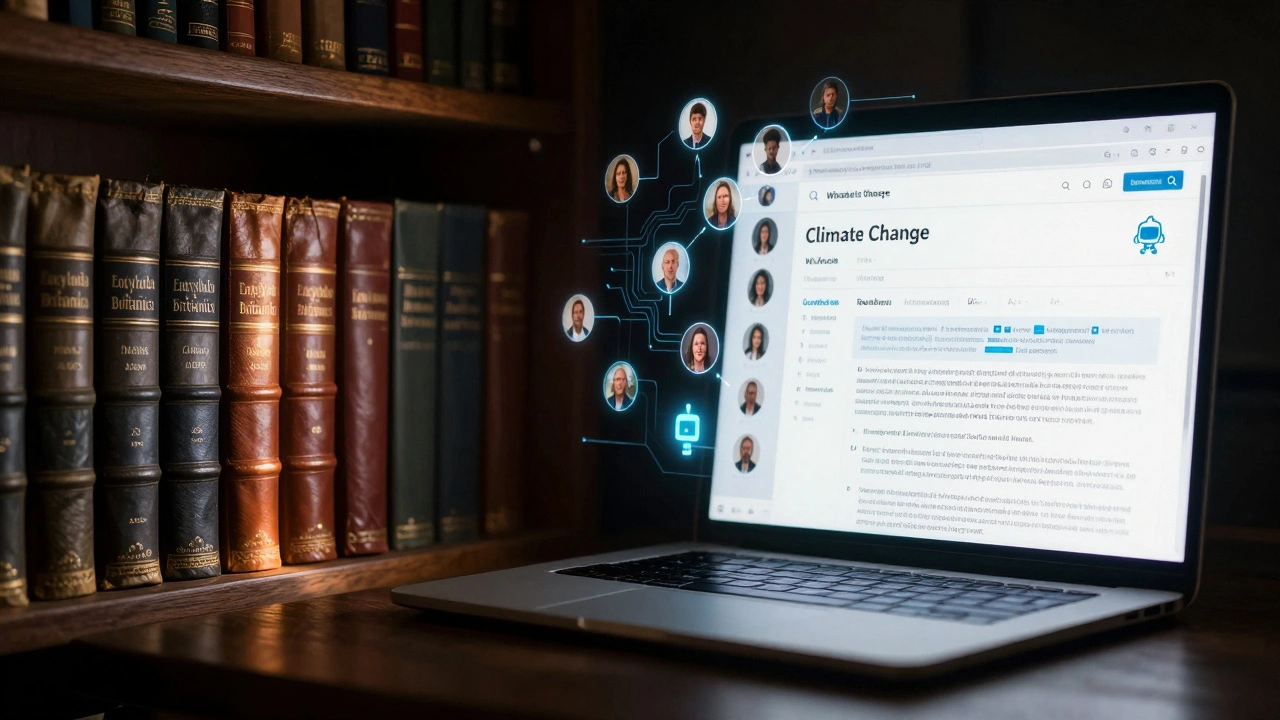
When you look up something online, where do you go first? For most people, it’s Wikipedia. But if you grew up before the internet, you might still picture a set of leather-bound books on a shelf - the kind your school library kept locked behind glass. Both are encyclopedias. But they work in completely different ways. One is built by millions of strangers. The other is written by experts hired by publishers. This isn’t just a difference in format. It’s a clash in how we understand truth, authority, and who gets to decide what’s worth knowing.
How Wikipedia Works - The Open Model
Wikipedia isn’t owned by a company. It doesn’t have editors in suits reviewing every change. Instead, it runs on volunteers. Anyone with an internet connection can edit an article. That’s the core idea. No gatekeepers. No paywalls. Just a shared effort to collect and organize knowledge. Over 1.5 billion people visit Wikipedia each month. That’s more than all traditional encyclopedias combined in their peak years.
Behind the scenes, it’s messy. Someone might fix a typo in the article about the Eiffel Tower. Someone else might add a controversial claim about climate change. A bot detects vandalism. A volunteer with 10 years of editing experience rolls back a biased rewrite. There’s no central authority. There’s only consensus, built slowly through discussion pages, edit histories, and community norms.
Studies from Stanford and MIT show that Wikipedia’s accuracy on scientific topics is comparable to Encyclopædia Britannica a traditional encyclopedia first published in 1768, known for its rigorous editorial process and expert contributors. In fact, a 2005 Nature study found Wikipedia’s science articles had only slightly more errors than Britannica’s. That’s not a fluke. It’s proof that open collaboration can work - if the community stays engaged.
Traditional Encyclopedias - The Expert Model
Traditional encyclopedias like Encyclopædia Britannica, World Book, and Larousse were built on a different philosophy: authority through control. Each entry was written by a credentialed expert - a historian, a physicist, a biologist - and reviewed by a team of editors. These editors didn’t just check spelling. They checked sources, tone, and alignment with established scholarship.
It was expensive. A full set of Britannica in the 1990s cost over $1,500. Libraries bought them. Schools kept them. Parents bought them as gifts for graduation. They were symbols of learning. But they were also static. Once printed, they couldn’t change. A child learning about the internet in 1998 would have read a paragraph that called it a "new technology" - even in 2003.
Traditional encyclopedias still exist. Britannica went fully digital in 2012. But their model hasn’t changed. They still hire writers. Still pay for peer review. Still publish updates only once a year. Their strength? Consistency. Their weakness? Speed. When the world changes fast, locked-in knowledge becomes outdated fast.
Who Writes the Articles? The People Behind the Words
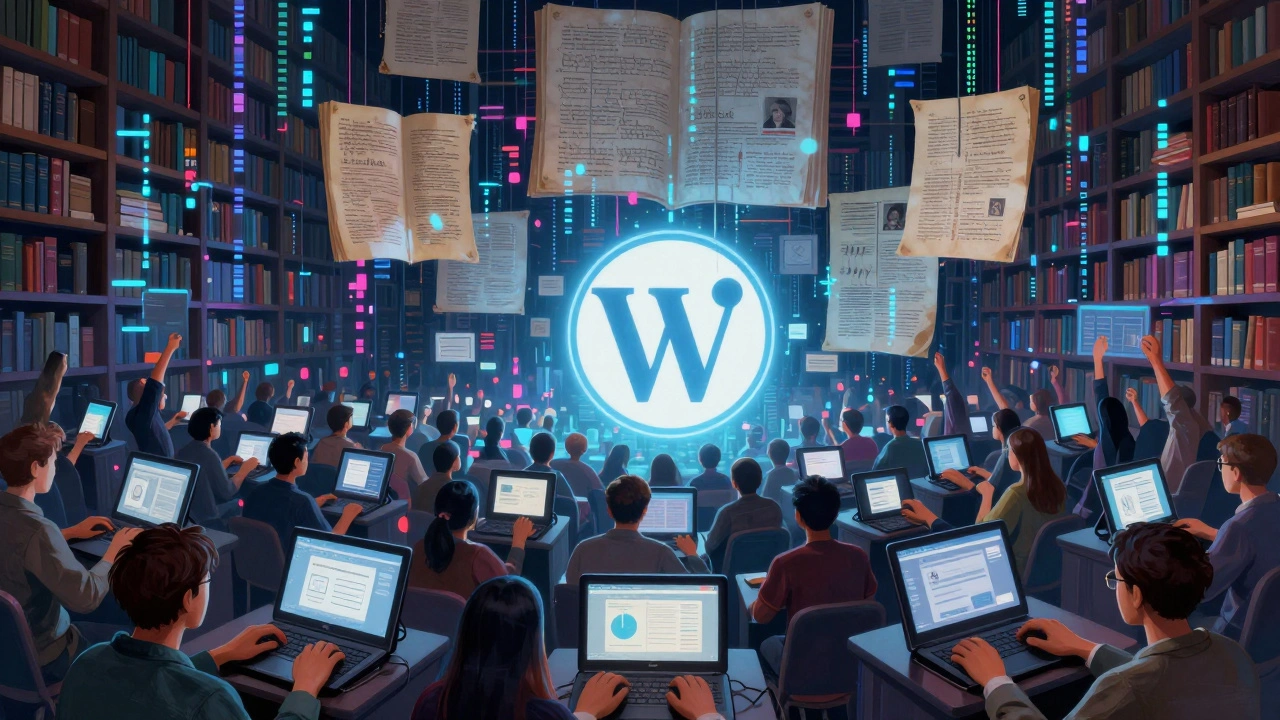
Wikipedia’s contributors aren’t professionals. Most are hobbyists. A high school student in Nairobi edits the page on African wildlife. A retired engineer in Ohio fixes math equations in quantum physics articles. A university professor in Berlin writes about medieval trade routes. They don’t get paid. They do it because they care.
Traditional encyclopedias pay their writers. Britannica pays its contributors $100-$500 per entry. That creates a different kind of quality. Experts write carefully. They cite peer-reviewed journals. They avoid speculation. But they also avoid controversy. If a topic is too hot - like gender identity or vaccine safety - publishers often delay updates or tone down language to avoid backlash.
Wikipedia doesn’t have that luxury. It has to respond. When a new virus emerges, Wikipedia updates its page within hours. When a scientist publishes a breakthrough study, Wikipedia editors summarize it within days. Traditional encyclopedias? They wait for the next printing cycle. Sometimes that’s a year. Sometimes it’s three.
What Happens When Things Go Wrong?
Wikipedia has had its scandals. A PR firm edited company pages to remove negative facts. A user added fake citations to a biography. A hoax about a nonexistent person lasted six years. These stories get attention. But they’re outliers. Most edits are minor. Most vandalism is caught within minutes.
Wikipedia’s defense is transparency. Every edit is recorded. You can see who changed what, when, and why. You can read the talk page where editors argue over wording. You can even see how many times an article has been protected from editing after a controversy.
Traditional encyclopedias don’t show their work. If an error slips in - like claiming the capital of Australia was Sydney in 2001 - you won’t know. There’s no edit history. No public discussion. You just get the printed version. And once it’s printed, it’s set in stone.
Which One Should You Trust?
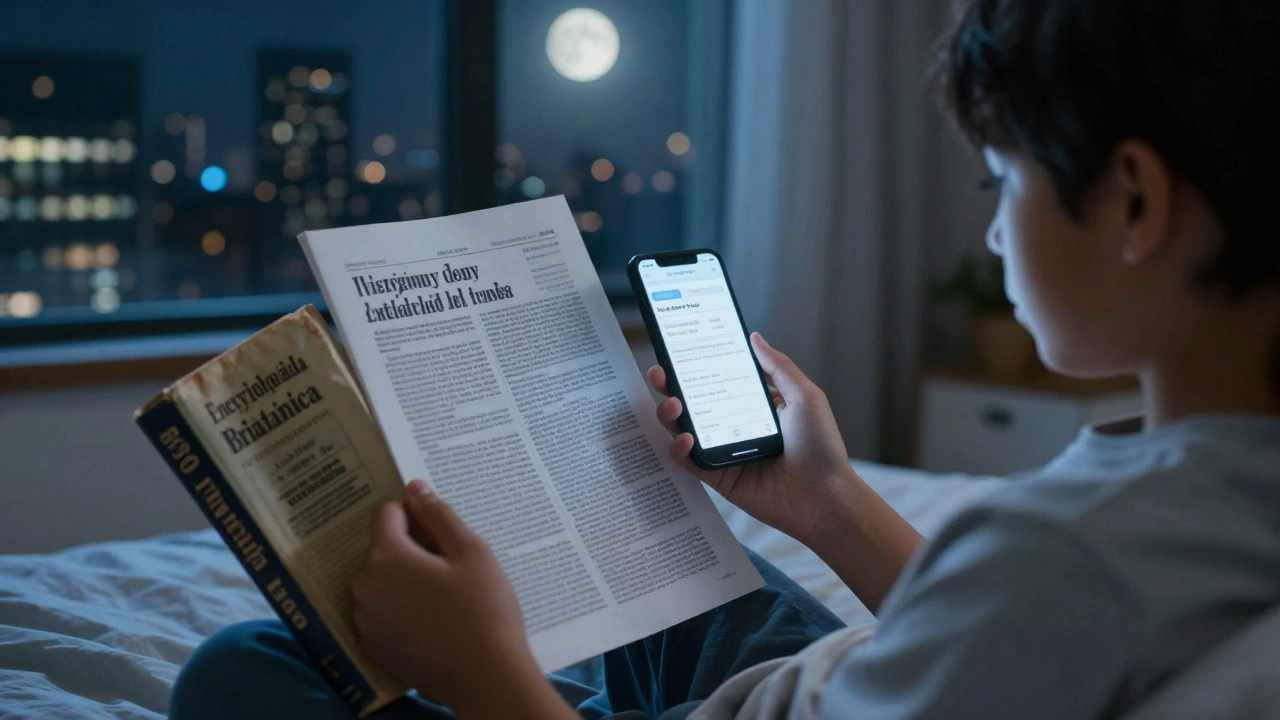
You shouldn’t trust either one blindly. But you can use them better.
Use Wikipedia to get a quick overview. Read the references at the bottom. Follow the links to academic papers, books, or official reports. That’s how real researchers use it - as a starting point, not an endpoint.
Use traditional encyclopedias when you need stability. If you’re writing a paper for school and your teacher says "no Wikipedia," it’s not because Wikipedia is wrong. It’s because they want you to use sources with formal vetting. That’s a valid requirement - especially for beginners learning how to cite properly.
Here’s the truth: the best researchers use both. They start with Wikipedia to understand the lay of the land. Then they turn to traditional sources to verify depth, context, and academic rigor. One isn’t better. They’re just different tools for different jobs.
The Future of Knowledge
Traditional encyclopedias are fading. Britannica stopped printing physical sets in 2012. World Book shifted entirely to digital subscriptions. Larousse now focuses on language learning, not general knowledge.
Wikipedia isn’t perfect. It’s biased. It’s uneven. It’s chaotic. But it’s alive. It grows. It adapts. It reflects the world as it is - not as publishers think it should be.
Journalism has always been about truth. But truth isn’t just about who writes it. It’s about how it’s checked, how it’s updated, and who gets to help shape it. Wikipedia doesn’t claim to have all the answers. But it lets everyone help find them.
Is Wikipedia more accurate than traditional encyclopedias?
Studies show Wikipedia’s accuracy on factual topics is very close to that of traditional encyclopedias like Encyclopædia Britannica. A 2005 study in Nature found Wikipedia’s science entries had only slightly more errors. But Wikipedia updates faster. If a new discovery happens, Wikipedia can reflect it in hours. Traditional encyclopedias take months or years.
Why do schools discourage using Wikipedia?
Schools discourage Wikipedia as a primary source because it’s editable by anyone. That means you can’t always trace who wrote it or verify their credentials. Teachers want students to learn how to find and cite authoritative sources - like peer-reviewed journals or published books. But using Wikipedia to get started and then checking its references is a smart, common practice among researchers.
Can Wikipedia be trusted for medical information?
Wikipedia has strict guidelines for medical content. Articles on diseases, treatments, and drugs are often reviewed by volunteer doctors and nurses. Many are linked to peer-reviewed studies. But it’s still not a substitute for professional medical advice. Use Wikipedia to understand symptoms or treatments, then consult a doctor or official health site like the CDC or WHO.
Do traditional encyclopedias still have value today?
Yes - but only in specific cases. If you need stable, vetted information without constant change, traditional encyclopedias offer reliability. They’re useful for historical context, foundational concepts, or when you need a source that’s been reviewed by a formal editorial board. But for current events, emerging science, or fast-changing topics, they’re too slow to be practical.
Is Wikipedia biased?
Wikipedia has well-documented biases. Articles on Western topics are longer and more detailed than those on non-Western subjects. Women and minority groups are underrepresented as both subjects and editors. But the community actively works to fix this. There are editing groups focused on gender equity, global representation, and Indigenous knowledge. Progress is slow, but it’s happening.