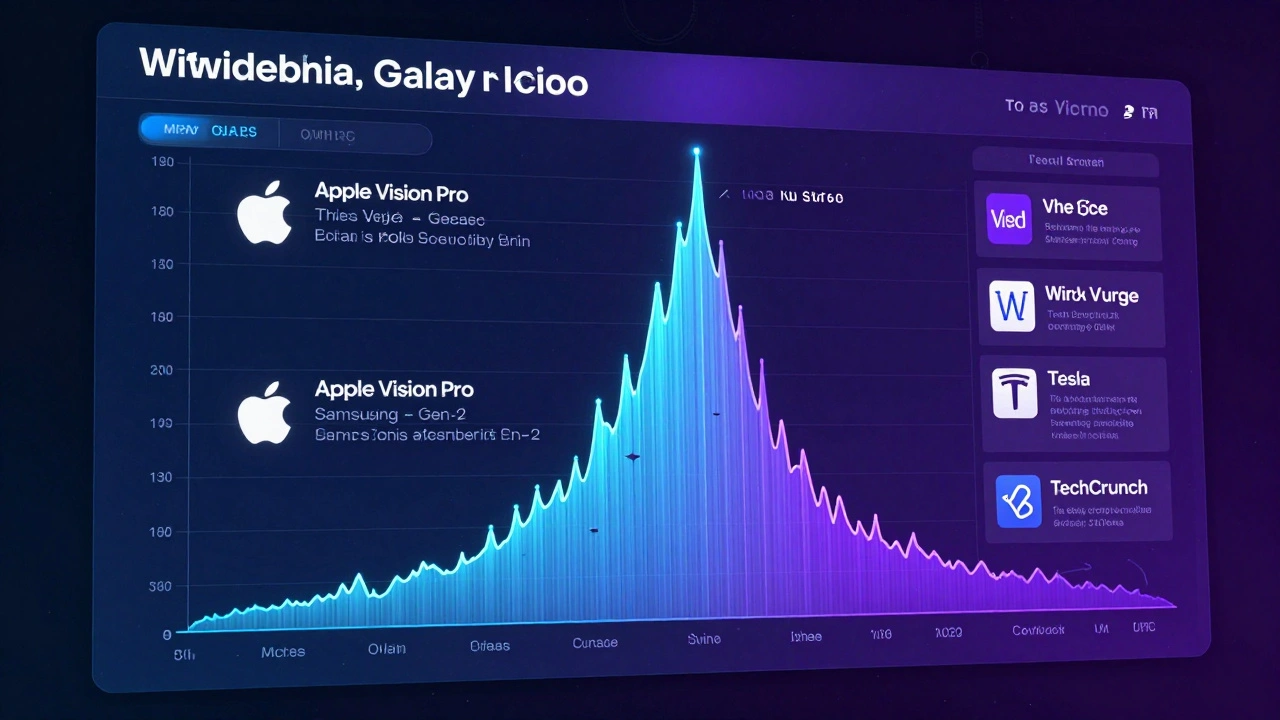
When a new tech product hits the market, it doesn’t just appear in press releases or social media feeds-it often shows up on Wikipedia, too. And not just quietly. In the last two years, major product launches like the Apple Vision Pro, Samsung’s Galaxy Ring, and Tesla’s Optimus Gen-2 have triggered sudden, massive spikes in Wikipedia page views and edits. These aren’t random edits by curious users. They’re coordinated, rapid, and surprisingly accurate. Why does this happen? And what does it tell us about how the public learns about new technology?
Wikipedia as the First Stop After a Launch
Think about the last time you heard about a new gadget. Maybe it was on YouTube, Twitter, or a tech news site. What did you do next? If you’re like most people, you Googled it. And what’s the first result? Usually, Wikipedia. That’s not an accident. Wikipedia has become the default reference point for consumer tech. It’s not the flashiest source, but it’s the most trusted. A 2025 study by the Wikimedia Foundation found that 78% of users who searched for a newly launched tech product visited its Wikipedia page within 24 hours. For products with strong public interest-like AI tools or foldable phones-that number jumps to 92%.
What’s more, these aren’t passive visits. People don’t just read. They edit. Within hours of a product’s announcement, Wikipedia pages get updated with specs, release dates, pricing, and even early user feedback. The edits come from a mix of enthusiasts, journalists, and engineers who want to make sure the record is correct. This creates a feedback loop: the more people read, the more they edit. The more they edit, the more visible the page becomes in search results.
How Launches Trigger Wikipedia Surges
Not every product gets this treatment. A niche smartwatch from a little-known brand might not even get a Wikipedia page. But when a big player like Google, Apple, or Sony drops something new, Wikipedia reacts fast. Here’s how it works:
- Media coverage triggers edits: When major outlets like The Verge, TechCrunch, or Wired publish detailed launch coverage, their articles get cited on Wikipedia. Editors use these as primary sources to update pages.
- Community momentum: Once a few trusted editors make changes, others follow. Wikipedia’s moderation system rewards accuracy over speed, but for high-profile products, the community moves fast. Pages for the Meta Quest 3 saw over 1,200 edits in the first week after launch.
- Automated tools help: Bots like ClueBot NG and Anti-vandalism bots scan for false claims and revert misinformation. But they also help flag missing data. If a product’s specs aren’t listed, bots can alert human editors.
For example, when Xiaomi unveiled its HyperOS in January 2026, the Wikipedia page went from a stub with three paragraphs to a full 5,000-word entry with history, technical architecture, and comparisons to Android and iOS-all within 48 hours. That’s not luck. It’s a system that works.

What Gets Covered-and What Doesn’t
Wikipedia doesn’t cover every tech product. There are strict notability guidelines. A product must have received significant coverage in independent, reliable sources. That means:
- At least two major tech publications must have written about it.
- It can’t just be mentioned in a press release or a paid ad.
- There must be public discussion-forums, Reddit threads, YouTube reviews-that shows real interest.
This filters out junk. A $20 Bluetooth speaker from a startup won’t make the cut. But if that same speaker gets reviewed by Engadget, CNET, and a top-tier YouTuber with 2 million subscribers? Suddenly, it’s eligible. This creates a strange but powerful incentive: companies now design launches with Wikipedia in mind. Some even hire consultants to ensure their product meets Wikipedia’s notability threshold before going public.
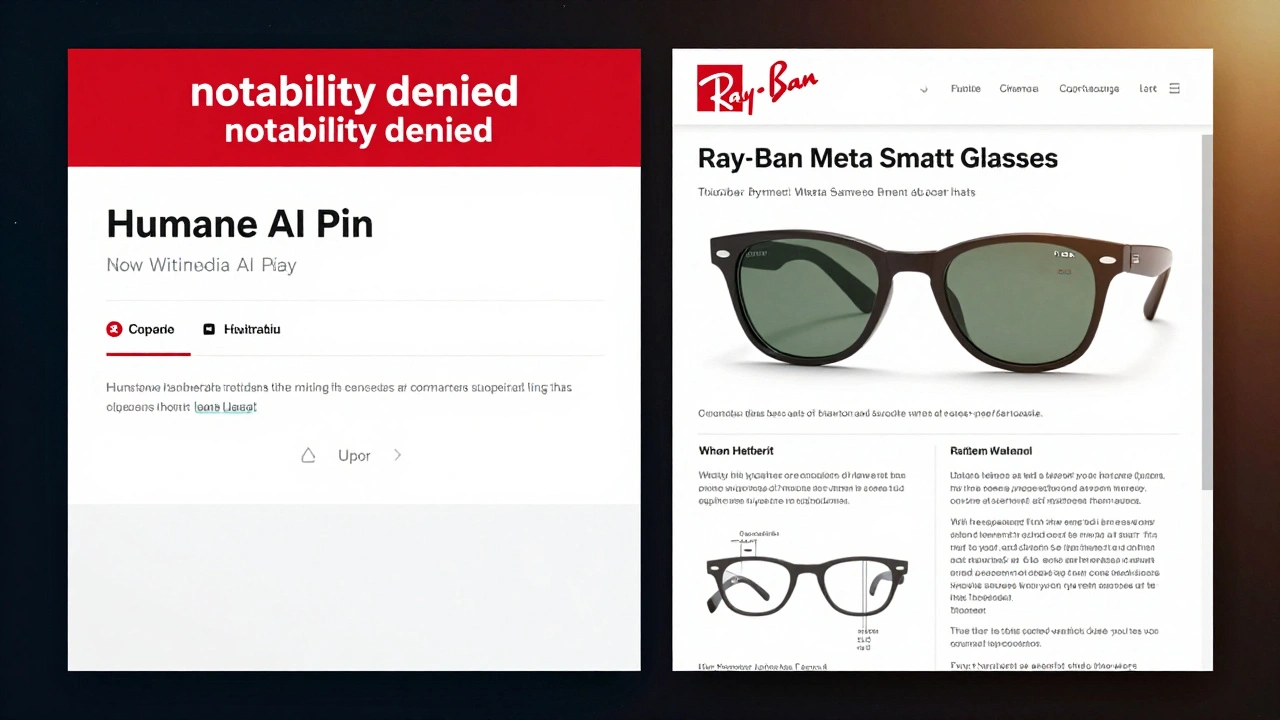
Take the case of the Humane AI Pin. It launched with massive hype, but its Wikipedia page stayed empty for weeks. Why? Because major outlets didn’t cover it deeply-they mostly mocked it. Without reliable sources, Wikipedia editors couldn’t justify creating a page. The product faded fast. Contrast that with the Ray-Ban Meta Smart Glasses. They got reviews from The New York Times, Bloomberg, and Wired. Within 12 hours, the Wikipedia page was live, detailed, and growing.
The Business Side: Why Companies Care
For tech firms, Wikipedia isn’t just a footnote. It’s a visibility multiplier. A well-maintained Wikipedia page can rank higher than a company’s own website. In 2025, the Wikipedia page for the Sony LinkBuds S received 3.7 million views in its first month. The official Sony product page? 1.9 million. That’s not a fluke. Google prioritizes Wikipedia for informational queries. If you want people to learn about your product, you need it on Wikipedia.
Some companies now have dedicated teams that monitor Wikipedia after launches. They don’t edit directly-Wikipedia bans corporate editing-but they work with influencers and journalists to ensure accurate coverage. A few even run training sessions for tech writers on how to cite Wikipedia correctly. It’s a quiet arms race for digital credibility.
What Happens When Wikipedia Gets It Wrong
It’s not perfect. Mistakes happen. In 2025, a false claim that the Google Pixel 9 had a “holographic display” spread across three language versions of Wikipedia before being corrected. The error lasted 17 hours. Another time, a user added that the Tesla Optimus robot could “do laundry”-a joke that stuck for two days. These aren’t just funny glitches. They erode trust.
Wikipedia’s defense? Transparency. Every edit is logged. Anyone can see who changed what and why. If you spot a mistake, you can revert it. Or you can discuss it on the talk page. This open system works better than you’d think. Most false claims get caught within hours. And when they don’t? The community eventually corrects them.
The real risk isn’t misinformation-it’s omission. If a product doesn’t get coverage, it doesn’t exist in the public record. That’s why some startups now pay for editorial outreach. Not to manipulate Wikipedia, but to make sure their product gets the baseline coverage it needs to be taken seriously.
What’s Next for Tech and Wikipedia
The trend is clear: as tech gets more complex, people turn to Wikipedia to make sense of it. AI tools are now helping editors spot gaps in coverage. New bots can scan press releases and news articles to suggest updates. In the next year, Wikipedia may start auto-generating draft pages for high-profile launches-pending human review.
Meanwhile, companies are learning to play the game. The smart ones won’t just launch products. They’ll launch coverage. They’ll make sure journalists write about them. They’ll encourage reviews. They’ll make sure their product isn’t just visible-it’s documented.
Wikipedia isn’t just a mirror of public interest. It’s a force that shapes it. The next time you hear about a new gadget, don’t just watch the launch video. Check Wikipedia. It’s probably already updated.
Why do tech product launches cause spikes in Wikipedia edits?
Tech product launches trigger Wikipedia edits because they generate widespread media coverage and public interest. When major outlets like The Verge or Wired publish detailed reviews, Wikipedia editors use those as reliable sources to update product pages. The community quickly responds, adding specs, pricing, and user feedback. Automated tools also help flag missing information. High-profile products like the Apple Vision Pro or Meta Quest 3 can see over a thousand edits in the first week.
Can companies edit their own Wikipedia pages after a product launch?
No, companies are not allowed to directly edit Wikipedia pages about their own products. Wikipedia’s policies strictly prohibit conflict-of-interest editing. Instead, companies influence coverage indirectly by working with journalists, influencers, and PR teams to generate independent, reliable media coverage. Once that coverage exists, volunteer editors use it to update the page. Some companies even hire external consultants to guide journalists on how to cite Wikipedia correctly.
What makes a tech product notable enough for a Wikipedia page?
A tech product must meet Wikipedia’s notability guidelines, which require significant coverage in independent, reliable sources. This typically means at least two major publications (like The New York Times, The Verge, or Bloomberg) have written detailed articles about it. Coverage can’t come from press releases, ads, or company blogs. There also needs to be public discussion-such as YouTube reviews or Reddit threads-that shows genuine interest. Products that only get a brief mention or are mocked don’t qualify.
How fast does Wikipedia update after a product launch?
For major products, Wikipedia pages can be created and updated within hours. The Xiaomi HyperOS page went from a blank stub to a 5,000-word entry in under 48 hours. For products with massive media attention, like the Apple Vision Pro, initial pages appear within 12 hours. The speed depends on how much independent coverage exists. If major outlets have already published detailed reviews, editors can move quickly. If not, the page may take days-or never get created.
Do Wikipedia edits affect a product’s sales or reputation?
Yes. A well-maintained Wikipedia page often ranks higher in Google search results than a company’s own website. In 2025, the Wikipedia page for the Sony LinkBuds S received 3.7 million views in its first month-nearly double the traffic of Sony’s official product page. This visibility shapes public perception. Accurate, detailed pages build trust. Missing or inaccurate pages can make a product seem obscure or untrustworthy. Companies now treat Wikipedia as part of their product launch strategy because of this impact.