Imagine a student in rural Ohio trying to understand quantum mechanics. They don't have a specialized physics library nearby. Their school's budget is tight. But they have a laptop and an internet connection. In that moment, Wikipedia becomes their primary reference point. It is not just a dictionary; it is a living, breathing repository of human knowledge that underpins modern STEM education involves the integration of science, technology, engineering, and mathematics into a coherent learning experience.
For decades, educators debated whether students should trust a site where anyone can edit. Today, that debate has shifted. The question is no longer "Is it accurate?" but "How do we teach students to verify, cite, and contribute to this massive digital commons?" As we move through 2026, the role of Wikipedia in science learning refers to the process of acquiring scientific concepts, skills, and attitudes through various instructional methods has evolved from a passive lookup tool to an active pedagogical engine.
The Foundation: Why Open Knowledge Matters in Classrooms
Traditional textbooks are static. A biology book printed in 2015 cannot reflect the latest discoveries in CRISPR gene editing unless it is revised, which costs money and time. Wikipedia, however, updates in real-time. When a new study on climate change impacts is published in a peer-reviewed journal, editors often update relevant articles within days. This immediacy is crucial for teaching current events in science.
But speed alone isn't enough. The true value lies in transparency. Every change on Wikipedia is logged. Every claim can be traced back to a citation. For students learning critical thinking, this audit trail is a goldmine. Instead of accepting information at face value, they learn to follow the chain of evidence. This mirrors the scientific method itself: observe, hypothesize, test, and verify.
Consider the concept of open educational resources (OER) are free, publicly available materials that can be used, adapted, and shared without restriction. Wikipedia sits at the heart of the OER movement. Unlike proprietary software or locked-down databases, Wikipedia allows teachers to download content, adapt it for their specific classroom needs, and redistribute it. This democratizes access to high-quality scientific information, ensuring that a student in a low-income district has access to the same depth of information as one in a wealthy private school.
From Lookup to Contribution: The Wiki Project Model
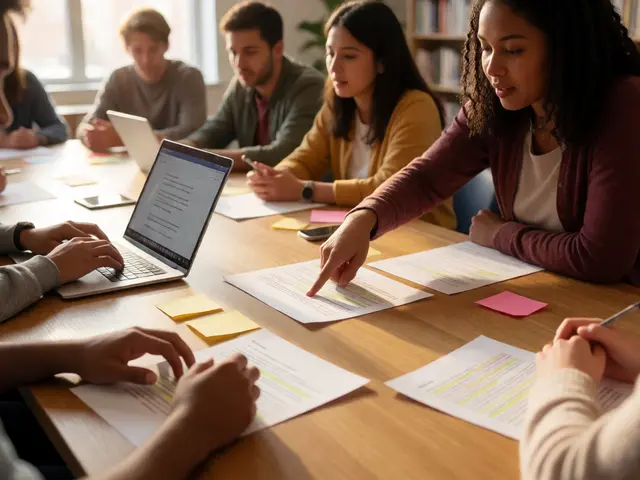
The most powerful way Wikipedia supports STEM education is not by reading, but by writing. Many universities and high schools now integrate "Wiki Projects" into their curricula. Students are tasked with creating or improving an article on a topic related to their coursework. Let's say a chemistry major is studying organic synthesis. Instead of just memorizing reaction mechanisms, they might be assigned to improve the Wikipedia page for a specific chemical compound, adding recent research findings or clarifying confusing sections.
This process forces deep engagement. To write a good encyclopedia entry, you must understand the topic thoroughly. You must find reliable sources. You must write clearly and neutrally. These are core competencies in any STEM field. Researchers have noted that students who complete Wiki Projects often demonstrate higher levels of metacognition-they become more aware of how they learn and how knowledge is constructed.
Furthermore, contributing to Wikipedia teaches digital citizenship. Students learn about copyright, fair use, and the importance of citing sources correctly. They also learn about collaboration. Editing a public page means dealing with other editors, some of whom may disagree with your changes. Navigating these discussions requires diplomacy, evidence-based argumentation, and patience-skills that are just as important as technical knowledge in professional science careers.
Bridging the Gap Between Theory and Real-World Application
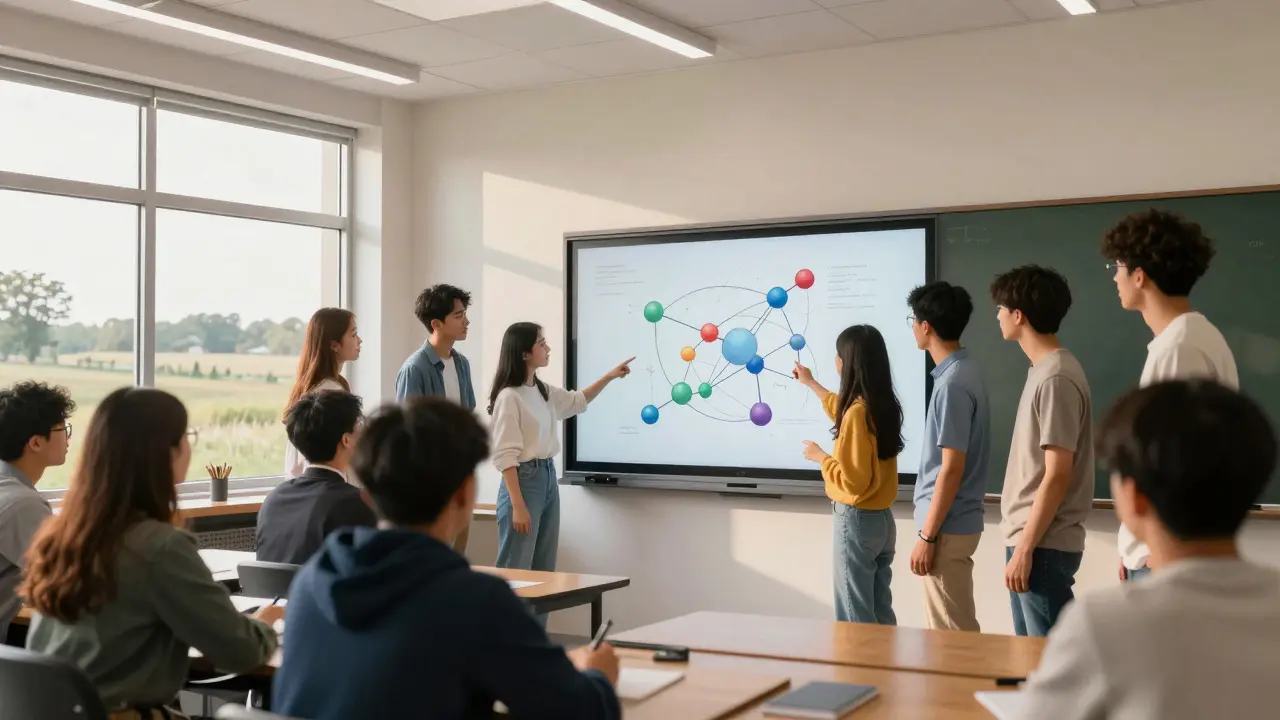
One of the biggest challenges in STEM education is making abstract concepts feel real. Wikipedia helps bridge this gap by connecting theoretical models to real-world applications. For example, an article on thermodynamics doesn't just list equations. It explains how those principles apply to car engines, refrigerators, and even biological processes. By linking to related topics, Wikipedia creates a web of context that helps students see the big picture.
This interconnectedness is particularly useful for interdisciplinary studies. Modern science rarely stays within one discipline. Climate change, for instance, involves physics, chemistry, biology, economics, and politics. Wikipedia articles on climate change link to all these areas, allowing students to explore the complexity of the issue. This holistic view is essential for preparing students to solve complex, real-world problems.
Moreover, Wikipedia serves as a gateway to primary sources. While the encyclopedic articles provide a summary, they are heavily cited with links to original research papers, government reports, and news articles. For advanced students, this makes Wikipedia a perfect starting point for deeper research. They can begin with the overview and then dive into the primary literature, guided by the citations provided in the text.
Addressing Misinformation in the Digital Age
In an era of misinformation, teaching students how to evaluate sources is more important than ever. Wikipedia provides a unique environment for this practice. Because the site is editable, it is vulnerable to vandalism and bias. However, this vulnerability is also its strength. Teachers can use specific examples of disputed edits or controversial topics to discuss how consensus is reached in scientific communities.
Students can analyze talk pages, where editors debate changes, to understand how experts resolve disagreements. They can look at revision histories to see how an article has evolved over time. This teaches them that knowledge is not fixed; it is dynamic and subject to revision based on new evidence. This is a fundamental principle of science that is often lost in traditional textbook-based instruction.
Additionally, Wikipedia helps combat confirmation bias. Because articles aim for neutral point of view, students are exposed to multiple perspectives on contentious issues. Whether it's the ethics of genetic engineering or the causes of global warming, Wikipedia presents the arguments from different sides, supported by citations. This encourages students to form their own opinions based on evidence rather than ideology.
Practical Strategies for Educators
If you are an educator looking to integrate Wikipedia into your STEM curriculum, start small. Here are some practical strategies to get you started:
- Source Evaluation Exercises: Give students a Wikipedia article and ask them to identify the primary sources cited. Have them visit those sources and compare the information. Discuss any discrepancies.
- Article Improvement Assignments: Assign students to find a short or incomplete article on a topic related to your course. Ask them to expand it by adding at least three new references from peer-reviewed journals.
- Comparison Tasks: Have students compare a Wikipedia article on a scientific concept with a textbook explanation. Ask them to identify what each source does better and why.
- Collaborative Writing: Form groups and assign each group a section of a larger article. Have them work together to draft, edit, and publish the section, mimicking the collaborative nature of scientific research.
When using Wikipedia in class, always emphasize the importance of checking the "References" section. Teach students to distinguish between reliable sources (like Nature, Science, or IEEE) and less reliable ones (like blogs or press releases). This skill will serve them well beyond the classroom, as they navigate the vast amount of information available online.
Challenges and Considerations
While Wikipedia is a powerful tool, it is not without challenges. One common concern is coverage bias. Some topics are well-covered, while others are sparse. For example, articles on cutting-edge research in niche fields may be outdated or missing entirely. Teachers need to be aware of these gaps and supplement Wikipedia with other resources when necessary.
Another challenge is the potential for confusion. Students may struggle to differentiate between a well-sourced article and a poorly sourced one. Clear guidelines and rubrics can help mitigate this. Additionally, some students may feel intimidated by the idea of editing a public website. Starting with smaller, low-stakes assignments can help build confidence.
Finally, technological barriers exist. Not all students have reliable internet access or devices at home. Schools need to ensure that Wikipedia is accessible during class hours and that students have the opportunity to work on projects in the lab or library.
The Future of Collaborative Knowledge in Education
As we look toward the future, the role of Wikipedia in STEM education is likely to grow. With the rise of artificial intelligence and automated fact-checking tools, the reliability of Wikipedia may increase further. Moreover, as more scientists and educators engage with the platform, the quality of content will continue to improve.
Wikipedia represents a shift in how we think about knowledge. It is no longer something that is handed down from authority figures; it is something that is built collectively by the community. For students, this is a valuable lesson. It shows them that they have a voice in shaping understanding of the world around them. In a rapidly changing world, this ability to contribute to and critique collective knowledge is perhaps the most important skill we can teach.
Is Wikipedia a reliable source for STEM students?
Yes, if used correctly. Wikipedia is generally reliable for getting an overview of a topic and finding primary sources. However, students should always check the references and compare information with other credible sources. It is best used as a starting point for research, not the final destination.
How can teachers integrate Wikipedia into their curriculum?
Teachers can use Wikipedia for source evaluation exercises, article improvement assignments, and collaborative writing projects. These activities help students develop critical thinking, digital literacy, and communication skills while engaging with scientific content.
What are the benefits of having students edit Wikipedia articles?
Editing Wikipedia articles encourages deep engagement with the material, improves writing and research skills, and teaches digital citizenship. Students learn to cite sources, maintain a neutral point of view, and collaborate with others, all of which are valuable skills in STEM fields.
Does Wikipedia cover all STEM topics equally?
No, coverage varies. Well-established topics tend to have comprehensive articles, while niche or emerging fields may have less detailed entries. Teachers should be aware of these gaps and supplement Wikipedia with other resources when needed.
How does Wikipedia help combat misinformation?
Wikipedia helps combat misinformation by providing transparent edit histories and requiring citations for claims. Students can learn to trace information back to primary sources and understand how consensus is reached among experts, which builds critical thinking skills.