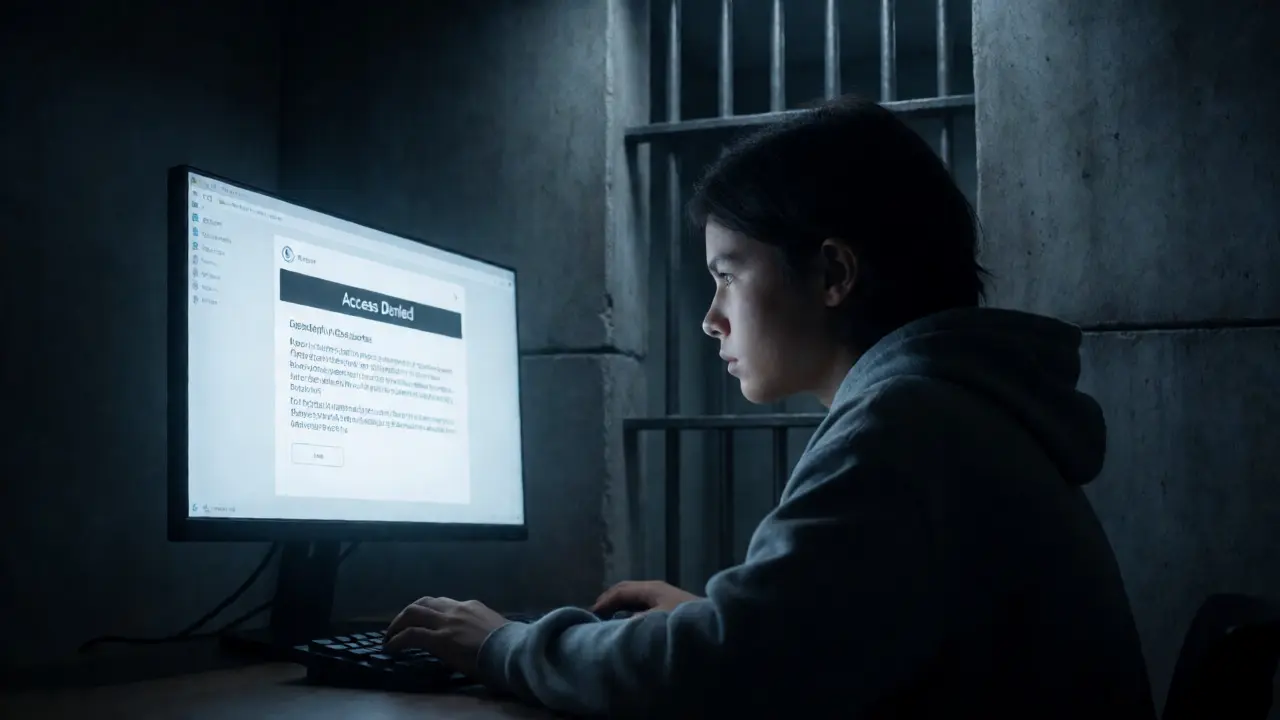
Imagine waking up tomorrow and finding that the world’s largest library has vanished from your country. No error message, no explanation-just a blank screen or a government notice saying the site is "blocked for national security." This isn’t hypothetical. It happens. From Turkey to China, governments routinely try to silence Wikipedia, the free online encyclopedia that anyone can edit. Yet, against all odds, it keeps coming back. How does a volunteer-run project outlast billion-dollar state apparatuses? The answer lies not just in technology, but in a stubborn, decentralized philosophy of information.
The Anatomy of Digital Silencing
Governments don’t block Wikipedia because they hate facts; they block it because they fear uncontrolled narratives. When a regime controls the media, Wikipedia becomes a threat simply by existing. It offers citations, multiple viewpoints, and historical context that might contradict the official story. In countries like Iran or Russia, editors have faced jail time for writing about political dissidents or controversial events. But here’s the twist: blocking the main domain often fails. Why? Because Wikipedia isn’t just one website. It’s a network.
When a government blocks wikipedia.org, users don’t stop seeking answers. They switch to mobile data, use Virtual Private Networks (VPNs), or access mirror sites. This cat-and-mouse game reveals a fundamental truth about the modern internet: you can filter traffic, but you can’t easily delete knowledge once it’s distributed. The resilience of Wikipedia stems from its architecture. It doesn’t rely on a single server farm in San Francisco. Its content is mirrored globally, stored in databases that are replicated across continents. If one node goes down, another picks up the slack.
Technical Shields: Mirrors and Proxies
How do regular people bypass these firewalls? It’s rarely high-tech espionage. Most users rely on simple tools. Tor is a popular choice, routing traffic through encrypted nodes worldwide. Then there are proxy servers, which act as middlemen, fetching the blocked page and sending it to you. Some countries even see the rise of unofficial mirrors-clones of Wikipedia hosted on local servers or cloud platforms outside the jurisdiction.
| Method | Difficulty | Reliability | Best For |
|---|---|---|---|
| VPN Services | Low | Medium (can be blocked) | General browsing |
| Tor Browser | Medium | High | Privacy-focused users |
| Proxy Sites | Low | Variable | Quick access without install |
| Mirror Sites | Low | Medium (outdated info) | Static reference needs |
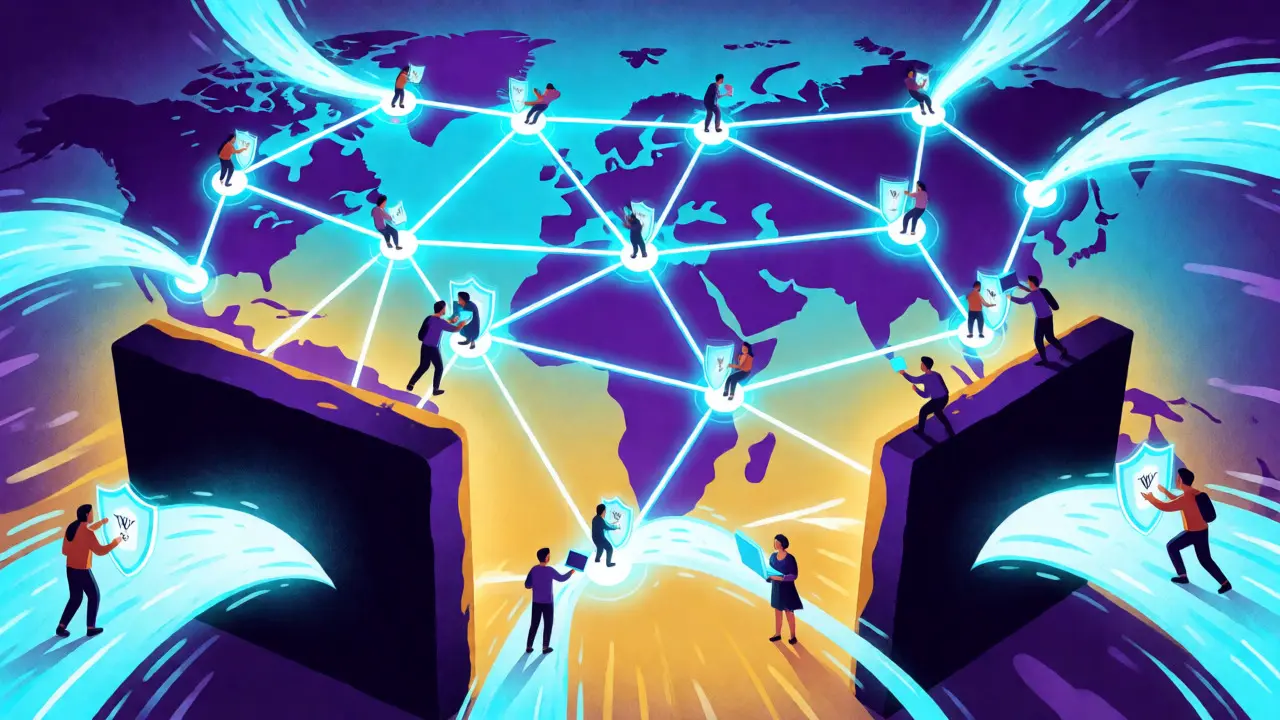
But technical solutions are only half the battle. If everyone uses the same VPN provider, the government can just block that IP range. That’s why diversity matters. The more ways people have to access the site, the harder it is to shut it down completely. It’s like trying to plug a leaky dam with one finger-you need many fingers, spread out.
The Human Firewall: Editors Under Pressure
We talk about servers and bandwidth, but Wikipedia’s real defense is its community. Think about the editor in Tehran who updates an article on human rights while risking arrest. Or the student in Beijing who translates English entries into Mandarin to preserve nuance. These volunteers form a living archive. Even if the site is blocked, the work continues offline. Drafts are saved locally. Discussions happen on Telegram or WhatsApp groups when forums go dark.
This human element creates redundancy. You can block a URL, but you can’t block thousands of individuals who memorize key facts or save PDFs of articles. In some restrictive environments, librarians print out Wikipedia pages and distribute them like samizdat literature. Knowledge escapes the digital cage and enters the physical world. This hybrid approach-digital where possible, analog when necessary-is what makes the ecosystem so tough to kill.
Legal and Ethical Gray Zones
Is it illegal to read Wikipedia in a banned country? Often, yes. But enforcement varies wildly. In some places, the law targets the providers, not the readers. In others, surveillance focuses on editors rather than consumers. This ambiguity works in favor of resilience. If the penalty for reading is minor, most people will take the risk. If the penalty is severe, usage drops but doesn’t vanish. Underground networks form. People share screenshots via Bluetooth or AirDrop, creating peer-to-peer knowledge exchanges that leave no central server to target.
Furthermore, the legal status of Wikipedia itself shifts. It’s not a company owned by a billionaire; it’s run by the Wikimedia Foundation, a non-profit based in the US. This structure complicates international pressure. A foreign government can’t easily sue or bribe a non-profit board to change content. The foundation’s stance is usually neutral: we host content, we don’t endorse it. This neutrality is both a shield and a sword-it protects the platform from accusations of bias, but also means they rarely intervene directly in local disputes.

The Future of Open Knowledge
As we move deeper into 2026, the threats evolve. Artificial intelligence is changing how we search for information. AI chatbots can summarize Wikipedia, but if the source is blocked, the AI hallucinates or pulls from state-approved sources. This poses a new danger: the loss of primary sources. If young people only learn from filtered AI outputs, the depth of understanding shrinks. Resilience now means preserving raw data, not just summaries.
There’s also a push toward decentralization. Projects like IPFS (InterPlanetary File System) aim to store Wikipedia copies on user devices. Instead of downloading from a central server, you download chunks from neighbors. This makes censorship nearly impossible unless every device is confiscated. While still niche, this technology represents the next frontier in keeping knowledge free.
Ultimately, Wikipedia survives because it adapts. It’s not a monument; it’s a river. It flows around obstacles. When governments build walls, the water finds cracks. The future of knowledge won’t be determined by who owns the servers, but by who refuses to let the conversation stop. And right now, the volunteers are winning.
Frequently Asked Questions
Why do governments block Wikipedia?
Governments typically block Wikipedia to control the narrative. Since the platform allows open editing and cites diverse sources, it may present historical or political facts that contradict the state's official position. Blocking it helps maintain ideological consistency among citizens.
Can I get in trouble for using a VPN to access Wikipedia?
It depends on the country. In nations like China or Iran, unauthorized VPN use can lead to fines or confiscation of devices. However, enforcement often targets commercial providers or active editors rather than casual readers, though risks always exist.
What happens if Wikipedia shuts down completely?
If the main site went offline, mirrors and backups would likely remain accessible. The Wikimedia Foundation maintains extensive backups, and community projects exist to replicate the database. Complete erasure would require removing every copy of the data worldwide, which is practically impossible.
Are there alternatives to Wikipedia in censored regions?
Yes, but they vary in quality. State-run encyclopedias exist in many countries, but they often lack critical perspectives. Community-driven alternatives like Wikiquote or Wikisource sometimes survive longer because they are less politically sensitive than general biographical or historical articles.
How does the Wikimedia Foundation respond to bans?
The Foundation generally avoids direct political confrontation. They focus on technical accessibility, supporting local chapters, and advocating for internet freedom through reports and partnerships. They rarely remove content solely due to government pressure, prioritizing their mission of free knowledge.