
You refresh the page. The headline changes. A new source appears. Then another editor deletes it, citing "too soon." This is the daily reality of breaking news on Wikipedia. It’s a high-stakes game where speed clashes with stability, and accuracy battles against the urge to document every tweet as history unfolds.
If you’ve ever tried to update an article during a major event-say, a political election or a natural disaster-you know the friction. One minute, the article is a stub; the next, it’s a chaotic war zone of conflicting edits. But there’s a method to this madness. Successful live updates aren’t about adding everything; they’re about curating what matters while the dust settles. Let’s break down how to handle these volatile moments without getting blocked or reverted into oblivion.
The Core Conflict: Speed vs. Stability
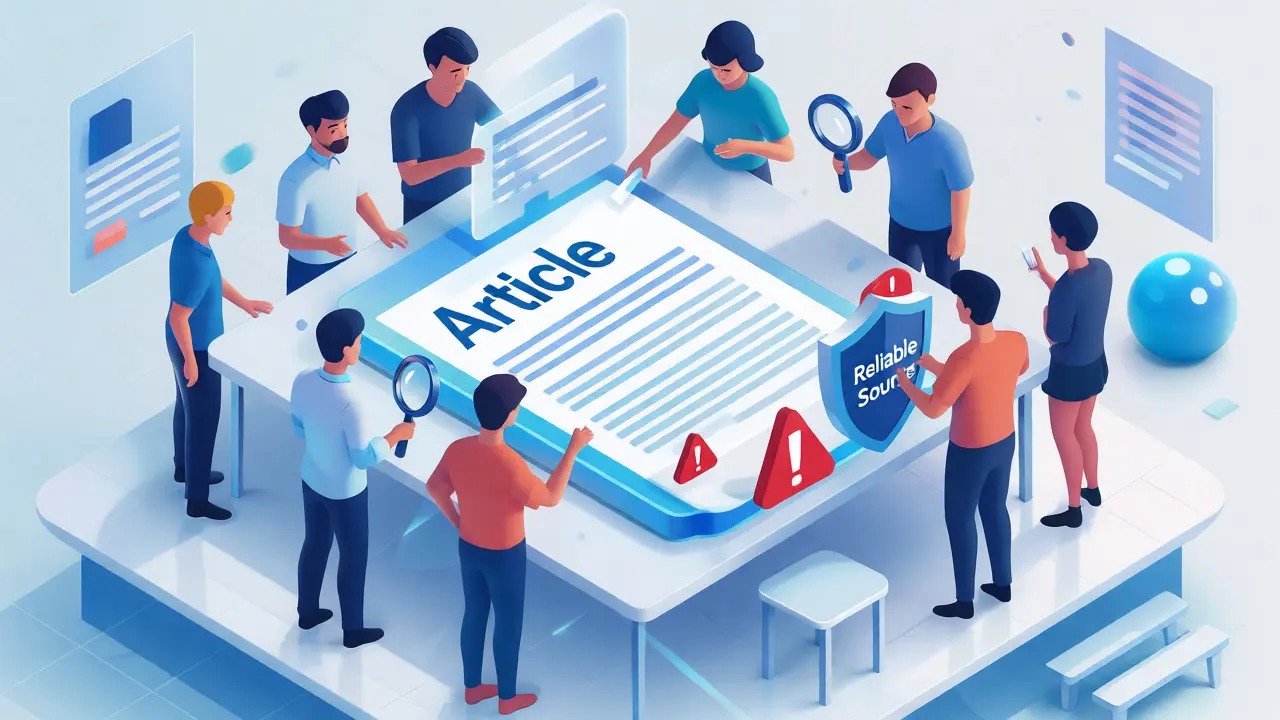
Wikipedia isn’t a newspaper. It doesn’t report news; it summarizes it. This distinction trips up many new editors during breaking events. When a plane crashes or a law passes, the instinct is to add the latest detail immediately. But Wikipedia’s core content policies demand that information be verifiable through reliable sources.
Here’s the catch: in the first hour of a breaking story, reliable sources are often scarce. Social media moves fast, but it’s rarely considered a primary source for encyclopedic claims. If you cite a random Twitter account, you’ll likely get reverted. Instead, wait for established outlets like Reuters, Associated Press, or BBC to publish their initial reports. These organizations have editorial standards and fact-checking processes that meet Wikipedia’s bar for reliability.
Think of your role as a librarian, not a reporter. You’re waiting for the books to arrive before shelving them. Rushing to shelve a rumor leads to cluttered shelves and angry patrons (or in this case, other editors).
Managing Recentism Bias
Recentism is the tendency to give undue weight to current events over historical context. During breaking news, this bias spikes. An article about a city might suddenly devote 80% of its length to a single day’s protest, overshadowing centuries of history. This creates an unbalanced article that fails to serve readers looking for general knowledge.
To combat this, keep a strict eye on proportionality. If an event is significant enough to warrant a section, ensure it doesn’t dwarf unrelated sections. For example, if updating an article on a specific university during a scandal, don’t let the scandal consume the entire biography of the institution. Use concise summaries. Link to a dedicated sub-article if the event becomes complex enough to stand alone.
| Event Duration | Recommended Article Treatment | Reasoning |
|---|---|---|
| < 24 Hours | Merge into existing section or use {{Current}} template | Too early to determine long-term impact |
| 1-7 Days | Create dedicated subsection with summary | Sources are stabilizing; context emerges |
| > 1 Month | Potential for separate article if notable | Long-term significance is clearer |
Source Hygiene: What Counts as Reliable?
Not all links are created equal. During a crisis, misinformation spreads faster than truth. Editors must act as filters. Here’s a quick heuristic for evaluating sources in real-time:
- Primary Sources: Official statements from government agencies or company press releases. Good for facts like dates, names, and official figures.
- Secondary Sources: Major news outlets analyzing the event. Essential for context, reactions, and interpretation.
- Tertiary Sources: Aggregators like Wikipedia itself or Britannica. Useful for background, not for breaking updates.
- User-Generated Content: Blogs, forums, social media. Generally unreliable unless corroborated by secondary sources.
A common pitfall is citing preprints or unpublished academic papers. While valuable in specialized fields, they lack peer review. In breaking news, stick to published journalism. If a claim seems too good-or too sensational-to be true, it probably needs more time to bake in the oven of public scrutiny.

Handling Disputed Facts and Edit Wars
When two editors disagree on a fact, things can get heated. Maybe one side cites a local blog, and the other cites a national paper. Who wins? Usually, the one with the higher-tier source. But sometimes, the dispute is about interpretation, not just fact.
In these cases, avoid revert wars. Instead, use the talk page. Explain why you believe a source is reliable. Ask for consensus. If the event is highly contentious, consider using the {{Disputed}} tag temporarily. This signals to readers that the information is under review, maintaining transparency while editors work out the details.
Remember, being right isn’t as important as being stable. A slightly imperfect but stable article is better than a constantly shifting one. Patience pays dividends in edit counts and community respect.
Technical Tools for Live Editors
You don’t need to be a coding wizard to manage live updates, but knowing a few tools helps. The Recent Changes page allows you to monitor edits across the entire encyclopedia. Filter by namespace or category to focus on your area of interest.
Use watchlists wisely. Add articles related to ongoing events to your watchlist so you get notified when others edit them. This helps you spot vandalism or bad-faith edits quickly. Vandalism spikes during breaking news because trolls love chaos. Quick reverts keep the article clean.
Also, familiarize yourself with templates like {{current}}, {{update}}, and {{as of}}. These tags inform readers that the information is subject to change. They set expectations and reduce complaints about outdated data.
When to Create a New Article
Not every breaking event deserves its own article. Many editors rush to create pages for minor incidents, only to see them deleted later for lacking notability. The rule of thumb: does the event have lasting significance beyond the immediate news cycle?
If a celebrity gets arrested, does it change their legacy? If a new policy is passed, will it affect millions of people for years? If yes, a new article might be justified. If no, integrate the information into existing topics. Creating too many small articles fragments knowledge and makes navigation harder.
Check the General Notability Guideline before hitting save. Look for multiple independent sources discussing the topic in depth. If you can’t find three solid sources, hold off on creating a standalone page.
Community Norms and Etiquette
Breaking news attracts attention, which means more eyes on your edits. Assume good faith. Most editors want to help, even if their methods differ from yours. Be polite in edit summaries. Explain your reasoning briefly. “Added AP citation” is better than “fixed it.”
Avoid personal attacks. If someone removes your content, ask why instead of assuming malice. Collaborative problem-solving resolves disputes faster than ego battles. Remember, you’re part of a global team working toward a shared goal: accurate, neutral, comprehensive knowledge.
Key Takeaways
- Wait for reliable sources: Don’t cite social media directly; wait for major news outlets.
- Balance recentism: Keep breaking news proportional to the rest of the article.
- Use templates: Mark content as current or disputed to set reader expectations.
- Monitor closely: Use watchlists to catch vandalism and edit wars early.
- Assess notability: Only create new articles for events with lasting significance.
Can I cite Twitter/X for breaking news on Wikipedia?
Generally, no. Twitter posts are considered user-generated content and lack the editorial oversight required for reliable sourcing. However, if a verified official account (like a head of state or major corporation) posts a statement, it can be cited as a primary source for that specific statement, provided it’s corroborated by secondary reporting.
What happens if I add information that turns out to be wrong?
It’s normal! Wikipedia is editable. If you make a mistake, simply correct it once new information arrives. Other editors may also fix it. Just ensure your edits are sourced properly so future readers can verify the changes. Mistakes are part of the process, especially during fast-moving events.
How do I prevent my edits from being reverted repeatedly?
Ensure your additions are well-sourced with reliable references. Check the talk page for ongoing discussions. If conflicts persist, discuss your proposed changes on the article’s talk page before making further edits. Consensus-building reduces reversion rates significantly.
Is there a limit to how much I can update during a breaking event?
There’s no hard technical limit, but practical limits exist. Avoid excessive fragmentation by grouping related edits. Focus on quality over quantity. Too many small edits can clutter the history log and annoy other watchers. Aim for substantive, well-referenced updates rather than trivial tweaks.
What is the 'Recentism' warning?
Recentism refers to the bias of giving disproportionate weight to current events at the expense of historical context. Wikipedia aims for neutrality and balance. If an article becomes dominated by a temporary event, editors may tag it with {{recentism}} to encourage balancing the content with broader historical information.