When you look up January 6 on Wikipedia, you get a detailed, sourced timeline: the planning, the crowd, the breach, the lawmakers in danger, the aftermath, and the legal cases that followed. It’s not flashy. It doesn’t try to shock. It just lays out what happened, who said what, and where the evidence came from. Now, go to Grokipedia. Same event. Same date. But the story feels different. The language shifts. The emphasis changes. Some sources vanish. Others appear out of nowhere.
How Wikipedia Handles January 6
Wikipedia’s entry for January 6, 2021, is built on a strict policy: verifiability. Every claim must tie back to a reliable, published source. That means major news outlets like The New York Times, The Washington Post, AP News, and Reuters. It also includes official reports - the Senate Select Committee on the January 6 Attack, the Department of Justice indictments, and congressional transcripts.
The article doesn’t just summarize. It organizes. Sections break down the events chronologically: pre-event rallies, the timeline of the breach, law enforcement response, the certification delay, and the immediate political fallout. Each paragraph has citations. You can click through and see the original article, video, or document. There’s no interpretation. Only evidence.
Wikipedia’s editors have spent years refining this. Over 1,200 unique contributors have edited the January 6 page since 2021. The page has been locked for semi-protection multiple times due to edit wars. But the rules hold. If a source isn’t credible - like a partisan blog or a YouTube channel with no editorial oversight - it gets removed. Not because it’s false. Because it’s not verifiable.
What Grokipedia Does Differently
Grokipedia is an AI-generated encyclopedia. It doesn’t rely on human editors. It scrapes, analyzes, and synthesizes content from millions of sources - including news sites, social media, forums, and even alt-right blogs. Its algorithm doesn’t ask, “Is this true?” It asks, “How popular is this claim?” and “What tone does it carry?”
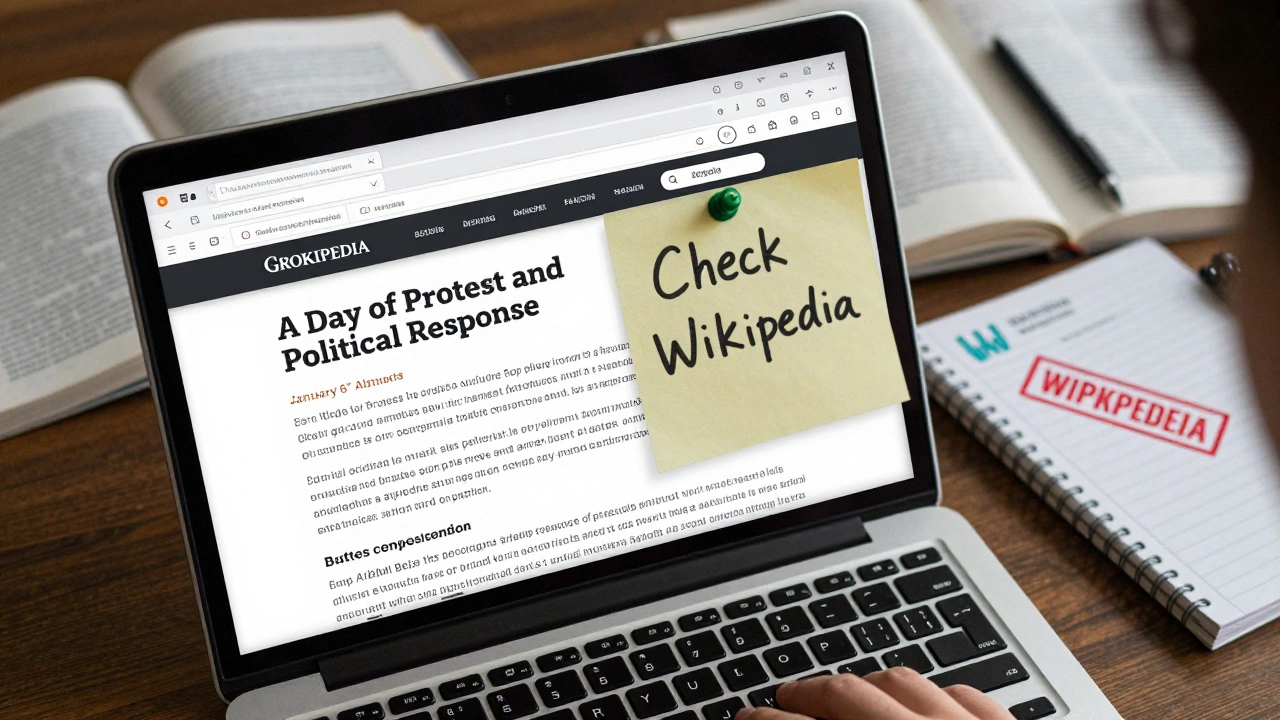
On Grokipedia, the January 6 page opens with a headline: “The Capitol Event: A Day of Protest and Political Response.” There’s no mention of “insurrection” or “riot.” The word “attack” appears only once, buried in a quote from a CNN article. The framing leans toward “political tension” and “misunderstood protest.”
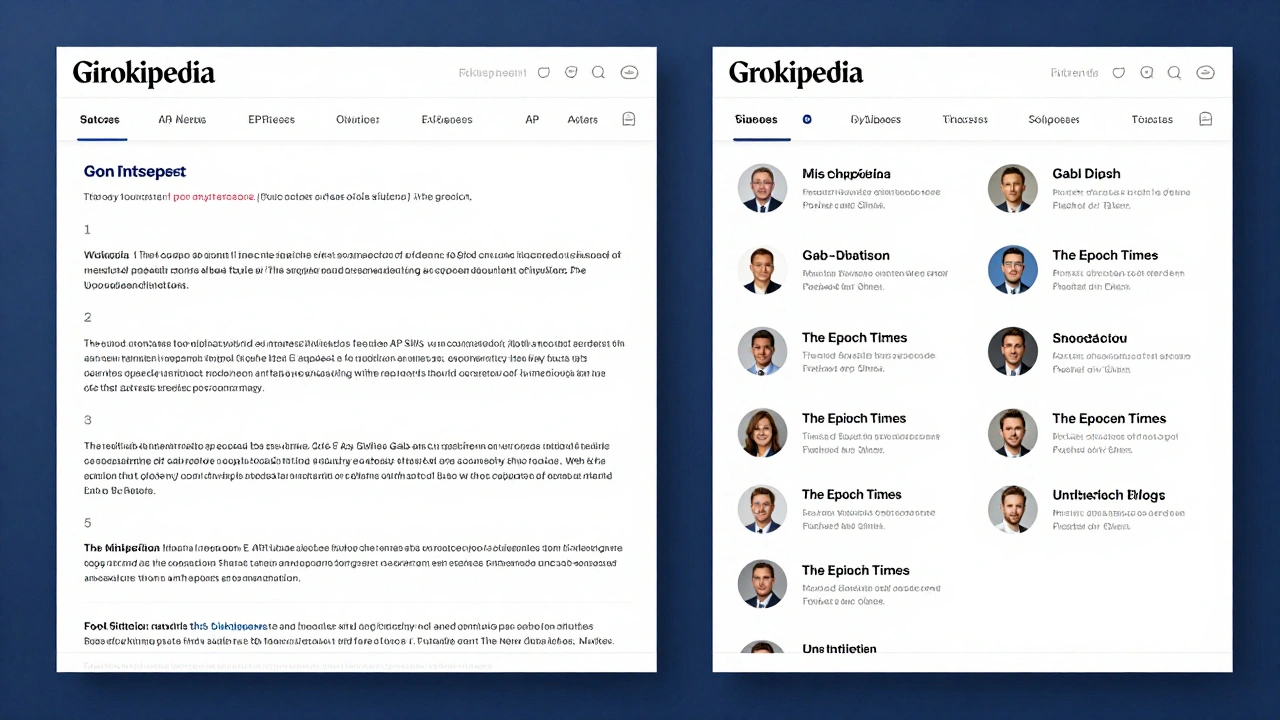
The sources? Half are mainstream. The other half? Sites like Gab, The Epoch Times, and a network of independent news aggregators with no fact-checking process. Grokipedia doesn’t label them as fringe. It just lists them. And because its AI weights frequency over reliability, these sources get equal visual weight as The New York Times.
One section claims “over 70% of Americans believed the event was peaceful.” That number? It comes from a single poll conducted by a partisan group with a sample size of 842 people - and only respondents who opted in after visiting a conservative website. Grokipedia doesn’t note the bias. It just presents the stat.
Source Framing: Who Gets to Decide What’s Real?
The difference between Wikipedia and Grokipedia isn’t just about sources. It’s about framing. Wikipedia treats January 6 as a historical event with documented consequences. Grokipedia treats it as a contested narrative - and gives equal space to every version of the story.
This isn’t neutrality. It’s false balance. When Wikipedia says “the Capitol was breached by armed rioters,” it’s citing police bodycam footage, eyewitness testimony, and federal charges. When Grokipedia says “some saw it as a protest, others as an attack,” it’s not adding context - it’s diluting it.
AI encyclopedias like Grokipedia were built to be “objective.” But objectivity isn’t the same as neutrality. Real objectivity means weighing evidence. Grokipedia doesn’t weigh. It averages. And when you average a fact with a myth, you don’t get truth. You get confusion.
Why This Matters for Everyday Users
Most people don’t know how Wikipedia’s editing system works. They assume it’s just another website. But when they land on Grokipedia - which looks clean, modern, and algorithmically polished - they assume it’s more accurate. It’s designed to feel like the future.
Here’s what happens in real life: A student writes a paper. They Google “January 6 summary.” Grokipedia shows up on page one. Wikipedia is on page three. The student copies the Grokipedia version. They cite it. They get a good grade. Later, they find out the sources were unreliable. The damage is done.
It’s not just students. Older adults, non-native English speakers, and people without media literacy skills are especially vulnerable. Grokipedia doesn’t have warning labels. It doesn’t say “this claim is disputed.” It just presents everything as equally valid.
What You Can Do
If you’re using an AI encyclopedia, here’s how to protect yourself:
- Check the sources. If they’re all from unknown blogs or social media, be skeptical.
- Compare with Wikipedia. If the story feels softer, vaguer, or avoids clear language like “riot” or “attack,” dig deeper.
- Look for citations. If there are none, or they’re broken links, skip it.
- Use Wikipedia’s “View history” tab. See how the page evolved. See who edited it. You’ll notice patterns - like when editors remove biased language.
- Don’t trust tone. A calm, neutral tone doesn’t mean accuracy. It can mean omission.
The truth doesn’t always come with drama. Sometimes, it’s quiet. It’s footnotes. It’s citations. It’s a hundred people checking the same fact over and over.
The Bigger Picture
Grokipedia isn’t an outlier. It’s part of a wave. AI-generated content is being rolled out across schools, libraries, and news aggregators. Companies say it’s faster. Cheaper. Scalable. But scalability doesn’t mean accuracy.
Wikipedia has 30 years of community trust. It’s had scandals. It’s had bias. But it also has systems to fix them. Grokipedia has no humans. No accountability. No appeals process. If it gets something wrong - and it does, often - there’s no way to correct it except to wait for the next algorithm update.
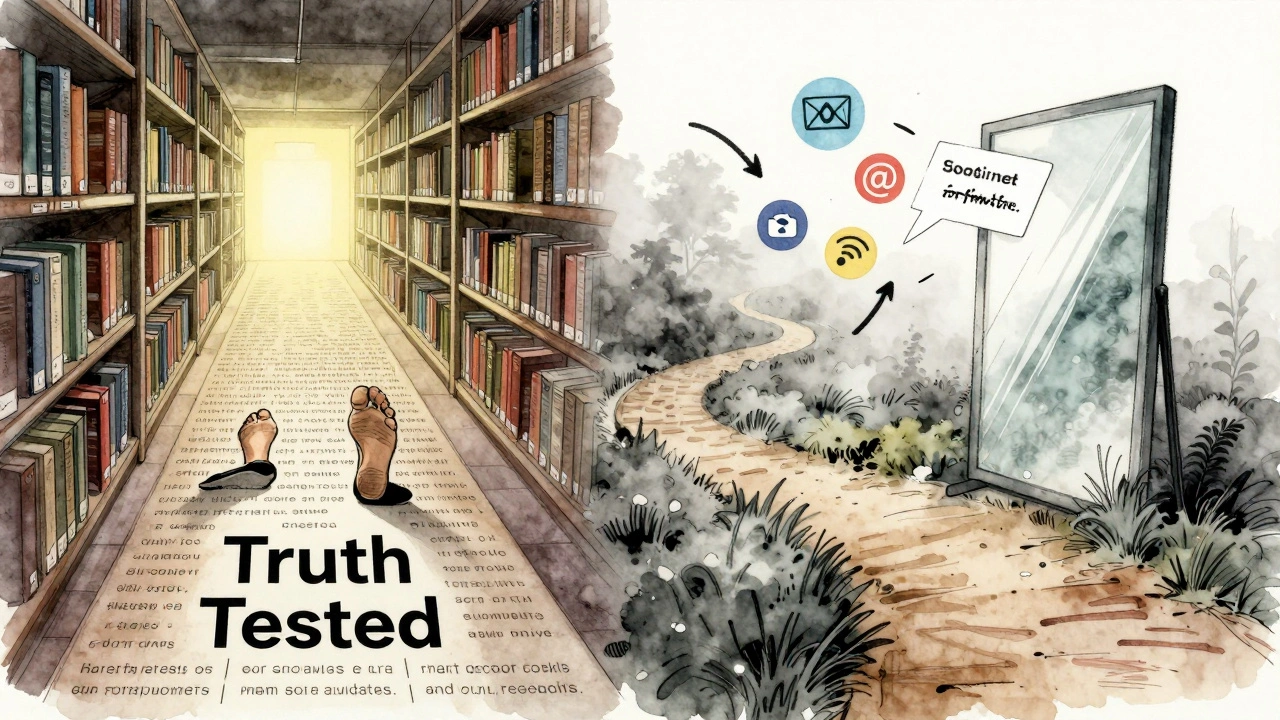
When you search for history, you’re not just looking for facts. You’re looking for context. For perspective. For truth that’s been tested. AI can’t replace that. It can only mimic it.
Why does Grokipedia use sources that Wikipedia rejects?
Grokipedia’s AI doesn’t judge source reliability. It counts how often a claim appears across the web. If a fringe blog repeats a claim 500 times, and The New York Times mentions it once, Grokipedia treats them as equally valid. Wikipedia, by contrast, only accepts sources with editorial standards - like major news outlets, academic journals, or official government reports.
Can Grokipedia be trusted for school assignments?
Most schools and universities require sources to be peer-reviewed or from established media. Grokipedia doesn’t meet those standards. Its content is generated by algorithms, not verified by experts. Using it as a primary source could lead to grade penalties or academic integrity issues. Always check your institution’s citation policy.
Is Wikipedia biased against conservative viewpoints?
Wikipedia has faced accusations of bias from all sides. But its rules don’t favor ideology - they favor evidence. If a conservative source is published by a major outlet with editorial oversight - like The Wall Street Journal - it’s accepted. If it’s a blog with no track record, it’s not. The goal isn’t to silence viewpoints. It’s to ensure claims are backed by reliable reporting.
What’s the difference between AI encyclopedias and human-edited ones?
Human-edited encyclopedias like Wikipedia rely on community review, policy enforcement, and historical accountability. AI encyclopedias like Grokipedia rely on data patterns and statistical frequency. One corrects errors through discussion. The other corrects them through retraining - which can take weeks or months, if at all.
Should I stop using Grokipedia entirely?
You don’t have to stop using it - but use it with caution. Treat it like a starting point, not an endpoint. Cross-check every claim with Wikipedia, official reports, or trusted news sources. If Grokipedia’s version feels vague, neutral, or avoids strong language, that’s a red flag. Truth often has texture. AI encyclopedias tend to smooth it out.