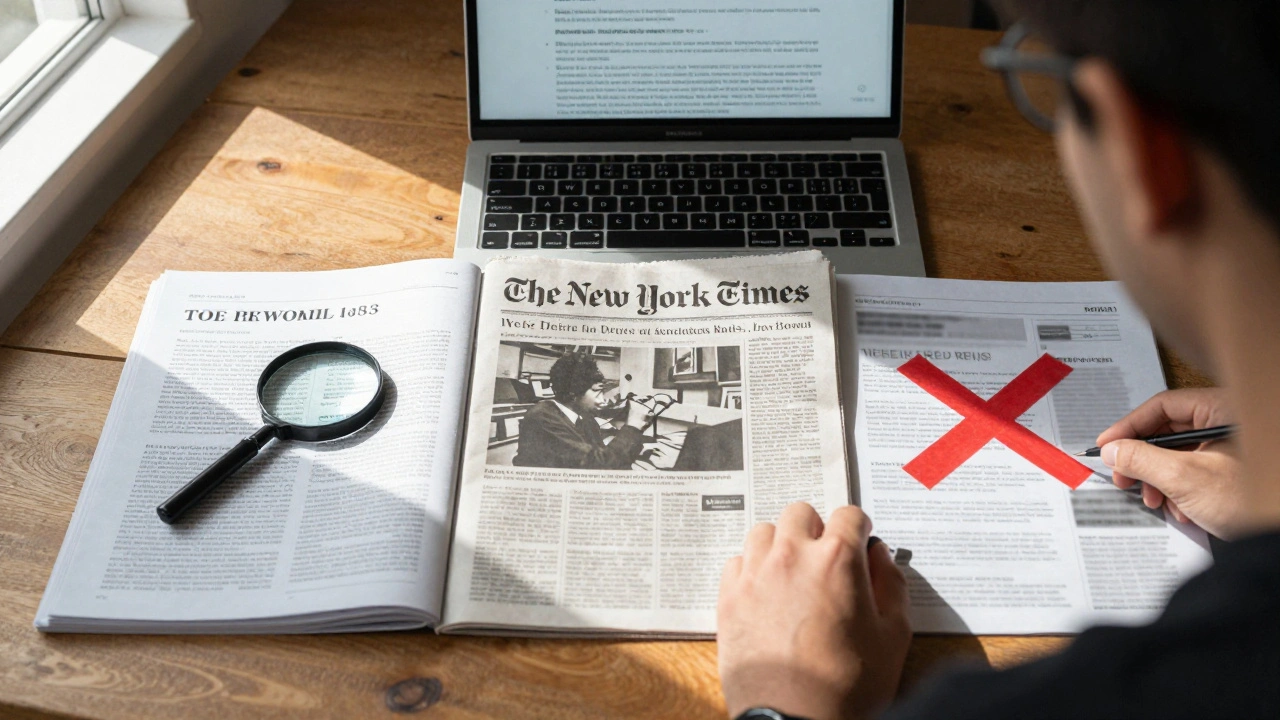
Wikipedia is one of the most visited websites in the world, but not all information on it is created equal. Behind every claim you read, there should be a source-something real, verifiable, and trustworthy. The problem? Not every source listed meets Wikipedia’s standards. If you’re trying to use Wikipedia as a research tool, you need to know how to tell the good sources from the bad ones. This isn’t about being skeptical for the sake of it. It’s about making sure the facts you’re using are actually true.
What Makes a Source Reliable on Wikipedia?
Wikipedia doesn’t accept just any website as a source. It has clear rules: sources must be published, verifiable, and independent. That means:
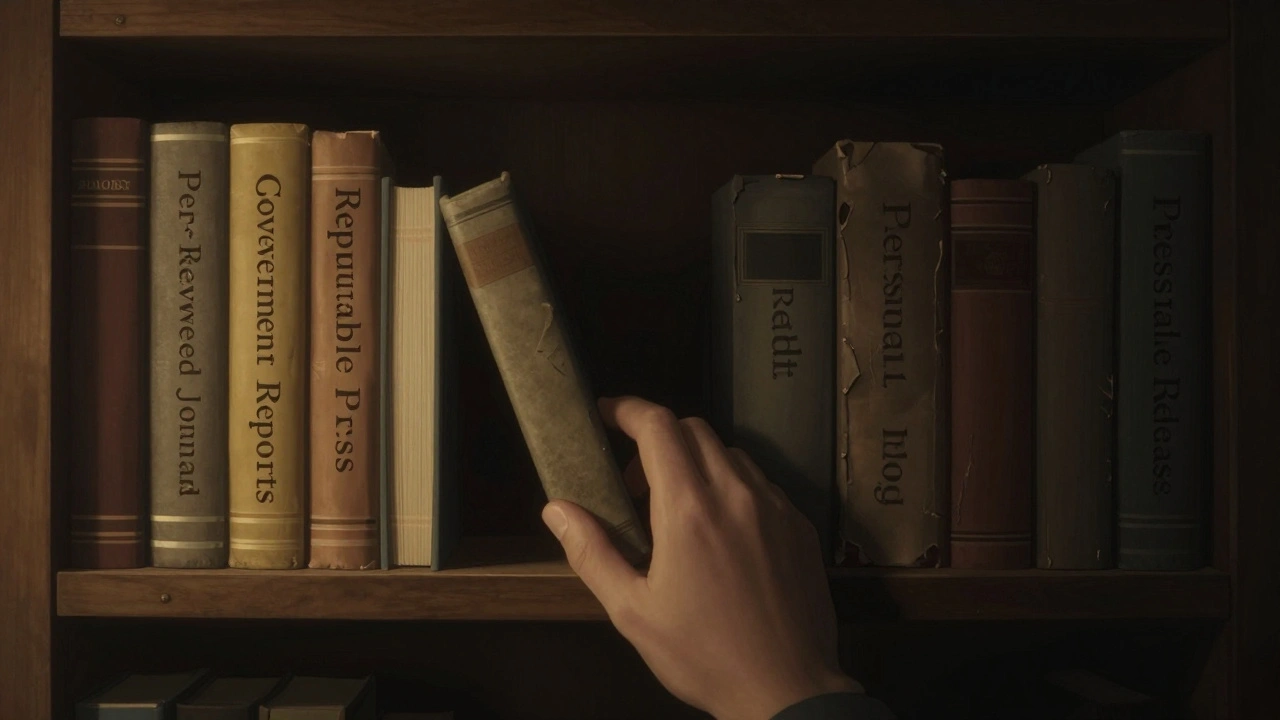
- Published - The source must exist outside of personal blogs or social media posts. Think books, peer-reviewed journals, major newspapers, or official reports.
- Verifiable - Anyone else should be able to find the same source and check the claim. If it’s behind a paywall or requires a login, that’s okay-as long as the content can be accessed.
- Independent - The source shouldn’t have a direct interest in the topic. A company’s own press release about its product? Not independent. A review in The New York Times about that same product? That’s independent.
These aren’t suggestions. They’re policy. Editors remove citations that don’t meet these standards. If you’re editing Wikipedia, you’ll get flagged if you use a Reddit thread as evidence that a celebrity died.
Where to Look for Good Sources
Some sources are automatically trusted. Others need scrutiny. Here’s a quick guide:
- Academic journals - Peer-reviewed publications like The Lancet or Journal of the American Medical Association are gold standards. They go through strict review before publication.
- Major newspapers - The Washington Post, The Guardian, Le Monde, and Asahi Shimbun have editorial oversight. Local papers can be okay too, but only if they’re known for solid reporting.
- Books from reputable publishers - University presses like Oxford University Press or academic publishers like MIT Press are reliable. Self-published books on Amazon? Not unless they’ve been reviewed by experts.
- Government and intergovernmental reports - Data from the U.S. Census Bureau, WHO, or the World Bank is usually trustworthy. Watch out for political spin, but the raw data is often solid.
- Professional organizations - Reports from the American Psychological Association or the IEEE are credible because they’re written by experts in the field.
On the flip side, avoid these:
- Personal blogs
- Forums like Reddit or Quora
- Wikipedia itself
- Press releases without independent coverage
- YouTube videos (unless they’re from a verified academic channel)
How to Check a Source You’re Not Sure About
Let’s say you find a citation to a website called Global Health Insights. You’ve never heard of it. What do you do?
- Look up the publisher - Search for the name + “about us” or “who we are.” Is it a nonprofit? A university? A commercial site selling supplements? A site with no contact info or unclear ownership is a red flag.
- Check the author - Does the article name a real person with credentials? Search their name. Are they a professor? A journalist? A consultant with no published work? A fake name or vague title like “research analyst” is suspicious.
- Look for bias - Does the site promote a product, ideology, or political agenda? Reliable sources present facts. They don’t push agendas under the guise of reporting.
- See if others cite it - Paste the article title into Google Scholar or a news database. If no reputable outlet has referenced it, it’s probably not trustworthy.
- Check the date - A 2012 study on smartphone use isn’t useful for today’s trends. Sources older than 5-10 years should be used only if they’re foundational (like classic studies in psychology or physics).
One real example: A Wikipedia article once cited a blog post claiming that “87% of people believe in aliens.” The blog had no methodology, no survey data, and no author. An editor removed it. A month later, a user replaced it with a citation from a peer-reviewed survey in Public Opinion Quarterly. That’s how it should work.
Why This Matters Beyond Wikipedia
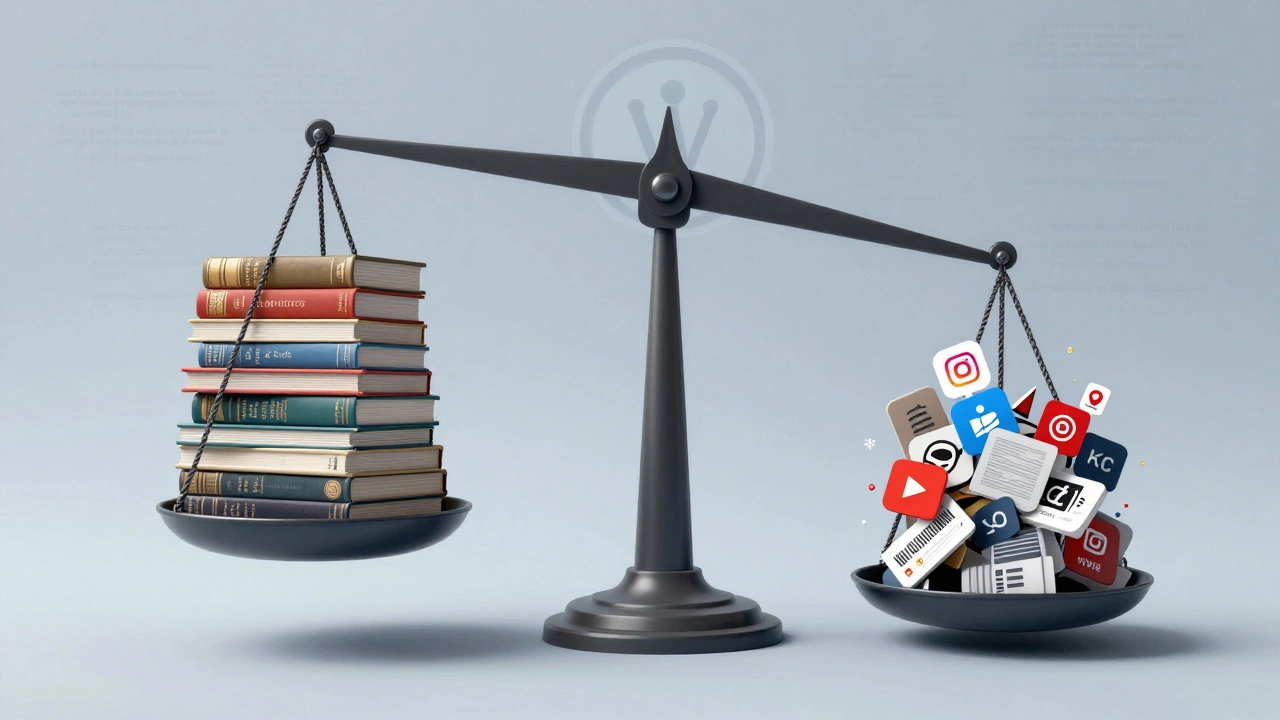
Learning to evaluate sources isn’t just for editing Wikipedia. It’s a skill that protects you from misinformation everywhere. You’ll use it when reading health advice, news headlines, or political claims. If you can spot a weak source on Wikipedia, you’ll spot it on Facebook, TikTok, or your email inbox.
Wikipedia’s citation rules are designed to keep the platform honest. They’re not perfect-but they’re the best system we have for crowd-sourced knowledge. When you learn how to judge sources, you’re not just helping Wikipedia. You’re becoming a smarter consumer of information.
Common Mistakes and How to Avoid Them
Even experienced editors make these errors:
- Using a news article as proof of a fact without checking the original source - If a newspaper says “a study found X,” go find the study. Newspapers can misquote or oversimplify.
- Trusting .org domains - Not all .org sites are nonprofits. Some are front organizations for corporations or political groups.
- Assuming “expert” means credible - Someone with a PhD in physics isn’t automatically an expert on economics. Expertise is specific.
- Ignoring language barriers - A French source on a global topic might be more reliable than a poorly sourced English one. Always check the original language source if possible.
When in doubt, ask: Could I use this in a college paper? If the answer is no, it probably doesn’t belong on Wikipedia either.
Tools to Help You Evaluate Sources
You don’t have to do this alone. Here are a few free tools that help:
- Google Scholar - Find academic sources and see how many times they’ve been cited.
- Media Bias/Fact Check - Enter a website name to see its reliability and bias rating.
- Wayback Machine - Check if a link has changed or been taken down. A source that vanished might have been debunked.
- Wikipedia’s own citation guidelines - Read Wikipedia:Reliable sources (yes, it’s a Wikipedia page, but it’s well-maintained and cited).
These tools don’t replace your judgment-they just give you more data to make it.
Can I use Wikipedia as a source for my research paper?
No, you shouldn’t cite Wikipedia directly in academic work. It’s a secondary summary, not a primary source. But you can use Wikipedia to find credible sources listed in its references. Follow those links to the original books, journals, or reports, and cite those instead.
Are .edu websites always reliable?
Not always. While university websites often host credible research, personal faculty pages or student projects may not be peer-reviewed or fact-checked. Always check the author, date, and whether the content is part of an official department or just a personal blog hosted on the domain.
What if a source is old but still relevant?
Old sources can be valid if they’re foundational-like Darwin’s theory of evolution or Einstein’s relativity papers. But for topics like technology, medicine, or social trends, you need recent data. A 20-year-old study on internet usage won’t reflect today’s reality. Always look for the most current, peer-reviewed evidence available.
Can I use a source that’s behind a paywall?
Yes. Wikipedia allows paywalled sources as long as they’re accessible to readers through libraries, university access, or other legal means. The key is verifiability-not availability. If you can’t access it yourself, ask someone who can, or look for a free version in an archive like PubMed Central or arXiv.
How do I know if a source is biased?
Bias shows up in word choice, omission of key facts, or a clear agenda. Ask: Does this source present multiple viewpoints? Does it cite evidence, or just opinions? Is it funded by a group with a stake in the outcome? Reliable sources acknowledge uncertainty and cite opposing views fairly.
Next Steps: Start Practicing
Open a Wikipedia article on a topic you care about-say, climate change, mental health, or the history of your hometown. Click on three citations. Try to find the original source. Ask yourself: Is this published? Is it independent? Can I verify it? If you can answer yes to all three, you’re doing it right. If not, you’ve found a weak link-and now you know how to fix it.
Every time you check a source, you’re not just improving Wikipedia. You’re building a habit that protects you from misinformation in the real world. That’s worth more than a good grade. It’s worth your ability to think clearly.