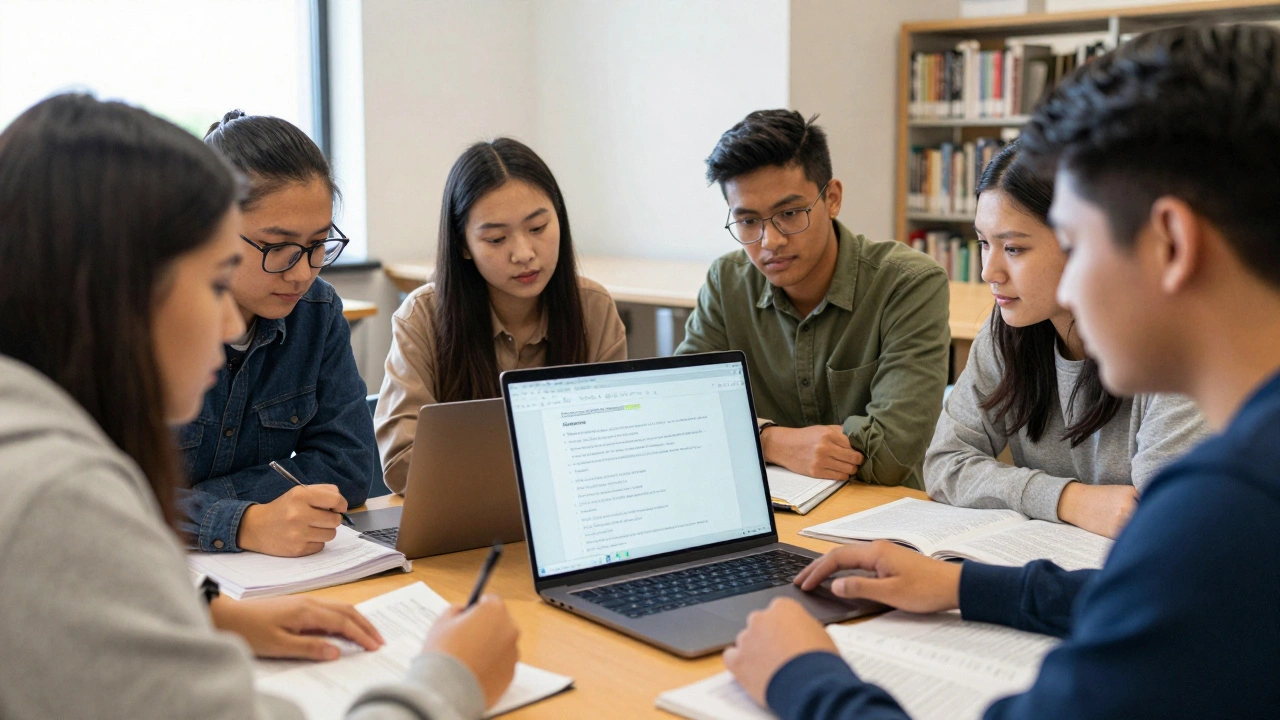
When professors first ask students to edit Wikipedia, many worry it’s just another busywork task. But when done right, a Wikipedia assignment can turn a term paper into a real-world contribution. Students don’t just write for a grade-they write for thousands of readers. And that changes everything.
Why Wikipedia Assignments Work
Wikipedia isn’t just a website. It’s the fifth most visited site on the internet, with over 2 billion monthly users. Every article a student edits gets seen by people in Nairobi, New Delhi, and rural Nebraska. That kind of audience doesn’t exist in a traditional classroom. When students know their work will be read by real people, they care more. They fact-check harder. They write clearer. They cite better.
A 2022 study from the University of Edinburgh tracked 1,200 undergraduates who edited Wikipedia as part of their coursework. Those students showed a 37% improvement in research skills compared to peers who wrote traditional papers. Their sources were more current, their arguments more evidence-based, and their writing less jargon-heavy. Why? Because Wikipedia’s community doesn’t tolerate fluff. If a sentence sounds made up, someone will call it out.
What Makes a Good Syllabus?
Not every Wikipedia assignment succeeds. Many fail because the syllabus treats it like a regular essay. That’s the mistake. A Wikipedia assignment isn’t about writing-it’s about editing. And editing means collaboration, revision, and public accountability.
A strong syllabus includes five non-negotiable pieces:
- Clear learning outcomes-Students should know exactly what skills they’re building: sourcing, neutrality, structure, citation, and collaborative feedback.
- Structured milestones-Don’t just say "edit a Wikipedia article." Break it into phases: topic selection, draft writing, peer review, submission, and final edits.
- Training modules-Students need to understand Wikipedia’s five core policies: neutrality, verifiability, no original research, citation, and conflict of interest. A 90-minute workshop is enough to cover this.
- Real-time feedback-Use Wikipedia’s talk pages. Students should respond to comments from editors, not just wait for a professor’s grade.
- Public visibility-Publish the final article link on the course website. Let students share it with family, friends, and future employers.
One professor at the University of Wisconsin-Madison requires students to submit a "Wikipedia reflection"-a 300-word essay explaining how their article changed after feedback. That’s where real learning happens. One student wrote about the history of public transit in Madison. After three rounds of edits, her article went from 400 words to 1,800. A volunteer editor added maps, primary sources, and citations from city archives. The student later told her class: "I didn’t know archives existed until someone on Wikipedia asked for them."
Choosing the Right Topics
Not all topics are created equal. A student writing about quantum physics might get lost in technical jargon. A student writing about a local nonprofit might run into copyright issues. The key is balance: significant enough to matter, narrow enough to manage.
Good topics have:
- Existing gaps in coverage (check Wikipedia’s "Articles for Creation" queue)
- Reliable sources available (academic journals, books, government reports)
- No major conflict of interest (e.g., editing about your own company)
- Clear notability (Wikipedia’s guidelines require independent coverage)
Professors often use the "Wikipedia Education Program" dashboard to find suitable topics. It shows articles that are stubs, orphaned, or flagged for cleanup. A biology class might adopt a missing entry on a regional plant species. A history class might expand coverage of a local civil rights movement. A sociology class might write about a lesser-known social movement in the Midwest.
One class at the University of Minnesota built a series on rural mental health services. Before the assignment, only two short paragraphs existed. After six students worked on it, the article grew to 3,200 words with 47 citations. It’s now cited in three state policy reports.
Assessment Without Grading
Grading Wikipedia edits is tricky. You can’t grade like you grade an essay. A 10-page paper has a clear structure. A Wikipedia edit might be 500 words or 5,000. What matters is quality, not quantity.
Instead of a letter grade, use a rubric focused on process:
| Criteria | Excellent | Proficient | Needs Improvement |
|---|---|---|---|
| Research Depth | Uses 8+ credible sources; cites primary documents | Uses 5-7 sources; includes academic journals | Relies on websites or blogs; lacks citations |
| Neutral Tone | No biased language; presents multiple perspectives | Minor bias present; mostly balanced | Clear opinion or promotional language |
| Structure & Flow | Follows Wikipedia’s manual of style; clear headings | Some structural issues; readable | Disorganized; hard to follow |
| Community Engagement | Responded to 3+ editor comments; revised based on feedback | Responded to 1-2 comments | No engagement with editors |
| Original Contribution | Added new data, analysis, or context not previously available | Expanded existing content meaningfully | Rephrased existing text without adding value |
Students who meet "Excellent" in three or more categories earn an A. Those who meet "Proficient" in all five earn a B. It’s not about perfection-it’s about progress.
Common Pitfalls and How to Avoid Them
Even the best syllabi run into problems. Here are the top three mistakes-and how to fix them:
- Mistake: Students write like they’re writing a paper. Solution: Teach them Wikipedia doesn’t use introductions like "In this essay..." or conclusions like "In conclusion." It starts with a definition. End with context. No fluff.
- Mistake: Students pick topics that are too broad. Solution: Require a topic proposal with three potential articles and a short rationale. Reject anything that’s a Wikipedia "stub" with less than 300 words.
- Mistake: Students get discouraged by edit wars. Solution: Explain that conflict is normal. A good edit doesn’t mean you win-it means you learned how to defend your sources. Role-play a disagreement in class. Show them how to respond calmly with citations.
One student at the University of Oregon tried to add a claim about a local politician’s voting record. Another editor reverted it. Instead of arguing, the student dug up the official legislative journal, linked it, and explained the change in the talk page. The edit stood. The student later said: "That’s the first time I felt like a real researcher."
What Happens After the Semester Ends?
The best Wikipedia assignments don’t end when the final grade is posted. They live on. Articles edited by students stay online, updated by others, cited in future research, and linked by educators.
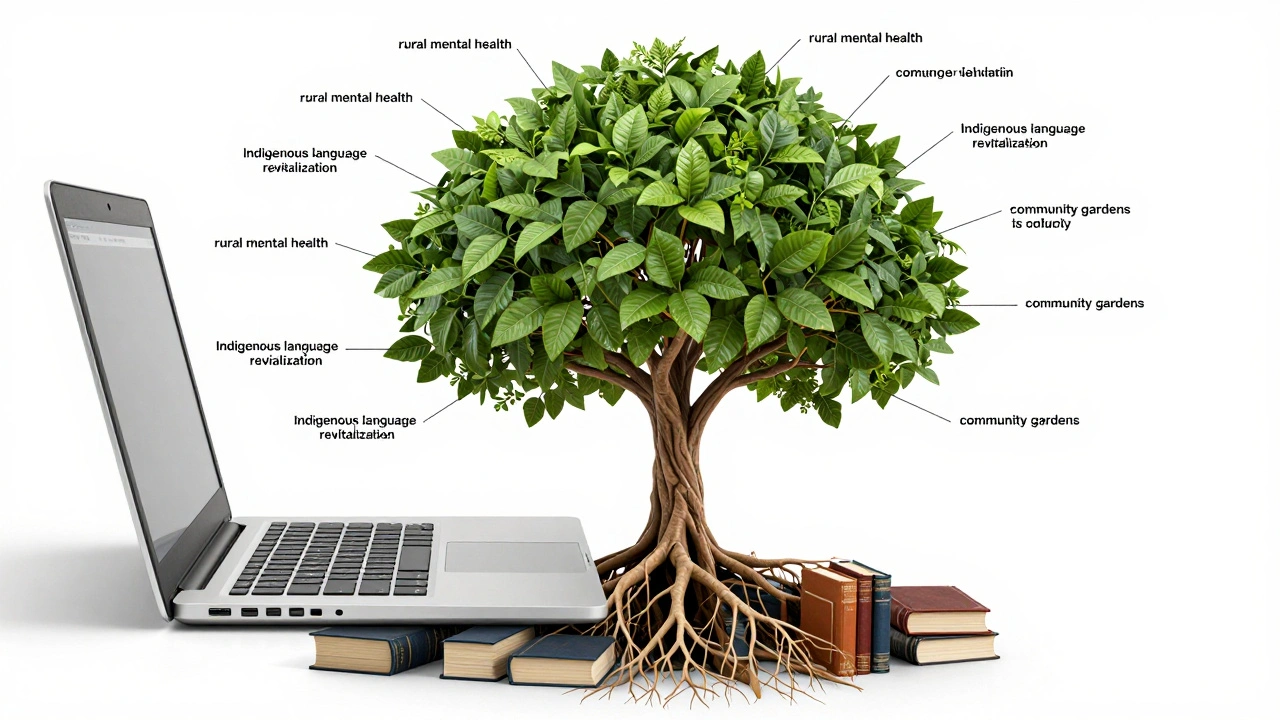
At least 12% of Wikipedia articles created by students in 2024 were still active in 2026. Some have been edited over 50 times. One article on the history of community gardens in Milwaukee, written by a student in 2023, was cited in a city council report on urban planning. Another, on Indigenous language revitalization in Wisconsin, became a resource for a local high school curriculum.
These aren’t just assignments. They’re legacy projects. And that’s the point.
Next Steps for Instructors
If you’re considering a Wikipedia assignment, start small. Pick one course. Try it with 15 students. Use the Wikipedia Education Program’s free resources. They offer:
- Lesson plans for 4-6 week modules
- Trained campus ambassadors (volunteer Wikipedia editors who help in class)
- Dashboard tools to track student progress
- Sample syllabi from 300+ universities
You don’t need to be a Wikipedia expert. You just need to be willing to let students teach themselves-while you guide them.
Can students edit Wikipedia without creating an account?
No. Wikipedia requires all edits to be tied to an account, especially for educational assignments. Anonymous edits are heavily monitored and often reverted. Creating an account teaches responsibility and helps track contributions. The Wikipedia Education Program helps instructors set up class accounts for students.
Do students need to know how to code or use special tools?
No. Wikipedia’s editor is a simple web form. Students don’t need to know HTML or CSS. The visual editor works like a word processor. Advanced features like templates or infoboxes are optional. Most student edits involve adding text, citations, and images using basic tools.
What if a student’s edit gets deleted?
It happens. Wikipedia has strict notability and sourcing rules. If an edit is deleted, it’s not a failure-it’s a teaching moment. Students should review the deletion reason, find better sources, and try again. Many professors treat deleted edits as part of the revision process, not a penalty.
Are Wikipedia edits considered academic work?
Yes. Many universities now recognize Wikipedia editing as legitimate scholarly activity. The American Historical Association, the Modern Language Association, and the Council on Undergraduate Research all endorse it. Some graduate programs even list Wikipedia contributions on CVs. The key is documentation: keep drafts, talk page exchanges, and reflection essays.
How do I prevent students from copying content?
Wikipedia’s plagiarism detection tools flag copied text automatically. Students must paraphrase and cite properly. Instructors should require source logs-showing where each fact came from. A good rule: if a sentence sounds like it came from a website, it’s probably plagiarized. Teach students to read, understand, and rewrite-not copy and paste.
