You probably trust Wikipedia more than you admit. You check it for quick facts, verify a date before an essay, or settle a bar bet about who invented the lightbulb. But what happens when the "free encyclopedia" gets it wrong? And what happens when the sources it cites-newspapers, academic journals, government reports-are also flawed? The idea that reliable sources are infallible is a myth. In reality, Wikipedia’s open-edit model creates a unique ecosystem where errors aren't just typos; they are often reflections of bias, outdated consensus, or simple human error in the sources themselves.
This isn't about mocking mistakes. It's about understanding how knowledge is built, contested, and corrected in real-time. When a high-profile article changes overnight, or when a decades-old error finally gets fixed, there’s usually a story behind it involving editors, librarians, journalists, and sometimes even the subjects of the articles themselves. Let’s look at why these errors happen, how they get caught, and what you should actually take away from reading an online encyclopedia.
The Myth of Infallible Sources
We tend to think of Encyclopedia Britannica as the gold standard because it had paid experts checking every word. Wikipedia, by contrast, relies on volunteer labor and secondary sources. Here’s the catch: if a major newspaper runs a story with incorrect data, and three other outlets copy-paste it without verification, Wikipedia will cite those newspapers as "reliable." The platform follows the rule of verifiability, not necessarily truth. If it’s published in a reputable outlet, it can go in. This leads to a phenomenon known as circular reporting, where a false claim circulates among media outlets until it looks like consensus.
Consider the case of the "Seal Team 6" raid on Osama bin Laden. Early reports were chaotic. For hours, different news agencies reported conflicting details about which team was involved and exactly where he was found. Wikipedia editors updated the page in real-time based on these shifting headlines. Was the article "wrong"? Technically, it was accurate according to the sources available at that second. But it wasn’t true. This highlights a critical distinction: Wikipedia reflects the current state of public discourse, not necessarily settled historical fact.
How Errors Slip Through the Cracks
Errors don't just appear out of nowhere. They usually follow specific patterns. Understanding these helps you spot potential issues before you cite a page in your homework or work presentation.
- Vandalism: This is the most obvious type. Someone adds "The Moon is made of cheese" to the lunar article. These are usually reverted within minutes by automated bots or active editors. However, subtle vandalism-like changing a political figure’s party affiliation or a company’s revenue figures slightly-is harder to catch.
- Bias and POV (Point of View): Editors have opinions. A controversial topic like climate change or gun control might be edited by someone pushing a specific narrative. While Wikipedia has strict policies against original research and personal opinion, the selection of which sources to include can skew the tone.
- Outdated Information: Technology moves fast. An article about a smartphone released in 2018 might still list its battery life as "excellent" based on reviews from launch day, ignoring long-term degradation reports published two years later. Unless an editor actively updates the section, the page remains static while the world moves on.
- Source Decay: Links break. Websites disappear. Academic papers get retracted. A citation that looked solid in 2015 might link to a dead domain today. While bots flag broken links, the content itself might remain unchanged, leaving readers with unsupported claims.
Case Study: The Seigenthaler Biography Incident
You can’t talk about Wikipedia controversies without mentioning John Seigenthaler. In 2005, his biography included a fabricated sentence claiming he was suspected of involvement in the JFK assassination. This wasn’t a typo. It was a deliberate hoax inserted by an anonymous user. It stayed up for four months. Why? Because no one checked the source, which didn’t exist. Seigenthaler, a prominent journalist, was furious. He wrote an op-ed in USA Today criticizing the lack of accountability.
This incident forced Wikipedia to change its rules. Before 2005, anyone could edit any page instantly. After the scandal, new pages created by unregistered users went into a "pending changes" review queue for biographies of living persons (BLP). This policy shift showed that while crowdsourcing works for broad topics, it struggles with nuanced, sensitive, or obscure individual histories where fewer people are watching.
| Error Type | Cause | Detection Method | Resolution Time |
|---|---|---|---|
| Overt Vandalism | Malicious intent or prank | Automated filters, community watchlists | Minutes to Hours |
| Circular Reporting | Media echo chamber | Editorial scrutiny, primary source checks | Months to Years |
| Biographical Hoax | Lack of oversight on niche topics | Subject complaint, expert intervention | Weeks to Months |
| Systemic Bias | Demographic skew of editors | Community projects, external audits | Continuous/Evolving |
The Role of "Reliable Sources" in Modern Journalism
Wikipedia doesn’t decide what’s true. It decides what’s been said by people we agree to trust. This definition of "reliable" has shifted over time. In the early days, mainstream print media was the default. Today, the landscape is messier. Does a blog post count? What about a press release? What about a preprint server like arXiv?
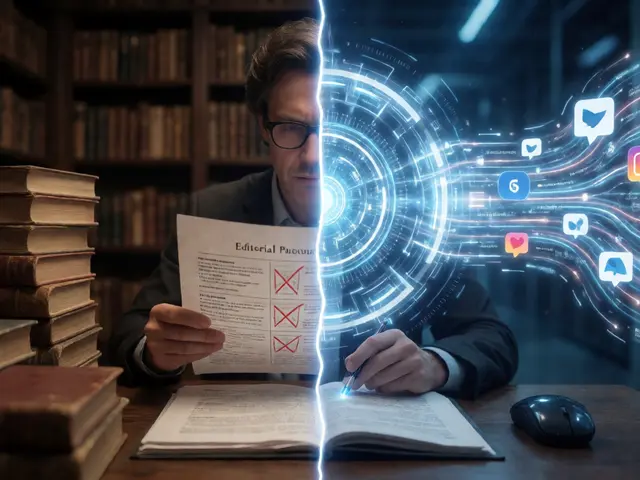
Editors use guidelines from the Wikimedia Foundation to judge sources. Generally, peer-reviewed journals and major news outlets rank highest. Self-published sources are low-tier unless written by a recognized expert. But here’s the friction point: journalism itself is under pressure. With shrinking newsrooms, copy-and-paste errors are more common. A study by Columbia University researchers found that errors in news stories often propagate to Wikipedia within days, but corrections rarely make it back to the encyclopedia unless a dedicated editor notices them.
This creates a lag. If The New York Times corrects a mistake on page A4, does the Wikipedia editor see it? Maybe. Maybe not. The correction might sit in a small footer note that no one reads. Meanwhile, thousands of students continue citing the original, erroneous version from the encyclopedia. This is why critical thinking matters more than ever. Don't just read the article; click the citations. See if the source actually says what the summary claims.
Who Fixes It? The Unsung Heroes of Fact-Checking
If you’ve ever wondered who spends their Tuesday night arguing about comma placement in a history article, meet the Wikipedians. They aren't all random internet trolls. Many are subject matter experts. There are retired professors, librarians, software engineers, and amateur historians who dedicate hundreds of hours to maintaining accuracy.
Take the "WikiProject Medicine," for example. This group partners with institutions like Harvard Medical School to ensure health-related articles are medically sound. They don’t just add text; they scrutinize references, remove outdated studies, and simplify jargon for general readers. Similarly, the "Edit-a-thons" organized by libraries and museums bring in diverse voices to fill gaps in coverage, particularly regarding women, people of color, and non-Western history.
These volunteers operate on a consensus model. If two editors disagree, they talk it out on the Talk Page. If they can’t agree, they might seek input from neutral third parties. It’s slow, sometimes frustrating, but it prevents unilateral changes. This deliberative process is Wikipedia’s immune system. It’s not perfect, but it’s resilient.
Practical Tips for Using Wikipedia Wisely
So, should you stop using Wikipedia? Absolutely not. It’s a fantastic starting point. But treat it like a map, not the territory. Here’s how to navigate it effectively:
- Check the Edit History: Click "View history" at the top right. If an article has been heavily edited recently, especially during a breaking news event, expect instability. Look for revert wars-where the same edit is undone repeatedly-as a sign of controversy.
- Read the Talk Page: This is where the sausage is made. Editors discuss discrepancies, source reliability, and structural issues. Often, the Talk Page reveals nuances that the main article smooths over.
- Verify Primary Sources: Never rely solely on the summary. Go to the footnote. If the source is a press release, be skeptical. If it’s a peer-reviewed paper, check the abstract. If the link is dead, try the Internet Archive’s Wayback Machine.
- Look for Maintenance Templates: Yellow boxes at the top of pages saying "This article needs additional citations" or "Neutral point of view disputed" are red flags. They mean the community already knows there’s a problem.
- Compare Languages: Sometimes, the German or French Wikipedia has better-sourced articles on local history or science. Cross-referencing can reveal biases present in the English version.
The Future of Accuracy in Crowdsourced Knowledge
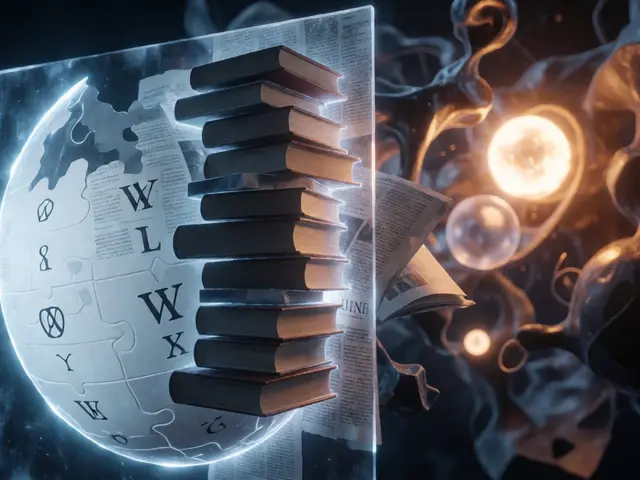
As AI tools like large language models begin to scrape and summarize web content, Wikipedia’s role is evolving. These models often train on Wikipedia data. If Wikipedia contains errors, those errors get baked into the AI’s "knowledge." This raises the stakes for accuracy. A single viral misinformation trend on social media can now influence both Wikipedia edits and AI outputs simultaneously.
However, Wikipedia’s strength lies in its transparency. Unlike a black-box algorithm, you can see who changed what and when. This audit trail is invaluable. As we move further into an era of synthetic media, the ability to trace a claim back to a human editor-and then to a primary source-will become a critical digital literacy skill.
Why does Wikipedia allow anonymous editing?
Anonymous editing lowers the barrier to entry, allowing millions of people to contribute. While this introduces risk, the community-driven monitoring system and recent changes patrol groups mitigate most serious errors quickly. Requiring accounts for all edits would likely reduce participation significantly.
Are Wikipedia citations always reliable?
Not always. Citations indicate that a claim appeared in a source deemed "reliable" by Wikipedia standards. However, sources can be biased, outdated, or misinterpreted by the editor. Always check the original source to confirm it supports the statement made in the article.
How long does it take for an error to be fixed?
It varies widely. Obvious vandalism is often reverted in minutes. Subtle factual errors or biased phrasing may persist for weeks, months, or even years if few people are watching that specific topic. High-profile articles are monitored closely; niche topics are not.
Can I trust Wikipedia for medical advice?
Use it for background information, not diagnosis. Wikipedia’s medical articles are generally well-sourced and reviewed by professionals, but they are summaries. Always consult a qualified healthcare provider for personal medical decisions.
What is "circular reporting" on Wikipedia?
Circular reporting occurs when a website copies information from Wikipedia, and then Wikipedia cites that website as a source. This creates a loop where an initial error becomes self-perpetuating because each source appears to validate the other.