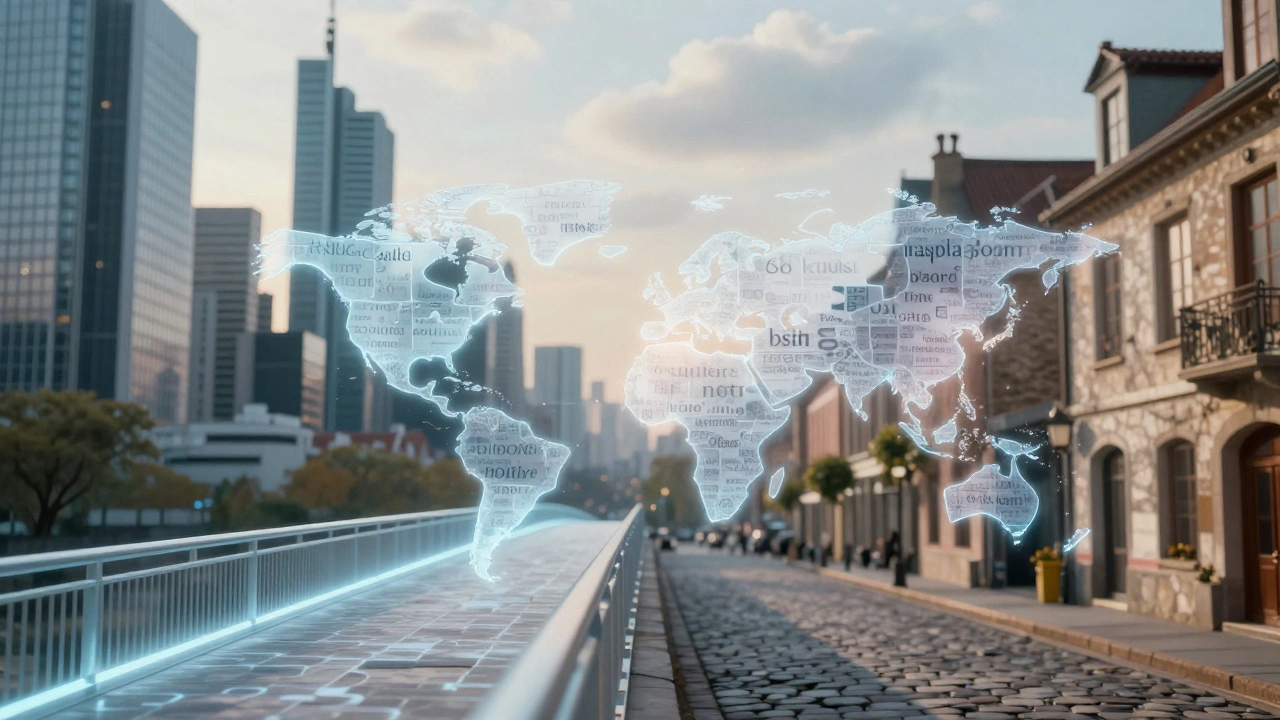
Imagine reading an article about a local festival in your hometown. Now imagine that same article being read by someone on the other side of the world who has never heard of it. The gap between those two experiences is where **cultural bias** lives. On Wikipedia, a free online encyclopedia available in over 300 languages, this gap can distort history, minimize important events, or misrepresent communities. Translating articles isn't just about swapping words; it's about preserving meaning while respecting the Neutral Point of View (NPOV) policy that keeps the platform reliable.
When you translate content from one language version of Wikipedia to another, you are not merely acting as a linguistic bridge. You are becoming a curator of global knowledge. If you do this poorly, you might accidentally erase nuance, impose your own cultural lens, or create confusion for readers. The goal is simple: make sure the translated article feels native to its new audience without losing the factual integrity of the original.
The Hidden Traps in Direct Translation
Most people think translation is a 1:1 swap. English word A becomes Spanish word B. But language carries culture. Idioms, humor, historical references, and even sentence structure reflect how a society thinks. When you copy-paste a sentence from the English Wikipedia into the French Wikipedia without adjustment, you risk importing cultural assumptions that don't apply in France.
For example, consider the phrase "the American Dream." In an English-language article, this term carries specific historical weight related to immigration, capitalism, and social mobility in the United States. If you translate this directly into a German article about global migration patterns, you might confuse readers who don't share that specific cultural context. Instead, you need to explain the concept briefly or use a more universal descriptor like "idealized notion of upward mobility." This small change prevents bias because it doesn't assume the reader knows U.S. history.
Another trap is tone. Some languages favor directness; others prefer indirectness. An article written in a blunt, factual style might seem rude or aggressive when translated into a language that values politeness markers. Adjusting the tone to fit the target language's norms helps maintain neutrality. Neutrality isn't just about facts; it's about how those facts are presented.
Understanding Wikipedia's Core Policies
To avoid bias, you must first understand the rules of the game. Wikipedia operates on several core policies that act as guardrails against personal opinion and cultural favoritism. The most critical one is Neutral Point of View, which requires that all views be represented fairly and proportionally according to their prominence in reliable sources.
- Verifiability: Every claim must be backed by a reliable source. When translating, ensure that the sources cited in the original article are accessible and relevant to the target audience. If a source is only available in English, consider finding a local equivalent in the target language if possible.
- No Original Research: You cannot add your own analysis or synthesis. Stick to what the sources say. If the original article synthesizes three studies, your translation should reflect that synthesis, not add a fourth study you found later unless it was already included in the original.
- Due Weight: Minority viewpoints should be included but not given disproportionate space. If a controversial theory is mentioned in one paragraph in the English version, it shouldn't become a full section in the translated version just because it interests you.
These policies are universal across all language editions of Wikipedia. However, enforcement can vary. Some language communities are stricter about citation styles than others. Familiarize yourself with the specific guidelines of the target language edition before you start translating.
Contextualizing Content for Local Audiences
One of the biggest challenges in translation is deciding what needs explanation. Not every proper noun needs a definition, but some concepts do. Take the concept of "suburbia" in an article about urban planning. In the U.S., this implies a specific post-WWII lifestyle of single-family homes and car dependency. In many European countries, suburbs look very different-denser, often integrated with public transit. If you translate "suburb" directly, you might mislead readers about the density and infrastructure described in the article.
A better approach is to adapt the description slightly to clarify the physical characteristics rather than relying on the cultural label. Instead of saying "typical American suburb," you could say "low-density residential area characterized by private vehicle use." This removes the cultural baggage while keeping the factual description accurate.
Also, watch out for measurement units, dates, and names. Convert miles to kilometers, Fahrenheit to Celsius, and Imperial gallons to liters. Change date formats from MM/DD/YYYY to DD/MM/YYYY if the target region uses that standard. These small changes signal respect for the reader's local conventions and reduce cognitive load.
Handling Sensitive Topics and Controversies
Sensitive topics are where bias hides most easily. Politics, religion, and historical conflicts often have deeply entrenched narratives in different cultures. When translating an article about a disputed border, for instance, you must be careful not to adopt the terminology of one side over the other unless the original article explicitly does so with attribution.
If the English article uses the term "West Bank" and cites international law, but a regional source uses a different name, stick to the term used in the original article if it aligns with Wikipedia's naming conventions. Do not switch terms to match your local preference. If there is significant dispute, mention the alternative names neutrally, e.g., "The area, known as X by some groups and Y by others..."
Always check the talk page of the original article. Editors often discuss contentious points there. Reading these discussions gives you insight into why certain phrasing was chosen and helps you avoid repeating past mistakes. It also shows you which parts of the article are stable and which are still under debate.
Using Technology Wisely
Machine translation tools like Google Translate or DeepL can speed up the process, but they are not perfect. They often miss idioms, fail to detect sarcasm, and struggle with complex sentence structures. Never publish a machine-translated article without thorough human review.
Use technology as a draft generator, not a final product. Here’s a workflow that works:
- Run the text through a machine translator.
- Read the output aloud to catch awkward phrasing.
- Check proper nouns and technical terms against official glossaries.
- Verify that citations link correctly and are accessible.
- Compare the tone with other high-quality articles in the target language.
This hybrid approach saves time while ensuring quality. Remember, your job is to polish the rough edges left by algorithms, not to fix fundamental errors in logic or fact.

Building Trust Through Transparency
If you’re unsure about a translation choice, document it. Use editor notes or leave comments on the talk page explaining why you chose a particular term. For example, "I translated 'highway' as 'autobahn' because the context refers to controlled-access roads common in Germany, though 'motorway' might be more accurate for UK readers." This transparency invites collaboration and reduces the chance of edit wars.
Collaboration is key. Invite native speakers to review your work. Many Wikipedia editors welcome feedback. Joining local editing groups or mailing lists can connect you with experienced translators who understand the nuances of both the subject matter and the language.
| Pitfall | Why It Happens | How to Fix It |
|---|---|---|
| Literally translating idioms | Assuming word-for-word accuracy equals meaning | Replace with equivalent idiom or plain language |
| Ignoring local measurements | Overlooking regional standards | Convert units and note originals in parentheses |
| Misattributing cultural context | Projecting home-country norms onto global topics | Add brief explanations for culturally specific terms |
| Skipping citation checks | Rushing to finish the translation | Verify each source links and is accessible |
Final Thoughts on Ethical Translation
Translating Wikipedia articles is a powerful way to democratize knowledge. But it comes with responsibility. By avoiding cultural bias, you help ensure that information remains fair, accurate, and useful for everyone, regardless of where they live. Stay curious, stay humble, and always prioritize the reader’s understanding over your own convenience.
Can I use machine translation for Wikipedia articles?
Yes, but only as a starting point. Machine translation lacks nuance and often misses cultural context. Always review and edit the output manually to ensure accuracy, natural flow, and adherence to Wikipedia's Neutral Point of View policy.
What should I do if a term has no direct equivalent in the target language?
Provide a brief explanation in parentheses or footnotes. For example, instead of translating a unique cultural concept directly, describe its function or significance. This maintains clarity without forcing an inaccurate translation.
How do I handle disputed names or places?
Stick to the naming convention used in the original article if it follows Wikipedia's guidelines. If there is significant dispute, mention alternative names neutrally with attribution. Check the talk page for ongoing discussions about naming preferences.
Is it okay to add new information during translation?
No. Adding new information violates the No Original Research policy. Your role is to translate existing content faithfully. If you find additional relevant information, suggest it on the talk page for discussion rather than adding it directly.
Where can I get help with difficult translations?
Join local Wikipedia editing groups or mailing lists. Engage with experienced editors in the target language community. They can provide guidance on terminology, style, and cultural nuances specific to their region.