Open Wikipedia is a free, web-based collaborative project that aims to compile and summarize knowledge from around the world in an encyclopedic reference work. It is often called the "eighth wonder of the world" because of its sheer size. But there is a quiet truth hiding behind those billions of page views: the people writing it are not a mirror of the world. They are a specific slice of humanity. If you look at who actually sits down to type into the edit box, you will see a pattern that repeats across almost every language version of the site.
The core issue with editor demographics is the statistical breakdown of contributors by age, gender, race, class, and location. This isn't just a trivia question. It shapes what gets written, how it gets written, and what gets left out entirely. When the voices creating the content skew heavily toward one group, the encyclopedia reflects their priorities, blind spots, and cultural norms. Understanding this distribution is the first step to fixing the gaps in global knowledge.
The Gender Gap: A Persistent Imbalance
For decades, the most cited statistic about Wikipedia has been the gender ratio. Historically, roughly 90% of active editors have been male. While recent efforts to recruit women have nudged this number slightly, the imbalance remains stark. Why does this happen? It isn't just about interest. Research suggests that women are less likely to feel welcome in the editing community due to perceived hostility or bureaucratic friction when trying to make changes. Men tend to dominate technical topics like engineering and politics, while women contribute more to literature and health sciences, but even within these fields, the volume of male edits often outweighs female contributions.
This demographic skew creates a subtle bias in tone and focus. Articles on male historical figures often receive more detailed treatment than articles on female counterparts. The solution isn't just to ask women to edit; it's to change the culture of the platform so that editing feels less like a competitive arena and more like a collaborative library.
Race and Ethnicity: The Invisible Majority
If gender is the most visible demographic gap, race is the least tracked. Unlike gender, which can sometimes be inferred from usernames or profiles, racial identity is rarely explicit on Wikipedia. However, studies using IP address geolocation and name analysis suggest that the vast majority of English-language editors are white. This lack of representation means that topics related to non-Western cultures, indigenous histories, and minority experiences often remain underdeveloped or rely on external sources rather than insider perspectives.
Consider the coverage of African history or Asian pop culture. These topics often suffer from "citation bias," where editors rely on Western academic journals that may overlook local nuances. When editors from diverse backgrounds join, they bring primary sources, local languages, and cultural context that enrich the entries. Yet, without active outreach programs, the default demographic remains homogeneous.
Geographic Distribution: The Anglosphere Dominance
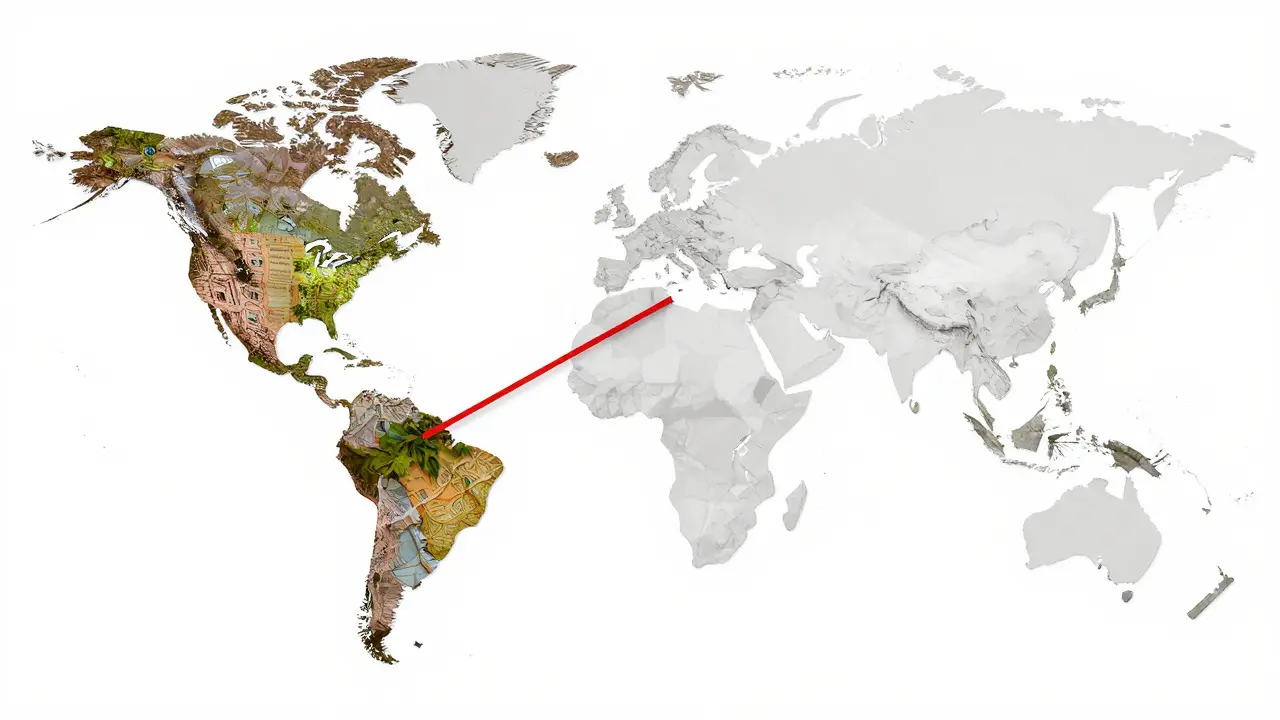
Where do Wikipedia editors live? The map is surprisingly lopsided. The United States, United Kingdom, Canada, and Australia account for a disproportionate share of the English-speaking editing population. This geographic concentration leads to what experts call "Anglocentrism." Events, people, and concepts from North America and Europe receive higher priority for creation and expansion. Meanwhile, significant events in South Asia, Sub-Saharan Africa, or Latin America might wait months for a dedicated editor to notice them.
This geographic bias also affects language versions. While the English Wikipedia is the largest, other major language versions like German, French, and Japanese have their own distinct demographic profiles. For instance, the German Wikipedia tends to have a higher proportion of older, technically inclined users, while the Japanese Wikipedia benefits from a strong corporate sponsorship model that encourages structured data entry. Comparing these versions reveals how local culture shapes global knowledge.
| Language Version | Estimated Male % | Primary Geographic Hub | Notable Strength | Common Criticism |
|---|---|---|---|---|
| English | ~85-90% | North America & UK | Breadth of topics | Anglocentric bias |
| German | ~80-85% | Germany & Austria | Structured data & citations | Strict bureaucracy |
| Japanese | ~75-80% | Japan | Corporate partnerships | Lower international reach |
| Spanish | ~85-90% | Spain & Mexico | Large user base | Regional fragmentation |
Socioeconomic Class and Education Level
Demographics aren't just about who you are; they're about what you know. Wikipedia editors tend to be highly educated, often holding university degrees. This creates a knowledge filter. Topics that require specialized academic training, such as advanced physics or legal theory, are well-covered. But topics rooted in oral traditions, informal economies, or subcultures often struggle for validation. The barrier to entry isn't just technical; it's intellectual. Newcomers often face a steep learning curve involving complex citation standards and neutral point of view (NPOV) debates, which can discourage those without formal research training.
This educational skew means that Wikipedia functions somewhat like an open-access university textbook. It excels at summarizing established consensus but can lag in capturing emerging grassroots movements or niche community knowledge until those topics gain mainstream academic traction. Bridging this gap requires simplifying the onboarding process for non-academic contributors.
Age Groups: The Youthful Core
Contrary to the stereotype of old men guarding gatekeepers, the median age of a Wikipedia editor is surprisingly young. Many active contributors are in their late teens or early twenties, often students or young professionals. This youthful energy drives rapid updates on pop culture, technology, and current events. However, this age profile brings its own challenges. Younger editors may prioritize trending topics over long-term stability, leading to volatility in article quality. Older editors, though fewer in number, often provide the institutional memory needed to maintain consistency and resolve disputes.
The interplay between these age groups is crucial. Mentorship programs that pair experienced editors with newcomers help stabilize the community. Without this balance, the platform risks becoming either too rigid or too chaotic. The ideal state is a dynamic equilibrium where fresh perspectives challenge stale narratives, but established standards prevent misinformation.

Why Demographics Matter for Knowledge Accuracy
So, why should you care about who edits Wikipedia? Because neutrality is a myth if only one perspective is present. An encyclopedia written by a single demographic group will inevitably reflect that group's values. By understanding the demographic makeup of the editor base, readers can better assess potential biases. For example, if an article on a developing nation's economy is primarily edited by analysts from wealthy nations, the framing might emphasize debt and instability over innovation and resilience.
Recognizing these patterns empowers readers to seek multiple sources. It also motivates the community to actively recruit editors from underrepresented groups. The goal isn't to erase individual voice, but to ensure that the collective voice is broad enough to represent the full spectrum of human experience. As the platform evolves, tracking these demographics becomes as important as tracking page views.
Frequently Asked Questions
What percentage of Wikipedia editors are female?
Historically, female editors made up less than 10% of the active community. Recent initiatives have increased this number slightly, but it remains significantly lower than the general internet population, hovering around 12-15% in many major language versions.
How does geography affect Wikipedia content?
Editors tend to write about places they know best. Since most English-language editors are from North America and Europe, topics from these regions receive more attention and detail. This leads to an uneven distribution of quality and depth across different parts of the world.
Is Wikipedia biased towards certain races?
Yes, indirectly. Because the editor base is predominantly white in English-speaking versions, topics related to non-white populations may lack nuance or rely on external sources. This doesn't mean the content is wrong, but it may lack the insider perspective that diverse editors would provide.
Who is the typical Wikipedia editor?
The typical editor is a young, highly educated male from a developed country. He is likely a student or early-career professional with a strong interest in technology or academia. However, this profile is changing slowly as outreach programs target broader audiences.
Can I check the demographics of a specific article?
Not directly. Wikipedia does not track the demographic data of each edit. However, you can look at the edit history to see how many unique users contributed. Tools exist to analyze IP addresses and user talk pages, but these are estimates rather than definitive proof of demographic identity.