Imagine you are reading a biography on Wikipedia is a free online encyclopedia that relies on volunteer editors to maintain accuracy and neutrality. You notice one sentence praising the subject’s leadership, while the next paragraph details a minor controversy buried in a footnote. Which part feels more like an encyclopedia? This tension defines the core challenge of Neutral Point of View (NPOV) is an editorial policy requiring articles to represent significant viewpoints fairly without bias.
For millions of daily readers, NPOV isn’t just a rule; it’s the reason they trust the platform. But for the hundreds of thousands of volunteers who edit these pages, it is a constant negotiation. Maintaining editorial balance at scale requires more than just avoiding adjectives. It demands a rigorous adherence to verifiability, a deep understanding of consensus mechanics, and the humility to accept that your perspective might be the minority view.
The Core Principles of Editorial Neutrality
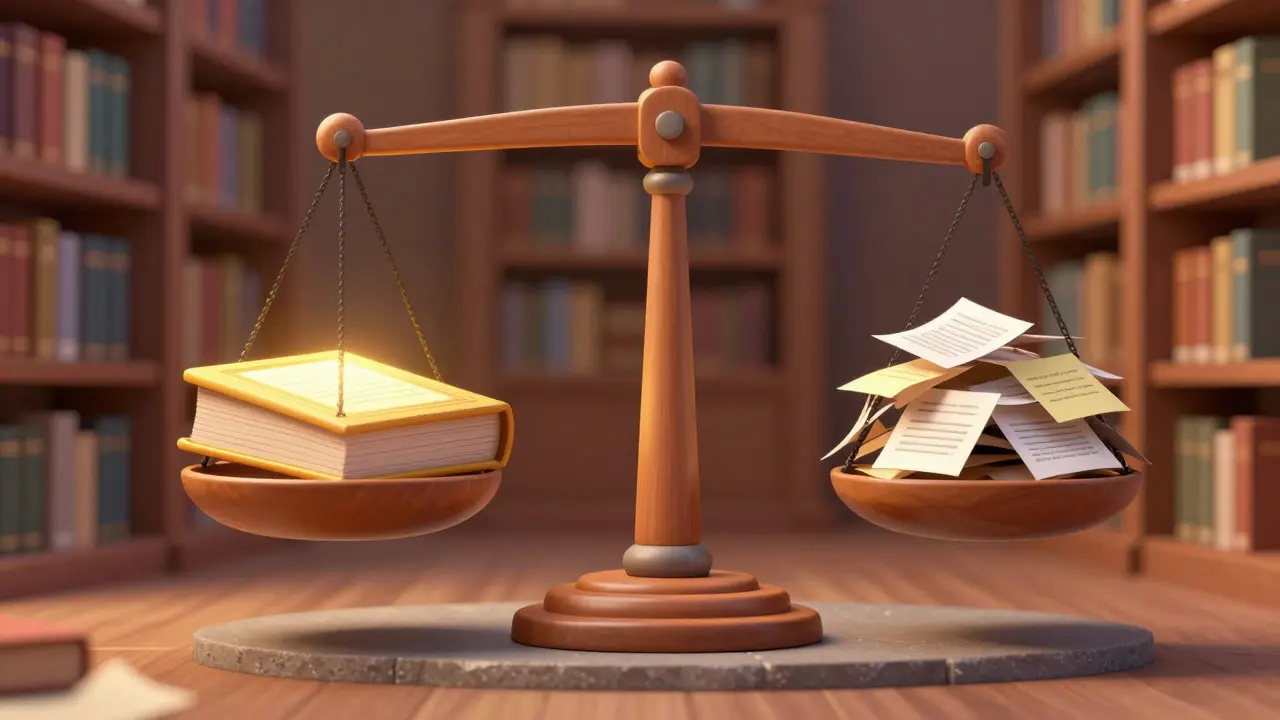
At its heart, NPOV does not mean presenting every opinion as equally valid. Instead, it means weighting views by their prominence in reliable sources. If a scientific theory is accepted by 95% of researchers but challenged by a vocal minority, the article should reflect that 95-5 split, not give both sides equal space.
This approach relies heavily on the concept of Reliable Sources is published works with a track record of fact-checking and expert review. In the context of Wikipedia, this usually means academic journals, major news outlets, and established books. User-generated content, such as blogs or personal websites, rarely qualifies unless the subject is specifically about that blog. By anchoring edits to these sources, editors reduce the risk of injecting personal bias.
However, finding balance is tricky when topics are inherently subjective, like politics or religion. Here, the policy shifts from factual reporting to representing the "significant viewpoints." The key question for any editor is: "What do reputable commentators say about this issue?" If most experts agree on a point, the article states it as fact. If there is genuine dispute, the article presents the dispute clearly, attributing each side to its proponents.
The Consensus Model: How Disputes Are Resolved
Unlike traditional journalism where an editor-in-chief makes the final call, Wikipedia operates on a Consensus Model is a decision-making process where editors reach agreement through discussion rather than voting. When two editors disagree on how to phrase a section, they don’t vote. They talk. They cite sources. They look for common ground.
This system works surprisingly well because it forces participants to justify their positions with evidence rather than authority. If Editor A wants to remove a criticism because they feel it’s unfair, they must explain why the source supporting that criticism isn’t reliable. If Editor B insists on keeping it, they must defend the source’s credibility. Eventually, one side yields, or a compromise phrasing is found that satisfies both.
But consensus has limits. Sometimes, editors get stuck in what is known as an "edit war," where they repeatedly revert each other’s changes. To break these cycles, the community uses tools like Talk Pages and Requests for Comment. These forums allow neutral parties to weigh in, often providing the fresh perspective needed to move forward. The goal isn’t always to find the "perfect" sentence, but to find a sentence that no reasonable person would object to strongly.

Common Pitfalls That Break Neutrality
Even well-meaning editors can accidentally introduce bias. One of the most common mistakes is weasel words. Phrases like "some critics argue" or "it has been suggested" sound objective, but they often hide weak sourcing. If only one obscure blog post suggests something, labeling it as "some critics" implies a broader consensus that doesn’t exist.
Another frequent issue is cherry-picking. This happens when an editor cites a study that supports their view but ignores three other studies that contradict it. True NPOV requires looking at the body of evidence, not just the pieces that fit your narrative. For example, if you’re writing about a new diet, citing only the positive results from one small trial while ignoring large-scale meta-analyses creates a misleading picture.
Finally, there’s the trap of presentism. This is judging historical figures by modern standards without context. While important to note contemporary reactions, NPOV requires explaining how people understood events at the time. Balancing modern relevance with historical context is a delicate skill that takes practice.

Tools and Tactics for Balanced Editing
Maintaining balance isn’t just about knowing the rules; it’s about using the right tools. The Citation Needed Template is a marker used to flag statements lacking reliable sources. Placing this tag encourages other editors to provide proof, effectively shifting the burden of evidence back to the claimant. It’s a powerful way to slow down biased edits before they become entrenched.
Editors should also familiarize themselves with the Talk Page is a dedicated forum attached to each article where editors discuss improvements. Before making a controversial change, posting on the Talk Page allows you to gauge the community’s sentiment. You might discover that your "obvious" correction is actually a long-standing debate. Starting a conversation early prevents many conflicts.
Here is a quick checklist for ensuring your edits align with NPOV:
- Check the Source: Is it a peer-reviewed journal, a major newspaper, or a reputable book? If not, look for a better source.
- Assess Weight: Does this source represent the mainstream view, or is it an outlier? Reflect that weight in your wording.
- Avoid Adjectives: Remove words like "brilliant," "terrible," or "controversial" unless quoting someone directly.
- Attribute Claims: Use phrases like "According to [Source],..." or "[Author] argues that..." for disputed points.
- Read Aloud: Read your edited section aloud. Does it sound like a textbook, or like an opinion piece?
Why Scale Makes Balance Harder
Wikipedia’s size is both its greatest strength and its biggest challenge. With over 6 million English-language articles, no single group of editors controls the entire project. This decentralization prevents any one ideology from dominating, but it also means that local biases can persist in niche topics.
In popular culture articles, for instance, fan communities often drive edits. They have deep knowledge but may lack the distance needed for critical analysis. Similarly, in political articles, partisan groups may swarm a page during election seasons, trying to tilt the narrative. The community counters this with Administrators are volunteers with additional technical tools to manage vandalism and disputes. Admins don’t decide what is true, but they can lock pages temporarily to stop destructive editing, giving the community time to cool off and find consensus.
Despite these challenges, the system holds up remarkably well. Independent studies have shown that Wikipedia’s accuracy on science topics rivals that of professional encyclopedias. This success isn’t accidental; it’s the result of thousands of hours spent debating, citing, and refining text. It proves that collective intelligence, guided by clear rules, can produce high-quality information at a scale no traditional publisher could match.
Does Neutral Point of View mean presenting all sides equally?
No. NPOV requires representing significant viewpoints fairly, weighted by their prevalence in reliable sources. If one view is held by 90% of experts, it should dominate the article, while the minority view is mentioned briefly with proper attribution.
What counts as a reliable source on Wikipedia?
Reliable sources are published works with a history of fact-checking and expert review. Examples include academic journals, major newspapers, and well-known books. Blogs, personal websites, and press releases are generally considered unreliable unless the article is specifically about them.
How do I resolve a dispute with another editor?
Start by discussing the issue on the article's Talk Page. Cite your sources and listen to the other editor's perspective. If you reach a stalemate, you can request a comment from the broader community or seek mediation from a neutral administrator. Avoid reverting the same edit multiple times, as this can lead to warnings.
Is Wikipedia accurate compared to professional encyclopedias?
Studies, including a notable 2005 comparison with Nature, have found that Wikipedia's accuracy on science topics is comparable to professional encyclopedias. While errors can occur, the rapid correction rate due to active monitoring helps maintain high overall quality.
What is an edit war?
An edit war occurs when two or more editors repeatedly revert each other's changes to the same section without reaching an agreement. To prevent this, editors are encouraged to discuss changes on the Talk Page before implementing them and to avoid the "three-revert rule," which suggests stopping after three reverts to seek external help.