You might think Wikipedia is just a website run by volunteers in their spare time. But behind the scenes, it’s a massive machine fueled by strategic alliances with museums, universities, and tech giants. These aren’t just handshakes; they are complex operations that shape what you read every day. When you look up a historical artifact or a scientific concept, there’s a good chance a Wikimedia Foundation partnership made that information accessible.
Why does this matter to you? Because these collaborations determine the quality, breadth, and reliability of the world’s largest free encyclopedia. They bring high-quality images from locked archives into the public domain. They integrate rigorous academic standards into community editing. And they ensure that knowledge doesn’t stay trapped behind paywalls or glass cases. Let’s break down how these major partnerships actually work, who is involved, and why they are critical for the future of open knowledge.
The Core Mission Behind Institutional Alliances
At its heart, the Wikimedia Foundation exists to collect and disseminate free educational material. But a non-profit cannot do this alone. It needs access to primary sources, expert validation, and technical infrastructure. This is where institutional partners come in. The foundation acts as a bridge between traditional gatekeepers of knowledge-like libraries and research labs-and the global crowd of editors.
Think of it this way: A museum has thousands of high-resolution photos of ancient vases, but only a few curators can describe them accurately. Wikipedia has millions of readers and thousands of amateur historians eager to write about those vases, but no access to the raw data. The partnership solves both problems. The institution gets visibility and preservation support; the community gets accurate, sourced content. This symbiotic relationship is the engine driving modern open knowledge initiatives.
These agreements are rarely one-size-fits-all. Some focus on digitization projects, where partners scan physical books or artifacts. Others are educational programs, integrating Wikipedia assignments into university curricula. Still others are technical integrations, linking database systems like Wikidata with proprietary corporate tools. Each type serves a different need, but all aim to reduce barriers to accessing human knowledge.
GLAM: Museums, Libraries, and Archives Join Forces
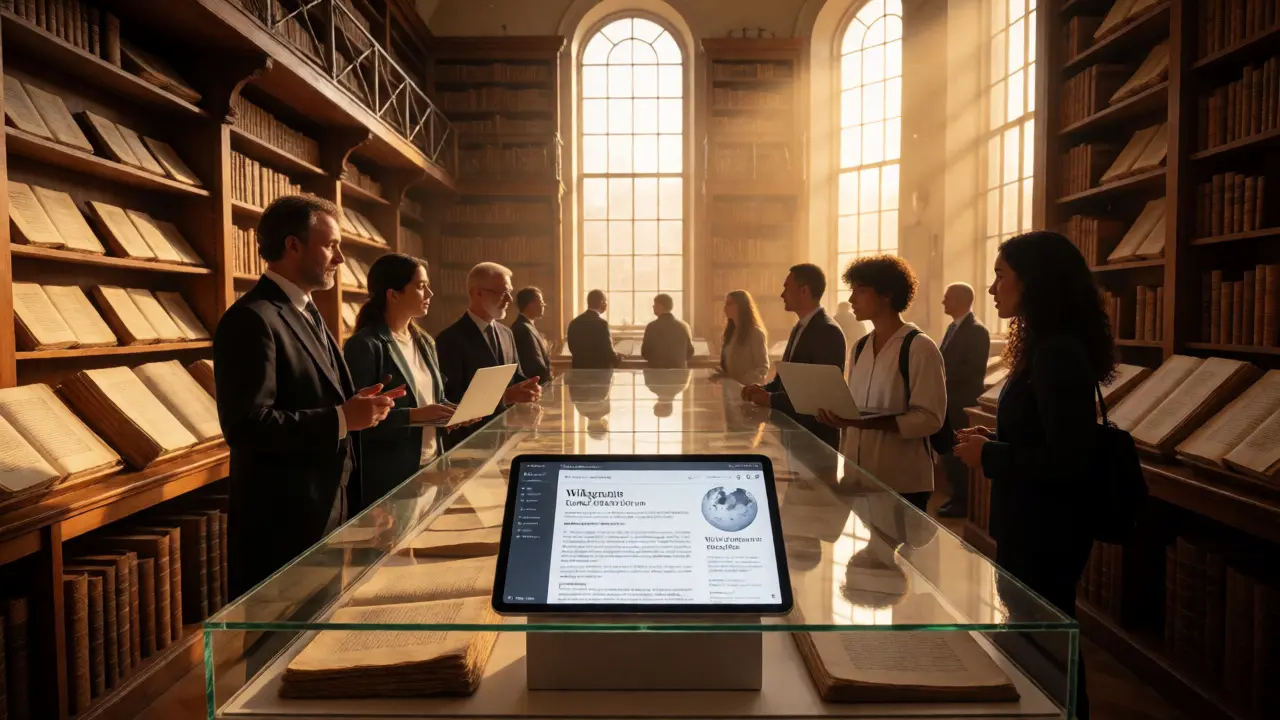
If you’ve ever seen a pristine image of a Renaissance painting on Wikimedia Commons, you likely have a GLAM (Galleries, Libraries, Archives, and Museums) partnership to thank. This sector represents one of the most successful areas of collaboration for the foundation. Major institutions like the British Museum, the Smithsonian, and the Metropolitan Museum of Art have signed extensive agreements to release millions of images under free licenses.
But it’s not just about dumping files onto a server. Successful GLAM partnerships involve active outreach. Institutions often hire "Wikipedians in Residence"-dedicated staff members who help curators understand copyright laws, edit guidelines, and community norms. This person acts as a translator between the rigid protocols of academia and the flexible, consensus-driven culture of Wikipedia.
| Institution Type | Primary Contribution | Foundation Benefit | Example Scope |
|---|---|---|---|
| National Libraries | Digitized manuscripts and rare texts | Source verification and historical depth | Millions of pages via Wikisource |
| Art Galleries | High-res artwork images | Visual enrichment of articles | Public domain art releases |
| Scientific Archives | Data sets and biological records | Accuracy in science entries | Species classification links |
The impact here is tangible. Before these partnerships, many cultural treasures were invisible online. Now, a student in rural Brazil can study the same high-definition details of a Van Gogh sketchbook as a professor in Paris. This democratization of visual culture is perhaps the most visible success of the foundation’s external relations.
Education Programs: Turning Students Into Editors
Another pillar of the foundation’s strategy involves higher education. The Wikipedia Education Program works with universities worldwide to replace traditional term papers with collaborative editing assignments. Instead of writing an essay that only the professor reads, students improve existing Wikipedia articles or create new ones on niche topics.
This approach tackles two issues at once. First, it improves article quality. Students, motivated by grades, conduct thorough research and cite reliable sources. Second, it trains a new generation of digital citizens. Learners gain skills in media literacy, citation management, and neutral point of view writing. Instructors report that students engage more deeply with course material when they know their work will be publicly scrutinized.
However, this isn’t without friction. Academic experts sometimes worry about the rigor of community review. To mitigate this, the foundation provides training modules and dedicated support channels for educators. Universities like Harvard and Yale have long-standing ties, contributing thousands of edits annually. These partnerships prove that formal education and open-source collaboration can coexist productively.
Tech Giants and Data Interoperability
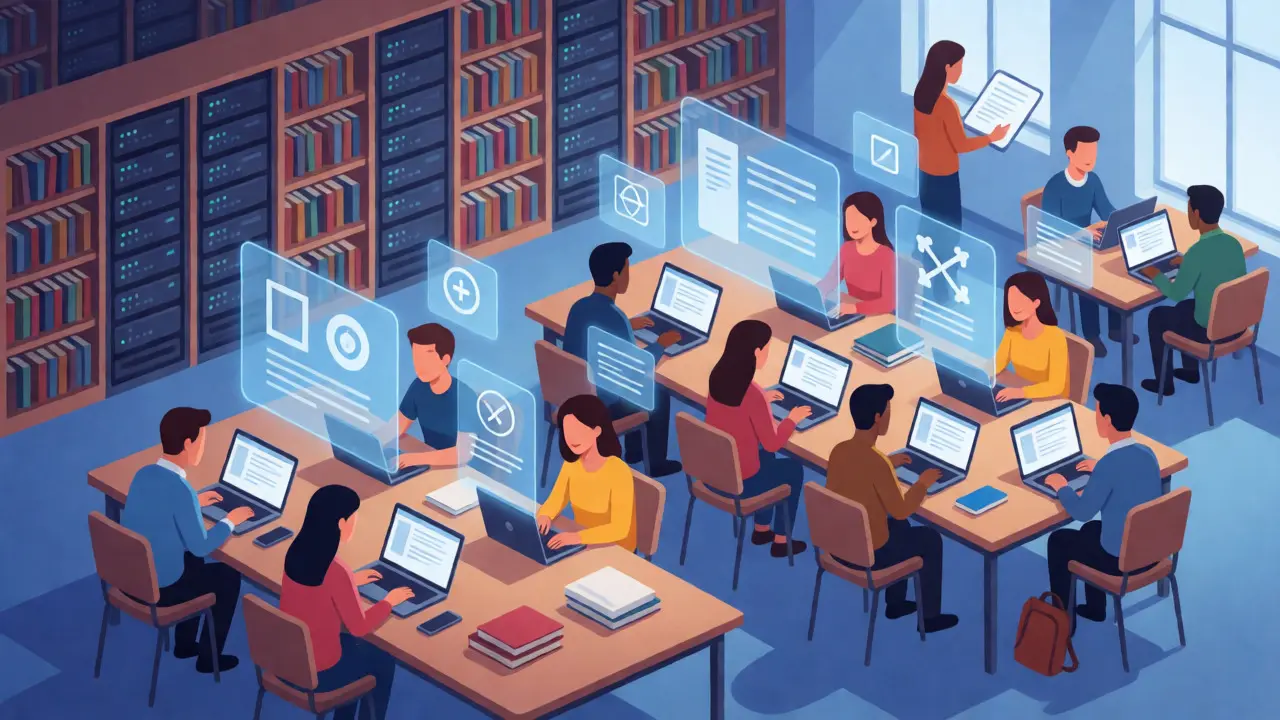
Beyond cultural institutions, the foundation collaborates heavily with technology companies. These deals often focus on infrastructure and data interoperability. For instance, cloud computing providers offer credits and technical support to keep servers running smoothly during traffic spikes. More importantly, tech firms integrate with Wikidata, the structured data backbone of the project.
Companies use Wikidata to power their own features. Search engines pull facts directly from the database to populate knowledge panels. Smart assistants answer questions using this structured data. In return, the foundation gains credibility and stability. If your voice assistant tells you the population of Tokyo, it’s likely pulling that number from a source maintained by Wikimedia contributors.
These relationships also drive innovation in translation. Partnerships with AI language models help automate the translation of interface elements and short descriptions across hundreds of languages. While human translators remain essential for nuance, these tech collaborations accelerate the spread of knowledge into underrepresented languages.
Challenges in Maintaining Trust and Neutrality
With great power comes great scrutiny. Critics often ask if partnerships compromise neutrality. Does a museum influence how its exhibits are described? Do tech companies skew data representation? The foundation addresses these concerns through strict governance policies. Partners agree to adhere to core content policies, including verifiability and no original research. They cannot buy editorial control.
Transparency is key. Most large-scale donations of content or resources are documented publicly. Community members monitor changes closely. If a partner tries to push a biased narrative, the community pushes back. This dynamic tension ensures that while institutions provide resources, the community retains editorial sovereignty. It’s a delicate balance, but one that has held up over nearly two decades of operation.
Financial independence is another hurdle. While grants and donations from partners fund specific projects, the foundation must avoid becoming overly reliant on any single entity. Diversifying partnerships helps maintain this equilibrium. By working with governments, NGOs, private corporations, and academic bodies, the foundation spreads risk and perspective.

How You Can Leverage These Resources
So, what does this mean for you as a reader or contributor? It means the information you consume is backed by institutional rigor. When you see a citation to a national archive, you know it’s been vetted by professionals. When you find a detailed entry on a obscure scientific theory, it may have been refined by university students guided by professors.
If you’re looking to contribute, consider starting with a topic related to a local library or museum. Many institutions host edit-a-thons specifically designed for newcomers. These events lower the barrier to entry, providing hands-on guidance and immediate feedback. You don’t need to be an expert; you just need curiosity and a willingness to follow sourcing rules.
For researchers, these partnerships offer a treasure trove of metadata. Wikidata’s API allows developers to build applications that tap into centuries of accumulated knowledge. Whether you’re building a timeline app or a fact-checking tool, the structured data provided by these collaborations is invaluable.
Frequently Asked Questions
Do partner institutions get special treatment on Wikipedia?
No. Partner institutions do not receive preferential editorial treatment. Their contributions are subject to the same community review processes as any other editor. The partnership typically involves resource sharing (like images or funding) rather than editorial authority. Content must still meet notability and verifiability standards.
What is the difference between Wikimedia Foundation and Wikimedia chapters?
The Wikimedia Foundation is the US-based non-profit that owns the technical infrastructure and trademarks. Wikimedia chapters are independent local organizations (e.g., Wikimedia Germany, Wikimedia France) that operate autonomously to promote the movement in their regions. Both engage in partnerships, but the Foundation handles global-scale institutional agreements.
Can businesses partner with the Wikimedia Foundation?
Yes, businesses frequently collaborate, particularly in technology and data sectors. These partnerships often focus on API integration, cloud services, or specific data projects. Unlike commercial advertising, these deals are usually mutually beneficial exchanges of resources or expertise, adhering to strict conflict-of-interest guidelines.
How do GLAM partnerships handle copyright issues?
Institutions grant explicit licenses for their materials, usually Creative Commons Attribution-ShareAlike or Public Domain Mark. This legal clarity prevents copyright strikes and allows unlimited reuse. Wikipedians in Residence often assist in verifying that the institution holds the rights before uploading assets.
Are student edits reliable?
Generally, yes. Student edits in the Education Program are monitored by instructors and experienced Wikipedians. The requirement to cite high-quality academic sources raises the overall standard of referenced articles. Studies show that articles touched by students tend to have better citations and fewer vandalism incidents.