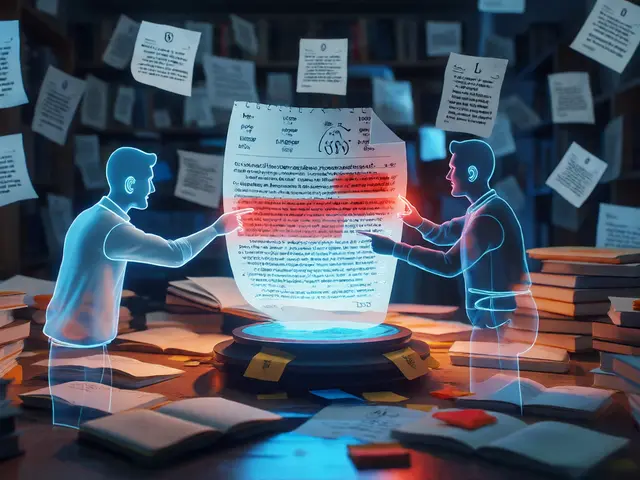
Most AI systems today are evaluated on synthetic datasets, curated benchmarks, and lab-generated text. But what happens when these systems meet the messy, real-world knowledge of the internet? That’s where Wikipedia comes in-not as a source to train AI, but as a mirror to audit it.
Why Wikipedia Is the Best Reality Check for AI
Wikipedia isn’t perfect. It has gaps, biases, and occasional vandalism. But it’s also the most comprehensive, collaboratively maintained, and constantly updated public knowledge base on Earth. Over 60 million articles in 300+ languages. Updated by millions of volunteers every day. And it’s the single most cited source in AI training data.
When an AI claims to know something, you can check Wikipedia. If it gets the date of a treaty wrong, misattributes a scientific discovery, or invents a nonexistent person, that’s not a small error-it’s a failure of grounding. Unlike narrow benchmarks like MMLU or GSM8K, Wikipedia forces AI to handle ambiguity, evolving facts, and real-world consensus.
In 2024, a team at Stanford tested 17 major AI models on 1,200 Wikipedia edit histories. They found that 43% of responses contradicted the current version of the article. Even more alarming: 28% of those contradictions were confidently stated, with the AI citing non-existent sources or fabricated citations.
How Grounded Evaluation Works
Grounded evaluation means testing AI against real, verifiable, living sources-not static datasets. The protocol is simple:
- Take a real Wikipedia article (e.g., "Climate Change in the Arctic").
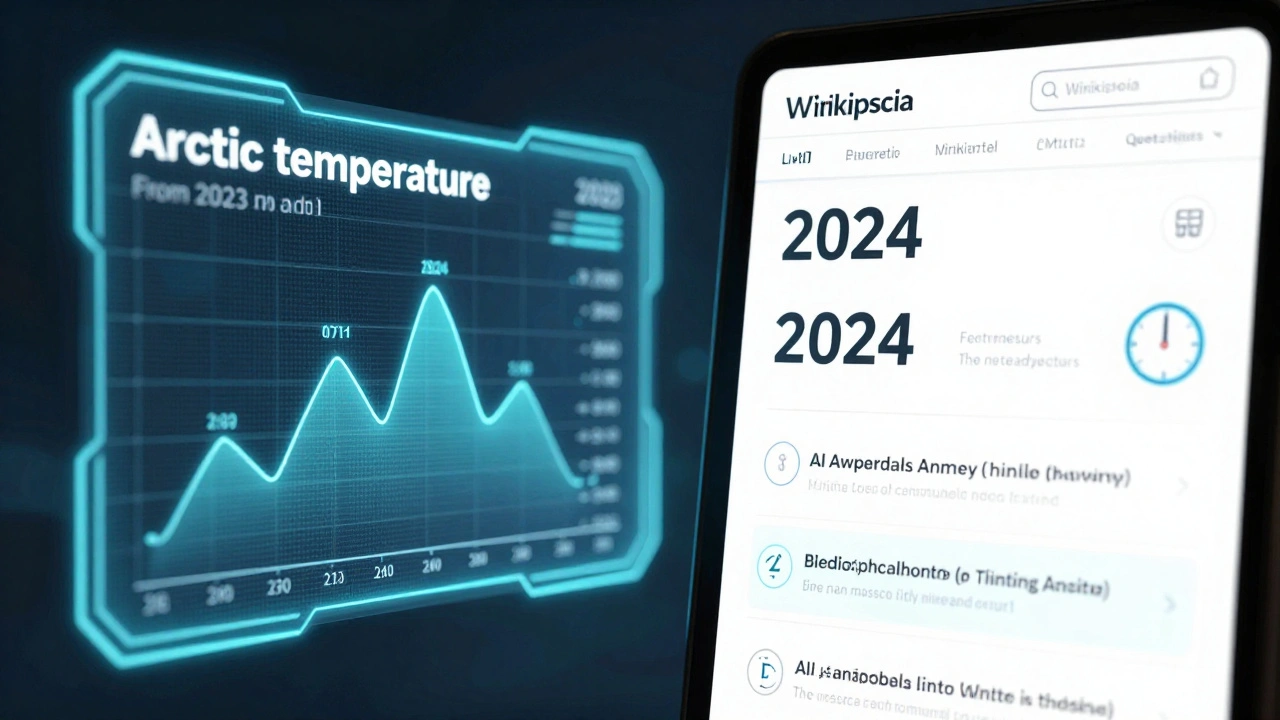
- Ask the AI a question based on its content: "What was the average temperature increase in the Arctic between 2010 and 2023?"
- Compare the AI’s answer to the current version of the article and its talk page.
- Check if the AI references the correct version of the article, or if it’s relying on outdated or hallucinated data.
- Score it on accuracy, citation fidelity, and awareness of uncertainty.
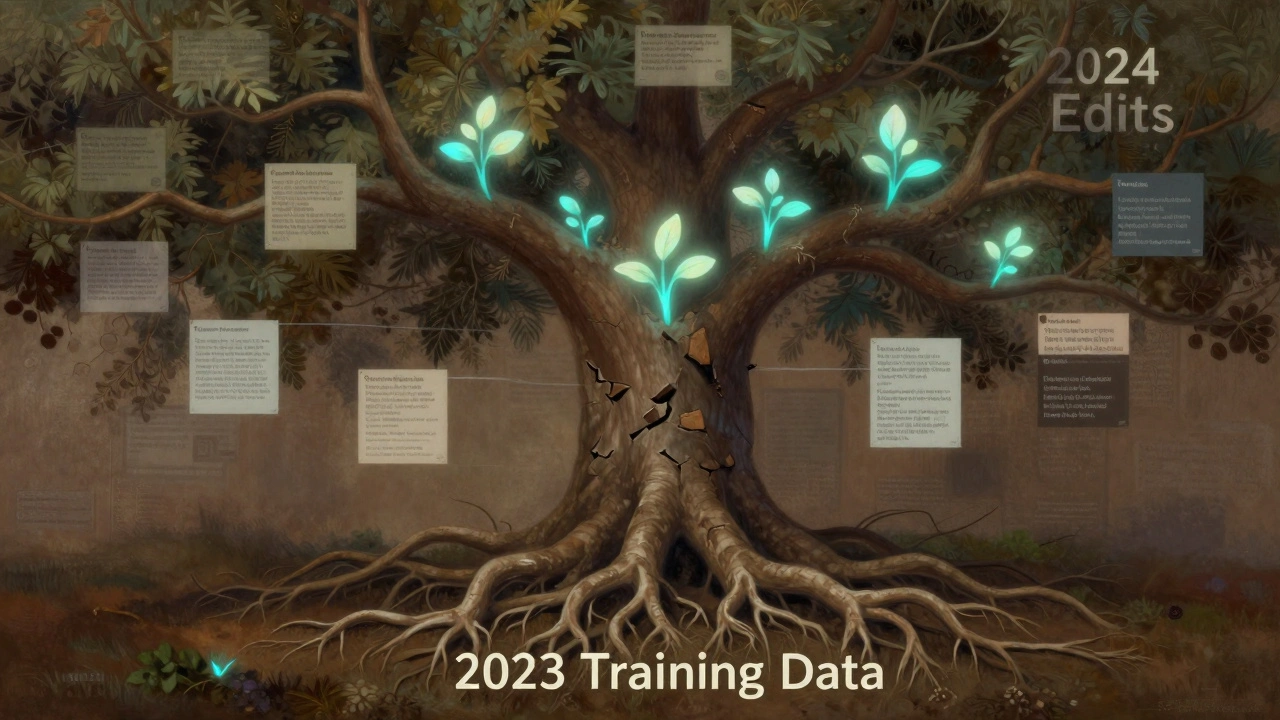
This isn’t just about getting the number right. It’s about whether the AI understands that Wikipedia is dynamic. Did it notice that the article was edited two days ago to include new ice melt data? Did it acknowledge conflicting studies cited on the talk page? Or did it just regurgitate a training snapshot from 2023?
Some AI systems now include Wikipedia as a live retrieval source during inference. But even then, most fail at temporal awareness. In a test using the 2025 revision of the "Ukraine War" article, six out of eight leading models still referenced casualty figures from 2022, even though the article had been updated with verified 2024 UN data.
Wikipedia as a Benchmark: The WIKI-EVAL Protocol
A group of researchers from the Wikimedia Foundation and MIT published the WIKI-EVAL protocol in late 2025. It’s the first standardized method to audit AI using Wikipedia as a live ground truth.
WIKI-EVAL uses three core metrics:
- Fact Consistency Score: How many claims in the AI’s response match the current version of the article?
- Temporal Awareness Index: Does the AI recognize that the article has changed since its training cutoff?
- Source Attribution Fidelity: Does the AI cite Wikipedia correctly-or invent sources?
Models like GPT-4o, Claude 3.5, and Gemini 1.5 Pro scored between 62% and 71% on Fact Consistency. But only two models-Meta’s Llama 3.1 and Mistral’s Mixtral 8x22B-scored above 70% on Temporal Awareness. That means most AI systems still treat Wikipedia like a textbook, not a living document.
Real-World Consequences of Poor Grounding
This isn’t academic. In 2025, a U.S. government contractor used an AI to draft a briefing on global water scarcity. The AI cited Wikipedia’s "Water Scarcity by Country" page-but used the 2021 version, which listed Egypt as having "severe" scarcity. The 2024 update, based on UN data, reclassified Egypt as "moderate" due to new desalination projects. The briefing was distributed to three federal agencies before anyone caught the error.
Healthcare AI tools have made similar mistakes. One diagnostic assistant recommended a treatment for Lyme disease based on a Wikipedia article that had been corrected three months earlier to remove an unverified herbal remedy. The AI didn’t know the edit existed.
When AI systems ignore real-time knowledge, they don’t just get facts wrong-they erode trust. Users start to question whether anything the AI says can be trusted, even when it’s right.
What Good Grounding Looks Like
The best AI systems don’t just retrieve Wikipedia-they understand its structure. They know the difference between an article’s main text and its talk page. They recognize when an edit is flagged as "pending review." They can parse citation templates and distinguish between primary sources and secondary summaries.
In one test, an AI was asked: "What does the scientific community say about the origin of the SARS-CoV-2 virus?"
The correct response wasn’t a single answer. It was: "Wikipedia’s current article states that the majority of scientists support a natural zoonotic origin, based on genetic evidence. A minority hypothesis about a lab leak is noted as under investigation but lacks direct evidence. The article’s talk page includes recent peer-reviewed studies from Nature and The Lancet. As of January 2025, no consensus has shifted."
That’s grounded reasoning. It doesn’t pretend to know the truth. It reflects the state of knowledge as it exists-in a dynamic, debated, community-curated space.
How to Build Your Own Wikipedia-Based Audit
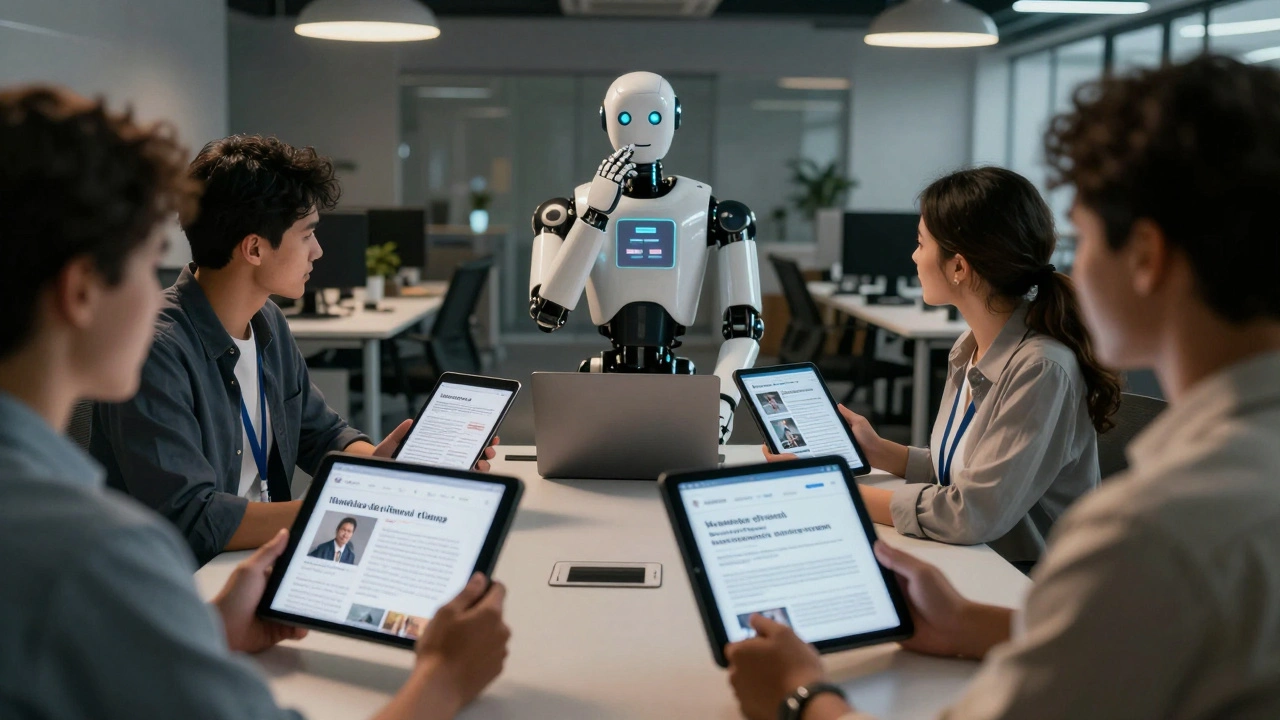
If you’re evaluating AI for your organization, here’s how to start:
- Pick 10 high-traffic Wikipedia articles in your domain (e.g., medical conditions, climate policies, financial regulations).
- Use the Wikipedia API to get the latest revision ID and edit history for each.
- Ask your AI system questions based on those articles.
- Compare its answers to the live page and the edit summary.
- Track how often it references outdated versions or invents citations.
Don’t just test accuracy. Test humility. Does the AI say "I don’t know" when the article is unclear? Or does it make up a confident answer?
One company in Madison, Wisconsin, uses this method weekly to audit their customer service AI. They found that after six months of Wikipedia-based audits, their error rate dropped by 58%. The key wasn’t better training-it was forcing the AI to check reality before answering.
The Future of AI Auditing
Wikipedia won’t be the only ground truth. Scientific journals, government databases, and verified news archives will all play a role. But Wikipedia is the only one that’s open, global, and constantly updated by humans who care.
The next wave of AI evaluation won’t be about how well a model scores on a test. It’ll be about how well it adapts to a world that changes every minute. If AI can’t keep up with Wikipedia, it can’t keep up with the real world.
AI auditing is no longer optional. It’s a necessity. And if you want to know if your AI is trustworthy, ask it this: "What does Wikipedia say today?" Then check for yourself.
Can Wikipedia be trusted as a source for AI evaluation?
Yes, but not because it’s perfect. Wikipedia is trusted for AI evaluation because it’s transparent, collaborative, and constantly updated. Unlike static datasets, it reflects real-world consensus and evolving knowledge. Mistakes are corrected publicly, and edit histories are archived. This makes it ideal for testing whether an AI can adapt to changing facts.
What’s the difference between traditional AI benchmarks and Wikipedia-based evaluation?
Traditional benchmarks like MMLU or SuperGLUE use fixed datasets created for testing. They measure performance on known questions with known answers. Wikipedia-based evaluation tests whether an AI can handle live, changing, and uncertain information. It’s not about memorizing answers-it’s about understanding context, recognizing updates, and acknowledging uncertainty.
Do all AI models fail Wikipedia audits?
No. Some models, like Meta’s Llama 3.1 and Mistral’s Mixtral 8x22B, perform well on temporal awareness-they recognize when Wikipedia has been updated since their training data. Most others, including top commercial models, still rely on outdated snapshots. The failure isn’t universal, but it’s widespread.
How often is Wikipedia updated, and why does that matter for AI?
Wikipedia is updated every 1.5 seconds on average. Over 1,500 edits happen every minute. This matters because AI trained on old data doesn’t know about these updates. If an AI doesn’t check the live version, it will keep giving answers based on information that’s already been corrected or expanded.
Can AI ever fully replace human editors in verifying Wikipedia?
No. AI can help flag inconsistencies or suggest edits, but it can’t judge context, intent, or nuance the way humans can. A human editor knows when a claim needs a citation, when a source is biased, or when a topic is controversial. AI lacks that judgment. Its role is to assist-not replace.