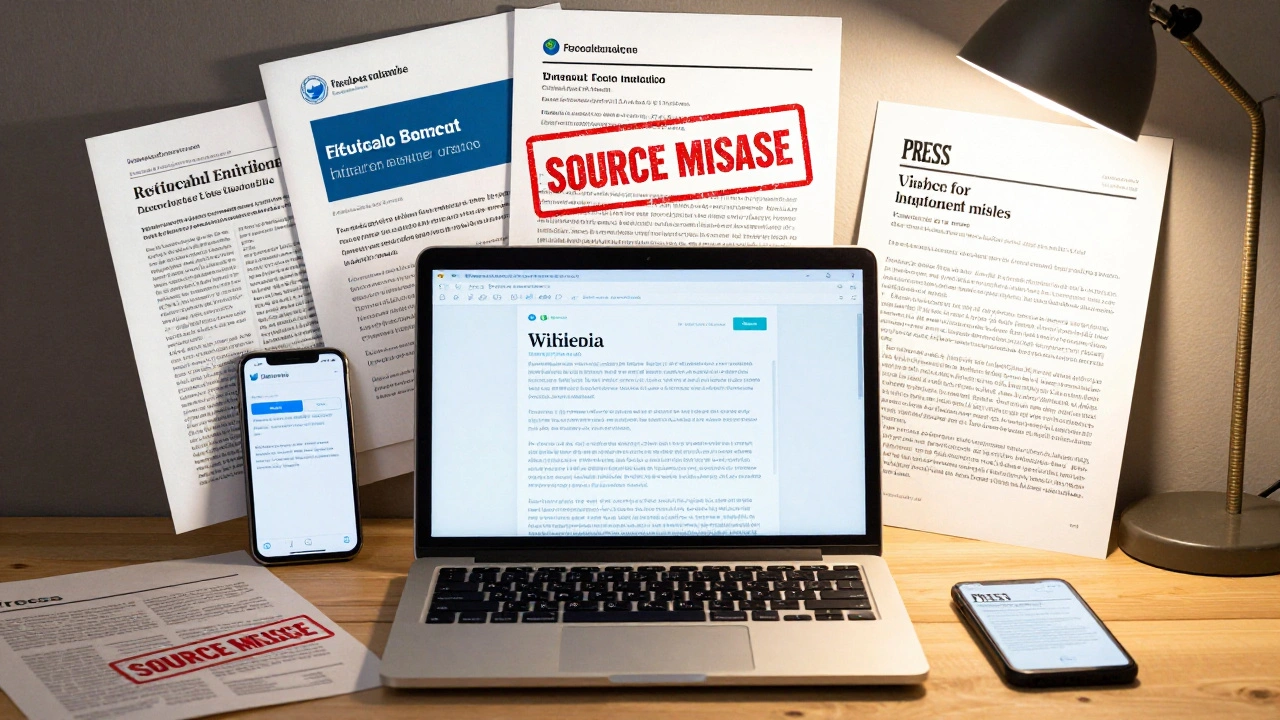
Wikipedia is one of the most visited websites in the world, but not every article you read is built on solid ground. A lot of the misinformation you might stumble across doesn’t come from lies-it comes from source misuse. Editors use sources that look official but aren’t reliable, cite outdated studies, or treat blogs like peer-reviewed journals. These mistakes are common, easy to make, and they quietly undermine the trust people have in Wikipedia. The good news? Most of them are simple to fix once you know what to look for.
What Makes a Source Reliable on Wikipedia?
Wikipedia doesn’t ban any type of source outright. Instead, it uses a hierarchy of reliability. At the top are academic journals, books from university presses, and major news outlets like The New York Times, BBC, or Reuters. These have editorial oversight, fact-checking, and peer review. Below them come reputable magazines like The Economist or Scientific American, and then established organizations like the World Health Organization or the U.S. Census Bureau.
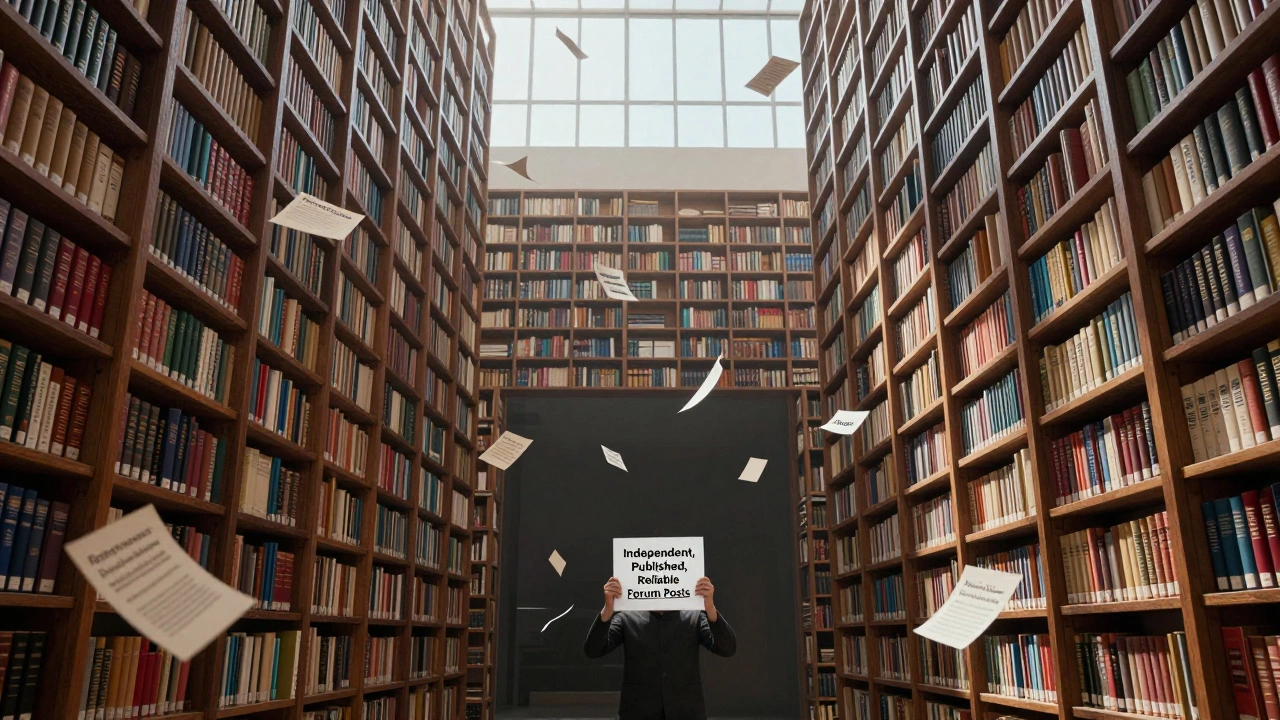
But here’s where things go wrong. Many editors pick sources based on convenience, not credibility. A blog post from a professor’s personal website? It’s not the same as their published paper. A press release from a tech startup? That’s marketing, not evidence. A forum thread on Reddit? It’s not a source-it’s noise. Wikipedia’s policy says sources must be independent, published, and reliable. If it doesn’t meet all three, it shouldn’t be used.
Common Source Misuse Errors
- Using self-published sources - This includes personal blogs, LinkedIn articles, or YouTube videos. Even if the person is an expert, their personal platform isn’t a verified source. A 2023 study of 5,000 Wikipedia edits found that 17% of questionable citations came from self-published material.
- Citing non-neutral outlets - Sources with clear bias, like partisan news sites or advocacy groups, are acceptable only if they’re used to describe the group’s own views-not as proof of fact. For example, quoting Breitbart on immigration policy is fine if you’re describing Breitbart’s stance. It’s not fine if you’re using it to claim facts about immigration rates.
- Over-relying on secondary sources - Wikipedia isn’t a place for summaries of summaries. If you’re citing a news article that’s summarizing a study, and that study is behind a paywall, you should try to find the original. If you can’t, say so. “According to a 2021 article in The Guardian, researchers found X” is better than “The Guardian says X is true.”
- Using outdated sources - A 2008 study on smartphone usage is useless today. Technology, medicine, and public opinion change fast. Wikipedia’s guideline is simple: if the source is more than five years old and the topic is fast-moving (like AI, health, or social media), it needs a newer citation to back it up.
- Misinterpreting sources - This is sneaky. An editor might quote a study saying “coffee consumption is linked to lower risk of liver disease,” then write “coffee prevents liver disease.” That’s not what the study said. Misrepresentation like this happens in about 12% of disputed edits, according to a 2024 analysis by the Wikimedia Foundation.
How to Spot Bad Sources
Here’s a quick mental checklist you can use before adding any citation:
- Who published it? Is it a university, government agency, or major news outlet? Or is it a personal website, a company blog, or a forum?
- Is it peer-reviewed? For scientific claims, peer-reviewed journals are the gold standard. If it’s not, ask: is there another source that confirms this?
- Is it independent? Does the source have a financial or ideological interest in the claim? A pharmaceutical company’s press release about its new drug? That’s not neutral.
- When was it published? Is it recent enough for the topic? For tech or health, five years is the max. For history or law, older sources can be fine-but still need context.
- Can you verify it? If the source is behind a paywall, can you find a free summary or quote from a reputable outlet that references it?
If you can’t confidently answer yes to all five, find another source.
How to Fix Source Misuse
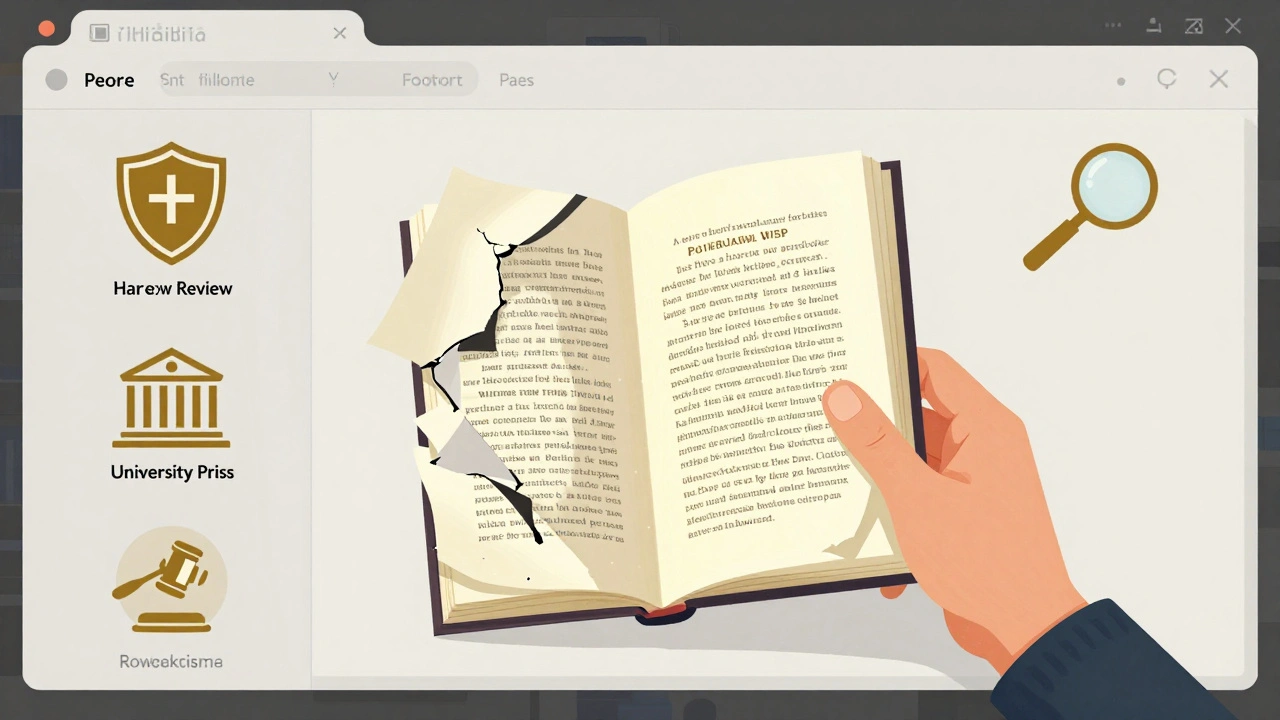
Fixing bad sources isn’t about deleting content-it’s about replacing weak evidence with strong evidence.
- Replace self-published sources - If someone cites a professor’s blog, look for their academic papers. Use Google Scholar, university repositories, or PubMed. If they’ve written a book, cite that instead.
- Upgrade outdated citations - Found a 2010 source on social media trends? Search for the same topic in journals from 2020 onward. Use the Wayback Machine to see if older versions of a source still exist-but don’t rely on them unless they’re the only option.
- Clarify biased sources - If you must use a partisan outlet, rephrase the sentence to show it’s their perspective. Instead of “Climate change is a hoax,” write “Some conservative media outlets have called climate change a hoax.”
- Use primary sources when possible - If you’re writing about a law, link to the actual statute. If you’re citing a statistic, go to the original government dataset. Wikipedia’s citation guidelines encourage this.
- Tag problematic edits - If you’re not ready to fix it yourself, use Wikipedia’s {{citation needed}} template. It alerts other editors without deleting content.
Real-World Examples
One well-known case was the Wikipedia article on COVID-19 treatments. In early 2021, dozens of edits added claims about ivermectin as a cure, citing blog posts and non-peer-reviewed preprints. These edits were removed within days after editors replaced them with citations from the World Health Organization and peer-reviewed clinical trials. The lesson? Popularity doesn’t equal reliability.
Another example: a Wikipedia page on a U.S. political figure once cited a tweet as evidence of a policy position. The tweet was deleted, but the edit remained for months. Someone later replaced it with a direct quote from an official press release. The tweet was gone, but the fact lived on-because it was backed by a trustworthy source.
Why This Matters
Wikipedia isn’t just a website. It’s the first place millions of students, journalists, and professionals look for facts. When a source is misused, it doesn’t just affect one article-it affects how people understand the world. A 2025 survey by Pew Research found that 68% of U.S. adults trust Wikipedia for basic facts, even more than traditional encyclopedias. That trust depends on consistent, careful sourcing.
Fixing source misuse isn’t about being a perfectionist. It’s about protecting the integrity of public knowledge. Every time you replace a blog with a journal, or a tweet with a government report, you’re helping Wikipedia stay accurate. And that’s not just good editing-it’s good citizenship.
What to Do Next
If you edit Wikipedia, start small. Pick one article you care about and go through its citations. Replace one bad source. Use the View history tab to see what changed before. Talk to other editors in the talk section-most are happy to help. You don’t need to be an expert. You just need to care enough to check.
And if you’re just reading? Be skeptical. If a claim seems too bold, check the citation. Click it. Read the source. If it’s a blog, a press release, or a forum post, question it. Wikipedia’s strength isn’t that it’s perfect-it’s that it’s open to correction. And you can be part of that.
Can I use Wikipedia as a source in my own research?
No, you shouldn’t cite Wikipedia directly in academic or professional work. It’s a summary of sources, not a source itself. Instead, use the references listed at the bottom of a Wikipedia article. Find the original book, journal, or report, and cite that. Wikipedia is a great starting point-but never the end point.
What if I can’t find a better source than a blog or forum?
If you can’t find a reliable source, don’t include the claim. Wikipedia’s policy is clear: no original research, and no unverified information. It’s better to leave something out than to include something questionable. You can add a note in the article’s talk page saying, “This claim needs a better source,” and invite others to help find one.
Are government websites always reliable?
Most are, but not all. Government press releases are often promotional. Look for official data portals like data.gov, cdc.gov, or eurostat.eu. These publish raw data, reports, and statistics with clear methodologies. Avoid citing press releases unless they’re quoting an official report or study.
How do I know if a journal is peer-reviewed?
Check the journal’s website. Most peer-reviewed journals state this clearly. You can also use databases like PubMed, Scopus, or DOAJ (Directory of Open Access Journals). If a journal isn’t listed in any of these and doesn’t explain its review process, treat it with caution-even if it looks professional.
Can I use sources in languages other than English?
Yes, as long as they’re reliable. A peer-reviewed article in French from a respected university press is perfectly valid. The key is the source’s credibility, not the language. If you’re unsure, ask for help on the article’s talk page or use translation tools to verify the claim against English sources.
Final Thought
Wikipedia’s power comes from its community. It’s not run by experts in a lab-it’s run by people like you who care enough to check a link, question a claim, or replace a blog with a study. That’s how it stays useful. And that’s how it stays trusted.