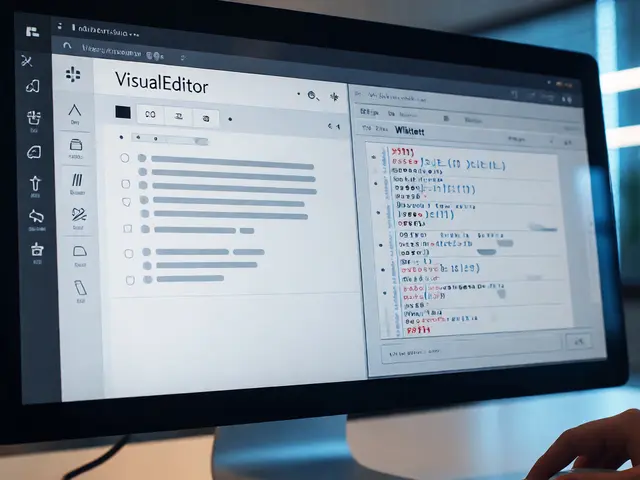
Half the world’s population has never searched Wikipedia. Not because they don’t need information - but because the information they need doesn’t exist there. This isn’t about slow internet or outdated phones. It’s about something deeper: global knowledge equity. The knowledge we treat as universal - the facts, histories, and expertise stored in digital libraries - is built mostly by and for a tiny slice of the world. If you speak English, live in a city, and have a university education, you’re part of the 15% who shape what the rest of the world can find. The rest? They’re left with gaps - silent, invisible, and growing.
Why Knowledge Isn’t Equal
Knowledge equity isn’t just about access. It’s about representation. Wikipedia has over 60 million articles, but 70% of them are in just five languages: English, German, French, Spanish, and Japanese. That leaves over 7,000 spoken languages out in the cold. A farmer in rural Nepal might need to know how to treat a common crop disease. But if the only available guide is in English, written by a researcher in California, it’s useless. The same goes for Indigenous healing practices, local legal systems, or traditional ecological knowledge. None of it shows up in search results because no one wrote it - or worse, because it was deemed "not notable" by editors who’ve never heard of it.
Even when content exists, it’s often buried. A study from the University of Cape Town found that articles about African history and culture are 40% less likely to be linked to from other Wikipedia pages than similar topics in Europe. That means even if you type in the right search term, you won’t find it - because the system doesn’t think it matters.
The Hidden Cost of Missing Voices
When knowledge gaps exist, they don’t stay empty. They get filled with misinformation. In parts of Southeast Asia, where there’s little local-language content on vaccines, false claims about side effects spread faster than facts. In sub-Saharan Africa, where maternal health resources are scarce, women rely on unverified social media posts - and many die because of it. The problem isn’t ignorance. It’s absence.
And it’s not just developing regions. Indigenous communities in Canada, Australia, and the U.S. have been excluded from mainstream knowledge systems for centuries. Their oral histories, land management practices, and medicinal plant knowledge are treated as folklore - not data. Meanwhile, universities and tech companies harvest this knowledge without permission, profit, or credit. The result? A system that extracts culture but refuses to preserve it.
Strategies That Actually Work
Fixing this isn’t about more servers or faster Wi-Fi. It’s about changing who writes, who decides, and who benefits. Here’s what’s already working - and what needs to scale.
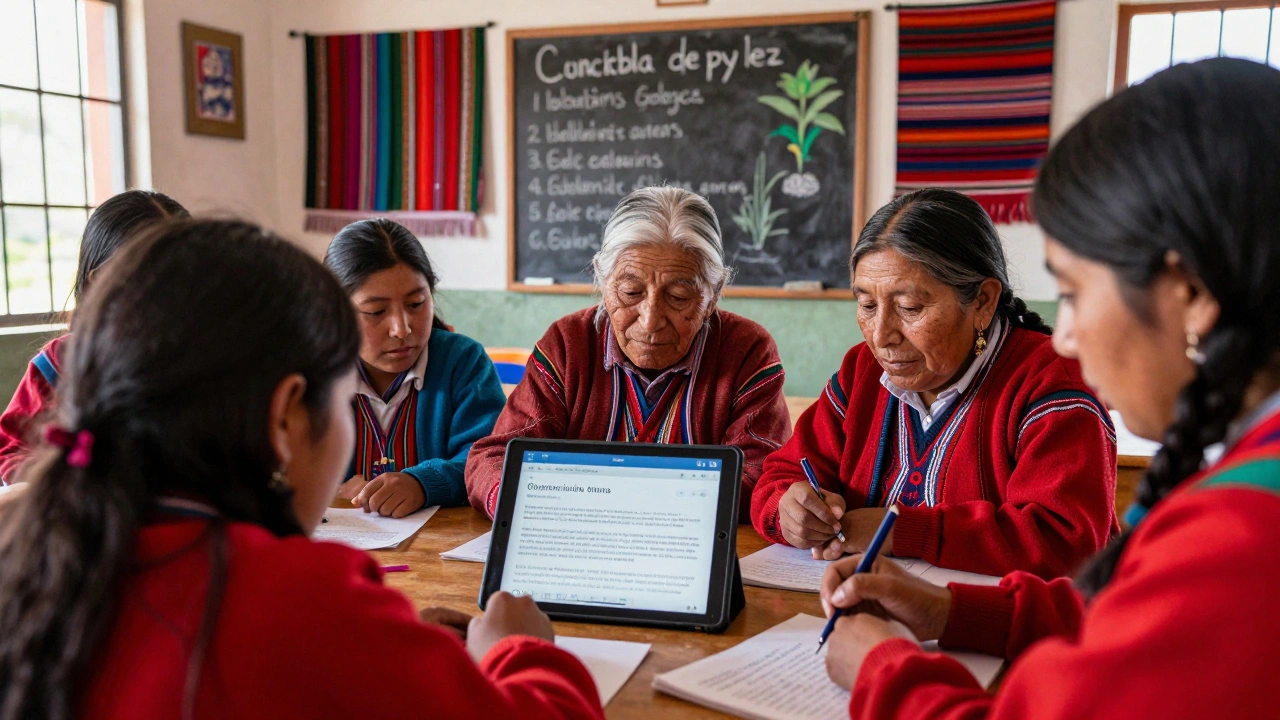
- Community-led knowledge hubs: In Bolivia, Quechua-speaking educators trained over 2,000 students to create Wikipedia articles in their language. They didn’t wait for outsiders. They started with local libraries, elders, and school curricula. Today, their wiki has 12,000 articles - on everything from traditional weaving patterns to climate adaptation.
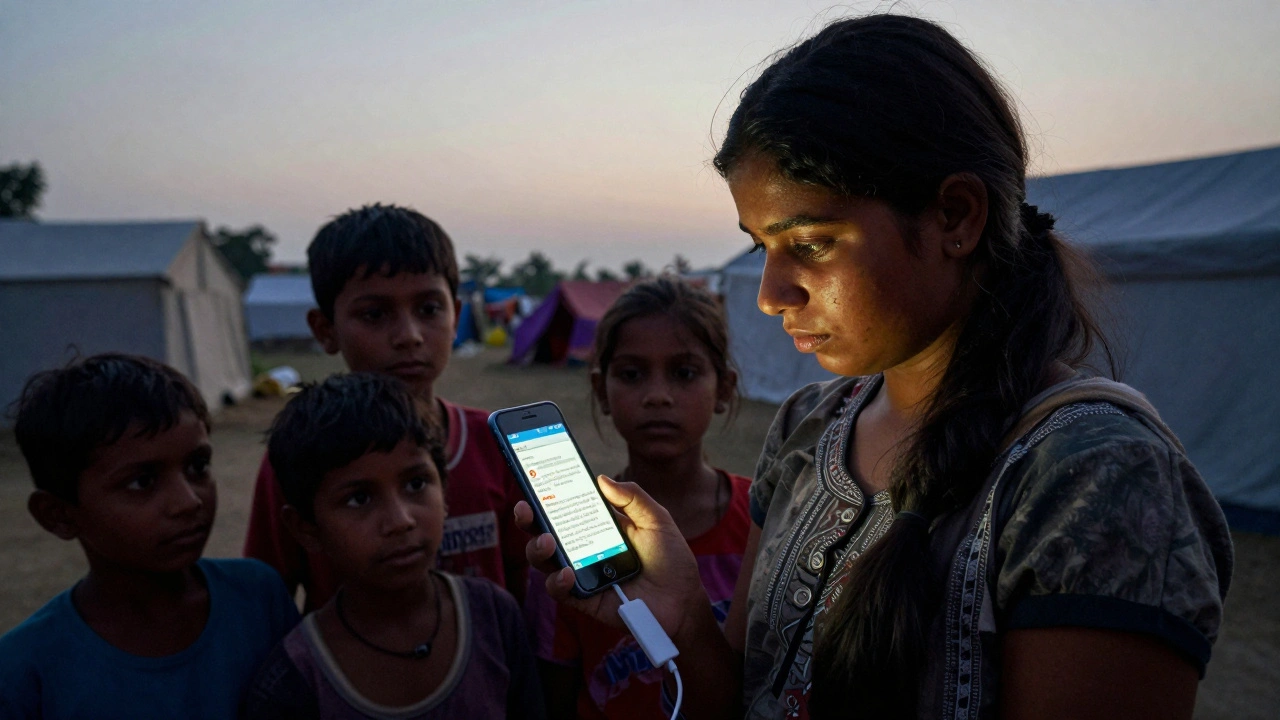
- Mobile-first, low-bandwidth tools: The Kiwix project lets users download entire Wikipedia libraries onto USB drives or offline apps. In refugee camps in Jordan and Bangladesh, thousands use these offline packs because the internet is too slow or too expensive. No login. No subscription. Just knowledge.
- Language justice in AI training: Most AI models like ChatGPT are trained on English, Chinese, and a handful of European languages. But projects like Masakhane are training African language models using local data - not translated English. A Swahili-speaking student can now ask an AI about ancient trade routes in East Africa - and get an answer that doesn’t sound like it was written by a Harvard professor.
- Revising "notability" rules: Wikipedia’s guidelines once said a topic needed to be covered in three independent sources. That blocked local history, community events, and Indigenous knowledge. Now, some language editions allow "community significance" as a valid criterion. In Ghana, a local festival that only appeared in three community newsletters is now a fully sourced Wikipedia page.
Who’s Left Behind - And Why
The biggest barrier isn’t technology. It’s power. Who gets to decide what counts as knowledge? For decades, the answer was: people with degrees from Western universities. That’s why Wikipedia’s editing community is 85% male and 70% from North America and Europe. A woman in Lagos trying to add a page about her grandmother’s herbal remedies gets reverted because "there’s no citation in a peer-reviewed journal." But peer-reviewed journals don’t document oral traditions. They don’t record village-level farming techniques. They don’t care about what happens outside the academy.
And when volunteers from wealthier countries "help" by translating content, they often miss the point. A translation of a U.S. medical article into Tagalog doesn’t help a Filipino farmer - because the advice was written for a climate, soil, and healthcare system that doesn’t exist there. Knowledge isn’t transferable. It’s contextual.
What Needs to Change
Here’s the hard truth: we can’t fix global knowledge equity with charity. We need structural change.
- Redirect funding: Less than 2% of global digital literacy funding goes to non-English knowledge projects. That needs to flip. Governments and foundations should require that 30% of public education tech grants go to local-language content creation.
- Recognize oral knowledge as valid: Universities and archives must accept audio interviews, community storytelling, and ritual demonstrations as legitimate sources - not just PDFs and journal articles.
- Empower local editors: Every major knowledge platform should have paid local coordinators in every country. Not volunteers. Not interns. Full-time roles with training, stipends, and authority to override global policies when they don’t fit local context.
- Build decentralized archives: Not every library needs to be on Wikipedia. Local servers, blockchain-based archives, and community-owned databases can preserve knowledge without relying on Silicon Valley platforms.
The Future Is Local
The most promising change isn’t happening in boardrooms or tech labs. It’s happening in village halls, refugee tents, and schoolyards. In Malawi, a group of teenage girls started a WhatsApp group to share study notes in Chichewa. Within a year, they turned it into a wiki with 300 pages on science, history, and health. No one funded them. No one asked. They just started.
That’s the model. Knowledge equity isn’t about giving people access to our content. It’s about trusting them to build their own - and then making space for it.
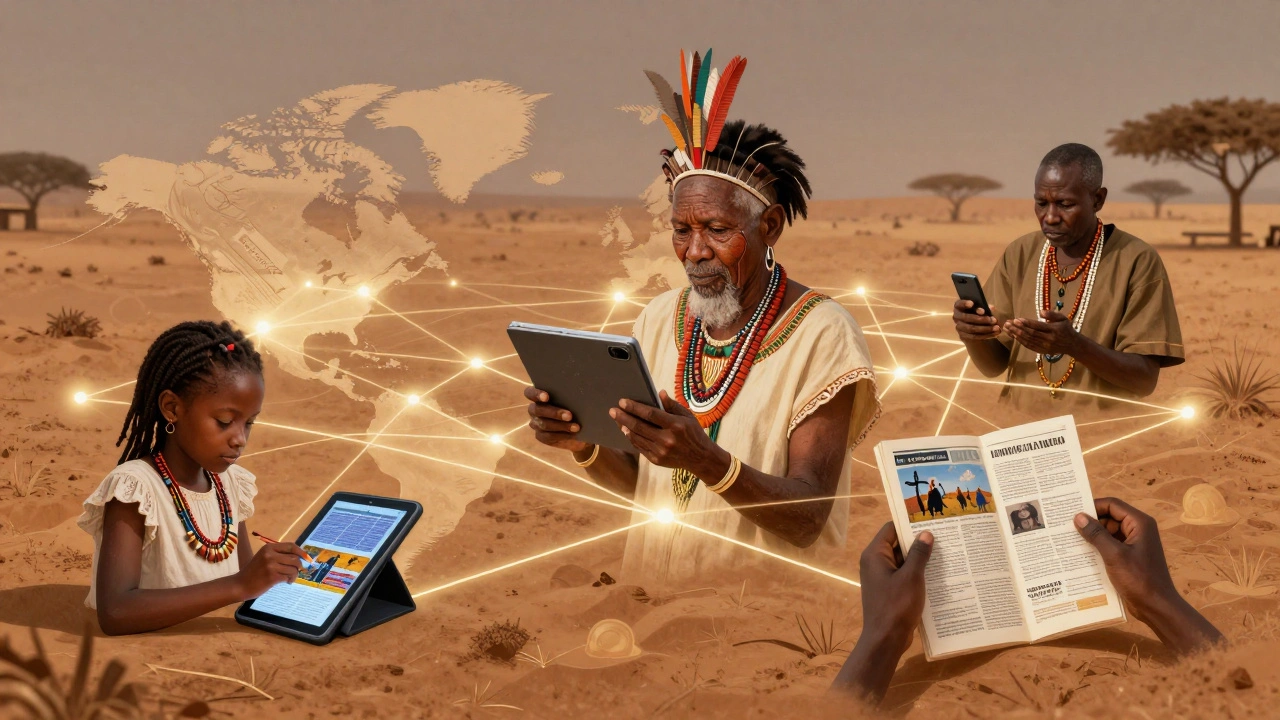
When a farmer in Kenya can search for the best time to plant maize and find an answer written by another farmer - not a university in Germany - that’s not progress. That’s justice.
Why isn’t Wikipedia more inclusive?
Wikipedia was built by volunteers from a small set of countries, mostly with access to universities and English-language education. Its rules - like requiring citations from academic journals - were designed for Western contexts. This excludes oral traditions, local media, and non-Western knowledge systems. Even when content exists, it’s often ignored because the editing community doesn’t recognize its value.
Can AI help close the knowledge gap?
AI can help - but only if it’s trained on real local data. Most AI models use English and European sources, so they repeat the same biases. Projects like Masakhane are training AI on African languages using community-generated texts, not translations. That’s how AI becomes useful: when it learns from the people it’s meant to serve.
What’s the biggest obstacle to global knowledge equity?
Power. The people who control digital knowledge platforms - from Wikipedia to Google - are mostly from wealthy, English-speaking countries. They set the rules, decide what’s "notable," and control funding. Until local communities gain real authority over their own knowledge systems, gaps will stay wide.
Are offline knowledge tools effective?
Yes - and they’re critical. In places with poor internet, like refugee camps or remote villages, offline tools like Kiwix let people access entire libraries without connection. A single USB drive can hold Wikipedia in 10 languages. For many, it’s the only reliable source of medical, legal, or educational info they’ll ever have.
How can I support global knowledge equity?
Start by learning what knowledge is missing in your region. If you speak multiple languages, help translate local content. Support organizations that train local editors. Donate to projects building offline libraries. And most importantly - stop assuming your knowledge is universal. Ask: who’s not here? And why?
Knowledge isn’t a resource to be distributed. It’s a right to be claimed.