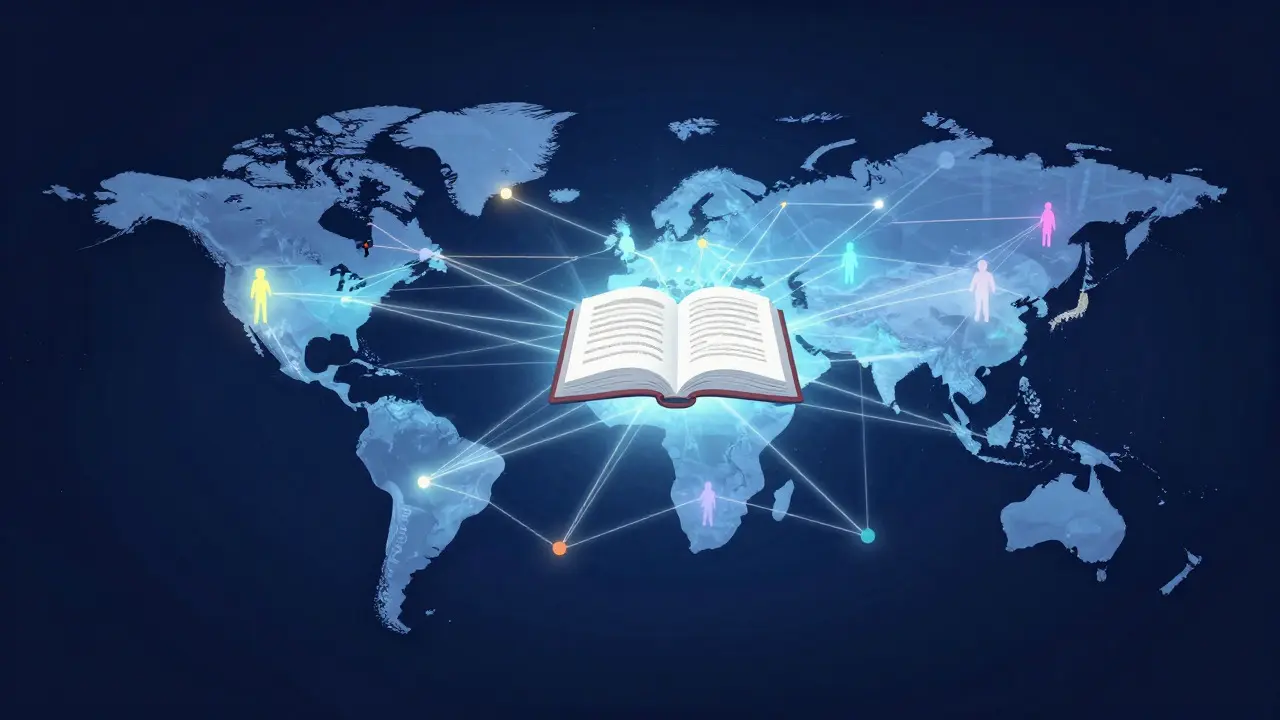
Imagine a world where every person on Earth can access reliable information in their native tongue. That is the core promise of Multilingual Wikipedia, a global network of encyclopedic projects that aims to provide free, editable knowledge in over 300 languages. While the main English-language version gets most of the attention, the real engine behind this massive expansion lies in local communities. These are not just random editors; they are organized structures known as affiliates and user groups that bridge the gap between a global platform and local cultural contexts.
The growth of non-English Wikipedias has been exponential, but it is rarely accidental. It happens because specific people organize themselves to solve specific problems: lack of translators, need for local verification standards, or simply the desire to preserve indigenous history. Understanding how these groups function reveals why some language editions thrive while others stagnate.
The Structural Backbone: Affiliates vs. User Groups
To understand the ecosystem, you first need to distinguish between the two main types of organizations working under the Wikimedia Foundation umbrella. They have different legal statuses, budgets, and goals, yet they often work side-by-side.
Affiliates are legally independent organizations that have a formal agreement with the Wikimedia Foundation. Think of them as the professional arms of the movement. They handle large-scale fundraising, grant management, and policy advocacy. Examples include Wikimedia Germany (Wikimedia Deutschland) or Wikimedia UK. Because they are legal entities, they can sign contracts, hire staff, and hold significant assets. Their focus is often broad: improving the technical infrastructure, supporting multiple language editions, and ensuring long-term sustainability.
User Groups, on the other hand, are informal collectives of users who share a common interest. They do not have separate legal identities from the individual members. A "User Group" might be focused on a specific topic (like History or Science), a specific demographic (like Students or Teachers), or a specific geographic region (like a city chapter). For multilingual growth, the most critical user groups are those focused on specific languages or regions. They act as the grassroots layer, mobilizing volunteers for editing marathons, training new contributors, and creating content that resonates locally.
| Feature | Affiliates | User Groups |
|---|---|---|
| Legal Status | Independent legal entity | No separate legal identity |
| Primary Function | Fundraising, Grants, Policy | Community Mobilization, Events |
| Scope | National or International | Local, Thematic, or Linguistic |
| Resource Control | Direct control over budget | Applies for grants via Foundation/Affiliates |
| Example | Wikimedia India | Sanskrit Wikipedia Community |
Why Local Context Matters for Content Quality
You might wonder why a global team couldn't just translate articles from English to other languages. The answer is simple: translation alone does not equal localization. When a user group dedicated to the Swahili Wikipedia creates an article about East African agriculture, they aren't just translating terms. They are verifying facts against local sources, using culturally appropriate idioms, and structuring the narrative in a way that makes sense to a local reader. This process ensures that the encyclopedia feels like *their* encyclopedia, not a foreign import.
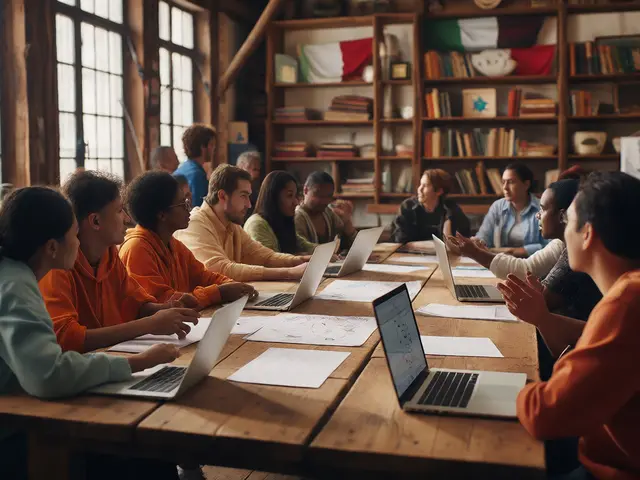
This local ownership drives retention. If a speaker of Bengali sees that their neighborhood landmarks, local poets, and regional festivals are documented with care by fellow Bengalis, they are far more likely to contribute than if the content was generated by an automated tool or a distant editor. User groups facilitate this by organizing "Wiki Loves Monuments" events or "Edit-a-thons" specifically tailored to local heritage. These events lower the barrier to entry for new editors who might feel intimidated by the complexity of the software but feel comfortable in a supportive, peer-led environment.

The Role of Technology and Interlanguage Links
Growth isn't just about writing new articles; it's about connecting existing ones. This is where the concept of Interlanguage Links becomes vital. Every article on one language edition can be linked to its equivalent on another. For example, an article on "The Great Wall of China" on the Chinese Wikipedia links to the French, Spanish, and Arabic versions. This creates a web of knowledge that allows readers to jump between languages seamlessly.
User groups play a crucial role in maintaining these links. Often, a new article is created in a major language like English, but the corresponding article in a smaller language like Korean doesn't exist yet. A Korean user group member might spot this gap, create the missing article, and link it back. This cross-pollination accelerates growth across all editions. Furthermore, affiliates often fund the development of tools that make this easier. For instance, the Translation Editor tool helps editors see the source text side-by-side with their target text, reducing the cognitive load of switching between languages. Without such tools, the friction of multilingual editing would be too high for casual contributors.
Challenges in Expanding to Low-Resource Languages
Not all languages start on equal footing. High-resource languages like English, German, and French have millions of speakers, robust digital infrastructure, and large pools of potential editors. Low-resource languages, such as many Indigenous languages or smaller regional tongues, face significant hurdles. The biggest challenge is often not motivation, but infrastructure. Do enough people speak the language digitally? Is there a standard keyboard layout? Are there enough reliable online sources in that language to verify facts?
User groups addressing these challenges often act as pioneers. For example, the community behind the Hawaiian Wikipedia had to work closely with linguists to establish orthographic standards before mass editing could begin. Similarly, the Quechua Wikipedia project relies heavily on oral history recordings being transcribed and verified by elders in the community. These efforts require patience and specialized funding, which is where the partnership between user groups and affiliates becomes essential. Affiliates can secure larger grants from international donors, while user groups ensure the funds are spent on the right local priorities.

Measuring Success Beyond Article Counts
When we talk about growth, we usually think of numbers: how many articles, how many editors, how many views. But for multilingual Wikipedia, these metrics tell only part of the story. A language edition with 10,000 articles written by 50 active editors is less sustainable than one with 5,000 articles written by 500 active editors. Diversity of contributors is a key health indicator. If a user group successfully recruits teachers, students, and professionals into the editing fold, the project gains resilience. Even if the initial organizers move on, the community remains active.
Another metric is the depth of coverage. Does the edition cover topics relevant to its speakers? A strong multilingual strategy ensures that local news, local science, and local culture are represented. This is often tracked through "Gaps" analysis, where tools identify topics that are well-covered in English but missing in other languages. User groups then prioritize filling these gaps based on community interest. This approach shifts the focus from "how much do we have?" to "what do we need?", making the growth more meaningful and useful to the end-user.
Future Directions: AI and Community Synergy
As we look toward 2026 and beyond, the role of artificial intelligence is becoming increasingly prominent. Machine translation has improved dramatically, raising questions about whether human editors are still needed. The consensus within the Wikimedia community is that AI is a tool, not a replacement. AI can draft a rough translation, but human user groups provide the necessary context, nuance, and fact-checking. The future of multilingual growth likely involves a hybrid model where AI handles the heavy lifting of basic translation, freeing up human editors to focus on complex topics, local verification, and community building.
Furthermore, the structure of affiliation is evolving. We are seeing more regional affiliates forming to serve clusters of languages rather than single nations. This allows for better resource sharing among neighboring countries with similar linguistic needs. For instance, an affiliate serving the Balkans might support Serbian, Croatian, and Bosnian Wikipedias simultaneously, leveraging shared historical sources and editorial standards. This efficiency is crucial for sustaining growth in a competitive digital landscape where attention spans are short and alternatives abound.
What is the difference between a Wikimedia Affiliate and a User Group?
An Affiliate is a legally independent organization with a formal contract with the Wikimedia Foundation, capable of holding assets and hiring staff. A User Group is an informal collective of users without separate legal status, focusing primarily on community activities and event organization.
Why are user groups important for small language Wikipedias?
Small language Wikipedias often lack large volunteer bases. User groups provide the social structure, mentorship, and localized motivation needed to recruit and retain editors. They also help establish local editorial standards and connect the project with offline institutions like schools and libraries.
How do interlanguage links contribute to multilingual growth?
Interlanguage links connect articles across different language editions. They allow readers to switch languages easily and highlight content gaps. By linking a well-developed English article to a missing French article, for example, editors are prompted to create the missing piece, thereby expanding the French edition.
Can machine translation replace human editors in Wikipedia?
No, machine translation is viewed as a supplementary tool. While it can speed up the initial drafting process, human editors are essential for adding cultural context, verifying facts against local sources, and ensuring the tone and style are appropriate for the target audience.
What are some examples of successful multilingual user groups?
Examples include the Sanskrit Wikipedia community, which revitalized ancient language content, and the Quechua Wikipedia project, which focuses on preserving Indigenous oral histories. Both demonstrate how targeted user groups can drive growth in low-resource languages through dedicated local effort.