
Wikipedia is often called the world’s largest encyclopedia, but it is also a massive social experiment. Millions of people edit millions of pages every day. Who are these people? What are they arguing about? Which articles are improving, and which ones are rotting? To answer these questions, you don’t need to guess. You just need to read The Signpost, the weekly news magazine of the Wikipedia community.
The Signpost doesn't just report news; it digs into the numbers. It uses on-wiki data-information generated directly by edits, talk pages, and user profiles-to create community analytics that reveal how the project actually works. This isn't corporate marketing fluff. It's raw, open-data journalism.
The Source: Mining the MediaWiki Database
To understand how The Signpost curates its data, you first have to understand where that data lives. Unlike Facebook or Google, which keep their user data locked behind firewalls, Wikipedia runs on MediaWiki, the free and open-source wiki software that powers Wikipedia. Every time someone clicks "save," a record is created in the database.
This creates a transparent trail. The Signpost writers access this data through the Wikimedia Cloud Services (formerly Toolserver). This is a platform provided by the Wikimedia Foundation that allows volunteers to run scripts and queries against live Wikipedia databases. Instead of relying on press releases from the foundation, Signpost reporters write SQL queries to pull out exactly what they need: edit counts, deletion rates, or the frequency of specific words in article text.
This direct access means the analytics are primary sources. When The Signpost says that vandalism has increased by 15% in a certain category, they aren't citing a third-party study. They are showing you the query results. This transparency builds trust with the readership, who are mostly editors themselves and skeptical of external narratives.
Defining the Metrics: What Counts as Activity?
Data is only as good as your definitions. In the chaotic world of Wikipedia, defining "activity" is tricky. Does an edit that fixes a typo count the same as an edit that adds a sourced paragraph? The Signpost curates its analytics by establishing clear metrics before running the numbers.
Here are the core metrics The Signpost typically tracks:
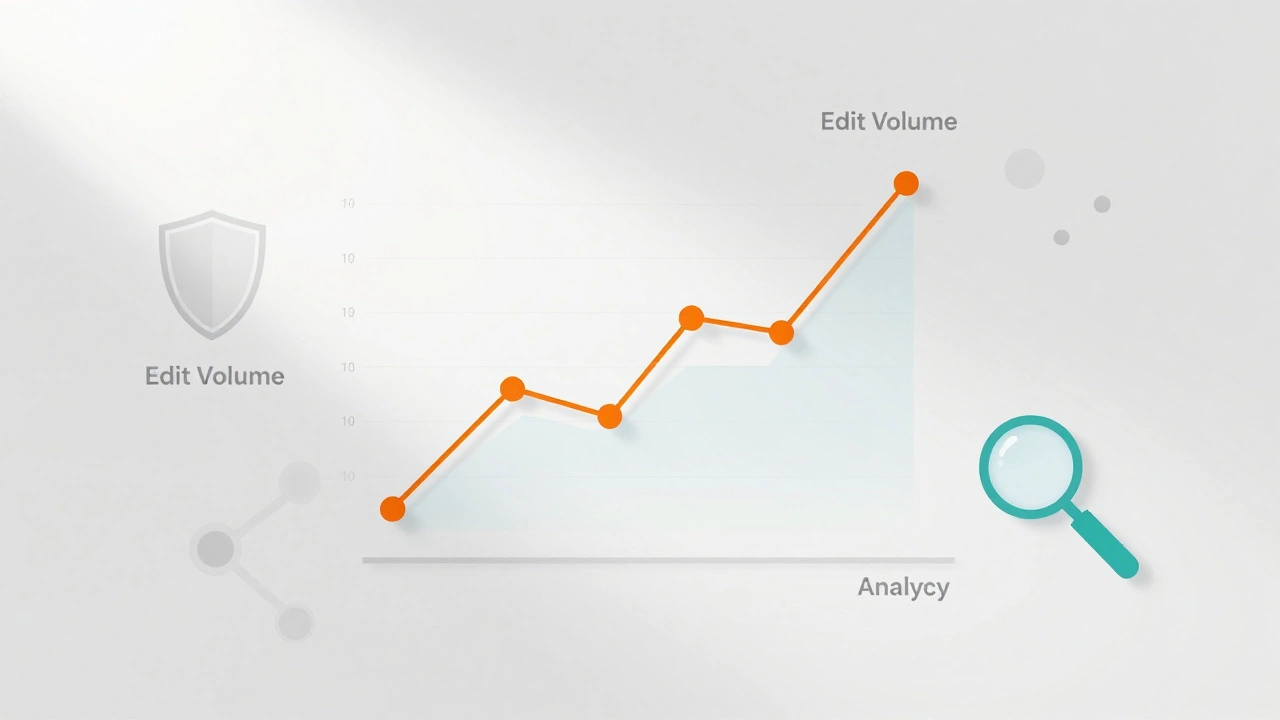
- Edit Volume: The total number of revisions made per day, week, or month. This gives a high-level view of community engagement.
- Active Editors: Usually defined as users who make at least five edits in a given period. This filters out bots and casual one-time contributors.
- New Article Creation: Tracking how many new entries are added versus how many are deleted shortly after creation.
- Administrative Actions: Counting blocks, bans, and page protections to gauge conflict levels within the community.
By sticking to these standardized metrics, The Signpost allows readers to compare trends over time. For example, if edit volume drops but active editor counts stay stable, it might mean experienced editors are doing less frequent but more substantial work. Without clear definitions, the data would be noise.
From Raw Numbers to Human Stories
A spreadsheet of numbers doesn't make for compelling reading. The real skill of The Signpost lies in translating cold statistics into human stories. This is where curation becomes editorial judgment.
Consider a spike in edits related to a current event, like an election or a natural disaster. The raw data shows a surge in activity. But The Signpost digs deeper. They analyze who is editing. Are it seasoned veterans? Or are it newcomers rushing to update facts? They look at the quality of those edits. Is the article becoming more neutral, or is it devolving into a battleground for biased viewpoints?
This approach turns analytics into narrative. Instead of saying "Edits increased by 40%," a typical Signpost article might say, "During the recent crisis, thousands of new editors joined forces to document the events, though this influx also brought challenges in maintaining neutrality." This contextualization helps the community understand not just what happened, but why it matters.

The Role of Bots and Automation
You can't talk about Wikipedia data without talking about bots. Automated accounts perform millions of edits daily, fixing links, updating templates, and removing spam. If you include bot activity in your analytics without labeling it, your data will be skewed.
The Signpost carefully separates human edits from bot edits. This distinction is crucial for accurate community analytics. A sudden drop in "human" edits might signal burnout or disinterest among volunteers, while a rise in bot activity might indicate improved maintenance tools. By filtering out automation, The Signpost provides a clearer picture of actual human participation.
This separation also highlights the efficiency of the community's technical infrastructure. When bots handle routine maintenance, human editors can focus on complex tasks like writing original content or resolving disputes. The Signpost often features articles explaining how specific bots operate, demystifying the automated side of the encyclopedia.
Visualizing the Trends
Data visualization is another key part of The Signpost's curation strategy. Text-heavy tables are hard to digest. Charts and graphs make trends immediately apparent.
The Signpost frequently uses line graphs to show long-term trends, such as the decline in new editor registrations over the past decade. Bar charts help compare different language editions of Wikipedia, showing how English Wikipedia differs from German or Japanese versions in terms of growth and stability. These visuals are usually generated using tools like Python with libraries like Matplotlib or Seaborn, or specialized wiki-tools designed for statistical analysis.
By making the data visual, The Signpost lowers the barrier to entry. Readers who aren't comfortable with SQL queries or statistical jargon can still grasp the big picture. This inclusivity strengthens the community by ensuring that everyone, regardless of technical skill, can participate in discussions about the health of the project.
Impact on Policy and Community Health
Why does all this matter? Because data drives policy. When The Signpost publishes an analysis showing that new editors are being blocked at disproportionately high rates, it sparks conversation. Administrators review their practices. New guidelines are proposed. Tools are developed to better welcome newcomers.
This feedback loop is essential for the sustainability of Wikipedia. The community relies on self-regulation. There is no central boss telling editors what to do. Instead, collective decisions are made based on evidence. The Signpost provides that evidence. Its analytics serve as a mirror, reflecting the community back to itself, highlighting both strengths and weaknesses.
For instance, if data shows that articles about women scientists are consistently shorter or lower quality than those about men, the community can launch targeted campaigns to address the gap. The Signpost has played a role in documenting these disparities, helping to mobilize efforts to improve coverage.
Challenges in Data Curation
It's not always smooth sailing. Working with on-wiki data comes with challenges. One major issue is privacy. While Wikipedia is public, aggregating data about individual users can raise ethical concerns. The Signpost adheres to strict guidelines to avoid doxxing or harassing editors. They focus on aggregate data rather than singling out individuals unless there is a significant public interest reason.
Another challenge is data completeness. Not everything happens on-wiki. Discussions often spill over to email lists, Discord servers, or offline meetups. The Signpost acknowledges these blind spots. They remind readers that on-wiki data captures only part of the story. This honesty adds credibility to their reporting.
Technical limitations also exist. Running complex queries on massive databases can be slow or resource-intensive. Sometimes, the data needs cleaning before it can be analyzed. Editors must account for anomalies, such as server outages or mass-imports of content, which can distort short-term trends.
| Feature | Internal (On-Wiki) Data | External (Traffic) Data |
|---|---|---|
| Source | MediaWiki Database | Google Analytics / Internet Archive |
| Focus | Editor behavior, content changes | Reader traffic, bounce rates |
| Access | Open via Wikimedia Cloud Services | Limited or aggregated |
| Use Case | Community health, policy decisions | Marketing, impact assessment |
| Privacy Risk | Low (aggregate focus) | Medium (user tracking) |
Conclusion: The Power of Open Data Journalism
The Signpost demonstrates the power of open data journalism. By leveraging the transparency of Wikipedia's infrastructure, it provides insights that are impossible to get elsewhere. It empowers the community to make informed decisions, hold leaders accountable, and celebrate successes.
For anyone interested in how large-scale collaborative projects function, The Signpost offers a masterclass in data curation. It shows that when you combine rigorous methodology with empathetic storytelling, data becomes more than just numbers. It becomes a tool for understanding and improving our shared knowledge.
What is The Signpost?
The Signpost is a weekly news magazine published on Wikipedia. It covers news, opinions, and analyses related to Wikipedia and other Wikimedia projects. It is written by volunteers and serves as a hub for community discussion and information sharing.
Where does The Signpost get its data?
The Signpost primarily uses on-wiki data from the MediaWiki database. This data is accessed through Wikimedia Cloud Services, allowing volunteers to run queries and extract statistics about edits, users, and page histories.
Can I access Wikipedia data myself?
Yes. The Wikimedia Foundation provides open access to its databases through Wikimedia Cloud Services. You can sign up for an account, learn SQL, and start querying the data yourself. There are also various APIs available for programmatic access.
Why is separating bot edits important?
Bots perform millions of automated edits daily. If included in general activity metrics, they can skew the data, making it seem like there is more human engagement than there actually is. Separating them allows for a more accurate assessment of volunteer participation.
How does The Signpost protect user privacy?
The Signpost focuses on aggregate data rather than individual user behavior. They avoid publishing information that could identify specific editors unless it is relevant to a significant public interest story. Ethical guidelines are strictly followed to prevent harassment or doxxing.