Imagine you’re writing a breaking news story about a new climate policy. You need a quick, verifiable baseline on the history of similar regulations from the 1990s. You type into Wikipedia is a free online encyclopedia that serves as a primary reference tool for millions of journalists worldwide. It’s fast. It’s cited. But it’s also editable by anyone. For decades, this dynamic created tension. Reporters feared inaccuracy; editors feared bias. Today, that relationship has shifted from suspicion to strategic partnership. This shift isn’t just about fixing typos. It’s about building a shared infrastructure for truth in an era where information moves faster than verification.
The Shift from Adversarial to Collaborative
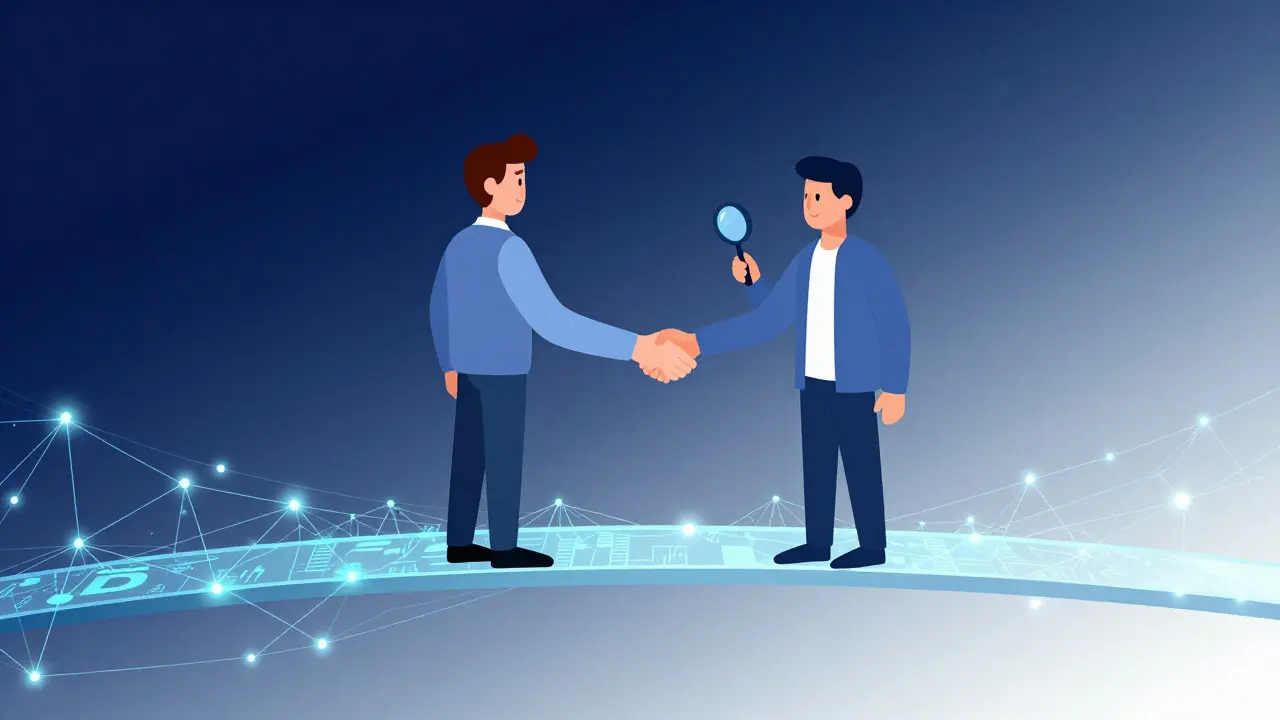
Historically, the wall between professional journalism and citizen editing was high. Newsrooms viewed Wikipedia as a dangerous shortcut, while volunteer editors saw journalists as gatekeepers who hoarded context. That changed around 2014 when the Wikimedia Foundation launched its “Wiki Journalism” initiative, explicitly inviting newsrooms to participate in content improvement rather than just consuming it. The goal was simple: if reporters are already citing these pages, they should help ensure those citations hold up under scrutiny.
This wasn’t a one-off event. It evolved into regular training sessions where veteran editors taught reporters how to read edit histories and assess source reliability. In return, journalists brought their expertise in narrative structure and legal standards for defamation. The result? A hybrid skill set. Reporters learned to distinguish between a well-sourced paragraph and a fan-fiction insert. Editors learned why a “neutral point of view” sometimes requires more nuance than a single sentence can provide.
Practical Mechanisms of Collaboration
Collaboration doesn’t happen in a vacuum. It happens through specific tools and protocols. The most effective method is the “Talk Page” strategy. Before publishing a major piece, some investigative teams now draft their key factual claims on the relevant Wikipedia Talk Page. They tag experienced editors for review. This isn’t peer review in the academic sense, but it acts as a rapid sanity check. If three independent editors agree that a claim lacks a reliable secondary source, the journalist knows they need better documentation before hitting print or post.
Another critical mechanism is the use of Citation Needed templates. These yellow tags appear next to unsourced statements. Journalists have started treating these not as annoyances, but as actionable data points. When a story relies on a statistic marked with “Citation Needed,” it signals a risk area. Some newsrooms now assign a specific “Wikipedia Liaison” whose job is to monitor these tags on topics relevant to their beat. If a tag appears on a page they frequently cite, the liaison flags it internally, prompting a deeper dive into the original sources.
- Talk Page Consultation: Using community discussions to validate complex historical or scientific claims before publication.
- Edit History Analysis: Checking who changed a fact and why, which helps identify potential vandalism or bias injection.
- Source Cross-Referencing: Comparing Wikipedia’s cited sources against the journalist’s own research to find gaps or contradictions.
Case Studies in Accuracy Improvement
Let’s look at a concrete example. In 2019, a major financial newspaper was preparing a feature on the rise of cryptocurrency regulation. Their initial draft relied heavily on a Wikipedia summary of a specific EU directive. However, during the collaborative review process, a Wikipedian pointed out that the article’s interpretation of “enforcement mechanisms” was outdated based on a recent court ruling that hadn’t yet been fully integrated into the main text. The journalist paused, verified the ruling, and rewrote the section. This prevented a significant error that would have misinformed thousands of readers about the legal landscape.
Another instance involved medical reporting. A health reporter was covering a new vaccine trial. The Wikipedia entry for the vaccine candidate had conflicting dates for Phase 2 completion due to a typo introduced by a casual editor. The reporter, trained in basic wiki literacy, spotted the discrepancy by checking the edit log. They contacted the lead editor, who corrected the date within hours. This speed of correction is impossible in traditional print cycles but essential for digital news.
Challenges and Pitfalls
It’s not all smooth sailing. The biggest hurdle remains time. Journalists work on tight deadlines, while Wikipedia edits can be reverted or debated for days. If a reporter waits for full consensus on a controversial topic, they might miss the news cycle. Therefore, successful collaborations focus on “low-hanging fruit”-factual, non-controversial details like dates, names, and biographical basics-rather than interpretive analysis.
Bias is another elephant in the room. Critics argue that Wikipedia leans toward certain political or cultural perspectives. While valid, this bias is often transparent because every change is logged. Journalists who collaborate effectively use this transparency to their advantage. Instead of accepting the current state of an article as absolute truth, they treat it as a snapshot of a debate. They ask: “What sources support this version? What sources were removed?” This turns a potential weakness into a research lead.
| Feature | Traditional Internal Review | Wiki-Collaborative Verification |
|---|---|---|
| Speed | Moderate (depends on staff availability) | Fast (global community active 24/7) |
| Scope | Limited to newsroom expertise | Global, diverse subject matter experts |
| Transparency | Closed process | Open edit history and talk pages |
| Risk | Groupthink within organization | Potential for external bias or vandalism |
| Cost | High (staff salaries) | Low (volunteer-based, time investment only) |
Building a Sustainable Workflow
To make this work long-term, newsrooms need to integrate wiki-collaboration into their standard operating procedures. It shouldn’t be an afterthought. Start small. Pick one beat, such as local government or science, and designate two reporters as “Wiki Champions.” Give them permission to spend 30 minutes a week engaging with Wikipedia editors on their topics. Measure the impact. Track how many errors were caught pre-publication versus post-publication corrections.
Training is crucial. Don’t assume reporters know how to use the interface. Teach them the difference between a “reliable source” and a “blog.” Show them how to create a user account with a clear username, not an IP address, to build trust with the community. Trust is reciprocal. When Wikipedia editors see a journalist acting in good faith, citing sources properly, and respecting the neutral point of view, they become allies rather than critics.
The Future of Open Knowledge Journalism
As artificial intelligence begins to generate summaries and drafts, the value of human-curated, verified knowledge increases. Wikipedia represents one of the last large-scale, human-maintained databases of general knowledge. By collaborating with its editors, journalists aren’t just improving an encyclopedia; they’re reinforcing the foundation of public discourse. They are signaling that accuracy matters, even when it’s inconvenient. And in doing so, they are reclaiming authority not through exclusivity, but through openness.
Is it safe for journalists to rely on Wikipedia?
Yes, provided it is used as a starting point rather than a final source. Always verify facts against primary sources or other reputable secondary sources. Use Wikipedia to find leads and understand context, but never cite it as the sole basis for a controversial claim without further verification.
How do I contact a Wikipedia editor about a potential error?
Go to the “Talk” tab on the top right of the article. Create a new section titled “Potential Error: [Specific Claim].” Politely explain the issue, provide your source, and sign your name with four tildes (~~~~). Avoid being aggressive; most editors are volunteers willing to help if approached respectfully.
What is the Neutral Point of View (NPOV) and why does it matter to journalists?
NPOV is a core Wikipedia policy that requires articles to represent all significant views fairly, proportional to their prominence in reliable sources. For journalists, understanding NPOV helps them anticipate how different audiences might perceive a story. It encourages balanced framing, which is a hallmark of quality journalism.
Can I edit Wikipedia directly as a journalist?
Yes, but with caution. If you have a conflict of interest (e.g., covering a person or company), it is better to propose changes on the Talk Page first. If you do edit, always cite reliable sources and avoid promotional language. Transparency is key; disclose your affiliation if relevant to the topic.
How much time does this collaboration take?
For routine fact-checking, it takes less than five minutes per claim. For complex topics, budget 30-60 minutes for discussion and verification. The time invested saves hours of potential retraction or correction later, making it a net positive for efficiency.