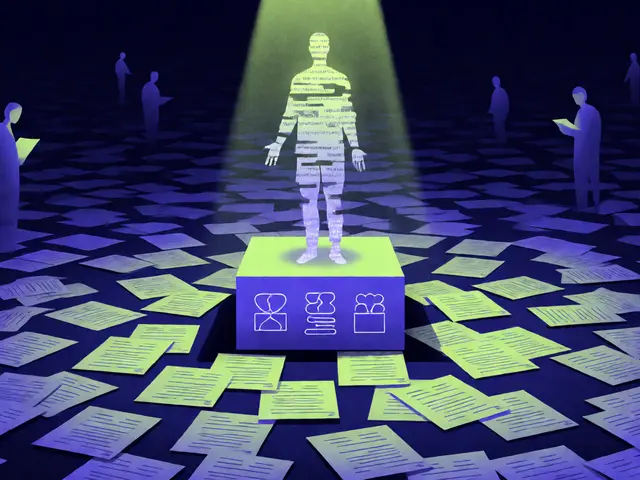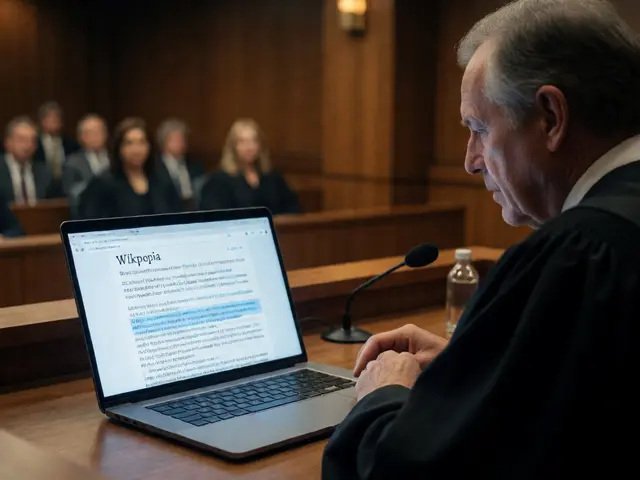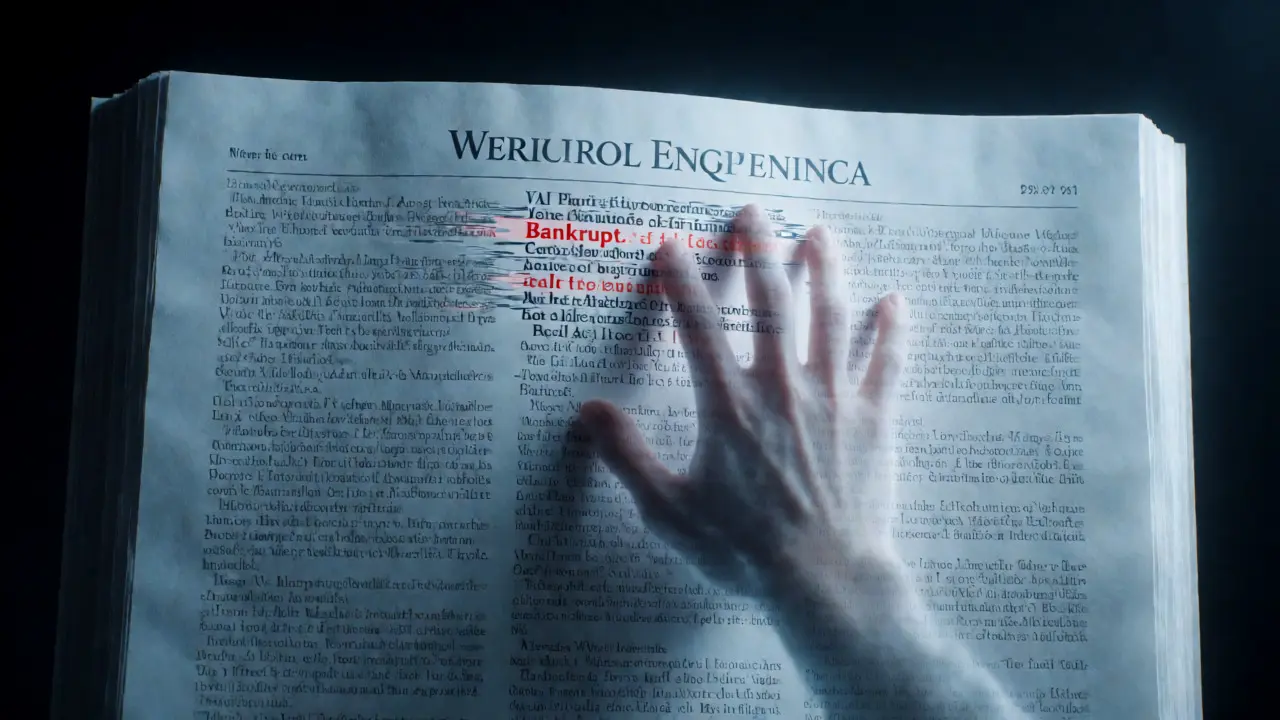
Imagine an encyclopedia entry that isn't written by a human expert but generated by a large language model. It sounds efficient, right? But who do you sue if that entry claims your business went bankrupt when it didn't? Or if it leaks private medical data about a public figure? We are standing on the edge of a legal cliff where traditional publishing laws struggle to keep up with AI-generated content. The core problem is simple yet terrifying for publishers: algorithms don't have reputations to lose, but they can destroy yours.
This isn't just theoretical. As we move deeper into 2026, the line between human curation and machine generation has blurred beyond recognition. For online encyclopedias, this creates a perfect storm of defamation, privacy breaches, and ambiguous liability. If you run a knowledge platform or contribute to one, understanding these shifts isn't optional-it's survival.
The Death of the "Editorial Judgment" Defense
For decades, encyclopedias relied on the defense of editorial judgment. If a mistake happened, the publisher could argue they exercised reasonable care in verifying facts. Humans made mistakes; humans fixed them. But what happens when an AI hallucinates a fact? A hallucination in this context means the AI confidently states something false as truth. Unlike a typo, which is clearly an error, a hallucinated fact looks polished and authoritative.
Current legal frameworks, like Section 230 in the US or similar provisions globally, often protect platforms from user-generated content. However, they rarely protect platforms from their own content. When an AI generates text, is that "user content" or "platform content"? Courts are currently split. In recent rulings regarding news aggregators, judges have leaned toward holding platforms liable if the algorithm actively curated or modified the content. For encyclopedias, which claim authority, this is dangerous. You aren't just hosting links; you are asserting truth. If the source of that truth is a black-box model, proving "reasonable care" becomes nearly impossible without transparent audit trails.
Defamation in the Age of Hallucinations
Let's get specific. Suppose an AI-written biography for a minor celebrity states they were arrested for fraud. There was no arrest. This is classic defamation: a false statement of fact that harms reputation. Traditionally, the author is liable. But who is the author here? The prompt engineer? The company that owns the LLM? The encyclopedia platform?
Most current terms of service try to push liability onto the user (the prompter). But if the encyclopedia publishes the output under its own masthead, it assumes the role of the publisher. Legal experts predict a shift toward "strict liability" for automated factual claims in reference works. Why? Because readers trust encyclopedias more than social media posts. That higher expectation of accuracy brings higher responsibility.
| Scenario | Potential Liable Party | Legal Basis |
|---|---|---|
| AI hallucinates a crime | Platform Publisher | Negligence in verification |
| User prompts biased output | Contributor/User | Malice or reckless disregard |
| Model trained on libelous data | Model Developer | Product defect theory |
This table highlights the messy reality. If the model developer is held liable, we might see insurance premiums skyrocket for AI vendors. If the platform is liable, they must implement rigorous human-in-the-loop checks, defeating the cost-saving purpose of AI.
Privacy Violations: The Right to Be Forgotten vs. The Right to Know
Privacy law is arguably even trickier than defamation. The General Data Protection Regulation (GDPR) in Europe and emerging laws in California give individuals the "right to be forgotten." This means you can ask search engines and databases to remove outdated or irrelevant information about you. But how does an AI know what is irrelevant?
Consider a living person whose early career failures are documented in an encyclopedia entry. They request removal. A human editor might weigh historical significance against personal embarrassment. An AI, optimized for completeness, might ignore the request because the data point is technically "true" and "relevant" to the timeline. When the AI refuses to delete, or worse, re-generates the deleted fact from its training weights, the platform faces a direct violation of statutory rights.
We are already seeing lawsuits where individuals claim that AI models "remember" sensitive data (like health diagnoses or sexual orientation) that was removed from the public web but remains in the model's latent space. For encyclopedias, this means deletion isn't just removing a row from a database; it requires retraining or fine-tuning the model, which is expensive and slow.
Who Owns the Truth? Copyright and Attribution
While not strictly about liability, copyright issues bleed into legal risk. If an AI summarizes a copyrighted book to create an encyclopedia entry, is it fair use? Recent court cases suggest that summarizing for commercial purposes might not always qualify. If an encyclopedia uses AI to rewrite thousands of entries based on proprietary sources, they risk mass infringement claims.
Moreover, attribution becomes murky. If an AI combines insights from ten different academic papers, citing all ten is cumbersome. Citing none is plagiarism. Citing the AI is misleading. Publishers are now facing demands for "algorithmic transparency," requiring them to disclose not just sources, but the specific model version and prompting strategy used to generate content. Failure to disclose can lead to consumer protection claims for deceptive practices.
Mitigation Strategies for Modern Publishers
You can't stop using AI, but you can manage the risk. Here is what smart publishers are doing in 2026:
- Implementing Provenance Tracking: Every sentence generated by AI should carry metadata indicating its source confidence score. High-risk facts (dates, legal status, financial figures) require manual verification flags.
- Human-in-the-Loop Workflows: AI drafts, humans edit. Never let AI publish directly to the main namespace for biographical or controversial topics. Use AI for structure and drafting, humans for final assertion.
- Dynamic Consent Mechanisms: Allow subjects of entries to flag inaccuracies instantly. Create a fast-track review process for privacy requests that bypasses standard editorial queues.
- Insurance Policies: Traditional media liability insurance often excludes AI errors. New policies specifically covering "algorithmic negligence" are emerging. Check your coverage.
These steps add friction, yes. But friction is the price of credibility. In a world flooded with synthetic content, verified human oversight becomes a premium feature.
The Future: Regulatory Sandboxes and Standardization
Look ahead two years. The EU AI Act and similar regulations in Asia will likely classify high-risk AI systems, including those used in public information dissemination. This means mandatory impact assessments before deploying new models. Encyclopedias will need to prove their models don't systematically bias certain demographics or erase minority histories.
We might also see industry standards emerge, akin to ISO certifications for quality management. Imagine an "Encyclopedia Trust Mark" that certifies an entry was vetted through a legally compliant AI-human hybrid process. Platforms without this mark may lose advertisers and subscribers who fear litigation.
The legal landscape won't settle quickly. It will evolve case by case. But the direction is clear: accountability cannot be outsourced to code. If you publish truth, you own the consequences of that truth, regardless of whether a brain or a chip produced it.
Can I sue an AI company directly for a defamation error in an encyclopedia?
Generally, no. Most terms of service limit the AI provider's liability to the contract value. You typically sue the publisher (the encyclopedia) who chose to rely on the AI. However, if the AI provider knowingly released a defective model, product liability claims are becoming more viable.
Does the "Right to Be Forgotten" apply to AI-trained models?
It's complex. Legally, you can demand removal from published outputs. Technically, removing data from a trained neural network is difficult and expensive (machine unlearning). Courts are increasingly siding with users, forcing providers to implement technical solutions to suppress unwanted memories.
What is "hallucination" in legal terms?
In legal contexts, a hallucination is treated similarly to negligent misrepresentation. It is a false statement of fact made without reasonable grounds for believing it true. Unlike intentional lies, it lacks malice, but it still carries liability for damages caused.
Are small encyclopedias at higher risk than Wikipedia?
Yes. Large platforms like Wikipedia have massive legal teams and community moderation buffers. Small niche encyclopedias using AI to scale content often lack the resources for robust human verification, making them easier targets for individual defamation suits.
How can publishers prove they exercised "reasonable care"?
By maintaining logs of human reviews, documenting the verification sources for critical facts, and showing that high-risk categories (biographies, legal status) undergo stricter scrutiny than low-risk ones (historical geography).