You’ve probably seen it before. You click on a Wikipedia article about a serious historical event, and suddenly the first sentence reads something like "Bob is a smelly potato." It’s funny for about two seconds, then you realize someone just broke the internet’s biggest library. But here’s the wild part: that edit was likely undone within thirty seconds. Sometimes even faster than you could finish reading the bad joke.
How does that happen? Humans can’t watch 60 million articles simultaneously. They don’t have to. The real heroes of Wikipedia’s integrity aren’t always people with degrees in history; they’re anti-vandal bots and automated detection systems. These digital janitors work around the clock, flagging nonsense, spam, and malicious edits before most humans even wake up. If you’ve ever wondered how the encyclopedia stays relatively clean despite thousands of anonymous edits every hour, this is where the magic happens.
The Scale of the Problem: Why We Need Machines
Let’s put things in perspective. Wikipedia receives roughly 15,000 to 20,000 edits per day across all language versions. In English alone, that’s thousands of changes hourly. Most are good faith improvements-typos fixed, sources added, clarity improved. But a small percentage are pure chaos. This isn’t just kids being silly; it includes coordinated spam campaigns, political bias injection, and deliberate disruption by users who want to see the world burn (or at least, the page deleted).
Human moderators, known as administrators or simply "admins," cannot keep up manually. Imagine trying to read every single diff-the technical term for the difference between the old version and the new one-in real-time. You’d go insane. That’s why the Wikimedia Foundation and volunteer developers built a layered defense system. It combines simple keyword filters with complex machine learning models. The goal isn’t perfection; it’s speed. An incorrect revert is annoying; a lingering piece of misinformation for hours is dangerous.
Meet the Heavy Hitters: Major Anti-Vandal Tools
When people talk about Wikipedia bots, they usually mean three specific tools that do the heavy lifting: Huggle, a semi-automated tool for human editors, ClueBot NG, an advanced AI-driven bot, and AbuseFilter, MediaWiki’s native rule-based engine. Each plays a different role in the ecosystem.
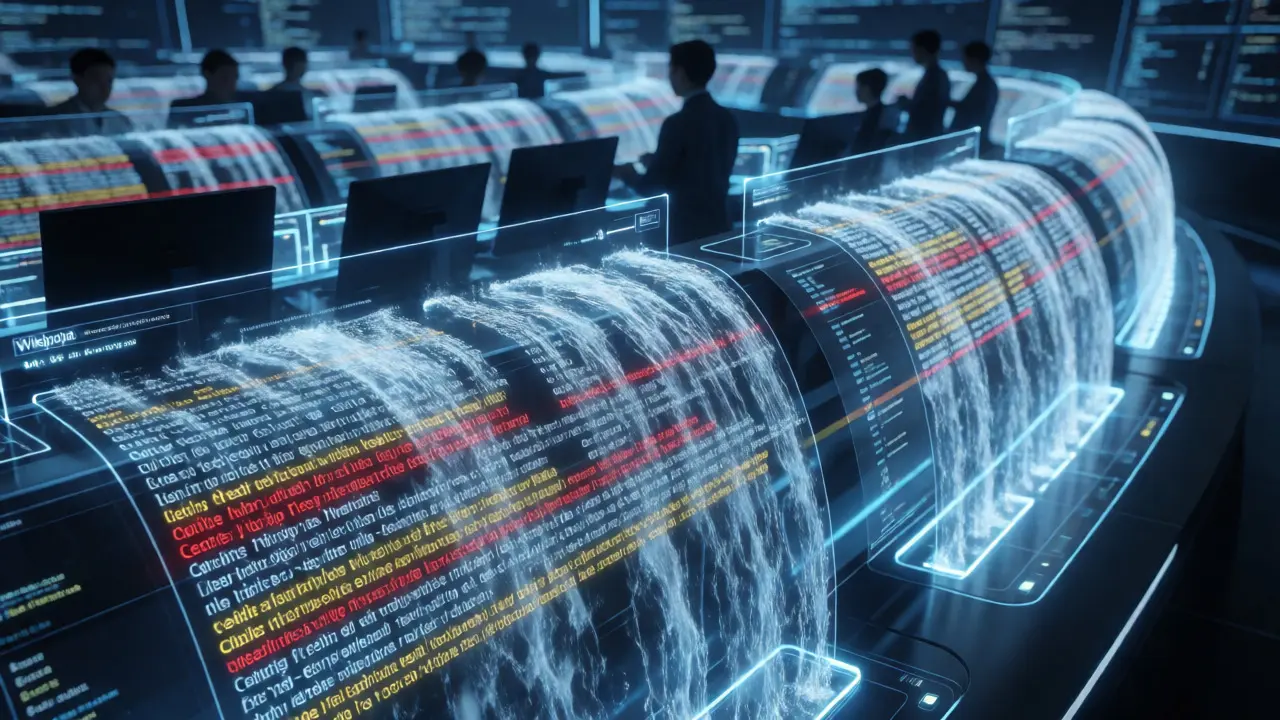
Huggle is interesting because it’s not fully autonomous. It’s a client application used by trusted human editors. When you run Huggle, it pulls recent edits from the Recent Changes feed and shows them to you in a simplified interface. It highlights potential problems using color coding-red for high probability of vandalism, yellow for suspicious activity. The human makes the final call. This hybrid approach works well because it leverages human judgment for ambiguous cases while automating the sorting process. It’s essentially a triage nurse for Wikipedia.
ClueBot NG is the opposite. It’s fully automated and uses natural language processing (NLP) to analyze text. Unlike older bots that just looked for bad words, ClueBot NG analyzes the semantic structure of an edit. Does the change make grammatical sense? Does it fit the context of the article? If a user changes "The capital of France is Paris" to "The capital of France is cheese," ClueBot NG recognizes the semantic disconnect. It has a low false-positive rate, meaning it rarely reverts good edits by mistake. According to its own statistics, it processes hundreds of edits per minute.
AbuseFilter is the gatekeeper. Built into MediaWiki software itself, it runs rules against every edit before it’s even saved. For example, if a new account tries to add a link to a shady cryptocurrency site in ten different articles within five minutes, AbuseFilter can block the edit instantly and ask for CAPTCHA verification. It’s less about understanding meaning and more about detecting behavioral patterns associated with spam.

How Detection Actually Works: Heuristics vs. Machine Learning
Early vandalism detection relied heavily on heuristics-simple if-then rules. If the edit adds the word "sex" or "poop" to a biography of a pope, flag it. If the edit removes all references, flag it. These rules are fast and cheap to compute. But they’re dumb. They miss subtle vandalism. A sophisticated vandal might replace "Albert Einstein was a physicist" with "Albert Einstein was a philosopher." Technically, that’s wrong, but no keyword filter would catch it. No expletives were used. No links were removed.
This is where modern systems like Ores (Objective Revision Evaluation Service) come in. Ores is a machine learning service developed by the Wikimedia Research team. It trains on millions of labeled edits to predict whether a revision is damaging. It doesn’t just look at words; it looks at metadata. Who made the edit? Is the account new? Did they edit pages related to their username? How large is the change?
| Method | Primary Mechanism | Speed | Accuracy Context |
|---|---|---|---|
| Keyword Filters | String matching against blacklists | Instant | High precision, low recall (misses subtle changes) |
| Behavioral Rules (AbuseFilter) | Pattern recognition in user actions | Pre-save check | Excellent for spam/botnets, poor for content quality |
| Machine Learning (Ores/ClueBot) | NLP analysis and statistical modeling | Post-edit (seconds) | High accuracy for both obvious and subtle damage |
| Human Review (Huggle) | Cognitive evaluation of context | Variable (minutes/hours) | Best for edge cases and policy interpretation |
The beauty of Ores is its feedback loop. When a human admin reverts an edit that Ores marked as "good," or keeps an edit that Ores marked as "damaging," the system learns. Over time, the model gets smarter. It’s not perfect-it struggles with sarcasm or highly technical niche edits-but it’s significantly better than any static list of banned words.
The Human Element: Patrols and Recent Changes
Bots handle the volume, but humans handle the nuance. There’s a dedicated community of "recent changes patrollers." These are volunteers who monitor the live feed of edits. They use tools like Huggle, but they also rely on intuition. Sometimes a bot misses a subtle bias insertion. A vandal might change "The war ended in 1945" to "The war ended due to Allied incompetence." Grammatically correct. Factually debatable. Politically charged. A bot might let it slide; a human historian will spot it immediately.
These patrols often coordinate via IRC channels or Telegram groups. If a major news story breaks-say, a celebrity dies or a politician resigns-traffic spikes. Vandalism rates increase proportionally. During these events, experienced editors form "task forces" to watch specific articles. They might temporarily lock the page or restrict editing to autoconfirmed users (accounts older than four days with at least ten edits). This dynamic response is something pure automation can’t replicate easily.
Pitfalls and False Positives
Automated systems aren’t infallible. One of the biggest complaints from legitimate editors is "false positives." Imagine you’re a new editor making your first contribution. You fix a typo. ClueBot NG reverts you because your account is new and the edit size is small. You get frustrated and leave. This churn hurts Wikipedia. To combat this, many bots now have "trust scores." If a user has been active for years without issues, their edits get less scrutiny. Conversely, a brand-new IP address from a region known for spam might face stricter filters.
Another issue is "edit wars." Sometimes, two bots disagree. Bot A reverts an edit because it thinks it’s vandalism. Bot B reverts Bot A because it thinks the original edit was fine. This creates a loop. Administrators have to step in and manually resolve the conflict. To prevent this, most bots are programmed to stop reverting if another bot has already acted on the same edit within a short timeframe. They respect each other’s territory.
The Future: LLMs and Next-Gen Detection
We are currently seeing a shift toward Large Language Models (LLMs). While Ores uses traditional machine learning, newer experiments involve transformer-based models that understand context even better. Imagine a bot that doesn’t just check if "cheese" belongs in a sentence about physics, but understands that replacing "quantum mechanics" with "magic spells" is semantically absurd, even if the grammar is perfect.
However, there’s a catch. As detection gets smarter, so do vandals. Adversarial attacks are becoming common. Vandals learn what triggers bots and craft edits specifically to bypass them. They might use Unicode characters that look like standard letters but confuse the parser. Or they might split vandalism across multiple small edits. It’s an arms race. The next generation of tools will need to be adaptive, learning not just from past edits, but from the evolving tactics of bad actors.
For now, the system works remarkably well. Wikipedia remains one of the most accurate sources of information online, largely thanks to this invisible army of code and concerned citizens working together. The next time you see a quick undo button appear on a weird edit, remember: it wasn’t luck. It was engineering.
What is the difference between Huggle and ClueBot NG?
Huggle is a semi-automated tool that requires human input to confirm reverts, making it ideal for nuanced judgments. ClueBot NG is fully automated, using AI to revert edits without human intervention, which allows for faster response times but carries a slightly higher risk of reverting valid edits incorrectly.
Can I appeal if my edit is reverted by a bot?
Yes. If a bot reverts your edit, you can typically restore it yourself if you are confident it was constructive. However, if it is reverted again, you should discuss the change on the article's Talk page. Avoid repeatedly restoring the edit (known as "edit warring") as this may lead to temporary blocking.
Do bots detect copyright violations too?
While primarily designed for vandalism, some bots like CopyPatrol specifically scan for copied text from external websites. These tools compare new text against existing web content to flag potential plagiarism or copyright infringement, though human review is still required for confirmation.
Why do some new accounts get blocked automatically?
New accounts are often targets for spam bots. AbuseFilter rules may automatically block accounts that exhibit suspicious behavior, such as creating multiple accounts from the same IP address or adding external links to unrelated articles immediately after registration. This helps protect the encyclopedia from mass-spamming.
Is Wikipedia vandalism only about funny words?
No. While juvenile humor is common, significant vandalism includes removing critical citations, inserting biased political viewpoints, deleting entire sections of content, or adding promotional material for companies. Sophisticated vandalism is often harder to detect than obvious profanity.