Imagine two editors arguing over a single sentence in an article about a local politician. One side cites a news report; the other insists on a primary source. The debate drags on for weeks on the talk page. But what you don't see is that before this fight even started, one group of editors spent three hours on a Discord server planning their strategy. This hidden layer of communication is changing how Wikipedia works. It’s not just about typing into a text box anymore. It’s about who talks to whom, where, and when.
Most people think Wikipedia is a meritocracy where the best argument wins. In reality, it’s often a popularity contest fueled by pre-arranged alliances. When editors coordinate outside the public view, they can amplify their voices, drown out dissent, and steer consensus in a specific direction. This phenomenon, known as off-wiki coordination, has become a central tension in the project's governance. It blurs the line between healthy collaboration and strategic manipulation.
The Shadow Side of Collaboration
Collaboration is the heart of Wikimedia Commons and its sister projects, but it takes different forms. On-wiki discussion happens in transparent spaces like Talk pages or Requests for Comment (RFCs). Everyone can read it. Everyone can join. Off-wiki coordination happens in private channels: Discord servers, Slack groups, email threads, or even face-to-face meetings at conferences like Wikimania.
The problem isn’t that people talk privately. Humans are social creatures. The problem arises when that private talk leads to synchronized actions on the wiki without full transparency. For example, if five editors agree on a Discord channel to revert an edit within ten minutes of it happening, they are effectively creating a de facto veto power. They aren’t voting; they’re executing a plan. This creates a power imbalance that the standard "consensus" model doesn’t account for.
Why Editors Leave the Wiki
Why do editors bother leaving the wiki to coordinate? There are three main drivers:
- Speed: Wikipedia discussions can be slow. A complex policy debate might take months. If you need to act quickly-say, to protect a live event article from vandalism or to push a controversial change through before a deadline-private channels allow for rapid decision-making.
- Signal Clarity: Talk pages are noisy. Not every comment is relevant. Private groups allow members to filter out noise and focus on the core strategy. You can say, "Ignore the pedantic grammar comments; let’s focus on the sourcing issue."
- Social Bonding: Editing is lonely work for many. Private communities provide emotional support and camaraderie. This bond makes them more likely to stick together during long, frustrating conflicts.
These factors make off-wiki coordination efficient. But efficiency in one group can feel like oppression to another. If Group A uses Discord to organize a cleanup campaign, and Group B finds out only after the edits are made, Group B feels blindsided. Trust erodes. That’s when the on-wiki conflict really starts.
Case Study: The Sourcing Wars
Let’s look at a common scenario: the "Sourcing Wars." These happen when editors disagree on what counts as a reliable source. One camp believes in strict adherence to encyclopedic standards; the other argues for broader inclusion of local or niche sources.
In recent years, these debates have intensified because specialized interest groups formed around specific topics (like music, science, or politics) created their own off-wiki hubs. For instance, a group of music editors might have a dedicated channel where they share databases of obscure bands. When a new band article is created, these editors can quickly populate it with high-quality citations from their shared database. To outsiders, it looks like a sudden burst of expertise. To critics, it looks like a coordinated takeover.
The conflict usually boils down to one question: Who defines quality? If your private group agrees that Source X is reliable, but the wider community disagrees, you have a standoff. The on-wiki result is often a series of reverts, tags, and heated talk page arguments. The root cause, however, was decided off-wiki, where the criteria were set by a small, self-selected committee.
The Impact on Consensus
Consensus on Wikipedia is supposed to be a process of reaching agreement through open discussion. But off-wiki coordination changes the dynamics of that process in subtle ways.
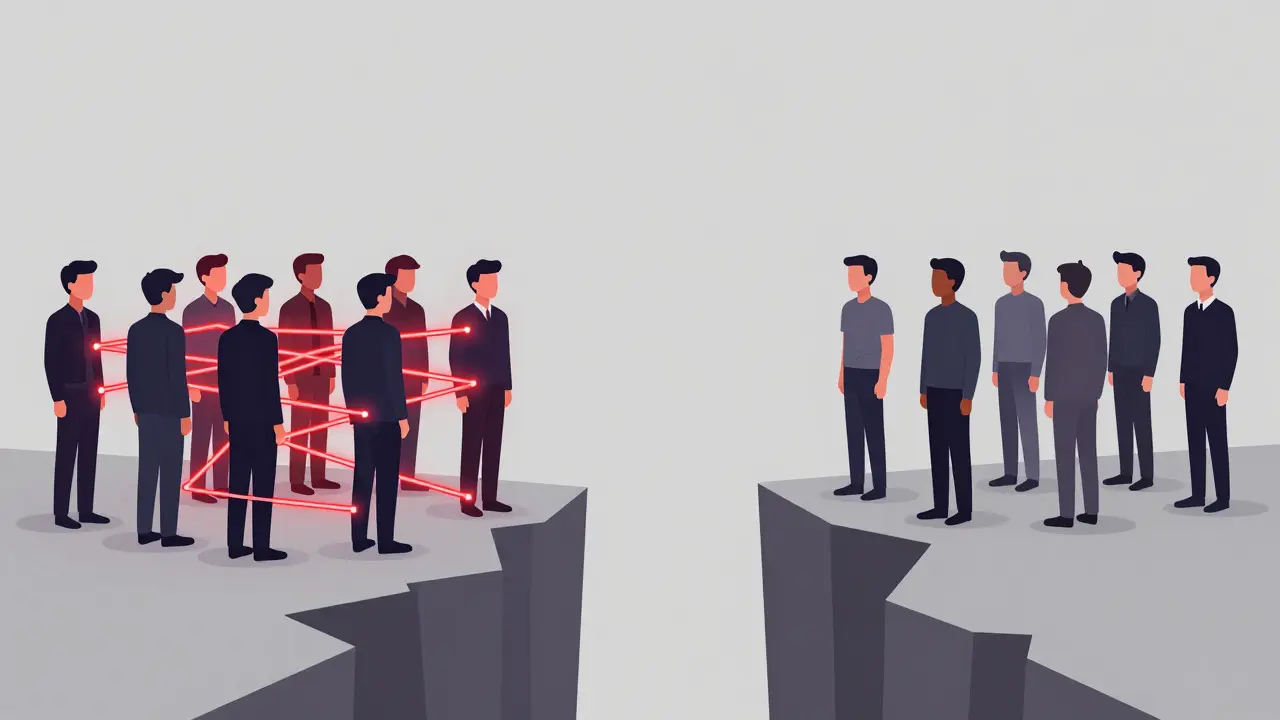
When a group coordinates off-wiki, they arrive at the on-wiki discussion already aligned. This means they present a united front. Other editors may perceive this as a "block" or a "cabal," even if no formal vote was taken. The psychological effect is significant. It discourages newcomers from joining the debate because they feel outnumbered. Over time, this narrows the pool of active participants in that specific topic area, further entrenching the influence of the coordinated group.
Governance Responses and Failures
Has the Wikimedia Foundation tried to fix this? Yes, but with mixed results. The foundation has emphasized transparency and encouraged editors to document their off-wiki agreements. Policies like "No surprise votes" suggest that if you’ve agreed to something privately, you should disclose it publicly before acting.
However, enforcement is difficult. How do you prove that two editors talked on Discord? You can’t easily. Most conflicts remain unresolved because the evidence is ephemeral. Screenshots disappear. Chat logs get deleted. Unless a major scandal breaks, the status quo remains: assume good faith, but suspect coordination.
Newer tools are helping. Some large-scale projects now use integrated platforms that link directly to wiki discussions, making the connection between private planning and public action more visible. Yet, for most individual editors, the barrier to entry for using these tools is too high. They stick to Discord or Slack because it’s easier.

Best Practices for Healthy Conflict
If you’re an editor involved in a contentious topic, how do you navigate this landscape? Here are some practical steps to keep conflicts fair and productive:
- Disclose Your Network: If you’re working with others on a specific article or policy, mention it. Say, "I’m coordinating with [Name] on this section." It removes the mystery and reduces suspicion.
- Use Public Channels for Strategy: Try to move your strategic discussions to the Talk page or a dedicated sub-page. Yes, it’s slower. But it builds trust. If you must use private channels, summarize the key points publicly.
- Invite Outsiders: Actively seek feedback from editors who aren’t part of your inner circle. This breaks up echo chambers and ensures your perspective isn’t too narrow.
- Focus on Sources, Not People: Keep the debate about the content, not the coordinators. Attack the citation, not the editor. This keeps the conflict professional.
- Set Deadlines: Indefinite debates breed resentment. Agree on a timeline for resolution. If no consensus is reached by then, accept the status quo or escalate to a neutral administrator.
These habits won’t eliminate off-wiki coordination-it’s human nature-but they can mitigate its negative effects. The goal isn’t to stop people from talking privately. The goal is to ensure that private talk doesn’t create unfair advantages in public spaces.
The Future of Open Knowledge
As Wikipedia matures, the balance between openness and organization will continue to shift. We’re seeing more structured collaborations, especially in specialized fields. Medical editors, for example, often work with academic institutions. Their off-wiki coordination is rigorous and peer-reviewed, which actually improves article quality. The issue arises when that coordination lacks transparency.
The future likely holds a hybrid model. More projects will adopt formalized workflows that acknowledge both public and private phases of development. Think of it like software development: code is written in private branches, but merged into the main trunk through public pull requests. If Wikipedia can implement similar clarity, it could reduce conflict while maintaining speed.
For now, the lesson is simple. Transparency is the antidote to suspicion. Whether you’re editing a biography or debating a policy, remember that your audience includes everyone who ever reads the page. Make sure your process reflects the same values as your final product: open, verifiable, and fair.
Is off-wiki coordination illegal on Wikipedia?
No, it is not illegal. Editors are free to communicate anywhere. However, if that coordination leads to actions that violate policies like "No Surprise Votes" or "Assume Good Faith," those actions can be challenged. The coordination itself is neutral; the outcome determines if it’s problematic.
What is the difference between a cabal and a team?
A team works openly toward a shared goal, inviting feedback. A cabal operates in secrecy, excluding outsiders to maintain control. The key distinction is transparency. If you hide your coordination, you risk being labeled a cabal, even if your intentions are good.
How can I find out if my opponent is coordinating off-wiki?
It’s hard to prove definitively. Look for patterns: simultaneous edits, identical phrasing, or references to private discussions. Ask politely on the talk page if they are working with others. Often, editors will disclose their collaborators if asked directly.
Does off-wiki coordination always lead to bad articles?
Not necessarily. In fact, coordinated efforts often produce higher-quality articles because specialists can divide labor efficiently. The problem arises when the coordination excludes valid opposing views or ignores broader community standards.
What role do administrators play in resolving these conflicts?
Administrators mediate disputes by enforcing neutral point of view (NPOV) and consensus guidelines. They don’t judge the merits of the off-wiki chat, but they judge whether the on-wiki actions followed proper procedure. If a group acted in bad faith, admins can intervene to restore balance.